As artificial intelligence becomes one of the principal engines of global investment, the financial statements of its most prominent companies are beginning to tell a more complicated story than their technological achievements suggest. Revenues are expanding at rates rarely seen in modern industrial history. Valuations have reached levels that would have seemed implausible only a few years ago. Data centers are multiplying, semiconductor orders are absorbing tens of billions of dollars, and the world's largest technology companies are reorganizing their capital expenditure around infrastructure they increasingly regard as essential to their competitive position over the coming decade. Yet behind this expansion, one question is gradually overtaking all others: how much does this growth actually cost, and how long will it take to generate the expected returns?
On October 20, 2026, financial information reportedly contained in a draft initial public offering prospectus for Anthropic gave this question a striking dimension. According to information reported by The Wall Street Journal and Reuters, the American company recorded a net loss of $80.7 billion in the first half of 2026, compared with approximately $13 billion a year earlier. The figure is large enough to evoke the financial dimensions of a major industrial sector. But interpreting it as the disappearance of $80 billion in cash would be misleading. Approximately $72 billion reportedly came from accounting charges associated with the valuation of financial instruments, including convertible notes and other commitments arising from capital raising. These charges affect net income without necessarily corresponding to equivalent cash outflows.
This distinction is essential. It does not eliminate Anthropic's financial pressures, but it changes the diagnosis. The issue is not simply that a company is losing more money as it sells more services. It is that commercial growth, computing costs, contractual obligations, and financing instruments are evolving simultaneously at a speed that makes traditional profitability indicators increasingly difficult to interpret.
During the first six months of 2026, Anthropic reportedly generated $16.3 billion in revenue, compared with approximately $1.1 billion during the same period in 2025. In one year, its half-year revenue would therefore have increased nearly fifteenfold. In the third quarter, revenue reportedly reached an additional $16.8 billion, approximately 45% higher than in the preceding quarter. The first nine months of the year would consequently represent around $33.1 billion in revenue. Such expansion confirms the existence of substantial commercial demand for artificial intelligence models, particularly among enterprises. It does not, however, establish sustainable profitability.
Information communicated to investors reportedly indicates a positive adjusted operating margin in the third quarter. This improvement is significant, but it must be distinguished from operating income calculated under accounting standards and, even more importantly, from free cash flow. A company can report a positive adjusted margin while continuing to mobilize considerable capital for infrastructure, research, and future commitments. It is precisely this coexistence of extraordinary commercial growth and enormous financial obligations that now characterizes part of the industry.
An Economy Growing Faster Than Its Own History
To understand the transformation that has taken place since 2024 and 2025, it is necessary to return to the fundamental nature of artificial intelligence laboratories. Their product is not traditional software whose initial development is followed by distribution at an almost negligible marginal cost. Every interaction with a model requires computing capacity, equipment, electricity, networks, and maintenance. Training successive generations of models simultaneously consumes considerable resources before additional revenue can even be generated.
The difference from the major software companies of the previous generation is fundamental. A software publisher could develop an application, distribute it to millions of users, and progressively improve its margins as fixed costs were spread across a larger customer base. In generative artificial intelligence, growth in the number of users and the intensity of usage also increases computing consumption. Efficiency improvements reduce the unit cost of certain operations, but they can simultaneously encourage more numerous, longer, and more complex applications.
The outcome therefore depends on several competing developments: declining computing costs per unit of work, increasing volumes of computation consumed, changes in actual selling prices, and the ability of companies to retain their customers. Rapid revenue growth does not necessarily translate into a proportional improvement in profitability.
Anthropic offers a particularly clear illustration of this transformation. The draft prospectus described by financial publications reportedly shows nearly $9 billion in infrastructure expenditure during the first half of 2026, more than the amount committed throughout 2025 according to the reported information. The company also depends on computing capacity supplied by several major operators, including Amazon, Google, and Microsoft, while seeking to secure resources over a much longer period.
Future commitments mentioned in the documents and financial analyses reach several hundred billion dollars. These amounts do not represent expenditure already incurred, nor necessarily debt immediately payable. They nevertheless reflect obligations, projects, and investment requirements that reveal the industrial scale now associated with advanced model development.
Artificial intelligence can therefore no longer be analyzed exclusively as a software industry. It is also becoming an industry of energy, technical real estate, electronic equipment, network infrastructure, and long-term financing. 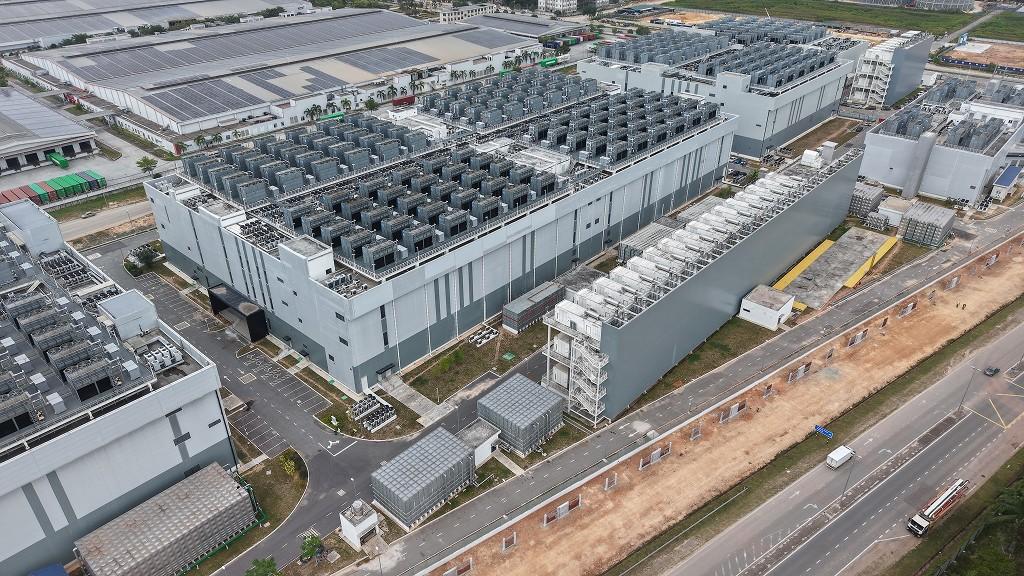
OpenAI and Anthropic: The Race for Scale
OpenAI's situation follows the same underlying logic, although the availability and presentation of its financial information do not permit a comparison as rigorous as that possible for publicly listed companies.
Market information available in 2026 describes exceptionally rapid commercial growth, driven by subscriptions, professional services, application programming interfaces, and the integration of models into enterprise applications. Yet published and reported figures do not always refer to the same indicators. Some represent revenue actually recorded during a quarter, others annualized revenue calculated from recent activity, and still others commercial projections.
The distinction between annual revenue and annualized revenue run rate is particularly important. A company generating $4 billion in revenue during a single month may announce an annualized run rate of $48 billion. This does not mean it has already collected $48 billion over twelve months, nor that it will necessarily sustain that level of activity.
This ambiguity contributes to the difficulty of valuing private AI laboratories. Their valuations depend partly on future revenue whose realization requires continued growth, but also cost control and durable access to infrastructure.
Competition between OpenAI and Anthropic therefore takes place across two markets simultaneously. The first is the customer market: individuals, developers, businesses, and public administrations. The second is the market for the resources required to serve those customers: chips, data centers, financing, electricity, and computing capacity contracts.
These two markets do not necessarily expand at the same pace. A company may acquire customers faster than it can secure the resources needed to meet their demands. It may also reserve substantial computing capacity in anticipation of demand that takes longer than expected to materialize.
It is within this interval between installed capacity and economically remunerated capacity that a significant part of the financial risk is concentrated.
The Major Platforms Hold a Decisive Advantage
The situation is considerably different at Microsoft, Alphabet, and Amazon. These groups invest in artificial intelligence from established commercial positions. Their historical businesses generate revenue and cash flow capable of absorbing part of the cost of developing new infrastructure.
In the second quarter of 2026, Alphabet reported consolidated revenue of $119.8 billion, up 24% year over year. Google Cloud reached $24.8 billion, an increase of 82%. The group's consolidated operating margin stood at 34%, confirming its ability to maintain substantial profitability despite rising technological expenditure.
These figures illustrate an essential difference between Google and specialized laboratories. Alphabet does not depend exclusively on revenue from its artificial intelligence models to finance their development. Search, YouTube, subscriptions, and digital services continue to support its operations. The group can also use AI to improve existing products without necessarily associating every improvement with a separate revenue stream.
This diversification provides financial protection, but it does not eliminate industrial risk. Increasing computing capacity can weigh on depreciation, financing requirements, and free cash flow. The historical profitability of advertising does not automatically guarantee the profitability of each new generation of data centers.
Amazon presents a comparable profile, although its activities are distributed differently. In the second quarter of 2026, consolidated revenue reached $200.6 billion, compared with $167.7 billion a year earlier. Operating income increased from $19.2 billion to $27.5 billion. AWS, its cloud services division, generated $42.2 billion in quarterly revenue, up 37%, while operating income reached $16.6 billion.
AWS's expansion demonstrates that demand for computing capacity is already translating into substantial commercial activity. It also explains Amazon's distinctive position within the ecosystem. The group supplies infrastructure to companies specializing in AI while also participating financially in the development of some of them.
This dual role as investor and supplier creates complex economic relationships. Amazon can benefit from Anthropic's growth through its cloud operations and the value of its financial stake. But these two sources of performance must be distinguished. In the second quarter of 2026, Amazon reported net income of $62.6 billion, substantially above its operating income, notably because of $53.4 billion in non-operating income before taxes, primarily associated with its investments in Anthropic.
The difference is considerable. A financial revaluation can increase net profit without corresponding to an equivalent improvement in the profitability of commercial operations. It may also be partially reversible if valuations change.
This situation offers a remarkable parallel with Anthropic: for one company, financial instruments amplify the accounting loss; for the other, the revaluation of an investment amplifies reported profit. Both phenomena demonstrate why net income must be interpreted cautiously when private valuations reach exceptional levels.
Amazon's free cash flow provides another perspective. Over the twelve months ended June 2026, it was negative $7.6 billion, despite operating cash flow of $161.4 billion. The explanation lies primarily in increased purchases of property and equipment. The company continues to generate substantial cash from operations, but it is reinvesting an even larger amount in infrastructure.
This contrast between accounting profits, operating cash flow, and capital expenditure is one of the most revealing features of the financial condition of the AI giants.
Microsoft: The Strength of an Integrated Model
Microsoft possesses an additional advantage: its simultaneous presence in enterprise software, cloud services, and artificial intelligence tools integrated into professional environments.
Its business model rests on the ability to commercialize AI at several levels. Azure provides computing capacity. Microsoft 365 integrates assistance and automation features. Developer and enterprise tools extend monetization into new applications.
This integration can reduce customer acquisition costs because Microsoft already maintains contractual relationships with businesses around the world. It does not, however, guarantee that additional revenue generated by AI features will fully cover the associated computing costs.
Figures from its second quarter of fiscal 2026, ended December 2025, illustrate its financial strength: $81.3 billion in revenue, compared with $69.6 billion a year earlier, and $38.3 billion in operating income. Azure and other cloud services were growing by 39%.
These results cover an earlier period than the latest Alphabet and Amazon figures and should not be compared as though they belonged to the same calendar quarter. They nevertheless demonstrate that Microsoft entered the current investment phase with an already substantial revenue and profit base.
The question for Microsoft is not whether it can finance its immediate investments, but whether infrastructure expansion will maintain sufficiently high returns once equipment begins to be depreciated, renewed, or replaced by new technological generations.
Meta: When Revenue Rises but Margins Fall
Meta reveals another dimension of the problem. Unlike specialized laboratories, the group does not primarily seek to sell access to a model. It uses artificial intelligence to strengthen advertising efficiency, improve recommendations, develop its applications, and prepare new services.
In the second quarter of 2026, revenue reached $60.8 billion, up 28% year over year. But costs and expenses increased by 55%, reaching $42 billion. Operating income declined from $20.4 billion to $18.8 billion, while the operating margin fell from 43% to 31%.
Part of this deterioration reflected specific charges, including legal and restructuring expenses. It cannot therefore be attributed entirely to artificial intelligence. Nevertheless, the development illustrates the pressure expenditure can exert on a company whose revenue continues to grow rapidly.
Meta spent $31.1 billion on capital expenditure during the second quarter, including principal repayments on finance leases. Quarterly free cash flow reached only $784 million, despite $31.9 billion in operating cash flow.
For 2026 as a whole, the company was then forecasting between $130 billion and $145 billion in capital expenditure under this broader definition.
These amounts demonstrate that AI development can absorb a substantial proportion of the financial resources of an already profitable company. They also explain why a comparison based solely on revenue would be insufficient.
Digital advertising continues to generate considerable income. But the company is accepting the commitment of an increasing share of those resources to build capacity whose economic benefits will emerge progressively, and some of which may never generate the returns initially anticipated.
Nvidia: The Immediate Beneficiary of the Transformation
Within this new industrial structure, Nvidia occupies a distinctive position. The company sells the processors, systems, and technologies that enable much of the expansion in computing capacity.
Its model differs from those of laboratories and cloud operators. Nvidia does not need every artificial intelligence application to become immediately profitable in order to recognize revenue from equipment ordered by its customers. It benefits directly from their investment decisions.
This position explains why semiconductor manufacturers and suppliers of critical components can record exceptional financial performance during a phase in which the final users of infrastructure are still seeking economic equilibrium.
But this advantage carries a dependency. Equipment suppliers' revenue relies on continued orders. If major operators slow their investments, extend the useful life of their hardware, or significantly improve the efficiency of existing infrastructure, demand for new capacity could change.
The current profitability of chip suppliers should therefore not be confused with the future profitability of the ecosystem as a whole.
Industrial history provides numerous examples of sectors in which equipment suppliers prospered during infrastructure construction, while the operators subsequently struggled to achieve expected returns. Telecommunications, fiber-optic networks, and certain phases of energy development illustrate this distinction between value created during construction and value captured during operation.
Artificial intelligence will not necessarily follow these trajectories. But the comparison is a reminder that genuine technological transformation can coexist with excessive or poorly allocated investment.
Electricity, Capital, and Time
As artificial intelligence becomes an infrastructure industry, its growth increasingly depends on factors extending beyond model performance.
Electricity availability, grid connection capacity, construction timelines, equipment supply, cooling systems, and environmental constraints now directly influence investment decisions.
A data center represents a financial commitment extending far beyond the purchase of processors. It requires buildings, transformers, electrical systems, backup equipment, communications networks, and maintenance operations. Chips may be replaced several times during the life of a facility. Energy contracts and property commitments frequently extend over much longer periods than software innovation cycles.
This difference between technological and financial timelines represents a structural risk.
Models can evolve within months. The infrastructure required to operate them is built for years. Financing may need to be organized over even longer periods.
A company investing today in a particular generation of equipment must therefore anticipate not only future demand, but also changes in computing costs, technological competition, and the speed of hardware replacement.
Declining unit costs could improve service profitability. They could also make certain earlier investments less competitive. Conversely, sufficiently strong demand could allow equipment to be monetized rapidly despite accelerated replacement.
The outcome will depend on the relationship between these variables, rather than on user growth alone.
Growth Circulating Among the Same Companies
One of the most distinctive characteristics of today's AI economy is the interdependence of financial and commercial relationships.
Major platforms invest in model laboratories. Those laboratories purchase or reserve computing capacity from the platforms. Cloud operators order processors and systems from semiconductor manufacturers. Those manufacturers themselves develop commercial, technological, and sometimes financial relationships with the companies using their products.
This organization can be entirely rational. Long-term contracts secure demand, facilitate infrastructure financing, and distribute risk. Cross-investments can also support innovations whose development would otherwise be considerably more difficult.
Nevertheless, they complicate the interpretation of aggregate growth.
When a laboratory receives capital from a partner and subsequently uses part of that money to purchase computing services from the same partner, the supplier's recorded revenue represents a genuine commercial transaction. But it does not, by itself, establish the existence of independent final demand capable of sustainably supporting all the associated financial commitments.
The question is not whether these revenues should be considered fictitious. It is what proportion of demand comes from end users paying for economic value actually created, and what proportion still depends on expanding access to financing.
Answering this question will require examining customer concentration, contract conditions, minimum purchase commitments, infrastructure expenditure, and associated cash flows.
Artificial intelligence may be building infrastructure as essential as telecommunications networks or the computing systems of previous decades. But the strategic importance of infrastructure does not guarantee that everyone financing it will receive proportionate returns.
2024, 2025, 2026: A Change of Regime
Comparing the past three years reveals not simply an acceleration, but a transformation in the nature of the industry.
In 2024, attention was still largely concentrated on model capabilities, adoption, and the first commercial applications at scale. Investments were already substantial, but uncertainty primarily concerned use cases and competitive positioning.
In 2025, increasing computing requirements and the multiplication of data center projects gradually shifted the center of gravity toward infrastructure. Capacity contracts, semiconductor orders, and energy commitments assumed a growing role in corporate strategies.
By 2026, this transformation had become directly visible in financial statements. Specialized laboratories were generating revenue growth at exceptional rates. Cloud divisions of major platforms were accelerating. But investment was reaching levels capable of substantially reducing free cash flow, even when operating businesses remained profitable.
Second-quarter 2026 results provide a particularly clear illustration. Alphabet maintained a consolidated operating margin of 34%. Amazon recorded a 43% increase in operating income. Meta saw its margin contract by twelve percentage points. At the same time, Amazon and Meta reported free cash flow significantly compressed by investment, although over different reporting periods.
It would be misleading to turn these observations into a definitive ranking of winners and losers. Accounting perimeters differ, fiscal calendars are not uniform, and third-quarter calendar-year results had not all been published as of October 20.
The general trend is nevertheless identifiable: AI growth now requires capital mobilization on a scale that is changing the financial structure of the sector's most powerful companies.
The Risk Is Not Necessarily a Bubble
It would be tempting to reduce this situation to a choice between technological revolution and speculative bubble. Such an interpretation would be insufficient.
A technology can permanently transform the economy while generating substantial losses for certain investors. Conversely, a period of excessive spending can help build infrastructure that subsequently becomes indispensable.
The development of railways, electricity, telecommunications, and the internet demonstrates that the economic usefulness of an innovation and the financial profitability of the companies deploying it do not always follow the same trajectory.
In artificial intelligence, commercial demand is already tangible. Businesses are purchasing services, developers are using models, cloud platforms are recording measurable growth, and automation tools are beginning to transform certain professional activities.
The question increasingly concerns the price paid to build this capacity.
If investments continue to grow faster than the cash flows they generate, companies will have to improve margins, raise prices, slow spending, or continue mobilizing external financing.
Each option carries industrial consequences.
Higher prices could limit adoption of certain services. Reduced investment could slow the expansion of capabilities. Greater dependence on financing could make companies more sensitive to interest rates and capital market conditions. Rapid improvements in technological efficiency could, conversely, alter the economic equation favorably.
There is therefore no automatic conclusion to draw from Anthropic's losses or the expenditure of Amazon, Google, and Meta. The figures describe an industry undergoing accelerated expansion, not necessarily one condemned to permanent unprofitability.
The Real Frontier of Artificial Intelligence
For several years, competition among major technology companies was presented as a race to develop the most powerful models. Scientific performance, reasoning capabilities, and advances in automation appeared to be the principal measures of dominance.
These dimensions remain important. But the financial statements of 2026 reveal a second competition, less visible and probably just as decisive: the ability to finance, operate, and sustainably renew infrastructure.
Laboratories must convert technological leadership into recurring revenue with sufficiently attractive margins. Cloud platforms must obtain satisfactory returns on enormous investments. Semiconductor manufacturers must preserve their markets in an environment where their largest customers are simultaneously seeking to reduce technological dependence. Companies using AI must ultimately demonstrate that productivity gains justify the expenditure incurred.
Only when these different levels of the economy begin generating mutually sustainable returns can the industry be considered financially stabilized.
The $80.7 billion net loss attributed to Anthropic is therefore not, by itself, a verdict on the future of artificial intelligence. Its importance lies primarily in what it reveals: an industry in which valuations, financial commitments, and infrastructure requirements have reached dimensions far beyond those of a traditional software market.
The paradox of 2026 is that artificial intelligence has probably never generated so much revenue, while requiring ever greater amounts of capital to sustain its development.
The next stage will not be exclusively technological. It will be financial.
Beyond models, processors, and data centers, the question that will determine the sector's future structure is now how returns will be distributed: who will pay for this new infrastructure, who will bear its risks, and who will ultimately retain its profits?
Artificial intelligence began by promising a transformation of global productivity. It must now demonstrate that it can sustainably finance the means of that transformation.
Main Sources
- Reuters, October 20, 2026 — Reporting on Anthropic's draft prospectus, first-half net loss, accounting charges, and financial commitments.
- The Wall Street Journal, October 20, 2026 — Analysis of Anthropic's draft prospectus, revenue growth, computing expenditure, and industrial risks.
- Financial Times, October 2026 — Anthropic's third-quarter revenue, adjusted operating margin, and financing outlook.
- Alphabet Investor Relations, July 22, 2026 — Second-quarter 2026 results, consolidated revenue, Google Cloud, and operating margin.
- Amazon Investor Relations, July 30, 2026 — Second-quarter 2026 results, AWS, operating income, financial investments, and cash flows.
- Meta Investor Relations, July 29, 2026 — Second-quarter 2026 results, cost developments, capital expenditure, profitability, and annual guidance.
- Microsoft Investor Relations — Fiscal 2026 results, cloud revenue, Azure, and operating profitability.
Methodological note: Figures for publicly listed companies are drawn from official financial disclosures. Information concerning Anthropic is based on private documents reported by financial publications and may be subject to revision. Revenue, net income, adjusted margins, capital expenditure, and free cash flow are not interchangeable measures. As of October 20, 2026, complete nine-month financial results were not available for every company examined. Comparisons are therefore limited to documented reporting periods.
Atlas Limits Research Desk
Atlas Limits’ editorial and analytical desk.