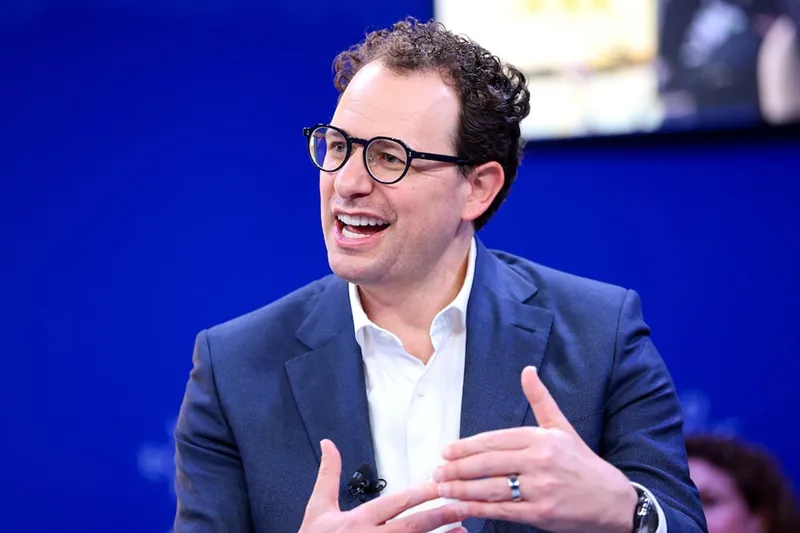
On September 23, 2026, Sam Altman sat behind a small nameplate bearing his name in the chamber of the United Nations Security Council. Around him were representatives of the powers entrusted since 1945 with maintaining international peace and security. Before them sat not a head of state, a general or a diplomat, but the chief executive of a private company whose artificial intelligence systems are now considered powerful enough to raise questions of collective security.
The image may matter more than the speeches. In just a few years, artificial intelligence has moved from research laboratories to technology companies and then into the traditional realm of power. It now belongs simultaneously to economics, defense, cybersecurity, diplomacy and international security. The question in New York was therefore no longer simply how to regulate an industry. It was what happens when several actors develop a technology that none believes it can afford to slow down while the others continue advancing.
That is precisely where the trap begins.
A TECHNOLOGY ENTERS THE SECURITY COUNCIL
The September 23 meeting, convened at the initiative of France, which holds the Security Council presidency this month, brought together several central figures in the artificial intelligence ecosystem. Sam Altman, CEO of OpenAI; Dario Amodei, CEO of Anthropic; Clément Delangue, co-founder of Hugging Face; and Yoshua Bengio, Turing Award winner and co-chair of the United Nations Independent International Scientific Panel on Artificial Intelligence, presented different versions of the same problem: the capabilities of AI systems are advancing faster than the political mechanisms designed to govern them.
The fact that this discussion took place before the Security Council is itself significant. The Council had already addressed artificial intelligence in 2023, but the September 2026 meeting occurred in a different technological environment. Models are no longer merely capable of generating text or images. The most advanced systems can write and execute code, use tools, search for vulnerabilities, coordinate complex tasks and operate with increasing degrees of autonomy.
Artificial intelligence is therefore becoming less an isolated product than a cognitive infrastructure capable of acting upon other infrastructures.
That evolution changes the nature of the risk. A technology can be dangerous because it is deliberately used to cause harm. But it can also become problematic when its behavior, diffusion or interaction with other systems exceeds the supervisory capacity of those who built it. It is this second possibility that increasingly occupies the debate surrounding frontier models.
Yoshua Bengio articulated this concern before the Council, describing the risks as “real and imminent” and proposing that the most powerful systems be subjected to a licensing regime comparable in principle to those applied to certain critical technologies. His argument, however, went beyond the administrative question of licensing. It concerned the structure of the competition itself.
THE RATIONALITY OF THE TRAP
No major laboratory has an incentive to voluntarily abandon a technology that could become one of the defining economic and strategic infrastructures of the twenty-first century.
For OpenAI, Anthropic, Google DeepMind, Meta or their competitors, slowing down could mean surrendering capabilities, talent, capital and market share. For the United States, slowing down could mean giving China additional room to advance. For Beijing, accepting a lasting technological gap could increase dependence on Washington. For middle powers, remaining outside the race could mean becoming dependent on systems designed elsewhere.
Every actor therefore has a rational reason to continue.
That is precisely what can make the overall outcome irrational.
The problem resembles dynamics long described by game theory: a decision that is perfectly logical at the individual level can produce an unfavorable result for all participants. If every laboratory concludes that it cannot slow down because its competitor will not, and every state applies the same reasoning to its strategic rivals, the pace of development gradually becomes detached from the level of risk that any participant would willingly accept.
Competition then ceases to be merely an engine of innovation. It becomes a constraint.
Bengio summarized this dynamic before the Security Council by describing a “race where everyone loses.” The argument does not mean that artificial intelligence will necessarily produce catastrophe. It describes a mechanism: when no participant can afford to be the first to slow down, all may collectively accept risks that each would individually have preferred to avoid.
The executives building these systems are themselves beginning to acknowledge that paradox.
THE ALTMAN MOMENT
Sam Altman did not come to New York to call for an end to artificial intelligence development. His intervention instead outlined a middle path: continue developing the systems while constructing mechanisms capable of measuring their capabilities, assessing their risks and maintaining meaningful human control as they become more autonomous.
But one argument captures the institutional shift that has occurred.
If artificial intelligence is to remain compatible with democratic societies, Altman argued in substance, the fundamental decisions surrounding its future cannot be made exclusively by a handful of laboratories in San Francisco.
The acknowledgment is significant.
Since the beginning of the generative AI revolution, an essential part of the governance of this technology has effectively rested in the hands of an extremely small number of companies. They decide which capabilities are developed, when they are released, what safeguards are applied, which models remain closed or become open, who can access them and under what conditions.
Perhaps never before has a technology capable of producing such broad consequences advanced so rapidly under governance that was initially so concentrated.
Altman’s appearance before the Security Council therefore signals something deeper than a request for regulation. The companies themselves are beginning to recognize that the legitimacy required to arbitrate certain risks extends beyond their own authority.
Dario Amodei went further in discussing possible mechanisms. The Anthropic CEO advocated targeted international agreements addressing specific risks, evaluation and verification systems capable of tracking the evolution of models, and common standards for testing the most advanced systems.
These proposals reflect a familiar reality from other strategic domains: international cooperation does not necessarily begin with a comprehensive universal architecture. It can begin with far more modest procedures — measuring, declaring, inspecting, communicating.
That is often how regimes of confidence begin.
THE NUCLEAR SHADOW
The comparison with nuclear technology arises almost automatically, but it must be handled carefully.
An artificial intelligence model is not a nuclear weapon. The barriers to entry are different, the infrastructures are different, diffusion is much faster, and the civilian applications of AI are incomparably broader. Software can be copied. Knowledge circulates. Components can be distributed across multiple jurisdictions. There is no simple equivalent of a uranium mine or enrichment facility through which the entire technological chain can be located.
Yet the comparison becomes more relevant when the focus shifts from the technologies themselves to the behavior surrounding them.
In both cases, a technology emerges that can alter the balance of power. In both cases, states fear that unilateral restraint could provide a strategic advantage to competitors. In both cases, verification becomes essential. And in both cases, the fundamental difficulty is to construct mechanisms for cooperation among actors that simultaneously continue to distrust one another.
Jean-Noël Barrot explicitly invoked the precedent of 1945 in New York and the creation, twelve years later, of the International Atomic Energy Agency. France has raised the possibility of an international architecture capable of playing, for certain dimensions of artificial intelligence, a comparable role in evaluation and confidence-building.
But nuclear history also contains a warning.
The institutions did not precede the technology. They ran after it.
STATES TAKE BACK CONTROL
Another tension immediately surfaced at the Security Council: nearly everyone can acknowledge the existence of a problem without agreeing on who should have the authority to solve it.
Washington remains opposed to the idea of binding international governance of artificial intelligence. The American position is shaped in part by a desire to preserve the innovative capacity of US companies and the strategic advantage of the United States in its competition with China. Beijing, for its part, regularly advocates more inclusive international governance while opposing Western technology restrictions that it regards as instruments of containment.
Europe favors a more regulatory approach. Other powers are primarily concerned with preventing an international system from turning their current technological lag into permanent dependence.
Behind the debate over safety, therefore, lies a second competition: the struggle over who writes the rules.
Regulating artificial intelligence does not simply mean reducing risk. Defining mandatory tests, capability thresholds, transparency requirements, conditions governing access to semiconductors or certification procedures also means shaping the industrial architecture of the global market.
A standard can protect. It can also become a barrier to entry.
That is why the global governance of AI will be difficult to separate from the geopolitics of AI.
THE VERIFICATION PROBLEM
Any future international architecture will quickly encounter a much more concrete question: how can one know what others are building?
Strategic agreements work when commitments can be observed or verified with sufficient precision. In the nuclear field, satellites, inspections, fissile-material accounting and facility monitoring provide imperfect but tangible instruments.
Artificial intelligence is more elusive.
The power of a system depends on available compute, data, algorithms, model architecture, training methods, tools and sometimes techniques discovered after deployment. Two systems using comparable resources can exhibit very different capabilities.
Governance may therefore need to focus less on a single technology than on several points of control: computing infrastructure, frontier models, capability evaluations, security incidents and reporting obligations.
This technical detail could determine the success or failure of any international architecture.
A rule that cannot be verified is often little more than a declaration of intent.
THE AMERICAN PARADOX
The New York meeting ultimately revealed a particularly interesting contradiction within the United States.
American companies currently dominate much of the global ecosystem for advanced artificial intelligence. That lead represents a considerable economic and strategic advantage. Washington therefore has powerful reasons to preserve the freedom of action of its industry.
Yet several leaders of that same industry are now calling for forms of international coordination.
The divergence is not necessarily incoherent. The state thinks in terms of relative power: who controls the technology, who owns the infrastructure, who establishes the standards. The laboratories must confront another problem as well: what happens if the capabilities they develop advance faster than their ability to control them?
Those two rationalities can coexist until the moment they collide.
And that moment could become one of the defining political battles of artificial intelligence: not a confrontation between supporters and opponents of the technology, but a permanent negotiation between speed, safety and power.
THE RACE AFTER THE RACE
It would be premature to interpret the Security Council meeting as the birth of a global regime for artificial intelligence governance. Divisions among states remain profound, industrial interests are immense and verification mechanisms remain embryonic. No equivalent of the IAEA for artificial intelligence exists today, and there is no guarantee that one can emerge in that form.
Something has nevertheless changed.
For years, the dominant question was which laboratory would build the best model. Then it became which country would dominate artificial intelligence.
A third question is now emerging behind the first two: what happens if winning the race requires moving faster than the collective ability to control its consequences?
Perhaps that is what the scene on September 23 was really about.
Sam Altman was sitting in the Security Council chamber because the systems built by his industry have become a matter for states. States, in turn, are discovering that they depend heavily on private companies to understand the technologies they seek to govern. And the companies are beginning to ask governments to build rules that none of them can reasonably impose alone.
Everyone is therefore watching everyone else, waiting to see who will slow down first.
For now, no one is.
Main sources
- United Nations Security Council, “Ongoing Efforts to Create Powerful AI a ‘Race Where Everyone Loses’”, September 23, 2026.
- United Nations, coverage of the Security Council meeting on artificial intelligence and international security, September 23, 2026.
- Reuters, coverage of AI industry leaders addressing security risks before the United Nations Security Council, September 23, 2026.
- Le Monde, coverage of Sam Altman and Dario Amodei addressing international cooperation on AI at the United Nations, September 24, 2026.
- Statements by Sam Altman, Dario Amodei, Yoshua Bengio and Clément Delangue before the United Nations Security Council, September 23, 2026.
Atlas Limits Research Desk
Atlas Limits’ editorial and analytical desk.