For nearly two months, production of one of the world's major long-haul freighter aircraft was brought to a standstill by a dispute with a component supplier. Not a design failure, a global shortage of raw materials, or a major technical breakdown, but a limited set of structural parts essential to wing assembly was enough to disrupt an industrial operation involving thousands of workers and substantial capital commitments. For Boeing, the conflict with American supplier Vaero exposes a vulnerability extending well beyond a temporary production interruption. It raises fundamental questions about the architecture of the company's supply chain and could accelerate a shift toward bringing critical manufacturing activities back under direct control.
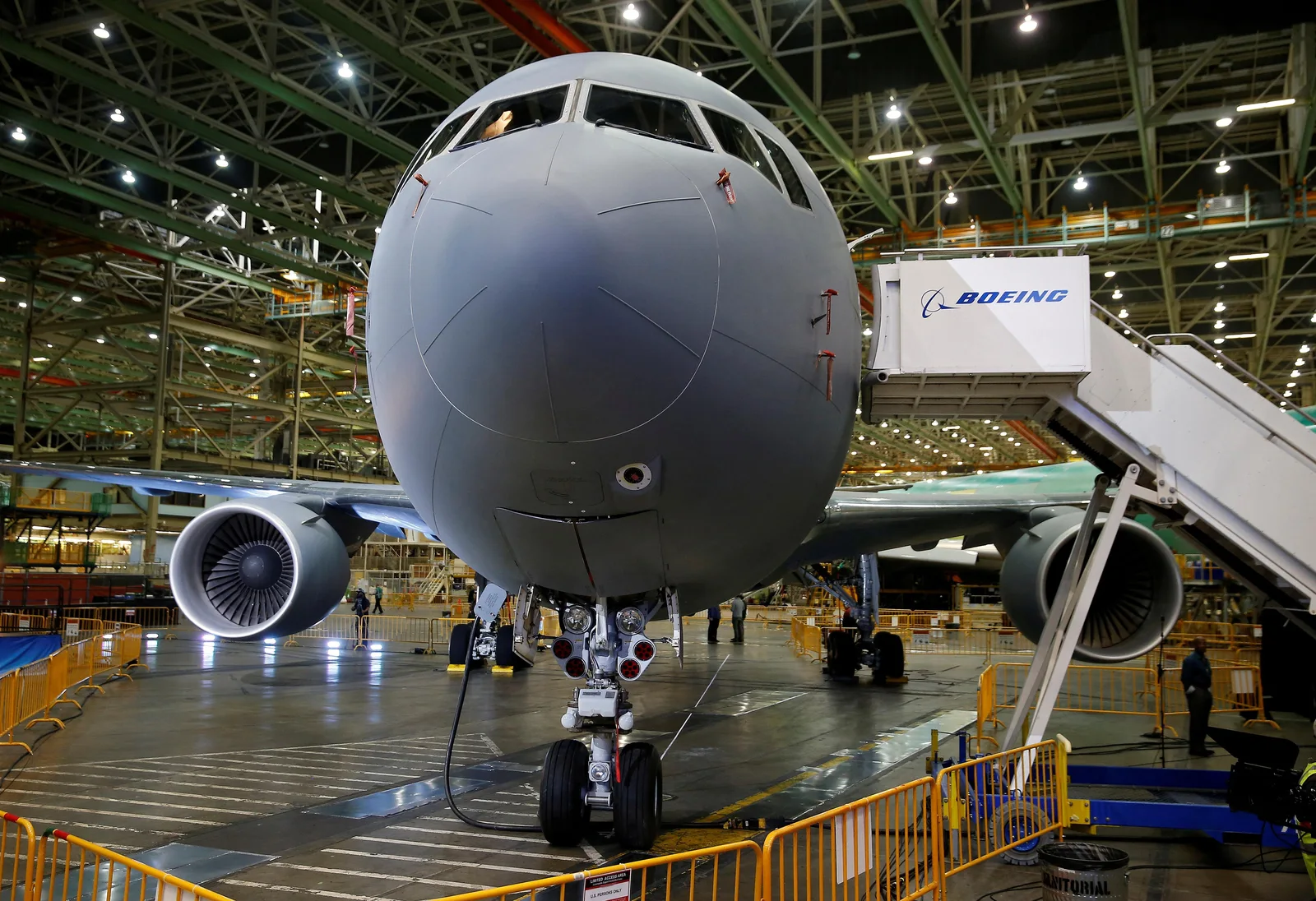
On October 23, 2026, Reuters reported that production of Boeing 777 freighters remained suspended following a contractual dispute with Vaero, despite a settlement reached between the companies in late September. The conflict concerns structural components known as trailing-edge rib kits, which are essential to the assembly of certain wing sections. Vaero had been the sole supplier of these components for the affected programs. The disruption also extended to Boeing 767 production, including cargo aircraft and the KC-46 military aerial refueling tanker.
According to court documents reviewed by Reuters, Boeing estimated in August that the interruption could cost the company as much as $6.5 million per day. This figure represented an estimate submitted in legal proceedings, not a definitively established accounting loss. Nevertheless, it illustrates the scale of the industrial imbalance: a corporation generating tens of billions of dollars in annual revenue can find several strategically important programs exposed by the unavailability of a relatively small number of components.
A Dependence Built Over Decades
Modern aerospace manufacturing operates through an extensively fragmented production system. Aircraft manufacturers retain responsibility for overall design, systems integration, final assembly, and certification, while vast networks of specialized suppliers produce the structures, equipment, electronics, and mechanical components required for each aircraft.
This organization reflects a longstanding economic rationale. Outsourcing allows manufacturers to distribute investment requirements, access specialized expertise, reduce certain fixed capital commitments, and transfer part of the manufacturing risk to subcontractors. In an industry where developing a new aircraft can require several billion dollars and many years of engineering, supplier specialization has become an essential feature of the business model.
Yet the efficiency of this arrangement depends on one fundamental condition: continuity of supply.
When a component can be obtained from several qualified manufacturers, disruptions can theoretically be absorbed by reallocating orders. When a single company controls production, the entire program becomes dependent on that supplier's ability and willingness to maintain deliveries.
This dependence is particularly pronounced in aerospace, where components cannot simply be substituted at will. Manufacturing processes, materials, dimensional tolerances, traceability requirements, and quality controls are embedded in rigorous certification frameworks. Replacing a supplier therefore involves considerably more than transferring engineering drawings to another factory. It requires tooling, technical expertise, approved manufacturing procedures, and the ability to demonstrate compliance with applicable standards.
A sole-source supplier consequently occupies a distinctive position. Its products may account for only a modest fraction of an aircraft's total manufacturing cost while remaining indispensable to completing the aircraft.
The Boeing–Vaero dispute illustrates precisely this asymmetry between the economic value of an individual component and its importance to the continuity of an entire production system.
Two Months of Disruption Despite a Legal Settlement
The dispute prompted Boeing to initiate legal proceedings in August, accusing Vaero of interrupting deliveries of essential components. The companies eventually reached a settlement in late September.
However, resolving the legal disagreement did not immediately restore industrial operations.
According to three employees interviewed by Reuters, production of the 777 freighter had still not resumed as of October 23. Boeing reportedly had to remove two partially assembled aircraft from its production line, including one intended for FedEx, according to aviation data examined by the news agency. Deliveries of certain components for the 767 program had meanwhile resumed.
This distinction is critical. A settlement between companies can resolve litigation without immediately restoring the physical conditions required for manufacturing. Inventories must be replenished, components delivered and inspected, interrupted operations rescheduled, and assembly sequences reorganized.
The duration of an aerospace production disruption cannot be measured solely by the period during which manufacturing equipment remains idle. It also affects a succession of interdependent operations whose restoration may require additional weeks.
The consequences can extend to upstream suppliers, logistics providers, testing teams, and customers whose delivery schedules depend on contractual commitments.
For the 777 freighter, the disruption comes in a market where dedicated widebody cargo aircraft represent expensive assets with particularly long replacement cycles. A delayed delivery can force an operator to extend the service life of older aircraft, revise capacity plans, or adjust investment decisions.
An industrial interruption thus becomes a commercial, financial, and logistical problem.
The Financial Cost of an Immobilized Production Line
The $6.5 million daily estimate presented by Boeing in court provides an indication of the potential financial exposure.
On a purely arithmetic basis, that amount would equal $195 million over thirty days and $390 million over sixty days. These calculations should not be interpreted as estimates of losses actually incurred. They merely extend an alleged daily maximum without accounting for changes in operations, actual expenditures, or potential compensation mechanisms.
The distinction matters because the financial effects of a production stoppage take several forms.
The first involves direct operating costs: employees, facilities, equipment, and resources that continue to generate expenses while production fails to advance normally. The second concerns disruption-related expenditures, including the relocation of incomplete aircraft, modifications to manufacturing sequences, and the work required to restart operations.
A third category involves cash flow. In commercial aerospace, aircraft deliveries are critical milestones for collecting a substantial portion of the purchase price. Postponements can therefore weigh on liquidity generation even when customer orders remain intact.
Finally, delays may produce contractual or commercial consequences whose magnitude depends on individual customer agreements.
It would nevertheless be incorrect to treat all these effects as permanent revenue losses. An aircraft delivered several months late may still generate the expected revenue, while some additional costs may eventually be recovered or compensated.
The more enduring risk lies elsewhere: the deterioration of industrial predictability.
For an aircraft manufacturer operating programs that extend over several decades, production stability is a strategic asset. It shapes relationships with airlines, freight operators, suppliers, investors, and public authorities.
Boeing Considers Bringing Production In-House
The most consequential element of the October 23 revelations concerns Boeing's potential industrial response.
According to two sources cited by Reuters, the aircraft manufacturer was seeking to bring production of the structural assemblies previously supplied by Vaero under its own control.
Such a decision would represent a form of vertical integration: an activity previously entrusted to an independent supplier would be performed directly by the manufacturer.
This is not an announced acquisition of Vaero. No corporate takeover was disclosed in the information examined. The distinction is essential because bringing production in-house can take several forms, including developing proprietary manufacturing capacity, transferring tooling, reallocating existing facilities, or establishing a new industrial organization.
Neither the cost nor the implementation timetable or investment requirements of this potential move had been disclosed. Boeing did not comment on the information gathered by Reuters, while Vaero did not respond to the agency's requests for comment.
Nevertheless, the possibility reflects a change in industrial logic.
Under an outsourcing model, the manufacturer seeks to optimize the distribution of investment and operational responsibilities. Under a more integrated structure, it accepts greater direct fixed costs in exchange for stronger control over the availability, quality, and continuity of critical components.
The central question is no longer simply who can manufacture a part at the lowest cost. It becomes who should control its production to ensure the continuity of the entire aircraft program.
This shift may appear paradoxical in an industry that has spent decades expanding specialization and subcontracting. Yet it reflects a familiar reassessment of industrial risk: when the potential cost of interruption exceeds the savings generated by outsourcing, direct control of an activity may regain its economic justification.
Still, the ability to manufacture a component must be distinguished from the ability to produce it quickly, consistently, and in compliance with aerospace requirements. Bringing production in-house would not automatically eliminate technical or organizational difficulties. It would transfer responsibilities currently carried by the supplier to Boeing itself.
The Spirit AeroSystems Precedent
This debate emerges against a broader backdrop of changes to Boeing's industrial perimeter.
In 2024, the company announced an agreement to acquire Spirit AeroSystems, one of its principal suppliers of aircraft structures, in an all-stock transaction valued at approximately $4.7 billion. The total transaction value, including debt, was presented at around $8.3 billion.
That transaction addressed issues distinct from the Vaero dispute, particularly manufacturing quality, industrial coordination, and control over production processes. Yet it reflected a related concern: the difficulty of managing critical operations when execution depends on legally and operationally separate entities.
Outsourcing is not inherently defective. It functions successfully across numerous industrial sectors, including the manufacture of highly sophisticated aerospace components. But it requires robust contractual relationships, sufficient visibility into supplier capabilities, and mechanisms capable of preventing or absorbing disruptions.
Boeing's experience demonstrates that an aircraft manufacturer can retain ultimate responsibility for safety, compliance, and deliveries without exercising direct control over every process that determines those outcomes.
This separation between final responsibility and operational control represents one of the central tensions in contemporary aerospace manufacturing.
Reintegrating selected activities can reduce that tension, but it does not eliminate manufacturing risks. A factory owned directly by the aircraft manufacturer can also encounter quality problems, capacity constraints, and productivity difficulties.
Vertical integration is therefore not an absolute guarantee. It represents a trade-off between different categories of risk.
A Vulnerability Extending Beyond Commercial Aviation
The Vaero case has an additional dimension: the disruptions also affected the 767 program, from which Boeing's KC-46 military aerial refueling tanker is derived.
This connection between commercial aviation and defense programs increases the strategic importance of shared suppliers.
The economies of scale pursued by aircraft manufacturers frequently rely on common infrastructure, technical expertise, and supply chains. The same industrial network can support multiple aircraft families, both civilian and military.
Such integration distributes costs but also creates interdependencies. A failure affecting one component, facility, or supplier can propagate across programs serving different customers, operating under different schedules, and subject to different contractual obligations.
In defense manufacturing, these dependencies raise a particular question: security of supply is no longer solely a matter of corporate performance, but also of governments' ability to obtain equipment they have ordered.
This does not mean the Boeing–Vaero dispute caused an operational breakdown in American military capabilities. The available information does not support such a conclusion. It does, however, demonstrate how a commercial disagreement between private companies can affect an industrial supply chain that also supports military programs.
The boundary between supplier management and strategic resilience consequently becomes increasingly narrow.
Vertical Integration as a New Dimension of Competitiveness
For decades, industrial competitiveness was frequently assessed through unit-cost reductions, capital efficiency, and the optimization of global subcontracting networks.
These criteria remain essential. Yet supply disruptions, geopolitical tensions, certification constraints, and growing demands for industrial security have progressively increased the importance of another variable: the cost of interruption.
A supplier may offer competitively priced components while representing a disproportionate risk if no credible replacement exists.
The appropriate industrial response is therefore not necessarily to internalize every sensitive activity. Such a strategy would substantially increase capital requirements, complicate capacity management, and potentially undermine the benefits of specialization.
Instead, manufacturers must identify the points at which dependence becomes excessive.
Several responses are available: supplier diversification, strategic inventories, contractual protection of manufacturing tooling, development of alternative capacity, and selective vertical integration.
In aerospace, however, each option encounters qualification, certification, and production-rate constraints. A second supplier does not provide meaningful redundancy if it lacks the capacity to assume production within an operationally acceptable timeframe.
Vertical integration can therefore become economically attractive for components whose critical importance far exceeds their financial weight.
For Boeing, the challenge will be to determine whether the permanent costs associated with in-house production are justified by the reduction in exposure to future disruptions.
That assessment will depend on expected production volumes, required investment, available expertise, and the remaining industrial life of the affected programs.
Without precise information on these variables, it would be premature to conclude that internal manufacturing is necessarily the most profitable option. The Vaero dispute nevertheless provides a compelling argument for reconsidering the architecture of critical supply relationships.
An Industry Confronting Its Own Industrial Choices
The Boeing–Vaero case comes at a time when major aircraft manufacturers must simultaneously control costs, stabilize production rates, improve quality, and respond to fleet replacement requirements extending over several decades.
These objectives can conflict.
Increasing production requires suppliers capable of investing and expanding capacity. Reducing costs can encourage manufacturers to concentrate orders among a limited number of partners. Strengthening resilience, by contrast, requires financing additional capabilities that may remain underutilized during normal operating conditions.
Industrial performance can therefore no longer be measured solely by the cost of manufacturing an aircraft. It must also reflect the ability to sustain production under adverse conditions.
That is precisely what the interruption of the 777 freighter program reveals. The vulnerability did not necessarily originate in the aircraft's most expensive or technologically sophisticated system, but in a structural component whose absence prevented normal assembly operations from continuing.
The contractual dispute may have been settled, but its industrial consequences continue to raise questions about supplier concentration, tooling control, delivery continuity, and the manufacturer's ultimate responsibility.
If Boeing proceeds with its reported plan to manufacture the affected components internally, the decision will not signal the end of aerospace outsourcing. Rather, it would illustrate a transition toward a more selective model in which manufacturers seek direct control over activities presenting the greatest systemic risk to their programs.
Aerospace manufacturing cannot function without extensive networks of specialized suppliers. Yet it cannot indefinitely accept a situation in which the prolonged unavailability of a single component can immobilize entire aircraft production lines.
Between these two constraints, a different definition of industrial competitiveness is emerging.
For decades, outsourcing helped reduce the visible costs of manufacturing. The Boeing–Vaero dispute demonstrates that the dependencies created by this model also carry a price, sometimes substantial, which becomes fully apparent only when deliveries stop.
For Boeing, the challenge is no longer simply to restart an assembly line. It is to determine which parts of its industrial system must remain under its direct control so that the production of an entire aircraft does not depend so heavily on a single outside company.
Principal Sources
- Reuters, October 23, 2026 — Investigation into the Boeing–Vaero dispute, the interruption of 777 freighter production, court documents, and the possibility of bringing component manufacturing in-house.
- Boeing–Vaero court proceedings, August–September 2026 — Legal filings and estimates of financial exposure, as reported by Reuters.
- Boeing, July 1, 2024 — Announcement of the agreement to acquire Spirit AeroSystems and its industrial rationale.
- Boeing Commercial Airplanes — Corporate documentation on the 777 Freighter and 767 Freighter programs.
- Boeing Defense, Space & Security — Corporate documentation on the KC-46A Pegasus program.
Atlas Limits Research Desk
Atlas Limits’ editorial and analytical desk.