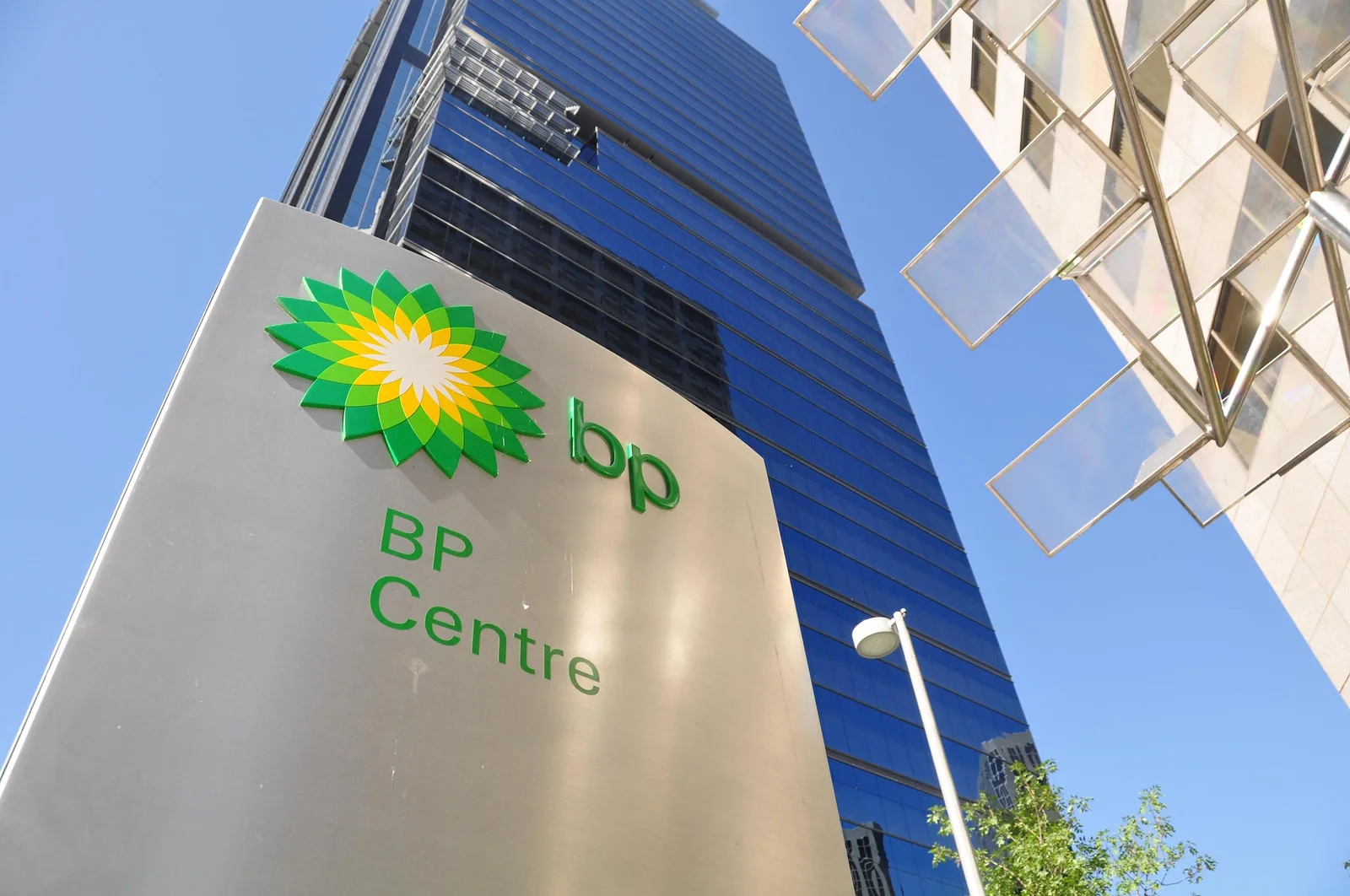
The sale of a controlling stake in Castrol to US investment firm Stonepeak illustrates a profound transformation of the energy industry. Between debt reduction, strategic refocusing and the growing influence of private capital, BP is redefining the boundaries of its industrial portfolio. The transaction raises a broader question: what should major oil companies continue to own to remain competitive?
A historic brand enters a new era
For more than a century, Castrol has accompanied the evolution of mobility and industry. From early automotive engines to modern industrial equipment, the British lubricants brand has established itself in a sector where technical reputation, distribution networks and customer loyalty are assets as important as manufacturing capacity.
Its transition to majority ownership by Stonepeak marks a new chapter in this industrial history.
On November 2, 2026, BP completed the sale of a 65% stake in Castrol to the US investment firm, retaining a minority interest of 35%. The original agreement, announced in December 2025, valued the business at approximately $10.1 billion on an enterprise-value basis.
BP expects to allocate approximately $6 billion in net proceeds from the transaction to strengthening its balance sheet, primarily through debt reduction.
The transaction therefore does not represent a complete separation. It changes the nature of BP's involvement in Castrol: from direct industrial control, the group moves to a minority financial position that preserves exposure to the company's future value.
This distinction is essential. BP is not necessarily questioning the economic attractiveness of lubricants. Instead, it has chosen to release a substantial portion of the capital tied up in the business to support other financial and industrial priorities.
Capital becomes a strategic resource
Major oil companies have historically built their strength through vertical integration. Exploration, production, refining, petrochemicals, distribution and specialty products formed an industrial system designed to control much of the energy value chain.
This structure followed a clear industrial logic: securing supplies, diversifying risks and capturing margins at several stages of hydrocarbon processing.
But integration also comes at a cost. Every business requires capital, demands investment and creates trade-offs between activities with sometimes very different return profiles.
For BP, the question is no longer simply which businesses are profitable. It is which businesses justify the continued commitment of the group's capital under majority ownership.
Castrol has precisely the characteristics of an asset capable of attracting outside investors. Its business model rests on a globally recognized brand, specialized formulations, established commercial relationships and recurring maintenance requirements. Lubricants remain essential to the operation of much of the world's industrial equipment, combustion-engine vehicles and machinery.
Yet the business does not necessarily need to remain under the control of an oil major to continue developing.
The transaction illustrates an important evolution in the management of energy conglomerates: the value of a business is no longer sufficient, by itself, to justify retaining control. Its strategic contribution, capital requirements and the valuation that an outside investor is willing to assign to it have become decisive.
Debt reduction as a source of strategic freedom
The intended use of the sale proceeds reveals another dimension of the transaction.
In an industry exposed to volatile oil and gas prices, debt is more than an accounting constraint. It determines investment capacity, resilience during market downturns and management's freedom to make strategic decisions.
A company with a strong balance sheet can maintain industrial investment during periods of weak commodity prices, finance opportunistic acquisitions or absorb unexpected expenditures. Conversely, excessive debt can force defensive decisions precisely when markets offer opportunities for expansion.
By allocating a significant portion of the Castrol proceeds to debt reduction, BP is seeking to improve that flexibility.
The group is accepting the loss of part of the business's future cash flows in exchange for an immediate improvement in its financial structure. The economic benefits of the transaction will therefore depend not only on the price received but also on lower financing costs and the capacity to redeploy capital more productively.
The trade-off is nevertheless significant.
Lubricants can generate revenues that are less directly correlated with crude oil prices than exploration and production activities. By reducing its exposure to Castrol, BP also reduces the contribution of a business capable of diversifying its earnings.
Strategic simplification may improve the group's financial profile and make its business model easier for investors to assess. But depending on the composition of its remaining portfolio, it could also increase exposure to certain energy cycles.
Simplification is therefore not automatically equivalent to risk reduction. It changes the nature of the risks a company carries.
Stonepeak and the expanding boundaries of infrastructure capital
Stonepeak's acquisition of control over Castrol deserves an interpretation extending beyond the oil industry.
Historically, infrastructure investors concentrated on physical assets associated with relatively predictable revenues: electricity networks, pipelines, port terminals, digital infrastructure and transportation facilities.
Their investment universe has gradually expanded toward businesses whose value rests on essential industrial functions, durable commercial relationships and recurring demand.
Castrol is not infrastructure in the traditional sense. Its operations remain exposed to competition, raw-material prices, industrial cycles and technological change. Yet the continuing need for lubrication and the scale of its commercial network offer characteristics that may appeal to long-term investors.
For Stonepeak, the challenge will be to translate that industrial position into sustainable value creation without weakening innovation capabilities, distribution relationships or product competitiveness.
The change in ownership could create opportunities for new investment and commercial development. It also introduces a different governance structure, in which growth decisions, potential acquisitions and capital allocation will be evaluated against the objectives of the new controlling shareholder.
This development belongs to a broader movement: businesses once considered inseparable from large industrial groups are becoming autonomous companies financed and governed by specialized investors.
Private capital is no longer merely financing the infrastructure of the global economy. It is increasingly participating directly in the reorganization of its industrial value chains.
Oil industry expertise for an independent company
The appointment of Ben van Beurden, former chief executive of Shell, as chairman of Castrol's board adds another dimension to the transaction.
Van Beurden led Shell from 2014 to 2022, overseeing one of the world's largest energy companies during a period marked by oil-price volatility, portfolio restructuring and intensifying debates over the energy transition.
His arrival at Castrol illustrates how industrial expertise can continue to circulate beyond the traditional boundaries of major oil companies.
An independent lubricants producer faces many challenges familiar to integrated energy groups: securing raw materials, developing specialized formulations, managing international operations, meeting environmental requirements and adapting to changes in mobility.
Experience across these markets can help guide a company whose ownership is changing while its underlying industrial constraints remain.
This continuity highlights a fundamental distinction between ownership and expertise. A business leaving the controlling perimeter of an oil major does not necessarily lose its connections to the industrial ecosystem from which it emerged.
The energy transition does not eliminate the need for lubricants
The transformation of the automotive market is central to Castrol's long-term prospects.
The gradual electrification of vehicles reduces certain requirements associated with combustion engines, particularly conventional engine oils. At the same time, it creates new needs in thermal management, specialized fluids and component protection.
Meanwhile, a substantial share of the global vehicle fleet will continue to rely on internal combustion engines for many years. The pace of fleet replacement depends on household incomes, charging infrastructure, public policy and the availability of alternative technologies.
Industry also retains structural lubrication requirements. Machine tools, mining equipment, manufacturing facilities, turbines and transmission systems all require products designed to withstand specific conditions of temperature, pressure and durability.
The future of lubricants therefore cannot be reduced to a confrontation between combustion engines and electric vehicles.
It will depend on manufacturers' ability to remain competitive in established markets while developing solutions adapted to new industrial technologies.
For Castrol, greater strategic autonomy could facilitate specialized partnerships and investment. But that autonomy will also require sufficient financial discipline to preserve research capabilities, commercial networks and product quality.
Value creation will not depend solely on a new ownership structure. It will depend on the company's ability to defend its industrial position in a changing market.
Oil majors are redrawing their boundaries
The sale of a majority stake in Castrol reflects a question confronting the energy industry as a whole.
For decades, diversification was an instrument of corporate strength. Owning complementary businesses allowed oil companies to extend their geographic reach, stabilize certain revenue streams and control more segments of the industrial economy.
Today, investors are placing greater emphasis on returns on invested capital, cash generation, financial discipline and portfolio coherence.
This evolution does not necessarily lead every company toward the same business model. Some continue to favor integration, others are developing electricity and energy-transition infrastructure, while several groups are increasing investment in hydrocarbons.
But all face a common question: which assets must remain under direct ownership, and which could be valued more efficiently by other investors?
The answer depends on each company's industrial advantages, financial constraints and assessment of future markets.
For BP, the sale of control over Castrol represents a significant trade-off between diversification and concentration. It releases financial resources without completely abandoning its economic interest in a historic business.
For Stonepeak, the acquisition provides access to a global industrial company whose potential will depend as much on managing its existing operations as on technological adaptation.
For Castrol itself, the transaction opens a new period in which the brand must demonstrate that it can continue developing outside the majority control of an integrated oil company.
A new geography of industrial ownership
The BP–Castrol transaction ultimately reveals a transformation extending far beyond energy.
Large industrial groups are no longer necessarily the permanent owners of the businesses they have developed. Global brands, distribution networks and specialized industrial companies can change control without losing their economic function.
Ownership is becoming more mobile, while industrial expertise, commercial infrastructure and underlying demand operate over much longer time horizons.
This separation creates opportunities for financing and specialization, but it also raises a fundamental question: can the pursuit of more efficient capital allocation preserve the long-term investments required for industrial competitiveness?
The answer will emerge over time, through Castrol's ability to invest, innovate and maintain its international position under its new ownership structure.
For BP, the challenge will be different. The group must demonstrate that the financial resources released by the transaction contribute to building a stronger balance sheet and a more competitive industrial portfolio.
Because behind the sale of a controlling stake lies a deeper transformation: energy giants are not merely redefining what they produce. They are redefining what they choose to own.
Atlas Limits Research Desk
Atlas Limits’ editorial and analytical desk.