BRICS is often discussed through a spectacular question: can it overturn the Western-dominated international order?
The question may be the wrong one.
It assumes that one order must replace another, that a coherent coalition must succeed the existing centres of power, and that BRICS would need to become some kind of Global South equivalent of the G7 before acquiring genuine strategic significance. Its evolution suggests something different.
BRICS is neither a military alliance nor a common market nor a political union. It has no supranational authority comparable to the European Union. It brings together states whose political systems, alliances, economic structures and, in some cases, strategic interests differ profoundly. Some maintain close relations with Washington; others are subject to American sanctions. China and India cooperate within BRICS while remaining strategic competitors. Iran and the United Arab Emirates do not approach the regional balance of power from the same position. Brazil has no reason to reproduce Russian or Chinese foreign policy.
And yet BRICS continues to expand, develop mechanisms of cooperation and attract additional countries.
That paradox is precisely what makes the group important.
Its cohesion does not necessarily depend on what its members want to build together. Increasingly, it rests on what they want to be capable of doing without systematically depending on the same centres of power.
From a financial acronym to a political platform
BRIC was not originally an organisation at all.
The acronym emerged in 2001 in a Goldman Sachs analysis identifying Brazil, Russia, India and China as major emerging economies whose growing weight could progressively reshape the global economy. The governments concerned eventually appropriated a category originally invented by Western finance.
The first BRIC summit was held in 2009. South Africa subsequently joined, turning BRIC into BRICS.
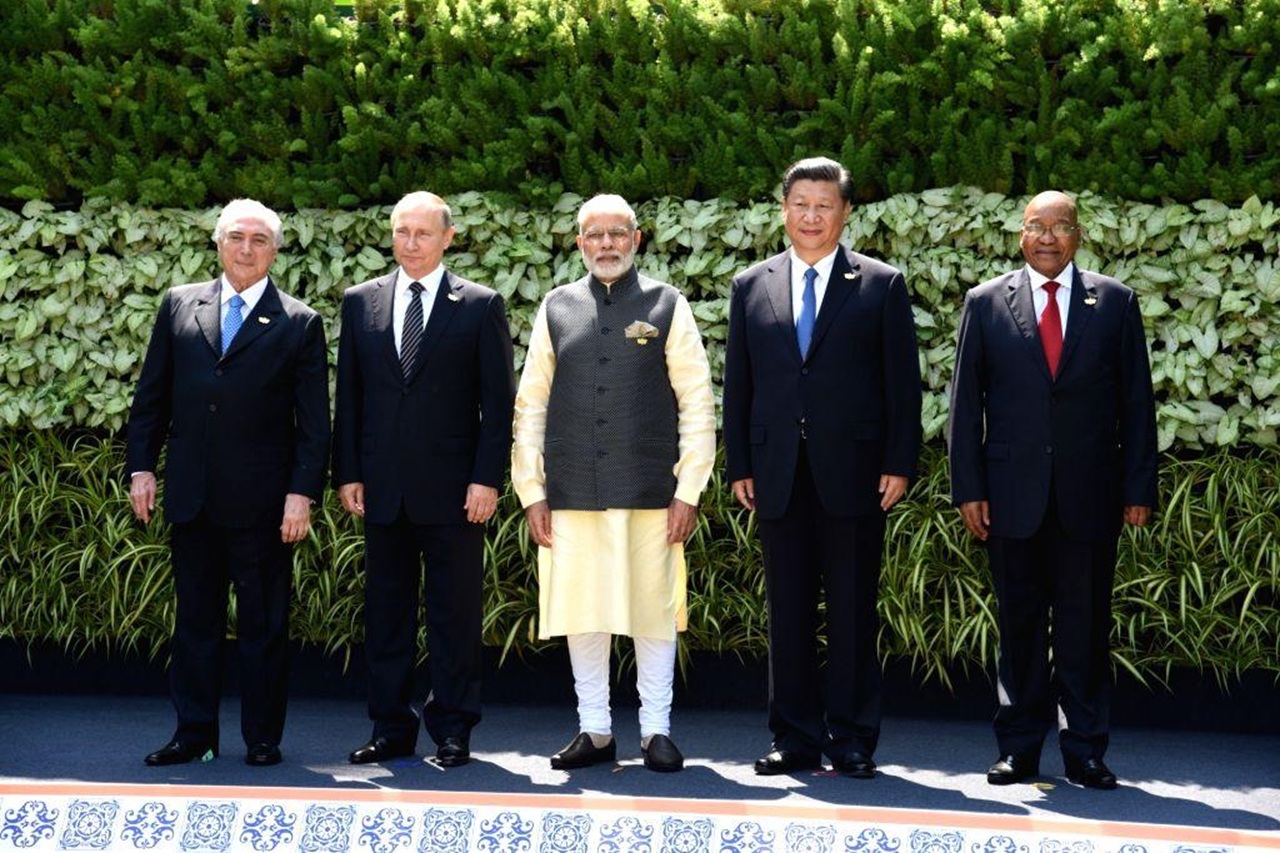
For much of the following decade, the format could still be understood primarily as a diplomatic forum bringing together emerging powers seeking greater influence within international institutions. Recent expansion has changed its nature. Egypt, Ethiopia, Iran, the United Arab Emirates and Indonesia have joined the original core. Saudi Arabia, meanwhile, has maintained a more ambiguous position regarding the definitive formalisation of its membership, a reminder that the group's expansion is not always as institutionally straightforward as some maps suggest.
At the September 2026 New Delhi summit, the joint declaration reaffirmed three pillars: political and security cooperation, economic and financial cooperation, and cultural and people-to-people exchanges. It also gave increasing importance to partner countries and relations with emerging markets and developing economies.
Expansion is changing the geography of the group.
China and India provide enormous demographic, industrial and commercial weight. Russia and Iran possess major energy resources and strategic positions across Eurasia. Brazil combines agricultural, mineral and energy power. South Africa retains an important position within Africa's financial and industrial architecture. Indonesia adds another major Asian economy, critical mineral resources and a strategic position across several maritime routes. The United Arab Emirates is a global financial, logistical and energy hub. Egypt controls access to the Suez Canal.
Individually, these countries pursue very different national strategies.
Collectively, however, they occupy a substantial part of the world's resource, energy, industrial production, transport and consumption chains.
That is where the real BRICS story begins.
The trap of enormous numbers
Comparisons between BRICS and Western economies regularly produce spectacular statistics.
Share of global population, GDP at purchasing-power parity, energy production, commodity reserves or contribution to global growth: depending on the indicator selected, the group already represents a major proportion of the world economy.
These figures matter. But they become misleading when transformed into direct measures of collective power.
A dollar of GDP measured at purchasing-power parity is not equivalent to a dollar that can be mobilised in international financial markets. A large population does not automatically create common economic power. Oil reserves located across several sovereign states do not constitute a coordinated energy policy. Adding together the foreign trade of China, India, Brazil and the UAE does not create a single market.
The distinction between economic mass and institutional capacity is essential.
The United States possesses exceptionally deep financial markets, the world's dominant reserve currency, common federal institutions and a financial system capable of absorbing enormous volumes of capital. The European Union possesses a single market, a common body of commercial law, supranational institutions and, for most of its members, a common currency.
BRICS possesses nothing equivalent.
But it may not need such structures to progressively alter parts of the global economic system.
De-dollarisation without a BRICS currency
Nothing illustrates the misunderstanding surrounding BRICS better than the currency debate.
The idea of a "BRICS currency" capable of directly challenging the dollar regularly returns to public discussion. Such a project, however, would require a degree of economic and institutional convergence that the group does not possess: a common central bank, shared monetary rules, mechanisms for managing economic imbalances, sufficiently deep and liquid financial assets, currency convertibility and sustained investor confidence.
The path actually being pursued is considerably less spectacular — and potentially much more realistic.
The New Delhi Declaration does not establish a common currency. Instead, it calls for further work by the BRICS Payment Task Force on more efficient cross-border payment mechanisms. It explicitly addresses the interoperability of payment and financial messaging systems and the expansion of trade and investment settlement in members' local currencies, while recognising that there is no single solution suitable for every member.
The distinction is fundamental.
The strategy does not require replacing the dollar.
It requires making the dollar less indispensable for certain transactions.
An Indian company purchasing goods from a partner in another BRICS economy does not necessarily need a new supranational currency if the financial infrastructure allows a larger part of the transaction to be settled directly in rupees, renminbi or another national currency. The same logic can apply to project financing, banking settlement and certain cross-border investments.
The international monetary system can therefore become more fragmented without the dollar ceasing to occupy its centre.
That is probably the more credible scenario: not sudden de-dollarisation, but a gradual reduction in the number of transactions for which passing through the dollar is technically or economically unavoidable.
Building the pipes before changing the system
The same logic can be seen across several BRICS financial initiatives.
The New Development Bank, established by the five original members, is the most tangible institution within this emerging ecosystem. It finances infrastructure, energy, water, transportation and other development projects. In 2026, it reports 139 approved projects representing $42.9 billion in financing.
Its scale remains modest compared with the World Bank and the major established international financial institutions. But its operations reveal the direction of travel.
Local-currency financing has become a strategic priority. By 2026, the bank said local-currency operations had approached 30% and was working, among other initiatives, on developing bond issuance in Indian rupees. Its stated objective is to reduce foreign-exchange risks for borrowers while contributing to deeper domestic capital markets.
The New Delhi Declaration extends this infrastructure logic further. It addresses cross-border payments, settlement and depository systems, a new investment platform, stronger reinsurance capacity and improvements to the Contingent Reserve Arrangement, designed to provide members with liquidity during periods of financial pressure.
Individually, none of these mechanisms transforms the international financial order.
Developed together over ten or twenty years, however, they could produce something considerably more consequential: an additional layer of international financial infrastructure.
That is where the structural potential of BRICS lies.
The power of having an option
For several decades, much of the international economic architecture has operated around a relatively concentrated collection of institutions, currencies, financial markets, payment systems, rating agencies, correspondent banks and standards largely structured around the United States and its allies.
This does not mean those institutions are exclusively Western, nor that emerging economies are excluded from them. China, India, Brazil and the other major economies of the Global South remain deeply integrated into the existing global economy.
But integration also creates dependencies.
The financial sanctions imposed on Russia following its invasion of Ukraine demonstrated with particular force that financial infrastructure can become an instrument of geopolitical power. American technology restrictions on China produced a comparable lesson in semiconductors. Trade tensions have shown that market access itself can become a strategic variable.
For many states, the response is therefore not necessarily to leave the existing system.
It is to possess an alternative.
Another bank. Another settlement currency. Another trade route. Another technology supplier. Another payment system. Another source of financing.
Each additional option reduces marginal dependence on any single existing system.
The power of BRICS may therefore reside less in its ability to construct an alternative world order than in its ability to make any single order less indispensable.
China is indispensable — and simultaneously the central problem
This evolution contains a fundamental contradiction: China.
No serious analysis of BRICS can treat its members as economically equivalent. China's industrial, commercial and financial depth is of an entirely different scale from that of most other participants.
It is therefore indispensable to any significant increase in the group's economic weight.
But precisely because China is considerably more powerful than most of its partners, it creates an obvious political problem.
Why would India want to replace excessive dependence on Western infrastructure with dependence on infrastructure dominated by Beijing?
Why would Brazil, the UAE or Indonesia want to enter a system whose rules were primarily determined by China?
This question helps explain some of BRICS' institutional caution.
India, in particular, has an interest in preserving a multipolar format rather than allowing the organisation to become a vehicle for Chinese geopolitical power. New Delhi simultaneously maintains relationships with the United States, Europe, Russia, Japan, the Gulf monarchies and the wider Global South. It also participates in the Quad alongside the United States, Japan and Australia.
BRICS therefore provides India with something very different from an alliance.
It provides another platform.
The same logic can be observed among several other members.
The United Arab Emirates can deepen its relationship with China while maintaining substantial economic, financial and security ties with the United States and Europe. Brazil can demand reform of global governance without breaking with Washington. Indonesia can participate in BRICS without abandoning its tradition of strategic non-alignment.
This ambiguity is not simply a weakness.
It is part of the group's operating principle.
The return of non-alignment — in another form
The twentieth century produced the Non-Aligned Movement in a world organised around two superpowers.
The twenty-first century may be producing a different form of non-alignment.
It no longer necessarily means maintaining equal distance between two blocs. Interdependencies are too extensive and coalitions too fluid. Instead, it increasingly means participating simultaneously in several architectures.
A state can use the dollar, receive European capital, purchase Chinese technology, import Russian energy, cooperate militarily with the United States, borrow from multilateral institutions and belong to BRICS.
Such behaviour can appear contradictory when viewed through the logic of blocs.
It becomes entirely rational when viewed through the logic of strategic autonomy.
Every additional relationship increases the number of available options.
BRICS then becomes less a coalition than an instrument of geopolitical diversification.
Energy changes the equation as well
Expansion reinforces this dimension in commodities and energy.
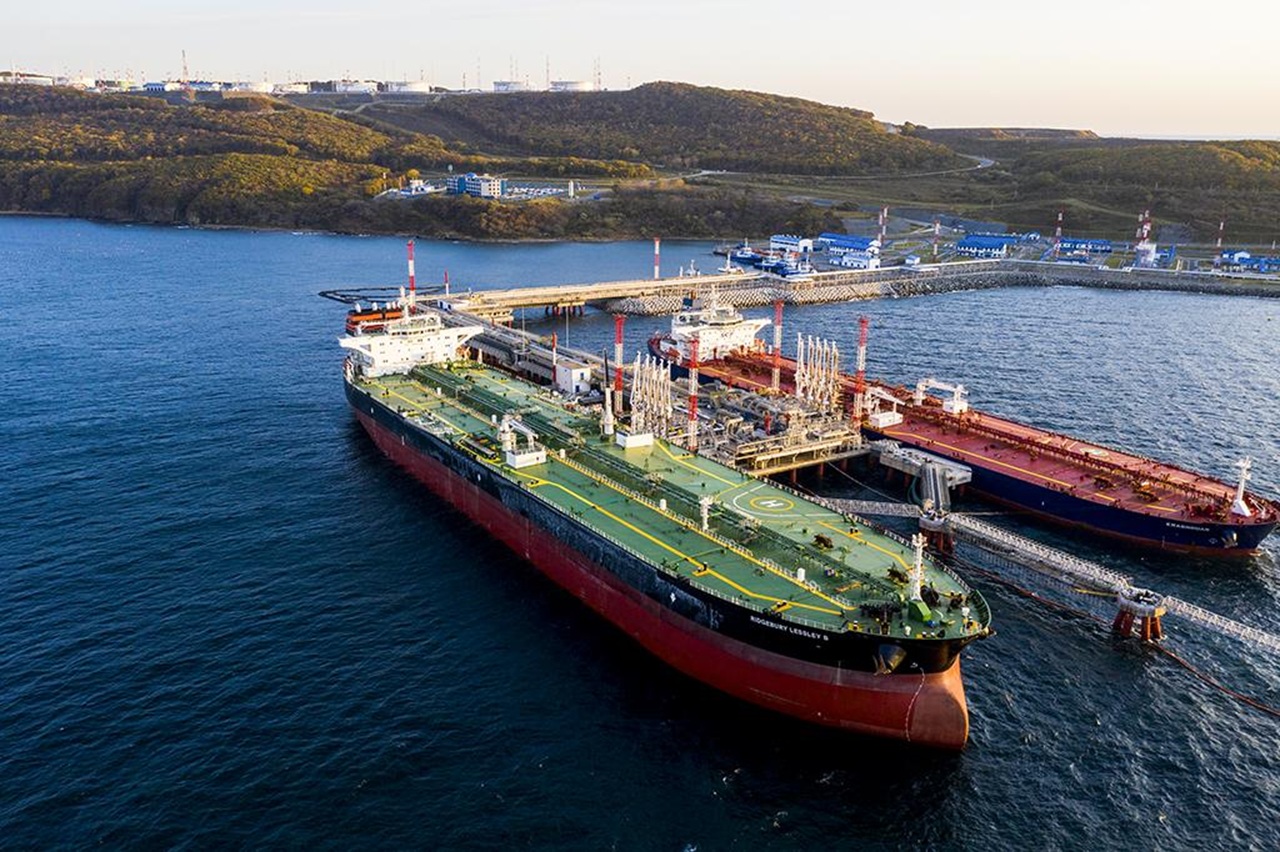
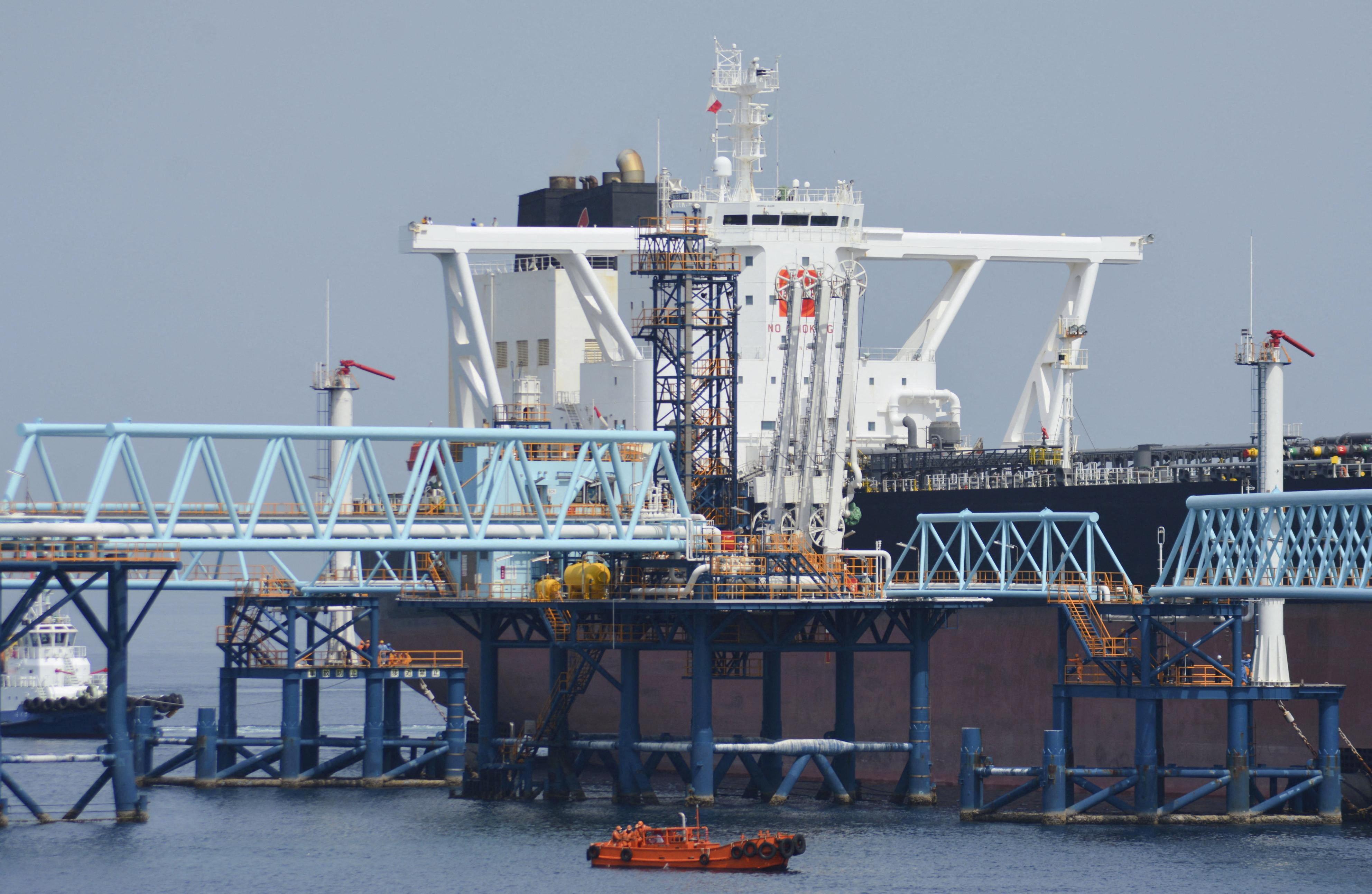
The coexistence of major producers and major consumers creates an unusual economic geography. China and India are among the world's largest energy importers. Russia, Iran and the UAE are major hydrocarbon producers. Brazil is expanding oil production while maintaining a highly diversified energy system. Indonesia occupies an important position in several strategic commodities, notably nickel.
This does not mean that a common BRICS energy policy is emerging.
The interests are too divergent.
Importers generally favour affordable prices; exporters seek stronger revenues. Some members participate in OPEC or OPEC+, while others do not. Their industrial, climate and energy strategies differ substantially.
But once again, BRICS creates additional spaces for transactions.
A world in which more energy contracts can be financed, insured, transported and settled through several infrastructures is different from one in which most of these operations depend upon a limited number of channels.
The change is less visible than a military treaty.
It may prove more durable.
A coalition of the dissatisfied?
It would nevertheless be excessive to describe BRICS as the homogeneous political expression of the "Global South".
The Global South itself is not a bloc.
Its states do not have identical interests or economic models. Some seek to reform existing institutions; others primarily want greater influence within them. Some openly challenge American power; others maintain close partnerships with Washington.
The New Delhi summit illustrated this again.
The joint declaration calls for reform of global governance and greater representation for emerging markets and developing economies. It also criticises the proliferation of unilateral tariff and non-tariff measures and reaffirms the importance of multilateralism.
Finding common language on geopolitical crises is much more difficult.
The simultaneous presence of countries with sharply different regional interests limits how far BRICS can go in transforming broad principles into common strategic positions. Its declarations therefore tend to favour restraint, dialogue, diplomacy and reform over the binding geopolitical commitments associated with conventional alliances.
That compromise captures the nature of BRICS remarkably well.
Its members can agree that the international order should provide more room for their interests without agreeing on what that order should ultimately become.
What BRICS is not
Two opposing interpretations are therefore equally insufficient.
The first predicts the imminent collapse of the Western order and the emergence of a BRICS bloc capable of replacing it. It transforms genuine structural trends into an institutional revolution that has not occurred.
The second dismisses BRICS as essentially symbolic because its members are too different to form a genuine alliance.
That interpretation underestimates the possibility that an organisation can become influential precisely without becoming an alliance.
BRICS does not need a common foreign policy to facilitate settlement in national currencies.
It does not need a common army to finance infrastructure.
It does not need a common central bank to develop domestic bond markets.
It does not need a single market to increase trade among its members.
And it does not need to eliminate the dollar to reduce certain dependencies on the dollar.
That may be the most important characteristic of the project.
The world is not switching systems — it is layering them
The emerging international order may therefore prove less spectacular than narratives of a historic global "shift" suggest.
The dollar could remain the world's leading international currency while accounting for a smaller proportion of certain transactions. The World Bank and IMF could retain central functions while the New Development Bank and other institutions expand. Western capital markets could remain indispensable even as South-South financial flows increase. The United States could remain the world's foremost financial power while possessing less infrastructural exclusivity.
The old institutions would not disappear.
New layers would be added to them.
This process of accumulation may ultimately matter more than identifying some hypothetical moment when BRICS "overtakes" the West.
International power is not simply a matter of possessing more GDP, oil, people or factories.
It is also about determining which infrastructures others must use.
For several decades, a significant proportion of those infrastructures has been concentrated around Western economies.
BRICS is gradually experimenting with something else: not necessarily constructing a system capable of replacing the existing one, but creating enough parallel routes that no single route remains absolutely compulsory.
The process will be slow. It will encounter Sino-Indian rivalry, economic asymmetries, regulatory differences, currency-convertibility constraints, the incomparable depth of American capital markets and the group's own geopolitical contradictions.
Those limitations do not make the phenomenon insignificant.
They reveal its nature.
BRICS is not becoming powerful because its members are becoming alike.
It is becoming important because profoundly different countries are discovering that they can share certain infrastructures without sharing the same vision of the world.
And if that architecture continues to develop, the decisive transformation may not be the emergence of a new centre of the international system.
It may be the gradual disappearance of the assumption that there has to be only one.
Main sources
- Government of India / Prime Minister's Office, BRICS New Delhi Declaration: Building for Resilience, Innovation, Cooperation and Sustainability, 12 September 2026.
- New Development Bank, institutional data and project portfolio, 2026.
- New Development Bank, strategy and communications on local-currency financing, 2026.
- New Development Bank, Investor Presentation, February 2026.
- Reuters, coverage of the 18th BRICS Summit and the New Delhi Declaration, 12 September 2026.
Atlas Limits Research Desk
Atlas Limits’ editorial and analytical desk.