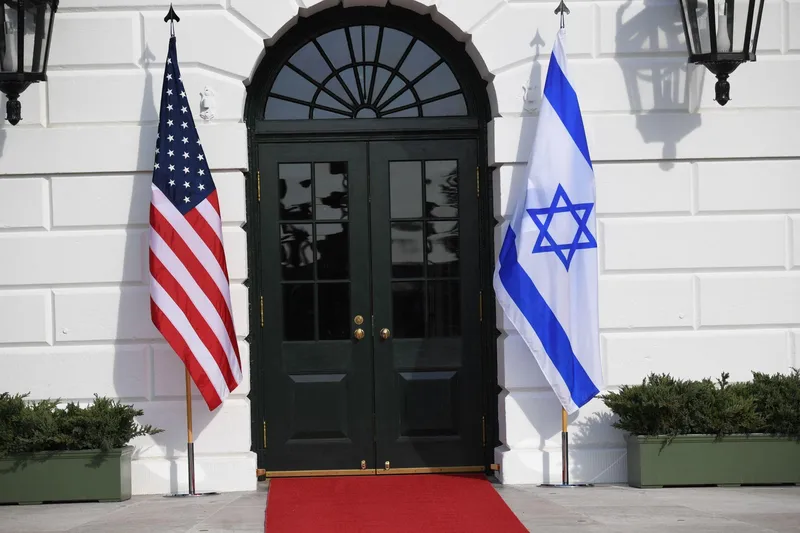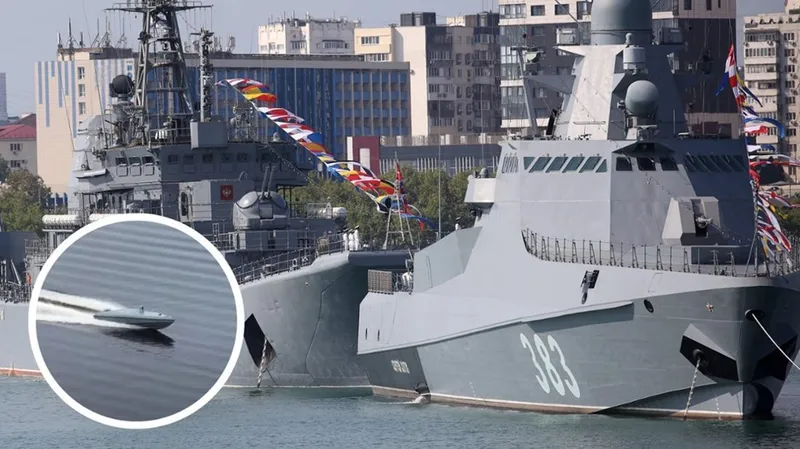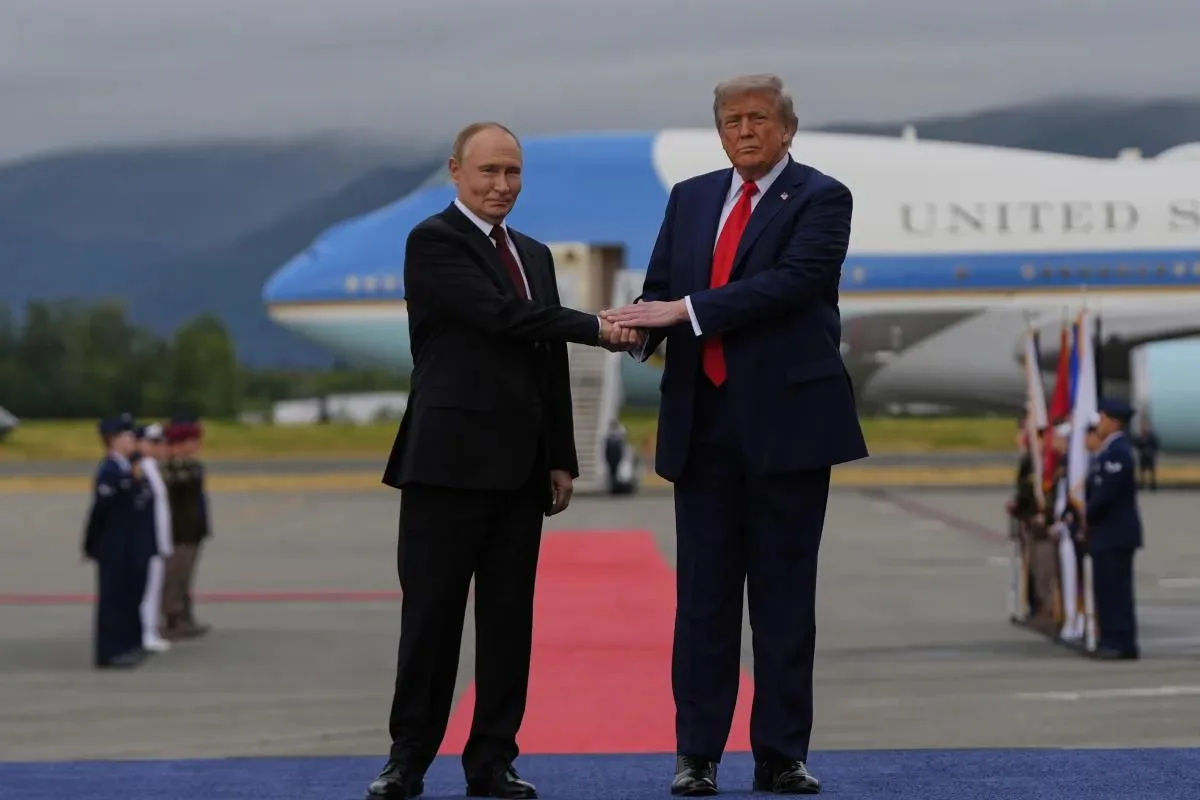
As Donald Trump raises the prospect of a settlement between Russia and Ukraine, European concerns reveal a much broader issue: the war could become the starting point for a renegotiation of the continent's security architecture. Behind the prospect of peace lies a deeper question: who will establish the rules of the European order, and what guarantees will ensure that they are respected?
Peace in Ukraine could ultimately confront Europe with a problem larger than the war itself. On November 5, 2026, following a meeting at the White House with Kirill Dmitriev, an envoy of Russian President Vladimir Putin, Donald Trump raised the prospect of an agreement extending beyond Ukraine's borders and potentially involving the entire European continent. The following day, he asserted that Moscow and Kyiv were now, in his view, willing to reach a settlement. These statements, received with concern in several European capitals, do not yet amount to the foundations of an agreement. They nevertheless suggest a possible shift in the diplomatic center of gravity: from negotiations intended to end the fighting toward discussions concerning the very foundations of European security.
This development is far from insignificant. Since Russia's invasion in February 2022, Western governments have generally presented Ukraine's defense as inseparable from the principles underpinning the European order: state sovereignty, the inviolability of borders, the freedom to choose alliances, and the rejection of territorial changes imposed by force. Yet the prospect of a comprehensive arrangement between Washington and Moscow raises precisely the question European governments had sought to avoid: could the continent's security once again become the subject of negotiations between major powers, potentially restricting the strategic freedom of the states situated between them?
The Return of an Old Negotiation
To understand the significance of the American initiative, it is necessary to return to December 2021. Two months before the full-scale invasion of Ukraine, Moscow published two draft treaties, one addressed to the United States and the other to NATO. Russia demanded, among other things, guarantees against further enlargement of the Atlantic Alliance, restrictions on certain military deployments, and limitations on Western military activity in several regions considered sensitive by the Kremlin.
These proposals therefore extended well beyond Ukraine. They sought to reorganize the security arrangements established since the end of the Cold War, particularly those resulting from NATO's expansion into Central and Eastern Europe. For Moscow, the objective was to secure recognition of specific security interests near its borders. For the European countries concerned, however, these demands threatened to turn their sovereignty into an adjustable variable in Russian-American relations.
Negotiations in early 2022 failed to resolve these contradictions. The United States and its allies expressed willingness to discuss arms control, military transparency, and risk reduction, but rejected the idea that Moscow should possess a veto over other countries' alliance choices. Russia's subsequent invasion fundamentally transformed the context without eliminating the strategic objectives underlying the Kremlin's demands.
Nearly five years later, the issue has returned under different circumstances. The war has transformed Russian military capabilities, accelerated European rearmament, and prompted Finland and Sweden to join NATO. It has also deepened Ukraine's dependence on Western assistance while exposing the limitations of Europe's ability to sustain an independent military and diplomatic strategy.
The possibility of a new security architecture therefore emerges on a continent profoundly transformed by conflict. It cannot simply restore previous arrangements: those arrangements have themselves been disrupted by the war.
Washington Broadens the Framework
American statements on November 5 and 6 suggest that the Trump administration is seeking to move beyond strictly territorial negotiations. Jared Kushner, involved in American diplomatic efforts, has discussed the search for practical arrangements addressing the security concerns of the different parties and potentially establishing a durable framework for European stability.
At the same time, American representatives have participated in consultations in Brussels with Ukrainian, European, and NATO officials. Further discussions involving American, Russian, and Ukrainian representatives are being considered in Abu Dhabi during the following week.
These initiatives reveal diplomacy operating on several levels. The first concerns the immediate conditions for ending hostilities: occupied territories, a ceasefire, monitoring arrangements, and guarantees for Ukraine. The second concerns relations between Russia and Western powers: military deployments, sanctions, mechanisms for preventing incidents, and possibilities for economic cooperation. The third, more ambitious level concerns the future organization of security across the continent.
The rationale for broadening the negotiations is understandable. A ceasefire that leaves the political and military causes of confrontation unresolved could remain fragile. Lasting risk reduction requires verification mechanisms, communication channels, and sufficiently precise commitments to limit the possibility of escalation.
Yet broadening the negotiations also carries risks. By linking a Ukrainian settlement to concessions concerning Europe's security architecture, Washington could open a negotiating space in which questions belonging to the sovereignty of other states become diplomatic bargaining chips. The pursuit of a more comprehensive peace could consequently make an agreement on the war itself more difficult.
There is also a dimension specific to Trump's diplomatic approach. The American president favors visible political agreements and direct negotiations, sometimes before institutional mechanisms and implementation guarantees have been fully defined. This approach can unlock entrenched situations, but it can also generate announcements whose apparent significance exceeds the commitments actually accepted by the parties.
At this stage, no public text establishes whether Washington envisages a limited arms-control arrangement, a new consultation structure with Moscow, or a more substantial revision of Europe's military balance. Treating these possibilities as equivalent would attribute a degree of precision to American statements that they do not yet possess.
Russia and the Recognition of Its Power
For Moscow, the opening of discussions on European security would already represent an important diplomatic achievement. For years, the Kremlin has sought to persuade Washington that continental stability cannot be organized without accommodating Russian security demands. Russian authorities have portrayed the war in Ukraine as a consequence of the failure to achieve this objective, although that justification does nothing to alter Moscow's responsibility for invading a sovereign state.
The distinction between legitimate security concerns and spheres of influence lies at the heart of the problem.
Every state may seek guarantees against military threats, propose transparency measures, or negotiate reciprocal limitations on certain weapons systems. But recognizing security concerns does not necessarily mean recognizing a right to control the political and military decisions of neighboring countries.
Part of Russia's prewar demands rested precisely on this ambiguity. By seeking lasting restrictions on NATO enlargement and certain Western deployments, Moscow aimed not only to reduce military risks but also to acquire structural influence over the strategic choices of other states.
The question therefore becomes one of reciprocity. An agreement establishing military exercise notifications, incident-prevention mechanisms, or mutual and verifiable limitations could contribute to stability. An arrangement imposing unilateral restrictions on Ukraine or certain NATO members, without equivalent guarantees, could instead institutionalize an asymmetry of sovereignty.
The Kremlin appears aware of the advantages offered by broadening the discussion. On November 6, its spokesman Dmitry Peskov acknowledged that Europeans would eventually need to participate in discussions concerning their security, while emphasizing their difficulties in defining common representation.
This position allows Moscow to endorse the principle of broader negotiations without abandoning its territorial demands. Russia continues to seek Ukrainian concessions in Donbas, while strikes against Ukrainian energy infrastructure remain an instrument of military and economic pressure.
Negotiations therefore do not replace the war. They can also become an extension of it.
Europe Confronts Its Own Contradiction
The European response was swift. Several officials insisted that the continent's security future could not be decided without the states concerned and that no weakening of NATO commitments should be accepted as the price of an agreement with Russia.
This position is consistent with the principles defended since 2022. It nevertheless reveals an older difficulty: Europe demands a central role in decisions determining its security, while remaining heavily dependent on American capabilities to make that security credible.
The contradiction is particularly visible in the military sphere. Despite rising defense budgets and new industrial initiatives, European states remain substantially dependent on the United States for several critical capabilities: strategic intelligence, space-based surveillance, missile defense, aerial refueling, strategic transport, and the coordination of certain high-intensity operations.
Nuclear deterrence adds another dimension. France and the United Kingdom possess their own nuclear forces, but the American guarantee remains an essential pillar of NATO's deterrence posture. Any modification of Washington's commitments could therefore not be compensated for simply by increasing European defense spending.
Material dependence is compounded by political fragmentation. The Baltic states and Poland place overriding emphasis on deterrence against Russia. France has long advocated the development of European strategic autonomy. Germany seeks to strengthen its capabilities while preserving transatlantic structures. Other governments place greater emphasis on dialogue or a negotiated exit from the conflict.
These differences do not necessarily mean that Europeans are incapable of reaching agreement. They reflect distinct geographical circumstances, historical experiences, and national interests. But they complicate the definition of a common mandate when negotiations simultaneously concern the war in Ukraine, NATO's future, and relations with Moscow.
The institutional problem is equally important. The European Union does not possess exclusive authority over defense. NATO includes European and North American states but does not represent Europe in its entirety. The United Kingdom plays a major military role without belonging to the European Union, while several European states retain different security arrangements and commitments.
The question of who could negotiate on Europe's behalf is therefore more than a diplomatic formality. It reflects the absence of a single political authority capable of committing the entire continent to a particular military balance.
It is precisely this fragmentation that could allow Washington to conduct negotiations whose consequences would be European, while their political direction remained American.
Ukraine, Between Peace and Sovereignty
For Kyiv, the danger of a broader agreement lies in the possibility that its interests could become secondary within negotiations between more powerful states.
Ukraine needs an end to the fighting, guarantees against another offensive, and sufficient resources to rebuild. But a ceasefire does not automatically constitute a durable peace. If occupied territories remain under Russian control, international guarantees remain vague, and Ukrainian military capabilities are restricted without credible protection mechanisms, an agreement could merely postpone the conflict.
Volodymyr Zelensky has acknowledged that certain Russian security concerns could be examined within a settlement, provided Europeans participate in the discussions. This openness should not be interpreted as acceptance of Russian demands. Rather, it reflects the need to distinguish measures of mutual stabilization from concessions that would permanently weaken Ukrainian sovereignty.
The problem of guarantees remains central. Under the 1994 Budapest Memorandum, Russia, the United States, and the United Kingdom provided security assurances relating to Ukraine's sovereignty and territorial integrity following Kyiv's relinquishment of the nuclear arsenal inherited from the Soviet Union. Those assurances did not establish a collective-defense mechanism comparable to NATO's.
That experience weighs heavily on any new negotiation. Political assurances without enforcement mechanisms may prove insufficient. Conversely, military guarantees strong enough to deter another offensive could be rejected by Moscow if perceived as indirectly integrating Ukraine into the Western military system.
The equation remains difficult: ensuring Ukraine's security without provoking another direct confrontation between Russia and NATO, while preventing the desire to avoid such confrontation from producing a permanent reduction in Ukrainian sovereignty.
The military situation further complicates prospects. Russia retains the ability to exert pressure on Ukrainian infrastructure and territory. Ukraine continues operations against Russian military and economic targets. Each side seeks to improve its position before accepting compromises.
Under these circumstances, announcing a willingness to negotiate does not necessarily demonstrate a willingness to make the concessions required for an agreement.
The Precedents of European Order
European history offers several examples of negotiations intended to stabilize relations between powers. The Congress of Vienna in 1815 sought to reconstruct a continental balance following the Napoleonic Wars. The Helsinki Final Act of 1975 established principles concerning security, cooperation, and fundamental rights in a Europe divided by the Cold War.
These precedents are frequently associated, but they embody different approaches.
The Vienna system prioritized the balance among major powers and the preservation of a political order. The Helsinki process, by contrast, combined respect for borders and non-interference with commitments concerning sovereignty, human rights, and cooperation among states.
The European order developed after 1991 attempted to extend some of these principles into a context in which the continent's division appeared capable of being overcome. The 1990 Charter of Paris, OSCE commitments, and institutional relations between Russia and NATO represented different attempts to organize cooperative security.
Their gradual erosion demonstrates that no architecture can guarantee lasting peace when its principal participants disagree on its fundamental principles or refuse to honor their commitments.
A new negotiation therefore cannot be limited to drawing security zones on a map. It would need to answer concrete questions: which states would be legally bound? Which military limitations would be reciprocal? What mechanisms would verify compliance? What consequences would follow violations? And above all, would the states concerned retain the right to determine their own strategic orientation?
Without answers, a new architecture risks becoming a diplomatic formula rather than an effective security system.
Three Possible Trajectories
In the short term, the most limited scenario would involve negotiations centered on Ukraine, accompanied by risk-reduction measures between Russia and NATO. These could include ceasefire-monitoring mechanisms, military communication arrangements, and transparency commitments. Such an approach would have the advantage of addressing certain security concerns without immediately modifying the foundations of the European order. It would nevertheless depend on a territorial and political compromise that the parties have not yet demonstrated their ability to accept.
A second trajectory would involve seeking a broader agreement linking the Ukrainian settlement to arrangements concerning military deployments, arms control, and relations between Moscow and Western powers. Such a framework could contribute to a lasting reduction in confrontation risks, provided it preserved state sovereignty and established genuinely reciprocal commitments. But it would require lengthy, complex, and politically fragile negotiations among participants who do not yet appear to share the same objectives.
The third possibility would be diplomatic deadlock. Discussions would continue without resolving the fundamental contradictions, while the war persisted in varying forms. Announcements of imminent agreements could then coexist with new offensives, strikes against infrastructure, and worsening economic and human costs. Diplomacy would serve as much to manage the conflict as to prepare its resolution.
These trajectories are not necessarily mutually exclusive. Local humanitarian measures may advance while territorial negotiations stagnate. Technical agreements to prevent military incidents may be concluded without a comprehensive political settlement. Conversely, a spectacular agreement in principle may remain ineffective if its guarantees are inadequate.
The recent local truce in occupied Oleshky illustrates this distinction. It enabled humanitarian operations and evacuations, demonstrating that limited arrangements between the parties remain possible. But their success does not establish the capacity to end a war whose territorial and strategic objectives remain incompatible.
Peace and the Power to Define It
The real novelty of the American statements does not lie in the idea that European security should be discussed with Russia. Dialogue mechanisms existed for decades, including during the most tense periods of the Cold War. It lies in the possibility that resolving the war in Ukraine could become the entry point for a broader renegotiation, driven by Washington.
This prospect confronts Europeans with a responsibility they have long been able to postpone. Rejecting an agreement considered unfavorable is not enough to define an alternative. To influence negotiations, they would need to specify the guarantees they are prepared to provide, the military capabilities they can mobilize, the compromises they consider acceptable, and the principles on which they are unwilling to yield.
The United States retains a decisive role, but its strategic priorities do not necessarily coincide with those of all its allies. Russia seeks recognition of its security interests without abandoning its territorial claims. Ukraine seeks to preserve its sovereign existence and obtain guarantees strong enough to prevent the war from recurring.
Europe thus stands at the intersection of three competing logics: America's pursuit of a settlement, Russia's ambition to redefine regional balances, and Ukraine's need to transform any ceasefire into lasting security.
None of these logics can simply be dismissed. But reconciling them requires distinguishing peace from an arrangement between powers. An agreement can halt the fighting without resolving the causes of conflict. It can stabilize certain borders while weakening the principles that protect others. It can temporarily reduce tensions while preparing the conditions for a future confrontation.
The next diplomatic exchanges may establish whether Washington possesses a sufficiently precise proposal to move beyond political declarations. For now, Russian demands, Ukrainian concerns, and European reservations remain too far apart to conclude that a new security order is emerging.
Yet one question has already become unavoidable. For decades, Europeans debated how to preserve the security architecture inherited from the end of the Cold War. They must now consider that it could be renegotiated under the pressure of a war they did not initiate and a diplomatic process they do not entirely control.
Peace in Ukraine could mark the beginning of European stabilization. It could also reveal the extent to which Europe remains dependent on other powers to define the conditions of its own security.
The issue, therefore, is not merely whether the war can end. It is what political and military order will follow, and whether Europeans will be capable of shaping that order rather than merely living under it.
Main Sources
- Financial Times, November 6, 2026 — Europe alarmed by US plans for security deal with Russia.
- Associated Press, November 6, 2026 — Donald Trump's meeting with Kirill Dmitriev and prospects for negotiations in Abu Dhabi.
- Reuters, November 6, 2026 — Kremlin statements concerning European participation in future security discussions.
- CNN, November 6, 2026 — American statements regarding a possible broader European security framework.
- Euronews, November 6, 2026 — European reactions to American proposals.
- Russian Ministry of Foreign Affairs, December 17, 2021 — Draft security-guarantee agreements with the United States and NATO.
- OSCE, 1990 — Charter of Paris for a New Europe.
- CSCE, 1975 — Helsinki Final Act.
- United Nations, 1945 — Charter of the United Nations, principles of sovereignty and peaceful settlement of disputes.
Analysis as of November 7, 2026. The diplomatic proposals discussed do not constitute a concluded agreement. The scenarios presented are analytical assessments, not confirmed commitments by the parties involved.
Atlas Limits Research Desk
Atlas Limits’ editorial and analytical desk.