Inflation, the housing crisis, generational downward mobility, fiscal austerity and institutional distrust are exposing the fractures of an economic and political order increasingly unable to absorb social tensions through its traditional mechanisms of representation. Behind widely differing national demands lies a common question: do governments still possess the economic resources and political legitimacy required to sustain the social contract?
When the Streets Become a Political Force Again
The avenues of European capitals have recovered a function that governments might have preferred to see absorbed by elections, parliamentary negotiations and institutional processes: serving as a space where public confidence in political authority is directly tested. Workers are challenging budgetary policies, students are denouncing deteriorating prospects, farmers are defending their incomes, and households confronted with rising rents are questioning the ability of public authorities to guarantee the material foundations of a stable life.
These mobilizations do not constitute a single movement. They share neither a common organization nor a unified political program. Some seek to defend existing social protections, while others demand a fundamental transformation of institutions. Some are led by established trade unions; others emerge from digital networks without identifiable leadership. Yet their proliferation raises a question that transcends national borders: why are so many societies simultaneously struggling to translate economic performance, democratic institutions and public policies into collective prospects considered acceptable by their populations?
Protest is not new. European history is marked by strikes, revolutions, student movements and social conflicts. What deserves particular attention today is the accumulation of grievances. Wage demands now intersect with concerns over housing, public debt, industrial transformation, migration, environmental policy and the ability of future generations to achieve the living standards enjoyed by their parents.
The streets have become the place where crises that governments often continue to address separately converge.
Europe and the Erosion of Its Social Compromises
Western Europe emerged from the Second World War around a historic compromise combining economic growth, rising wages, expanding public services and the development of social protection. This model took different national forms, but it rested on a broadly shared conviction: economic progress should make possible a relatively continuous improvement in living standards.
That promise has become increasingly difficult to fulfill.
Slowing productivity growth in several European economies, demographic aging, rising healthcare and pension expenditure, investment requirements in defense and infrastructure, and constraints on public financing are narrowing governments' room for maneuver. The inflationary shocks of recent years have intensified these pressures by eroding purchasing power and increasing the cost of essential goods.
Inflation can slow without prices returning to their previous levels. This economic distinction, often insufficiently explained in public debate, is a major source of frustration. A declining inflation rate means prices are rising more slowly, not that households automatically recover their purchasing power. When real wages fail to compensate fully for earlier price increases, the perception of impoverishment can persist even as macroeconomic indicators improve.
France illustrates the difficulty of these trade-offs. Debates over pensions, public finances, taxation and the distribution of fiscal adjustment have crystallized a deeper question about the legitimacy of the sacrifices being demanded. In Belgium, tensions surrounding social and budgetary reforms similarly reflect resistance to changes in the balance between public spending, employment and collective protection.
In Southern Europe, housing has become an increasingly important source of political tension. In Spain and Portugal, tourism, real estate investment, the transformation of urban centers and insufficient affordable supply have produced a contradiction: cities can experience sustained economic activity while becoming progressively unaffordable for substantial parts of their populations.
In Italy, weak real wage growth and territorial disparities form part of a longer history of limited productivity gains. In Germany, the transformation of the automotive industry, energy costs and changes to the export-oriented economic model are contributing to economic uncertainty, even if these pressures do not everywhere translate into mass demonstrations.
The diversity of these situations makes it misleading to describe Europe as experiencing a uniform crisis. Nevertheless, they reveal a shared difficulty: the social compromise is coming under new pressure just as the resources available to preserve it are becoming increasingly contested.
Autumn 2026: Signs of a Broader Mobilization
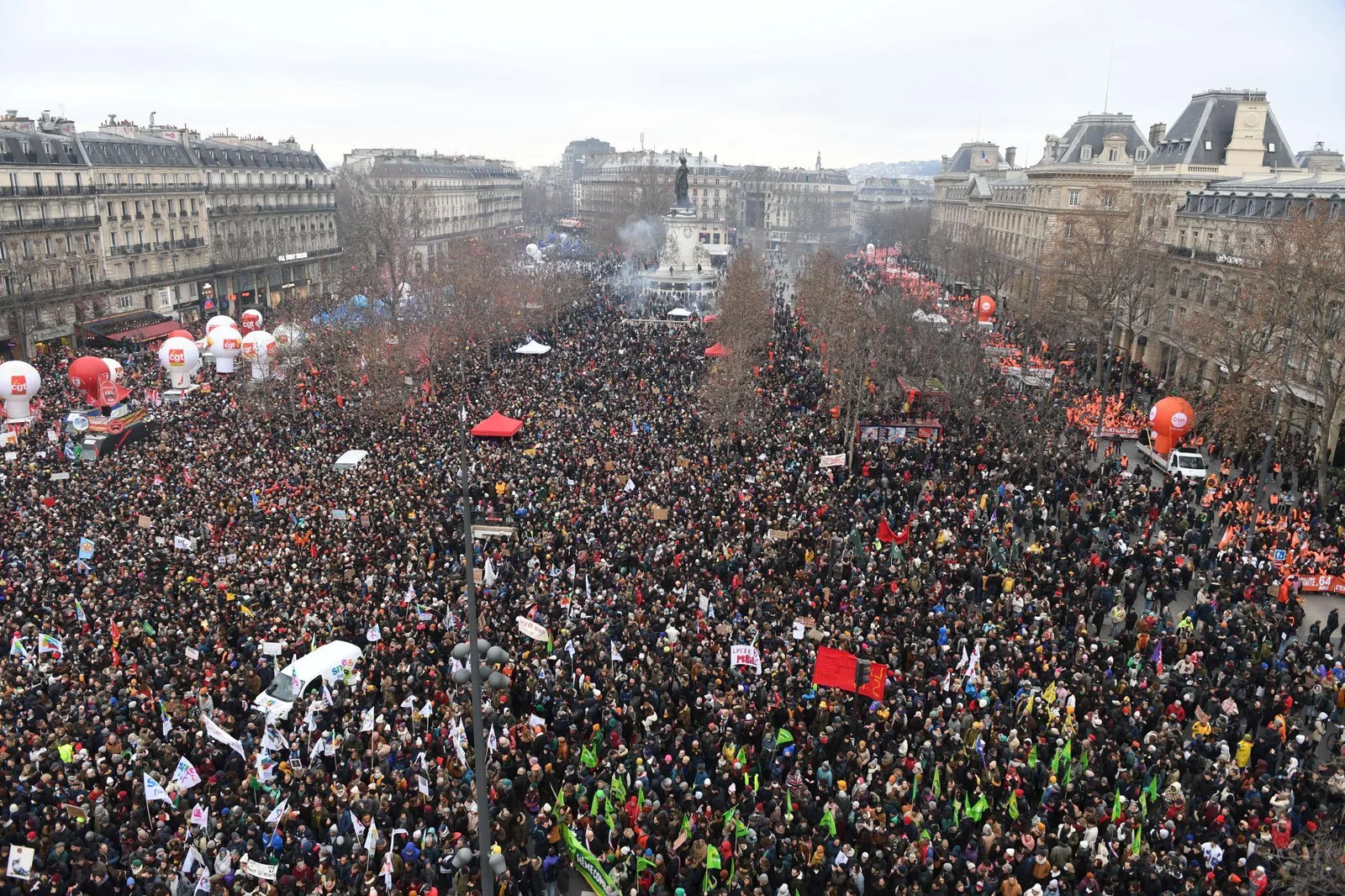
Recent developments have given these tensions a more tangible dimension. On October 24, France experienced another day of nationwide demonstrations, drawing 410,000 participants according to the Interior Ministry, while trade unions reported considerably higher figures. At least 110,000 people demonstrated in Paris. Most gatherings remained peaceful, but clashes, fires and property damage were reported in several cities. Approximately 70,000 police officers and gendarmes were deployed.
The mobilization extends beyond France. A survey published by El País on October 24 identified at least 177 demonstrations across twelve European countries between September 15 and October 23. Five countries — France, Spain, Italy, Portugal and Belgium — accounted for approximately 80% of the recorded events. Housing, education and the cost of living dominated the grievances, while corruption and institutional concerns featured more prominently in some Balkan mobilizations.
Belgium offers an example of convergence between different forms of discontent. On October 9, students joined trade unions protesting proposed government spending cuts. Concerns over higher education funding thus intersected with broader tensions surrounding social protection and public finances. In Spain and Portugal, protest encampments against the housing crisis expressed another form of rupture: the inability of parts of the working population to secure accommodation compatible with their incomes.
In Italy, student and labor mobilizations were accompanied by episodes of violence in Milan and other cities. It remains essential to distinguish between demonstrators' demands, peaceful forms of mobilization and violent actions carried out by smaller groups. Conflating them would reduce a social crisis to a public-order issue, without adequately acknowledging the seriousness of attacks against people and property.
The most significant development is therefore not simply the existence of simultaneous demonstrations. It is their capacity to bring together grievances that were previously separate. When a school protest becomes a movement against the cost of living, or when housing activism merges with broader opposition to budgetary decisions, the conflict changes character. It no longer concerns exclusively one public policy but begins to challenge the priorities of the state itself. 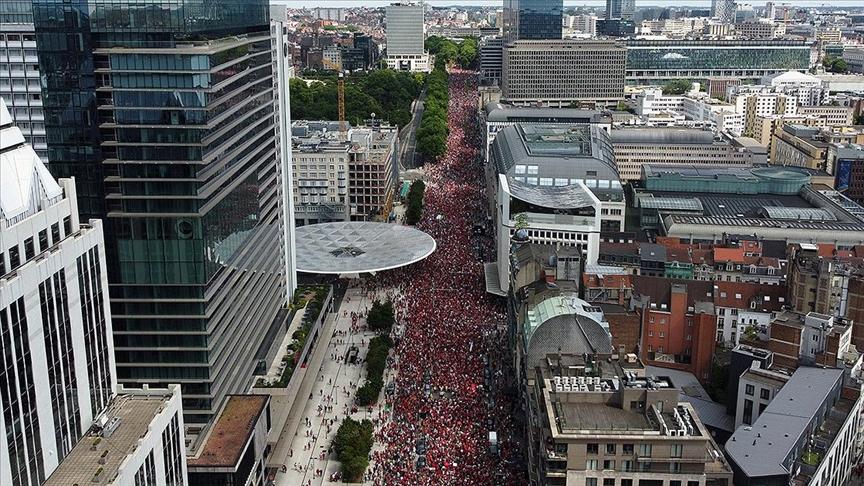
The Generational Divide: Working More Without Achieving Material Security
One of the most important features of this period is the prominent role of younger generations. Their dissatisfaction cannot be reduced to cultural opposition to institutions or a preference for digitally organized protest. It often reflects an objective transformation in the conditions under which people enter economic life.
In advanced economies, employment no longer systematically guarantees residential independence. Rising property prices in major metropolitan areas, difficulties obtaining credit, insecure employment arrangements and unavoidable living expenses are prolonging financial dependence on families. Educational qualifications, long presented as instruments of social mobility, do not always protect against relative downward mobility.
In Portugal, housing prices more than doubled between 2015 and 2024, according to official figures cited in reporting on the demonstrations. This increase has transformed real estate into a dividing line between homeowners and tenants, between generations that acquired property at lower prices and newcomers entering the market.
In French-speaking Belgium, student protests have focused particularly on budget reductions, education costs and access to public financial support. These disputes raise a question extending far beyond universities: how much of the cost of education can be transferred to individuals when the economy simultaneously demands ever-higher qualifications?
The generational divide does not mean that all young people share identical interests, or that older generations are uniformly protected. Rather, it reveals an imbalance between the expectations generated by contemporary societies and the concrete opportunities available to fulfill them.
For decades, the implicit contract offered to younger generations followed a relatively clear sequence: study, work, advance professionally, secure housing, accumulate assets and pass improved living conditions to the next generation. When several stages of that trajectory become uncertain at the same time, protest no longer concerns income levels alone. It concerns the credibility of the promise of social mobility itself.
From Asia to Africa: Different Causes, Comparable Mechanisms
The expansion of protest extends well beyond Europe, although it would be misleading to present global mobilizations as manifestations of a single generational revolution.
In Bangladesh, the 2024 student movement, initially driven by opposition to public-sector employment quotas, evolved into a major political crisis and contributed to the fall of Sheikh Hasina's government. In Nepal, the protests of 2025 combined anger over corruption, digital restrictions and opposition to political elites. In Madagascar, demonstrations in 2025 highlighted the destabilizing impact of failures in essential services, particularly water and electricity.
In Indonesia, protests focused on political privileges, inequality and government accountability. In Morocco, youth mobilizations surrounding healthcare, education and public spending priorities illustrated the tensions that can emerge when ambitious national investment programs coexist with unmet social expectations. In Peru, demonstrations also expressed profound distrust toward political elites and institutions.
The differences between these countries remain considerable. Income levels, demographic structures, freedom of assembly, the organization of security forces and institutional resilience profoundly shape the trajectory of protest. In some states, demonstrations target a particular reform; in others, they can directly challenge a government or political regime.
Nevertheless, a recurring mechanism can be identified: an initial event, sometimes relatively limited, exposes accumulated frustrations that institutions had failed to measure adequately. An administrative decision, a corruption scandal, a price increase or a digital restriction then becomes the focal point for much broader dissatisfaction.
Social media acts as an accelerator. Digital platforms facilitate the circulation of images, the coordination of gatherings and the identification of common symbols. They also allow demonstrators to observe methods used in other countries, adopt slogans and draw inspiration from previously tested organizational approaches.
This transnational circulation of protest methods does not demonstrate international coordination. It indicates that social movements now operate in an information environment where experiences abroad can rapidly influence behavior at home.
The Paradox of the State: Expanding Obligations, Contested Resources
Behind social grievances lies a structural contradiction. Governments face an accumulation of expenditures that are difficult to postpone at precisely the moment when populations demand immediate improvements in public services and living standards.
In Europe, demographic aging is increasing the financing requirements of pensions, long-term care and healthcare systems. The energy transition requires investment in electricity networks, generation capacity, transportation and building renovation. Geopolitical tensions are simultaneously leading many governments to raise their defense ambitions.
These expenditures are not necessarily incompatible, but they compete within national budgets. Financing them requires trade-offs between taxation, debt, reductions in other spending categories and the pursuit of productivity gains.
Yet the benefits of these choices are distributed unevenly over time. Investment in energy infrastructure can generate positive effects for decades, while a tax increase or subsidy reduction is felt immediately. A military modernization program may be considered essential to national security without directly improving a household's housing conditions.
It is within this gap between present costs and future benefits that some protests develop.
The difficulty is not purely financial. It is also political. Governments must explain why certain expenditures take priority, how the burden is distributed and what measurable results citizens can expect. When those explanations appear insufficient or contradictory, budgetary decisions may be interpreted as expressions of a social hierarchy rather than consequences of economic constraints.
The risk is a self-reinforcing cycle: distrust makes reforms more difficult, delays worsen imbalances, and the measures eventually adopted become politically more expensive.
A Crisis of Representation Beyond the Economic Crisis
A deterioration in purchasing power does not automatically produce demonstrations. Societies can experience serious economic difficulties without mass mobilization, while major protests can emerge during periods of growth.
The decisive variable often lies in how citizens interpret their circumstances and assess the capacity of institutions to respond.
When elections, trade unions, political parties, public administrations and consultation mechanisms are perceived as effective channels, dissatisfaction can be transformed into negotiation. When they are regarded as inaccessible, ineffective or disconnected, demonstrations become an alternative form of representation.
This development does not necessarily indicate a rejection of democracy. In some cases, it reflects a stronger demand for public accountability, transparency and participation. But it can also fuel political radicalization, anti-establishment rhetoric and confrontations with authorities.
Established political forces consequently face a dilemma. They can incorporate some demands, potentially challenging their economic programs, or maintain policy continuity, risking a wider gap with parts of the electorate.
Protest movements thus become factors in party-system realignment. They can strengthen opposition parties, encourage the emergence of new political actors or alter government priorities even before elections take place.
Europe is entering a period in which several important electoral contests coincide with growing social tensions. This proximity increases incentives for political parties to frame protests in electoral terms, but it does not establish how demonstrators will vote. A crowd united against a particular policy does not automatically constitute a homogeneous electorate.
The Boundary Between Democratic Protest and a Public-Order Crisis
The spread of protests also raises the question of how authorities respond. Democratic states must protect freedom of assembly and expression while safeguarding individuals, infrastructure and economic activity.
Violence observed in some European cities illustrates how difficult that balance can become. In Milan, clashes resulted in arrests and substantial property damage. In Belgium, several demonstrations also led to confrontations with police. In France, the October events prompted an exceptional security deployment.
It would nevertheless be mistaken to associate all mobilizations with such episodes. Peaceful gatherings remain distinct from looting, arson and violence against individuals. This distinction is fundamental both to evaluating the legitimacy of grievances and to assessing the proportionality of police responses.
The way governments manage these situations can permanently alter relations between society and institutions. An exclusively security-oriented response risks transforming a sector-specific grievance into a broader political conflict. Conversely, improvised concessions lacking sustainable financing or economic coherence can postpone difficulties without addressing their underlying causes.
A state's ability to overcome a period of protest therefore depends less on its capacity to disperse demonstrations than on its ability to restore credible mechanisms of negotiation, decision-making and accountability.
A New Variable in Economic and Geopolitical Risk
For companies, investors and international institutions, the proliferation of protests is not merely a political phenomenon. It is becoming a variable in economic risk assessment.
Transport strikes, logistical blockades, production interruptions and restrictions on movement can generate direct costs. Yet the most significant consequences sometimes emerge over the medium term, when social tensions delay reforms, weaken governing coalitions or alter economic expectations.
A fiscal consolidation program can become more difficult to implement if its social costs provoke sustained mobilization. Energy policy may be revised when household expenses become politically unsustainable. An industrial strategy may encounter resistance if its benefits are concentrated in particular regions while its costs are distributed more broadly.
For financial markets, the determining factor is not the number of demonstrations itself but their capacity to affect fiscal trajectories, institutional stability, regulation or growth prospects.
This distinction is particularly important in heavily indebted economies, where the credibility of public policy plays a central role in financing conditions.
Geopolitically, domestic tensions can also reduce governments' room for maneuver. An administration confronted with a prolonged social crisis has less political capital available to defend costly international commitments, support controversial reforms or maintain a foreign policy strategy requiring economic sacrifices.
It would be excessive, however, to conclude that protest movements necessarily weaken democracies. They can also help correct ineffective policies, expose neglected imbalances and improve political accountability. Their effects depend on the quality of the institutional response.
Toward the Internationalization of Protest?
The proliferation of demonstrations across Europe, Africa, Asia and the Americas may create the impression of a single worldwide wave. The available evidence calls for a more nuanced interpretation.
Movements display similarities in their grievances and methods, but their timelines and causes remain different. A demonstration against housing costs in Lisbon does not arise from the same political context as an anti-corruption mobilization in Kathmandu or a movement demanding access to essential public services in Madagascar.
Internationalization concerns the mechanisms through which protest spreads more than the existence of a transnational organization.
Societies face comparable economic pressures: rising costs for essential goods, the concentration of opportunities in major cities, difficulties entering the labor market, wealth inequality and a growing perception of distance between governments and governed populations. Digital platforms make these experiences mutually visible and can accelerate their transformation into collective action.
It remains impossible, however, to conclude from recent events alone that the world is experiencing a continuous statistical increase in demonstrations. Such a conclusion would require comparable international datasets accounting for the number of events, their scale, duration and differences in political freedom across countries.
What is more clearly emerging is the growing importance of protest in the political equilibrium of several regions.
The Real Challenge: Rebuilding the Capacity to Govern
Today's protest movements confront governments with a challenge that extends beyond electoral alternation. Governing no longer consists simply of defining an economic policy and securing parliamentary approval. It also requires demonstrating that demanded sacrifices are fairly distributed, that public services function and that future generations have credible prospects.
This requirement is particularly difficult in a world characterized by persistent budgetary constraints, intensifying geopolitical rivalries and rapid technological transformation.
Artificial intelligence, automation, the energy transition and industrial restructuring could increase productivity and generate new economic activities. But they could also intensify concerns over employment, qualifications and income distribution if their benefits appear excessively concentrated.
Governments will therefore have to manage both the social consequences of economic transformation and the financial costs of adaptation. Their ability to establish lasting compromises will depend on transparent trade-offs, institutional quality and the existence of tangible prospects for improving living conditions.
Demonstrations are neither a democratic anomaly nor, by themselves, evidence of political collapse. They signal disagreement over how societies distribute resources, organize priorities and envision their future.
But when these disagreements multiply in countries with such different histories and institutions, they become a structural phenomenon that governments can no longer treat as a succession of isolated crises.
Europe currently offers one of the most visible expressions of this development. Other regions reveal sometimes deeper forms of the same challenge, where social demands can rapidly become direct contests over political power.
The emerging task is therefore not simply to restore calm to the streets. It is to rebuild the conditions under which public decisions can be understood, debated and accepted without every major policy choice threatening to become a political crisis.
For the true fragility of a political system does not begin when citizens take to the streets. It emerges when the streets become, in their eyes, the last place where their voices can still change the decisions of those in power.
Main Sources
- Reuters, October 24, 2026 — French demonstrations, participation figures and security deployments.
- El País, October 24, 2026 — Survey and geographical distribution of European protests.
- Associated Press, October 19–20, 2026 — Social unrest and youth mobilization in Europe.
- Reuters, October 9, 2026 — National strike and demonstrations in Belgium.
- El País English, October 19, 2026 — Generational mobilizations in Europe and international comparisons.
Atlas Limits Research Desk
Atlas Limits’ editorial and analytical desk.