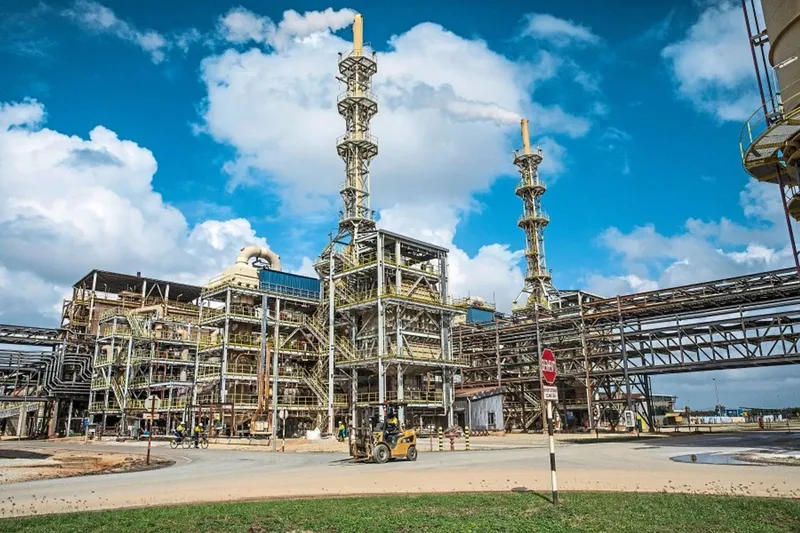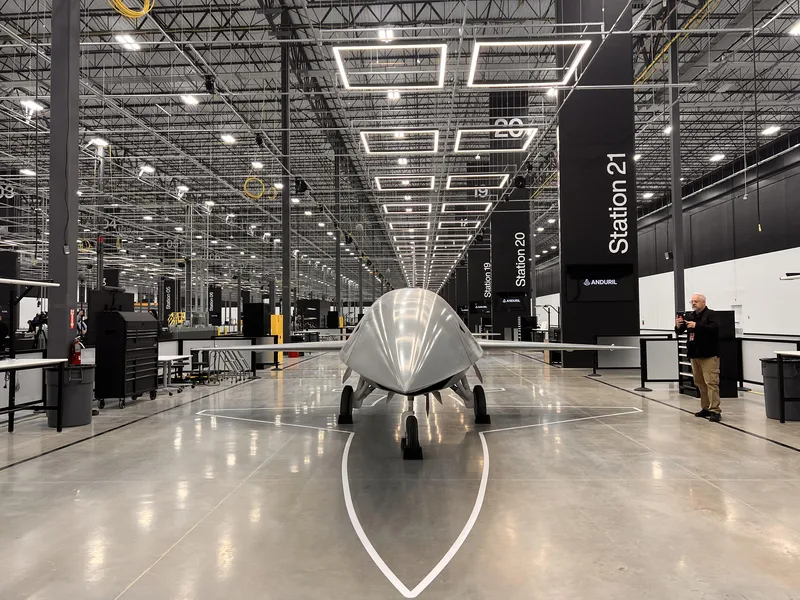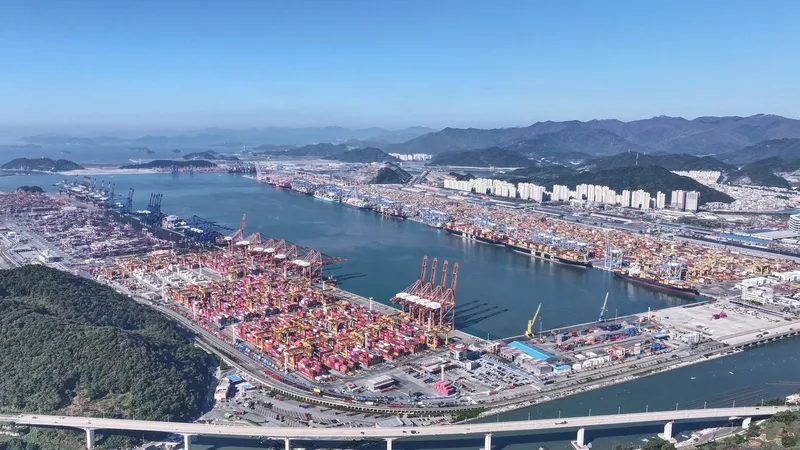
For several decades, industrial globalization was built on a relatively simple premise: companies could separate the geography of production from that of their markets. They could manufacture where economic conditions were most favorable, assemble their products in another country and sell them in the most lucrative markets. This organizational freedom shaped multinational corporate strategies as profoundly as it influenced the development policies of emerging economies.
On November 25, 2026, the US administration took another step toward challenging this architecture. By unveiling tariff proposals targeting fourteen trading partners following an investigation into structural manufacturing overcapacity, Washington is shifting the center of gravity of its trade policy. The nationality of the producer is no longer the sole determining factor. The economic conditions under which industrial capacity is established are themselves becoming a subject of trade disputes.
This shift could have consequences far more profound than the proposed tariffs themselves.
Overcapacity as a Trade Doctrine
Launched on March 11, 2026, under Section 301 of the Trade Act of 1974, the US investigations initially covered sixteen economies. The findings released in November concern China, the European Union, Switzerland, Japan, South Korea, Taiwan, India, Bangladesh, Vietnam, Singapore, Indonesia, Malaysia, Thailand and Cambodia. Mexico and Norway remain outside the scope of the determinations announced at this stage.
The US administration maintains that certain foreign industrial policies encourage disproportionate manufacturing expansion, with consequences for American producers and international markets.
Industrial overcapacity, however, is hardly a new concept. It generally describes a situation in which available production capacity persistently exceeds economically accessible demand. When such conditions endure, companies may be forced to lower prices, compress margins or seek foreign markets to recover their investments.
In certain capital-intensive industries, such as steelmaking, this dynamic can be sustained by preferential financing, public subsidies or support mechanisms that delay the exit of less profitable production facilities.
Yet production exceeding domestic consumption does not necessarily constitute overcapacity. An export-oriented economy can maintain a perfectly viable industrial base without possessing a domestic market large enough to absorb its output. Much of international trade rests precisely on this form of specialization.
The difficulty arises when the distinction between legitimate competitiveness and structural imbalance becomes sufficiently elastic to encompass fundamentally different economic models.
An Offensive Extending Beyond China
China remains central to this issue. The scale of its industrial investment, particularly in steel, batteries, electric vehicles and photovoltaic equipment, has fueled trade tensions with its principal economic partners for several years.
What is new is the widening scope of Washington's approach.
The November 25 proposals encompass emerging economies specializing in manufacturing, technologically advanced markets and international trading hubs alike.
Vietnam faces a proposed maximum tariff rate of 35%, while Singapore faces a potential ceiling of 20%. Taiwan, meanwhile, is seeking to preserve the benefits of its previously negotiated 15% rate.
These figures reflect different stages and conditions within the US trade framework. They should not be interpreted as directly comparable, definitive or uniformly cumulative tariffs. 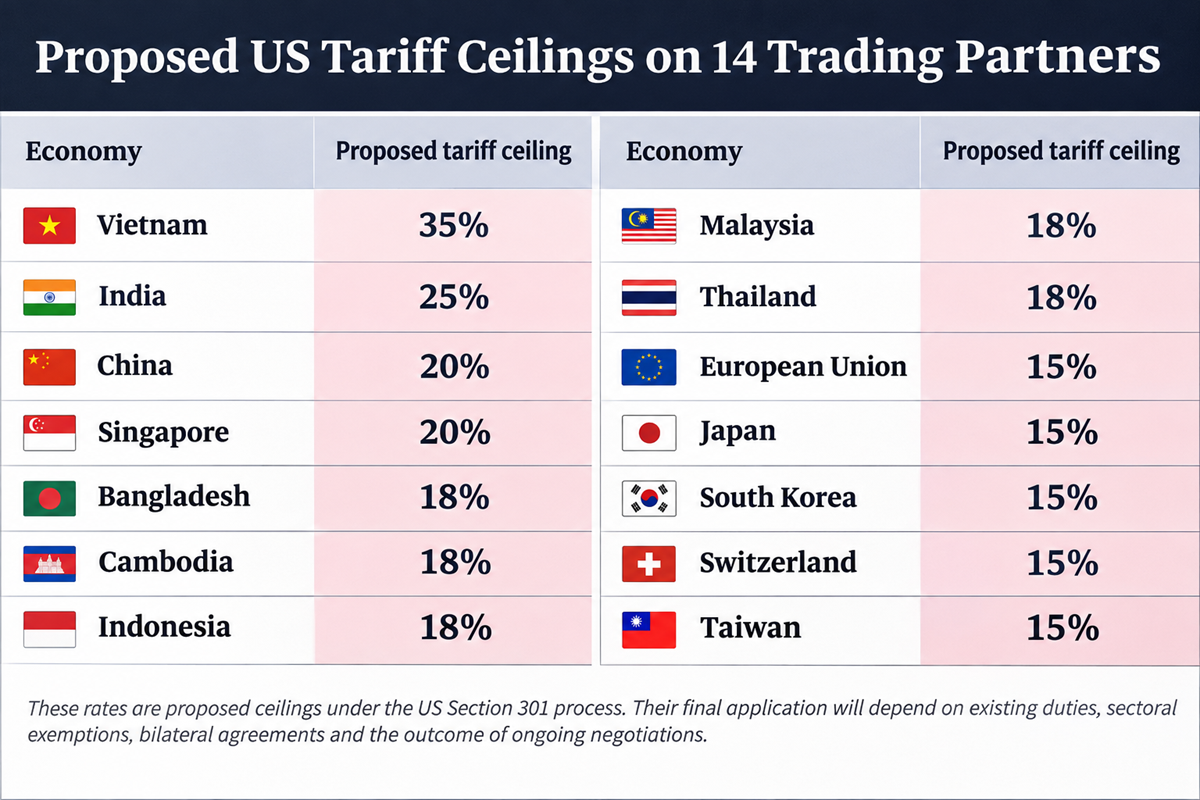 Their eventual application will depend on the interaction between existing duties, sectoral exemptions, bilateral agreements and the outcome of ongoing negotiations.
This differentiation reveals the dual function of the measures. Beyond their stated industrial objectives, they constitute a negotiating instrument through which Washington can seek bilateral commitments concerning production conditions and access to the American market.
The Vietnamese Paradox
Few countries illustrate the contradictions of global industrial restructuring as clearly as Vietnam.
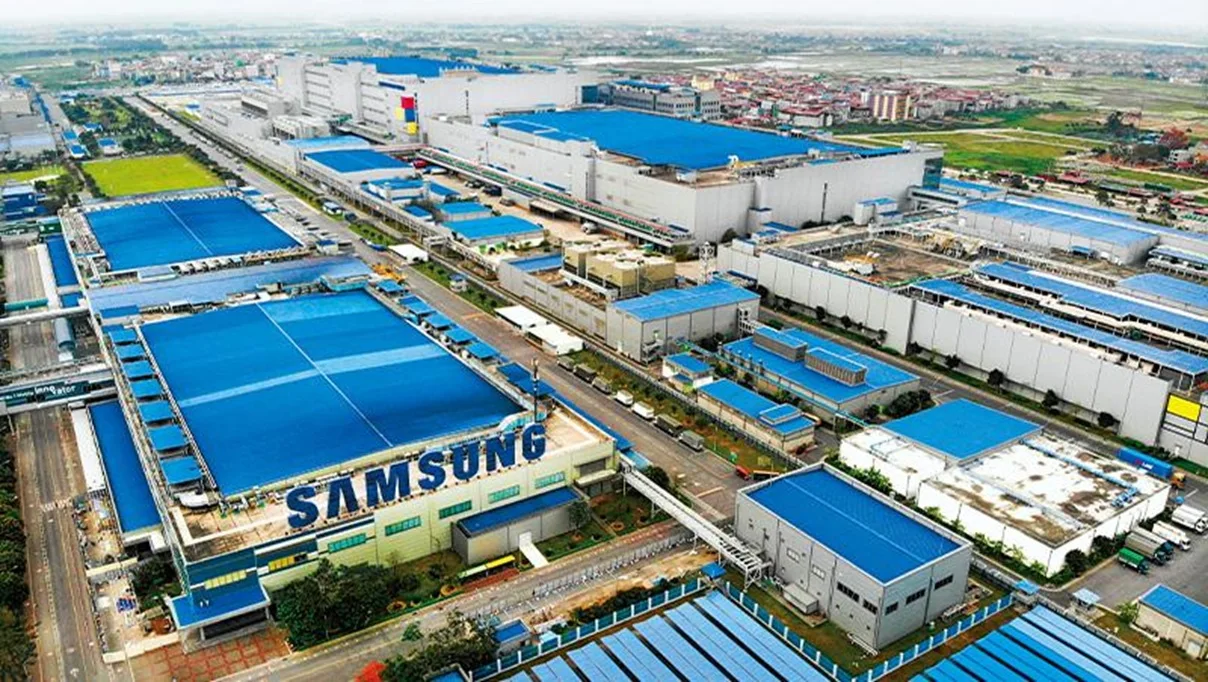
When the initial trade tensions between Washington and Beijing encouraged multinational corporations to diversify their Asian operations, Vietnam emerged as one of the principal beneficiaries. Samsung, Foxconn, Luxshare Precision, LG and numerous electronics suppliers expanded their manufacturing capacity in the country, accelerating its integration into global value chains.
The strategy known as China Plus One reflected both economic and geopolitical considerations. In most cases, the objective was not to abandon China, whose industrial ecosystem remained difficult to replicate, but to reduce the geographical concentration of operations by establishing complementary production capacity elsewhere in Asia.
Vietnam offered an attractive combination of manufacturing costs, proximity to Chinese suppliers, trade integration and labor availability.
Yet this very industrial proximity has now become one of the issues at the heart of US trade concerns.
American authorities are examining not only Vietnamese industrial policies but also foreign investment, the origin of components used in local factories and the potential circumvention of trade restrictions through third countries.
A distinction must nevertheless be drawn between the mere transshipment of goods, which may constitute circumvention of customs rules, and genuine industrial transformation undertaken on Vietnamese territory. The two phenomena are neither economically nor legally equivalent.
A Vietnamese factory using Chinese components, Japanese machinery, South Korean capital and American patents embodies less a commercial anomaly than the ordinary functioning of contemporary industry.
The paradox is now apparent. Companies that relocated part of their production to reduce their exposure to US-China tensions may discover that geographical diversification is no longer sufficient to safeguard their access to the American market.
Singapore and the Limits of Industrial Reasoning
Singapore presents a different challenge.
The city-state occupies a distinctive position in the global economy. Its commercial importance derives as much from its port infrastructure, logistics and financial functions as from its manufacturing activities in semiconductors, pharmaceuticals, chemicals and precision engineering.
Singapore's economy cannot be understood solely through the relationship between domestic production and consumption. Its territory, population and economic structure make it an inherently international platform.
The potential application of tariffs of up to 20% on its goods illustrates how complex the extension of American trade doctrine can become when applied to intermediary economies.
Singapore also benefits from a free trade agreement with the United States that entered into force in 2004. The existence of this agreement did not prevent its inclusion in the investigations announced in March.
This does not mean that previous commitments automatically become invalid. Their ability to provide lasting commercial predictability, however, is something businesses may increasingly need to reassess.
The Fragmentation of Global Value Chains
Global industry has long ceased to function as a collection of independent national production systems.
A semiconductor may be designed in the United States, manufactured in Taiwan using European and Japanese equipment, assembled in another Asian country and subsequently incorporated into a product intended for Western markets.
Each stage involves investments, expertise, infrastructure and contractual relationships that cannot be relocated overnight.
The expansion of tariff restrictions therefore affects far more than the final cost of a product. It introduces an additional layer of uncertainty into the calculation of industrial investment returns.
A company considering the construction of a factory must traditionally weigh the cost of capital, energy prices, labor productivity, supplier availability and logistics expenditure. It must now pay greater attention to the possibility that a location considered favorable today could become the subject of a trade dispute tomorrow.
Such uncertainty may translate into higher required returns on invested capital, postponed industrial projects or the multiplication of redundant production facilities.
Geographical diversification, originally intended to mitigate risk, could thus become a source of additional fixed costs.
For multinational corporations with strong balance sheets, this development remains manageable, albeit at the expense of economic efficiency. For industrial subcontractors and emerging economies dependent on foreign direct investment, it could represent a considerably greater constraint.
The Cost of Industrial Sovereignty
The American approach nevertheless reflects an economic concern that cannot simply be dismissed.
When production capacity is sustained over extended periods through public support and its output is sold abroad under conditions that competitors struggle to match, the consequences can be substantial. Companies disappear, expertise is lost and certain industrial dependencies become difficult to reverse.
The question is whether broad trade restrictions constitute a sufficiently effective means of restoring domestic productive capacity.
A tariff can increase the price of an imported product. It cannot, on its own, create the technical expertise, supplier networks, energy infrastructure or capital required to rebuild an industrial ecosystem.
It may also increase the cost of components used by American manufacturers themselves. In sectors characterized by deeply internationalized supply chains, protecting certain manufacturing activities could consequently undermine the competitiveness of other segments of production.
Industrial policy thus faces a trade-off between economic security, productive efficiency and the cost of transition.
This dilemma extends beyond the United States. The European Union, China, Japan, South Korea and India are also developing their own instruments to support strategic industries. The proliferation of such policies raises a collective difficulty: every major economy seeks to preserve or expand its productive capacity, yet none can guarantee that global demand will absorb the entirety of the resulting investment.
Industrial competition is therefore increasingly defined by the ability of states to finance productive transformation and shape the conditions of market access.
A New Hierarchy of Industrial Locations
Over time, companies may be compelled to distinguish more clearly between production capacity intended for the American market and that serving the rest of the world.
Such regionalization would not necessarily signify the disappearance of globalization. Rather, it could lead to a more fragmented industrial architecture in which parallel production networks coexist under different trade regimes.
The choice of an industrial location would then depend less exclusively on its immediate economic advantages than on the stability of its trade relationships, the traceability of its supply chains and its ability to negotiate with major economic powers.
Intermediary economies would seek to deepen domestic industrial integration, diversify their export markets and reduce their dependence on a single destination for their goods.
This remains a gradual transformation, however, whose scale will depend on the measures ultimately adopted. US consultations are scheduled to continue in January 2027, and the proposals presented in November remain subject to revision.
The End of a Long-Held Assumption
The American announcement of November 25 does not mark the disappearance of the international division of labor. It does, however, expose one of its fundamental vulnerabilities: comparative advantage no longer necessarily guarantees lasting access to markets.
For decades, manufacturers faced a relatively straightforward question: where could they produce at the lowest cost? Trade tensions between major powers had already introduced a second consideration: where could they manufacture while minimizing geopolitical exposure?
A third question is now emerging. Under what conditions will foreign industrial capacity continue to be regarded as legitimate by the countries for which its output is intended?
The answer no longer depends solely on companies, their productivity or consumer preferences. It also depends on political decisions capable of altering the economic value of an investment long after it has been made.
The geography of global industry is therefore no longer being reshaped exclusively by costs, expertise and resources. It is also being defined by the permission to access markets.
And that permission is gradually becoming one of the most strategic assets in the global economy.
Atlas Limits Research Desk
Atlas Limits’ editorial and analytical desk.