By forcing Lukoil to divest its international industrial assets, US sanctions are paving the way for a major redistribution of global energy infrastructure. Behind a multibillion-dollar financial transaction lies a deeper transformation of the relationship between industrial ownership, economic sovereignty and political power.
It took Lukoil nearly three decades to build an international oil company. A handful of regulatory decisions could be enough to dismantle its architecture. The refineries will remain in place, oilfields will continue producing wherever operating conditions permit, and infrastructure will retain its economic function. What will change is ownership.
On November 26, 2026, Vagit Alekperov, co-founder and former chief executive of Russia's second-largest oil producer, publicly acknowledged that Lukoil's international retreat was driven by political constraints rather than an independent corporate decision. His remarks came a day after American billionaire Todd Boehly announced an agreement under which his consortium intends to acquire the group's international assets, with the participation of the US International Development Finance Corporation (DFC).
The transaction, which remains subject to regulatory approval, represents one of the most significant examples of economic sanctions evolving into an instrument for reshaping industrial ownership.
The dismantling of an international ambition
Established during the restructuring of the Soviet oil industry in the early 1990s, Lukoil gradually developed an integrated business model extending well beyond Russia's borders.
The acquisition of interests in foreign oilfields, the development of refining capacity and the establishment of commercial networks enabled the group to control several stages of the petroleum value chain. International expansion reduced its dependence on the Russian market while securing direct access to energy-consuming economies.
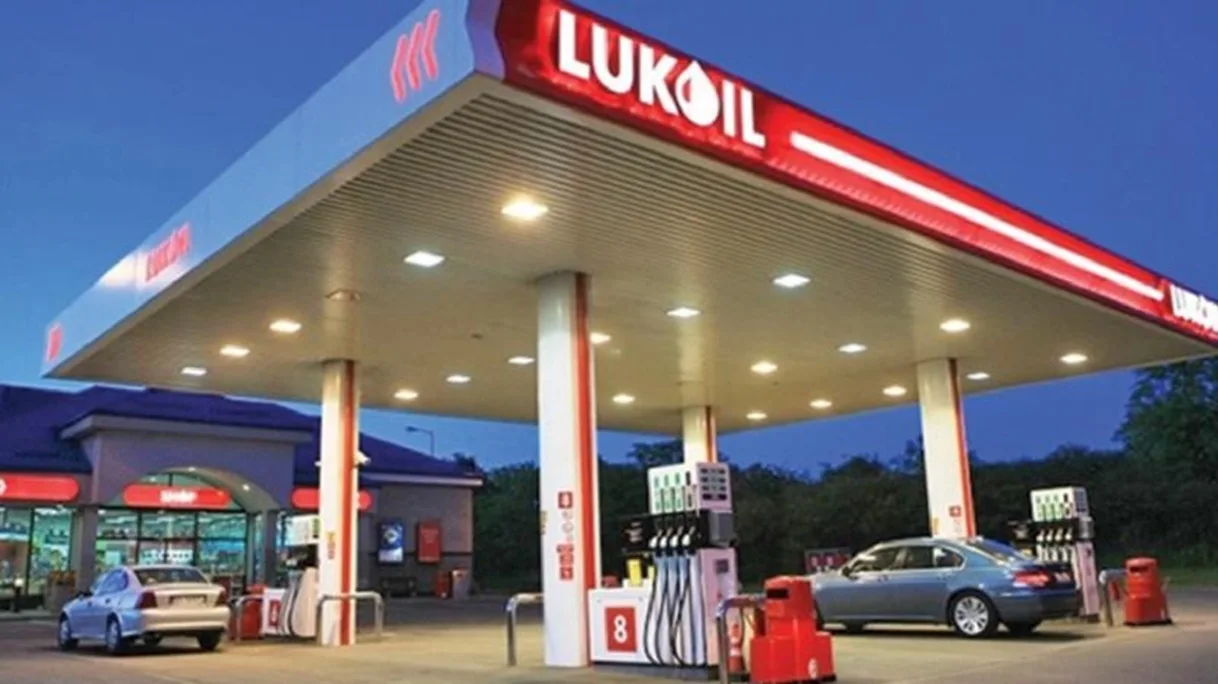
Lukoil's international portfolio spans approximately 40 countries. Its overseas production activities account for around 350,000 barrels per day, alongside refining capacity, distribution networks and interests in various energy infrastructure assets.
In Europe, the Neftohim Burgas refinery in Bulgaria, the Petrotel refinery in Romania and a 45% stake in the Netherlands' Zeeland refinery represent particularly significant industrial assets. In Central Asia and the Caucasus, Lukoil's interests in Kazakhstan, Uzbekistan and Azerbaijan form part of long-term energy strategies. In the Middle East, its longstanding presence in Iraq further illustrates the depth of its international commitments.
These assets represent more than revenue streams. They embody operating rights, commercial relationships, logistical capabilities, technical expertise and established positions within national energy systems.
Their disposal would therefore amount to more than a reduction in Lukoil's accounting perimeter. It would undermine part of the group's ability to operate as an international industrial power.
Sanctions and the erosion of capital value
The US sanctions imposed on Lukoil and Rosneft in October 2025 were intended to intensify economic pressure on Russia in the context of the war in Ukraine. In Lukoil's case, their consequences quickly extended beyond conventional trade restrictions.
A sanctioned company may retain legal ownership of an asset while progressively losing its ability to derive normal economic value from it. Access to financing, insurance, banking services, suppliers and commercial counterparties becomes increasingly difficult. Cash flows deteriorate while compliance costs rise.
These conditions alter the fundamental parameters of financial valuation.
Under a discounted cash flow model, declining expected revenues and an increasing risk premium simultaneously reduce the present value of assets. Regulatory restrictions may also compromise their terminal value, particularly when the owner lacks sufficient visibility over the effective duration of their operations.
These mechanisms are compounded by an illiquidity discount. The pool of legally eligible buyers contracts, financing options become scarcer and the time available for negotiations grows uncertain.
According to valuations reported during the sale process, Lukoil's international portfolio was initially estimated at approximately $22 billion. Information surrounding the latest agreement places its valuation closer to $16 billion.
The difference amounts to approximately 27%. It cannot, however, be directly equated with a realized accounting loss, as the successive transaction perimeters, associated liabilities and valuation methodologies have not been fully disclosed.
Nevertheless, it illustrates the pressure facing a seller whose ability to retain its assets and freely select its counterparties has been substantially diminished.
In an ordinary transaction, the ability to walk away from a sale constitutes one of the owner's principal sources of negotiating leverage. Sanctions weaken precisely that option.
An acquisition without direct cash payment
The transaction structure presented by Todd Boehly differs from conventional mergers and acquisitions.
The consortium includes Boehly's investment firm Eldridge, Xtellus Partners, the UAE-based Catena Investment Holding and the US Development Finance Corporation.
The proposed transaction would rely on an exchange of Lukoil securities with a stated value of $10 billion. These financial instruments, held in part by American and British institutions, have become difficult to trade since the introduction of Western restrictions.
Some of these securities were reportedly acquired from institutional holders at substantial discounts. In early November, Reuters reported transactions involving certain instruments at approximately 30 cents on the dollar.
The underlying principle is to mobilize immobilized financial assets in exchange for international industrial assets that could potentially return to normal operating conditions following a change of control.
The proposed placement of the securities in escrow in the United Arab Emirates is intended to prevent the transaction from providing Lukoil with directly accessible funds.
The economic rationale lies in the difference between the stated value of the financial instruments being exchanged, their effective acquisition cost and the potential value of the underlying industrial assets.
For investors, the removal of operational constraints following a change in ownership could generate substantial portfolio appreciation. Restored banking relationships, improved market access and normalized supply arrangements could all contribute to stronger future cash flows.
It would nevertheless be premature to infer a guaranteed profit. The precise terms of the exchange, the aggregate acquisition cost of the securities, assumed financial obligations, required capital expenditure and contractual commitments remain insufficiently documented.
The difference between the announced $10 billion securities exchange and the portfolio's indicative $16 billion valuation does not, in itself, constitute a guaranteed $6 billion capital gain.
When the state becomes a co-owner
The participation of the US International Development Finance Corporation gives the transaction a dimension extending beyond an opportunistic acquisition by private investors.
The DFC is a US federal institution mandated to mobilize capital for projects supporting development objectives and foreign economic policy. Its involvement in the Lukoil transaction introduces Washington's strategic interests directly into the portfolio's prospective ownership structure.
Under the reported arrangements, the institution would receive an equity interest, representation in corporate governance and a share of future profits after private investors recover their capital and agreed returns.
This combination of public and private capital serves as a reminder that energy infrastructure is never an entirely conventional asset class.
A refinery determines a country's ability to process its oil supplies. An interest in an oilfield establishes a lasting relationship with the producing state. A distribution network provides direct access to markets and consumers.
The transfer of such assets can therefore alter economic and political relationships between countries without a single piece of physical infrastructure being relocated.
The participation of Emirati capital also highlights the growing role of Gulf investors in transactions where commercial interests, energy security and geopolitical restructuring converge.
The transaction nevertheless raises questions in the United States regarding the DFC's mandate, the risks borne by public finances and the compatibility of its involvement with certain legislative restrictions on Russia-related investments.
The convergence of strategic and financial objectives does not necessarily mean that their interests will remain aligned throughout the investment's lifetime.
The regulator as arbiter of industrial ownership
Lukoil's divestment process also demonstrates that financial capacity alone is no longer sufficient to determine the outcome of a strategic acquisition.
In January 2026, Lukoil announced an agreement with Carlyle concerning the sale of its international subsidiary, excluding its Kazakh assets. The transaction failed to secure the necessary approvals within the required timeframe. Carlyle ultimately abandoned its active pursuit of the acquisition in October.
The episode highlights the central role of the Office of Foreign Assets Control (OFAC), which exercises considerable influence over the feasibility of transactions involving sanctioned entities.
Regulatory approval is no longer merely a closing formality. It shapes the selection of investors, payment arrangements, legal structures and the ultimate destination of financial value.
This fundamentally changes the dynamics of the acquisitions market.
The seller can no longer necessarily prioritize the highest financial offer. The buyer must demonstrate that its transaction structure satisfies compliance and national security objectives. Creditors, employees and local authorities, meanwhile, become dependent on decisions made thousands of miles away from the facilities concerned.
Specific licenses allowing certain operations to continue temporarily illustrate this complexity. In Bulgaria, OFAC extended authorization covering several Lukoil entities, including Neftohim Burgas, until April 24, 2027.
Maintaining local energy supplies therefore requires a balance between exerting pressure on the Russian owner and preserving the industrial capabilities of the economies concerned.
A redistribution of influence rather than production
The strategic effectiveness of the transaction does not necessarily depend on a reduction in global oil production.
If the assets are acquired and continue operating, their contribution to international energy supplies could remain largely intact. The most significant consequences would instead lie in the redistribution of revenues, governance rights and commercial relationships.
For Russia, the potential loss of these assets would reduce the international diversification of its energy industry and its ability to participate directly in foreign value chains.
For the buyers, the transaction would provide access to existing infrastructure whose replication would require substantial capital expenditure, administrative approvals and several years of development.
For the countries hosting these facilities, a change in ownership could facilitate commercial normalization while also creating new financial and strategic dependencies.
Lukoil's circumstances must, however, be distinguished from those of the Russian oil sector as a whole. Rosneft, which is also subject to US sanctions, has not initiated a comparable comprehensive divestment of its international portfolio. Some of its foreign operations are nevertheless subject to specific control arrangements, notably in Germany.
Sanctions do not produce a uniform industrial response. Their effects depend on corporate ownership structures, relationships with the Russian state, international financial exposure and the constraints specific to each jurisdiction.
Ownership as an instrument of power
Modern economic history has largely associated globalization with the free movement of capital and the international expansion of corporations. The Lukoil case demonstrates the extent to which that freedom remains conditional on the balance of power between states.
Physical infrastructure is relatively immobile. The financial and legal rights that determine its control, however, can be profoundly reorganized through political decisions.
Sanctions thus become an instrument not only for restricting an adversary's resources but also for durably altering the international distribution of productive capital.
The agreement announced by Todd Boehly does not yet constitute a completed acquisition. Regulatory approvals, the rights of local partners, the precise perimeter of the assets and the final financial terms remain variables capable of altering its outcome.
Regardless of how the transaction ultimately unfolds, however, the process reveals a major evolution in international political economy.
Energy power is no longer measured solely by the volume of oil extracted, the reserves held or the refining capacity installed. It is also measured by the ability to determine who can own these facilities, finance them, receive their revenues and decide their future.
Lukoil built its global presence by acquiring assets. Its retreat serves as a reminder that, in an economy increasingly fragmented by geopolitical rivalries, ownership itself has become a field of confrontation.
Main sources
- Reuters, Lukoil's global retreat driven by politics, co-founder says, November 26, 2026.
- Reuters, Boehly signs US-backed share swap deal to buy Lukoil global assets, November 25, 2026.
- Reuters, US billionaire leads swap plan to buy Lukoil's overseas assets, November 3, 2026.
- Center for Strategic and International Studies (CSIS), The U.S. Government’s Deal to Buy Lukoil’s Assets, Explained, November 25, 2026.
- S&P Global Energy, Carlyle ends active pursuit of Lukoil's international oil assets, October 9, 2026.
- Lukoil, official announcement concerning the agreement with Carlyle, January 29, 2026.
- US Department of the Treasury, Office of Foreign Assets Control, General License No. 130B, October 15, 2026.
Atlas Limits Research Desk
Atlas Limits’ editorial and analytical desk.