Some companies grow by conquering new markets. Others seek to redefine the boundaries between industries themselves. SpaceX now belongs to the latter category. Founded in 2002 with the objective of reducing the cost of access to space, the American company has become the focal point of an industrial consolidation strategy encompassing space transportation, telecommunications, artificial intelligence, semiconductors, energy and robotics.
On November 25, 2026, the Federal Communications Commission (FCC) authorized SpaceX to deploy up to one million satellites designed for data processing in low Earth orbit. The decision comes as the company, having already absorbed xAI and listed on Nasdaq in June, continues negotiations over a potential merger with Tesla.
These developments do not necessarily represent successive stages of a fully established industrial strategy. They nevertheless outline a coherent architecture in which each activity could help reduce the economic and technological constraints facing the others.
The ambition now extends beyond space exploration. It concerns control over the physical infrastructure of the intelligent economy.
From Space Transportation to the Infrastructure Economy
SpaceX's first strategic achievement lies not in rocket manufacturing itself, but in the economic transformation of space transportation.
For decades, access to orbit remained characterized by high costs, limited operational frequency and structural dependence on government contracts. By industrializing the reuse of Falcon 9 first-stage boosters, SpaceX gradually altered these parameters.
Lower marginal launch costs, higher mission frequency and accumulated operational experience have created a competitive advantage that rivals cannot replicate through capital investment alone.
This transformation has enabled the company to become both a provider of launch services and a major user of its own transportation capabilities. Starlink represents the most advanced expression of this shift in business model.
SpaceX no longer merely transports third-party space assets. It deploys, operates and replenishes its own infrastructure, capturing a growing share of the economic value generated after orbital insertion.
Launch capacity becomes an internal means of production. The satellite constellation becomes a revenue-generating asset. Together, they form an industrial feedback loop in which internal demand supports production frequency and potentially improves the competitiveness of commercial launch services.
The company has thus begun transforming space into economic infrastructure rather than merely a destination.
Starlink: The Foundation of Diversification
Starlink occupies a central position within this architecture.
The satellite network provides connectivity in territories where terrestrial infrastructure is insufficient, expensive to develop or difficult to access. Its market is gradually expanding from individual consumers to businesses, maritime transport, aviation, telecommunications operators and government agencies.
This diversification is changing the economic structure of SpaceX. Subscription revenues and connectivity services introduce a recurring income stream into a business historically dominated by individual launch contracts.
The development of direct-to-device satellite communications could further expand this market. The objective is not necessarily to replace terrestrial networks, whose capacity remains superior in densely populated areas, but to extend their coverage beyond conventional geographical boundaries.
Starlink also provides SpaceX with critical industrial experience in mass satellite manufacturing, large-scale constellation management, spectrum coordination, optical communications and distributed network operations.
These capabilities constitute part of the very foundation required for the emergence of orbital computing infrastructure.
Starmind: Artificial Intelligence Beyond Terrestrial Power Grids
The authorization granted by the FCC on November 25 opens a new avenue for development.
Known as Starmind, the SpaceX program envisages a constellation of up to one million satellites operating at altitudes between 500 and 1,002 kilometers. These platforms would primarily communicate through optical inter-satellite links and host computing capabilities intended, among other applications, for artificial intelligence workloads.
The regulatory timetable requires deployment to begin no later than November 2033, with milestones of 100,000 satellites by November 2035 and 500,000 by November 2038. The authorization establishes a development horizon extending to 2040.
These deadlines are not industrial forecasts. The regulatory ceiling determines neither the number of satellites that will ultimately be manufactured nor the amount of capital that will be committed.
The economic significance of the project lies in its potential to transform the energy constraints of artificial intelligence.
On Earth, processor availability is no longer sufficient to determine the pace of digital infrastructure development. Access to electricity, transmission capacity, land availability, water requirements and regulatory approval timelines are becoming increasingly restrictive factors.
By installing computing capacity in orbit, SpaceX intends to generate part of the electricity required for its operations directly from solar radiation. Certain orbital configurations could substantially reduce the intermittency associated with terrestrial photovoltaic generation.
Space, however, does not eliminate physical constraints. It changes their nature.
In the absence of atmospheric convection, heat generated by processors must be dissipated primarily through radiation. Radiators, thermal transfer systems and their associated mass therefore become essential components of the economic equation.
Additional challenges include radiation exposure, maintenance, component reliability, hardware replacement and orbital debris management. The accelerating obsolescence of semiconductors, already a concern for terrestrial data centers, could become particularly costly in an environment where equipment replacement remains complex.
Starmind's competitiveness will therefore depend less on the theoretical availability of solar energy than on the total cost of each unit of computing capacity effectively produced and commercialized.
Starship: The Industrial Multiplier
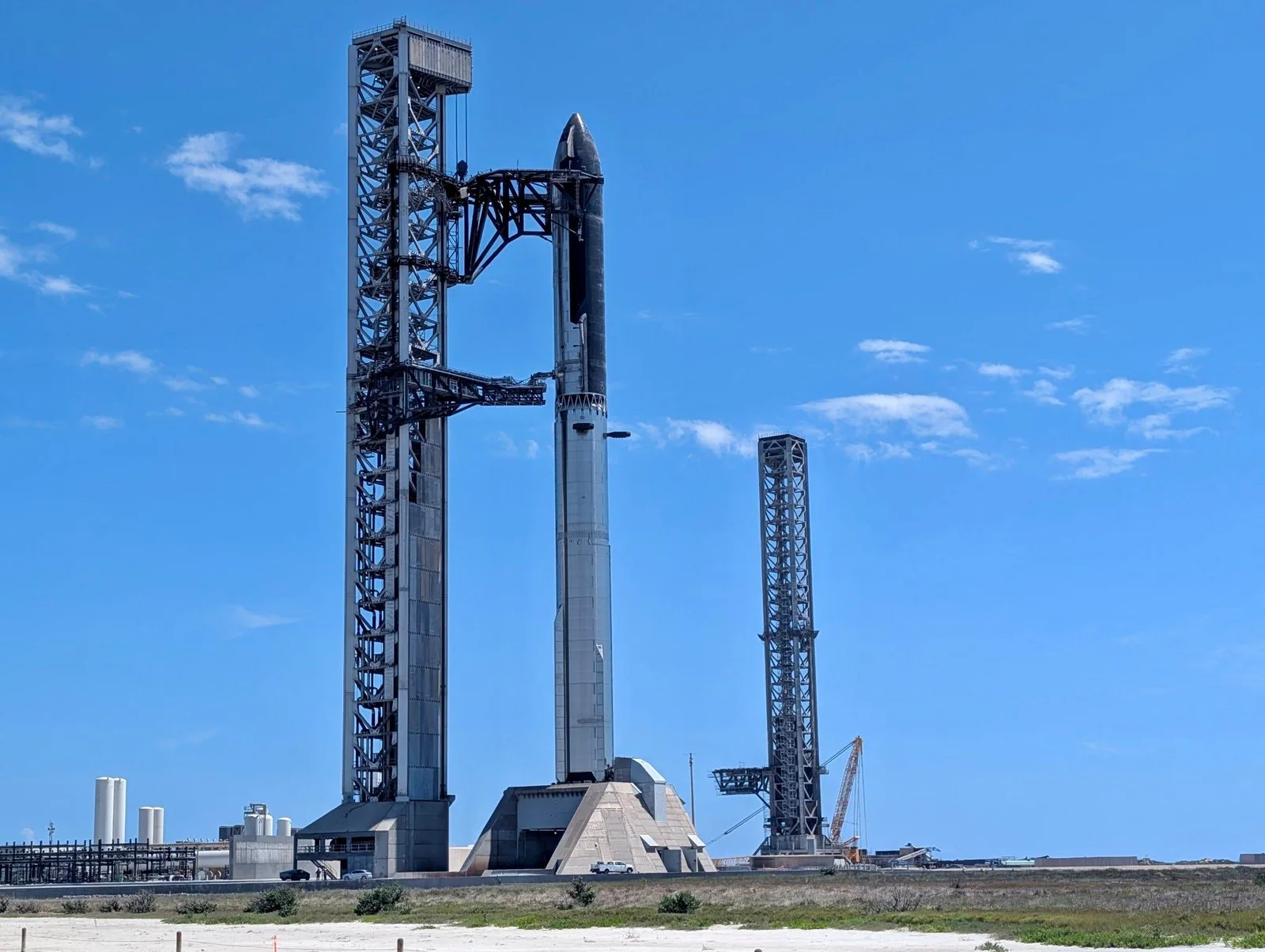
Behind this ambition lies Starship, whose development could determine the viability of many of SpaceX's future projects.
The system is designed to achieve full reusability of both the spacecraft and its booster, combined with substantially greater payload capacity than previous generations of launch vehicles.
If SpaceX succeeds in stabilizing this architecture, increasing operational frequency and sustainably reducing costs, the consequences will extend well beyond the commercial launch market.
Lower orbital transportation costs could make possible infrastructure that has thus far remained incompatible with the economic models of the space industry: large-scale structural assembly, energy platforms, computing facilities, maintenance systems and the development of industrial activities in orbit.
Lunar and Martian prospects also form part of this logic, although their commercial models remain considerably more uncertain.
Programs conducted with NASA, particularly those associated with the Artemis missions, represent an important institutional market. Over the longer term, cargo transportation, lunar infrastructure and orbital refueling capabilities could open new industrial value chains.
Starship should therefore not be regarded solely as a next-generation launch vehicle. It represents an attempt to redefine the economic cost of distance between Earth and space.
Its success nevertheless remains conditional on mastering complex technologies, achieving operational repeatability and obtaining the necessary regulatory approvals. A theoretical reduction in costs becomes an industrial advantage only once it has been demonstrated under regular operating conditions.
xAI: Control Over Computing Demand
SpaceX's acquisition of xAI in early 2026 fundamentally altered the company's strategic perimeter.
SpaceX is now directly exposed to the development, training and distribution of artificial intelligence models, as well as the infrastructure required to operate them. The integration also includes the social media platform X, previously combined with xAI, which provides a digital distribution channel and a source of data whose commercial exploitation remains subject to legal and economic constraints.
The combination creates a complementary relationship between a potential producer of computing capacity and one of its users.
Major artificial intelligence companies generally depend on an extensive network of suppliers: processor manufacturers, data center operators, electricity producers and distribution platforms. SpaceX is seeking to internalize a growing share of this value chain.
The objective is not necessarily to achieve complete autonomy. Such an outcome would be difficult to reconcile with the complexity of the semiconductor industry. Rather, it is to reduce certain strategic dependencies and improve control over costs, available capacity and deployment schedules.
This integration nevertheless introduces a new financial vulnerability. Artificial intelligence requires substantial investment, while the economic lifespan of its equipment can be considerably shorter than that of space infrastructure.
SpaceX must now simultaneously finance assets operating across different industrial time horizons. Developing a launch vehicle, replenishing a satellite constellation, training an AI model and replacing a generation of processors involve different investment cycles and profitability requirements.
The technological coherence of the combination does not therefore guarantee its financial coherence.
Tesla: The Missing Piece
Negotiations between SpaceX and Tesla add a new dimension to this strategy.
On October 20, 2026, Elon Musk confirmed the establishment of independent board committees tasked with examining a potential merger. According to information reported by Reuters on November 12, discussions have progressed and could lead to an announcement in December or early 2027.
The market valuations observed during these discussions, approximately $1.9 trillion for SpaceX and $1.55 trillion for Tesla, would place the combined entity at around $3.45 trillion. The Financial Times has reported a potential transaction valued at approximately $3.5 trillion.
If completed on a comparable scale, it would represent one of the largest corporate combinations in economic history.
Tesla would bring SpaceX industrial capabilities extending far beyond automotive manufacturing. The company possesses expertise in battery production, stationary energy storage, power electronics, automated driving software and advanced manufacturing infrastructure.
Its energy operations could contribute to optimizing the power supply and electricity management of terrestrial data centers. Its storage and electronics technologies could also support certain space-related developments, subject to substantial adaptation to orbital conditions.
The Optimus program introduces another dimension: humanoid robotics. Should the technology achieve sufficient maturity, it could find applications in manufacturing, logistics, infrastructure maintenance and, over the longer term, certain space operations.
The most fundamental complementarity, however, lies in embodied artificial intelligence. Tesla develops systems designed to interpret and act within physical environments, while xAI works on models capable of processing vast quantities of information.
Combining these capabilities could support the development of intelligent systems able not only to generate responses but also to interact with machines, vehicles and infrastructure.
A merger would therefore transform SpaceX into a group combining the production of computing capacity, the development of artificial intelligence models and their deployment throughout the physical economy.
Terafab and the Semiconductor Competition
The integration of these businesses would be incomplete without addressing their dependence on semiconductor manufacturers.
SpaceX and Tesla are jointly developing Terafab, an industrial project intended to produce components meeting their requirements in artificial intelligence, robotics and embedded systems.
According to indications provided during SpaceX's earnings presentation, an initial experimental chip could be produced around May or June 2027, with volume production targeted for the third quarter of 2028.
These remain ambitious timelines.
Advanced semiconductor manufacturing depends on a particularly complex global industrial ecosystem encompassing lithography equipment, specialized materials, design software, etching processes, memory technologies and advanced packaging.
Control over a fabrication facility does not imply control over the entire value chain.
SpaceX and Tesla will therefore continue to rely on specialized suppliers, among which Nvidia, TSMC, ASML and leading advanced memory manufacturers occupy critical positions.
Terafab nevertheless reflects a significant strategic shift. Having internalized part of its space transportation and telecommunications infrastructure, Musk's industrial ecosystem is seeking to reduce its dependence on one of the principal upstream markets of the intelligent economy.
Over time, this approach could alter the balance of bargaining power between semiconductor manufacturers and major consumers of computing capacity.
Capital Markets as an Industrial Instrument
SpaceX's initial public offering on June 12, 2026, represents a major change in the resources available to the company to pursue its expansion.
Access to public capital markets broadens its financing options and enables it to use publicly traded shares as an acquisition currency. In a potential transaction with Tesla, a share exchange could limit immediate cash financing requirements without eliminating future capital needs.
The high valuation of technology companies thus becomes an instrument of industrial expansion.
Such valuations, however, are based on the discounting of future revenues, a substantial proportion of which still depends on technologies under development. Financial markets can assign considerable value to the potential of Starship, Starmind, Terafab or autonomous robotics before these activities have demonstrated their profitability.
Market capitalization is neither a reserve of liquidity nor a direct measure of productive capacity. It reflects investor expectations and can contract rapidly when assumptions concerning growth, financing or profitability are challenged.
A merger between SpaceX and Tesla would also introduce significant valuation difficulties. The respective contributions of mature businesses, existing infrastructure and experimental projects would need to be assessed before establishing an exchange ratio acceptable to the shareholders of both companies.
The risk would be that industrial complementarity evolves into a permanent mechanism of cross-subsidization, in which cash flows generated by certain businesses finance projects whose profitability remains uncertain.
At this scale, capital allocation would likely become one of the group's most important functions.
A Company at the Heart of American Sovereignty
SpaceX's trajectory cannot be separated from its relationship with the United States government.
The company operates across institutional space transportation, crewed missions, national security launches and government communications. Starshield extends some of the capabilities developed through Starlink into services intended for government agencies and defense organizations.
SpaceX therefore occupies a distinctive position within the American economy: it remains a commercial organization while operating infrastructure important to national strategic capabilities.
A merger with Tesla would intensify the questions arising from this position.
Tesla maintains substantial industrial and commercial operations in China, particularly through its Shanghai manufacturing facility. The coexistence within a single group of sensitive American government contracts, orbital infrastructure and significant industrial exposure to the Chinese market would require rigorous mechanisms for separation, oversight and information protection.
American authorities could also examine the implications of the transaction for competition, corporate governance and national security.
The fact that the leadership of both companies is already associated with Elon Musk makes potential conflicts of interest particularly important. The establishment of independent committees represents an initial procedural response, but it does not relieve directors of their obligation to demonstrate that the transaction would serve the interests of each company's shareholders.
The issue extends beyond the personal circumstances of their chief executive. It concerns the concentration within a single organization of transportation, communications, computing and automation capabilities, some of which are strategically important to public authorities.
Competition Is Being Reorganized
SpaceX's strength does not mean that the company faces an uncontested industrial trajectory.
In space transportation, Blue Origin continues to develop its own launch capabilities, while European, Chinese and other public and private actors seek to strengthen their autonomy.
In satellite telecommunications, Amazon is developing its Leo constellation. Europe's IRIS² program and China's Guowang and Qianfan constellations likewise reflect, through different approaches, a determination to avoid exclusive dependence on foreign infrastructure.
Competition is now extending into orbital computing.
Blue Origin has presented a constellation project known as Sunrise, encompassing up to 51,600 satellites. Starcloud is considering an architecture potentially comprising 88,000 units. Google is also exploring the possibilities of space-based data processing.
These projects are at different stages of development and do not represent comparable operational capabilities. Their proliferation nevertheless indicates that the convergence of energy, space and artificial intelligence is no longer exclusive to SpaceX's strategy.
The American company's principal advantage remains its ability to coordinate multiple stages of the industrial value chain within a single organization. Its competitors will either need to develop equivalent capabilities or establish partnerships sufficiently robust to replicate part of this integration.
Competition could therefore increasingly take place not between individual companies, but between competing industrial architectures.
The Physical and Regulatory Boundaries of Expansion
The scale of the proposed orbital constellations raises questions that cannot be reduced to investment profitability alone.
The mass deployment of satellites would alter the conditions governing the use of low Earth orbit. Trajectory management, collision risks, deorbiting procedures, interference and the consequences for astronomical observation would become matters of collective concern.
The FCC's authorization of Starmind has prompted objections from competing operators, scientific organizations and specialists in orbital safety.
The American regulator determined that some of these concerns fell outside the scope of its authority. This institutional distinction does not mean that the underlying risks have disappeared.
The orbital economy could gradually encounter a difficulty comparable to that facing certain terrestrial infrastructure systems: the limited availability of a shared environment in which individual commercial exploitation generates collective consequences.
The greater the commercial value of orbit, the more important its governance becomes.
SpaceX's development will therefore depend not only on its engineers and investors, but also on international rules that remain insufficiently adapted to the industrialization of space.
Towards a New Model of Industrial Concentration
Economic history has witnessed several dominant forms of vertical integration. Oil companies combined extraction, refining and distribution. Automotive groups organized substantial portions of the manufacturing industry around themselves. Digital platforms brought together computing infrastructure, software and access to users.
SpaceX could become the center of a new form of industrial concentration, combining energy infrastructure, space transportation, communications, computing and machines capable of performing physical tasks.
A potential merger with Tesla would accelerate this development, but it is not an absolute prerequisite. Industrial cooperation, cross-shareholdings and joint projects already allow the two companies to pursue some of these complementarities.
The decisive question will be whether this technological convergence can be converted into sustainable economic advantages.
Lower launch costs will need to translate into competitive orbital infrastructure. Computing capacity will need to generate sufficient revenue to finance its replacement. Robotics will need to progress beyond demonstrations and address commercially viable industrial demand. The anticipated synergies will need to exceed the coordination costs of an organization of exceptional complexity.
SpaceX now has the opportunity to participate in defining the infrastructure upon which part of the economy of the coming decades could depend.
It has yet to demonstrate that it can operate all of these assets with equal efficiency.
The future of the group will be determined by the gap between the power of the assets it has assembled and their capacity to generate lasting economic value.
The conquest of space was its starting point. Control over the material foundations of intelligence could become its true industrial horizon.
Atlas Limits Research Desk
Atlas Limits’ editorial and analytical desk.