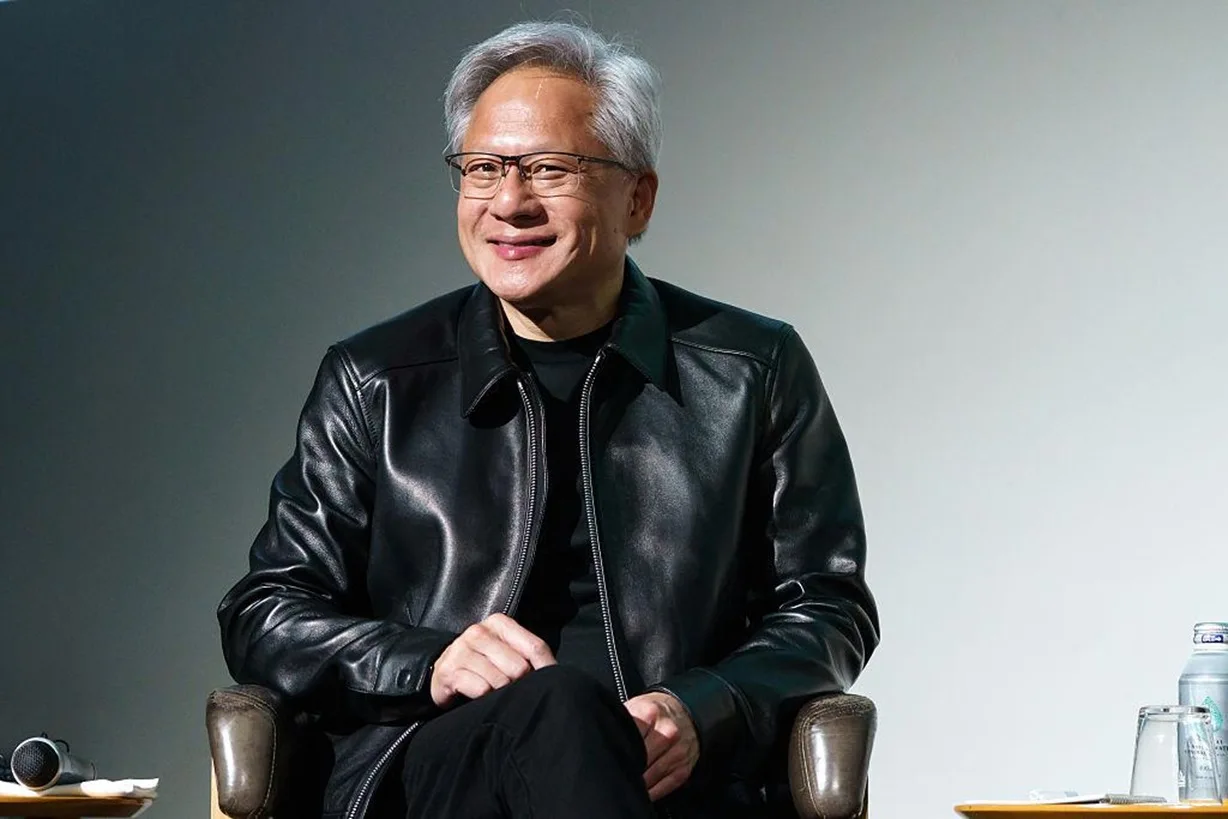
Eleven days after stepping down as Nvidia's chief executive, Jensen Huang is back in charge of the company he co-founded in 1993. On November 23, 2026, the American semiconductor manufacturer's board unanimously announced his immediate reinstatement as president, chief executive officer and director. The decision came less than a week after the same board had publicly ruled out his return. In the intervening days, senior American officials were consulted, financial markets registered growing concern and pressure to restore Huang intensified.
The reversal extends far beyond the succession of an influential technology executive. Nvidia remains subject to investigations involving its commercial distribution channels, regulatory obligations and national security concerns surrounding certain personal relationships of its former chief executive. The company must now reconcile two competing imperatives: preserving the leadership of the individual who helped establish its central position in the global artificial intelligence industry, while demonstrating that its oversight mechanisms can operate independently of him.
Nvidia's November 23 announcement states that the board reached its decision following discussions with Huang and consultations with senior US government officials. Directors expressed satisfaction with his explanations and concluded, based on the information received, that his reinstatement posed no national security risk. Harvey Jones remains board chairman, while Colette Kress, who served as interim chief executive, continues as chief financial officer.
Huang's reinstatement does not terminate the investigations. An independent committee examining whether he was targeted by a foreign intelligence operation will continue its work. A separate National Security and Export Control Committee now oversees regulatory and geopolitical risks associated with the company's operations. Nvidia has also announced plans to appoint a Chief Compliance Officer responsible for group-wide compliance and reporting to the board's Nominating and Corporate Governance Committee.
The combination of restored leadership and strengthened oversight defines the new situation. Rather than addressing the crisis through a permanent separation from its founder, Nvidia is attempting to preserve his strategic authority while establishing a governance framework capable of satisfying increasingly demanding national security and regulatory requirements.
Eleven days that exposed a strategic dependency
On November 12, Nvidia announced Jensen Huang's immediate resignation as president, chief executive officer and director. The decision followed revelations concerning personal relationships, including one involving a Singapore-based businesswoman whose alleged connections to Chinese intelligence attracted public scrutiny. Those allegations remain unproven, and no criminal responsibility on Huang's part has been established.
Nevertheless, the controversy rapidly acquired an institutional dimension. Nvidia's position within the global artificial intelligence ecosystem, the sensitivity of its technologies and American restrictions on advanced semiconductor exports to China transformed an initially personal matter into a question of corporate governance and national security.
Colette Kress's appointment as interim chief executive provided operational continuity. Having served as Nvidia's chief financial officer since 2013, she possessed extensive knowledge of the company's activities, financial structure and investor relationships. Yet administrative continuity could not resolve the more fundamental question of whether Nvidia could preserve its industrial and commercial trajectory without the individual who had shaped its strategy for more than three decades.
The question soon extended beyond the company. Investors, technology partners and prominent Silicon Valley figures advocated Huang's return. President Donald Trump also expressed support, emphasizing the importance of his leadership to American technological competitiveness.
On November 17, Harvey Jones nevertheless stated that the board did not intend to reinstate Huang. Six days later, directors unanimously reversed that position.
The sequence exposes a familiar corporate governance dilemma on an exceptional scale. Concentrated leadership can provide a substantial competitive advantage when technological knowledge, commercial relationships and strategic judgment are closely associated with one individual. It becomes a source of institutional vulnerability when the organization must demonstrate its capacity to function independently of that person.
Huang's return therefore confirms both his importance to Nvidia and the difficulty of establishing a credible succession within such a compressed period. It does not, by itself, resolve the company's structural dependence on its founder.
Washington enters the governance equation
Perhaps the most consequential element of Nvidia's announcement is the involvement of senior American officials in the process preceding the board's decision.
The company explicitly acknowledged receiving input from senior levels of the US government and stated that this information supported the board's conclusion that Huang's reinstatement posed no national security risk. President Trump welcomed the decision and reiterated the importance of Huang's leadership to the American economy.
The scope of this intervention must be distinguished from a judicial determination. Government consultations do not constitute comprehensive regulatory clearance for Nvidia, nor do they resolve ongoing investigations. They concern the assessment of national security risks associated with Huang's return, not every commercial transaction or compliance practice potentially under examination.
This distinction matters because the interests involved are not entirely aligned. Washington seeks to preserve American leadership in advanced computing while restricting China's access to capabilities that could strengthen its military, scientific and industrial potential. Nvidia aims to protect commercial opportunities, maintain relationships with major artificial intelligence customers and sustain innovation. Investors expect stable management, predictable growth and effective regulatory risk management.
The American government consequently occupies a dual position. It regulates a strategically sensitive industry while also treating the success of its leading companies as an element of national economic power.
Huang's reinstatement illustrates this tension. Nvidia's leadership stability was considered important enough to involve senior government officials, while the broader framework of export restrictions and regulatory oversight remains in place.
The institutional question is how corporate boards can preserve independent judgment when decisions concerning private-sector leadership acquire strategic national significance.
Export controls remain central to the investigations
Huang's return comes as Washington continues examining the distribution of advanced American semiconductors.
On November 22, Treasury Secretary Scott Bessent indicated that American authorities were seeking explanations from Nvidia concerning certain chip sales and internal compliance responsibilities. The questions include identifying who supervised relevant transactions, what information was available within the company and whether concerns reached senior management.
One area of scrutiny involves Megaspeed International, a Singapore-based company associated with substantial purchases of Nvidia components. American authorities are examining whether certain equipment may have reached restricted destinations or end users. Megaspeed has disputed allegations of illicit transfers. The investigations do not currently establish that Nvidia violated export regulations or that its executives knowingly participated in unlawful transactions.
The underlying challenge extends beyond any single distributor. Global semiconductor supply chains involve manufacturers, distributors, system integrators, data-center operators and computing-service providers. A processor may be designed in the United States, manufactured in Asia, sold through a third jurisdiction and ultimately deployed in infrastructure accessible from multiple countries.
This fragmentation complicates the identification of ultimate beneficiaries. The challenge becomes particularly significant when the economic value of a semiconductor lies not merely in physical ownership but in access to the computing capacity it provides.
American export controls are intended to restrict access to certain sensitive technological capabilities. The Bureau of Industry and Security, within the Department of Commerce, administers important elements of these regulations, including licensing requirements and restrictions involving particular destinations, products and end users.
For semiconductor manufacturers, compliance can no longer be limited to checking the declared destination of a shipment. It increasingly requires scrutiny of intermediaries, ultimate users, re-export risks and circumstances suggesting possible circumvention.
Legal responsibility nevertheless depends on the regulations applicable at the time of each transaction, the information available to the parties and their specific due-diligence obligations. Regulatory inquiries must not be confused with findings of wrongdoing.
Nvidia rebuilds its oversight architecture
The most lasting organizational consequence of the crisis may be the strengthening of Nvidia's internal controls.
The company has established a committee composed exclusively of independent directors to investigate whether Huang was targeted by a foreign intelligence operation. Independent legal counsel has been retained, and the inquiry will continue despite his reinstatement.
Separately, the National Security and Export Control Committee is responsible for overseeing geopolitical and trade-compliance risks. Nvidia intends to support its work with specialized legal and national security expertise.
The planned appointment of a Chief Compliance Officer adds a further layer. This executive will oversee compliance across the company and report to the board's Nominating and Corporate Governance Committee.
Together, these measures elevate compliance from a primarily operational function to a central responsibility of corporate oversight.
The distinction between executive management and independent supervision is especially important. Huang has regained responsibility for Nvidia's strategy and operations, but investigations concerning him must remain under the authority of independent directors. The effectiveness of this arrangement will depend on whether those directors have unrestricted access to relevant information, can exercise judgment without interference and possess the authority to require corrective measures where necessary.
Restored founder leadership and stronger independent oversight are not inherently incompatible. They may form the basis of a more durable governance structure, provided the independence of supervisory mechanisms is substantive rather than merely procedural.
Financial markets reassess the value of leadership
The market response to Huang's reinstatement demonstrates the economic significance investors attach to his leadership.
Reuters reported that Nvidia shares surged approximately 33% following the announcement, a move potentially representing nearly $900 billion in additional market capitalization. These intraday movements should not be confused with a definitive closing valuation, but their magnitude illustrates the importance of leadership uncertainty in the market's assessment of the company.
The reaction does not mean Nvidia's industrial fundamentals changed overnight. Its processor architectures, manufacturing relationships, customer investments and existing commercial commitments remained largely unchanged. What investors reassessed was the risk associated with Huang's absence and the company's ability to execute its strategy without him.
The episode illustrates an unusually pronounced form of key-person risk. Investors value not only intellectual property, assets and expected cash flows, but also the ability of leadership to coordinate a complex industrial ecosystem.
For Nvidia, that ecosystem includes cloud providers, artificial intelligence developers, semiconductor manufacturers, infrastructure operators and governments pursuing digital sovereignty objectives.
Huang's return may reduce uncertainty surrounding strategic execution. It does not eliminate regulatory risks or questions about corporate governance. Federal and internal investigations remain active, while the effectiveness of the new oversight arrangements has yet to be demonstrated.
The market response therefore exposes a paradox: investors are rewarding the restoration of highly personalized leadership precisely as Nvidia seeks to institutionalize stronger and more independent controls.
Compliance becomes a competitive capability
The Nvidia controversy reflects a transformation extending beyond the events of November 2026.
For decades, semiconductor competitiveness depended primarily on research capabilities, technological architectures, software ecosystems, manufacturing partnerships and market access. These remain essential, but they must increasingly be integrated with national security requirements and restrictions governing sensitive technologies.
Companies need systems capable of documenting transactions, identifying intermediaries, verifying end users and detecting circumstances that may indicate regulatory violations. Such systems require investments in information technology, specialized personnel and coordination across jurisdictions.
Their importance grows as computing capabilities become accessible through geographically distributed infrastructure. The distinction between physical exports, digital services and cross-border access to computing resources is considerably more complex than conventional trade in manufactured goods.
Compliance capabilities may consequently become a competitive differentiator. Companies able to demonstrate effective controls may be better positioned to maintain regulatory confidence and institutional customer relationships. Those with inadequate systems may face commercial disruption, remediation costs or additional restrictions.
The transformation may also raise barriers to entry. Large technology companies generally possess greater resources to finance specialized compliance teams and traceability systems, while smaller competitors may struggle to satisfy equivalent requirements.
For corporate boards, the implications are substantial. Expertise in national security, international trade and industrial geopolitics is becoming increasingly relevant alongside traditional financial and technological competencies.
A changing relationship between technological power and public authority
Jensen Huang's reinstatement does not close Nvidia's governance crisis. It changes its character.
The immediate leadership question has been resolved, but investigations involving commercial distribution, potential intelligence risks and internal oversight remain open. The board must now demonstrate that it can exercise independent supervision while restoring the founder whose authority has shaped the company.
The involvement of senior American officials also highlights Nvidia's exceptional position in the global economy. It is no longer simply a manufacturer of processors. It is one of the essential suppliers of the infrastructure underpinning industrial, scientific and strategic ambitions in artificial intelligence.
That position provides considerable economic influence while exposing the company to oversight requirements increasingly connected to national security.
The case may contribute to redefining governance standards for companies controlling strategically important technologies. Performance no longer depends exclusively on developing advanced components or expanding into new markets. It also requires demonstrable transaction traceability, effective risk identification and independent corporate supervision.
For Nvidia, the challenge in the months ahead will be to show that Huang's return can coexist with a more robust governance structure rather than simply restoring the arrangements that preceded the crisis.
The company has recovered its historic leader. Whether it can build institutions sufficiently strong to operate independently of him remains the more consequential question.
Atlas Limits Research Desk
Atlas Limits’ editorial and analytical desk.