The American push to develop Greenland's natural resources exposes a fundamental contradiction: Washington increasingly regards the island as a major strategic asset, yet it possesses neither sovereignty over its territory nor the authority to determine how its resources are exploited. Between hydrocarbons, critical minerals, military installations and aspirations for independence, Greenland is becoming one of the places where the relationship between economic power, territorial control and political autonomy is being redefined.
On October 14, 2026, Donald Trump reportedly announced preparations for large-scale oil, gas and mineral exploration operations in Greenland. The American president also suggested that the territory might contain some of the world's largest and most easily accessible petroleum reserves. However, no detailed geological inventory or specific industrial development program accompanied these claims, leaving their operational significance uncertain.
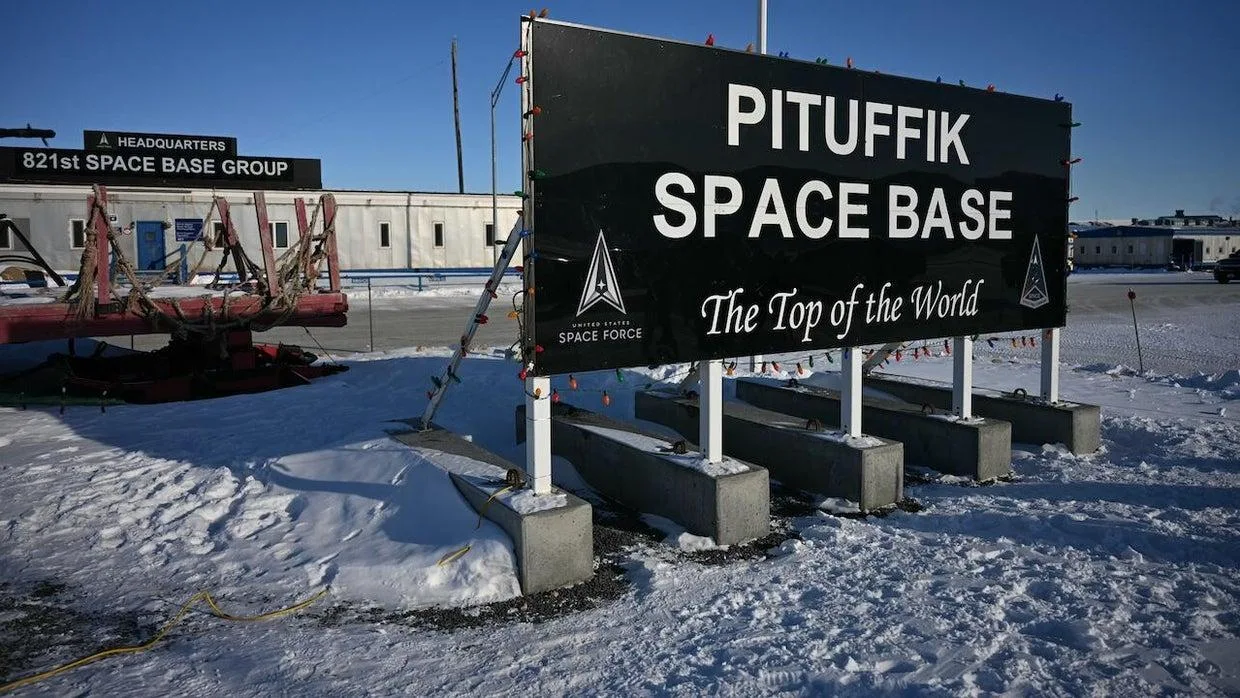
The announcement comes amid efforts to strengthen the American strategic presence in the Arctic. According to information concerning an agreement reportedly concluded on September 22 between the United States, Denmark and Greenland, Washington intends to expand its military activities beyond existing facilities, particularly at Pituffik, and develop additional capabilities elsewhere on the island. The precise provisions and legal status of this reported agreement still require confirmation through official documentation.
These two developments, one economic and the other military, reflect the same underlying transformation. The United States no longer views Greenland exclusively as an indispensable outpost for the defense of North America. It also sees the island as a potential reservoir of strategic resources, a platform for Arctic surveillance and a territory capable of contributing to the restructuring of Western supply chains.
Yet this ambition confronts an institutional reality: Greenland is not American territory, and its natural resources are not subject to Washington's authority. Over several decades, its institutions have gradually acquired extensive powers over economic policy. They have also chosen to restrict certain extractive activities despite the revenues these industries might generate.
The issue therefore extends beyond resource availability. It concerns the ability of a major power to translate strategic influence into economic access without exercising political control over the territory involved.
An Enormous Island, a Small Economy and Resources That Are Difficult to Exploit
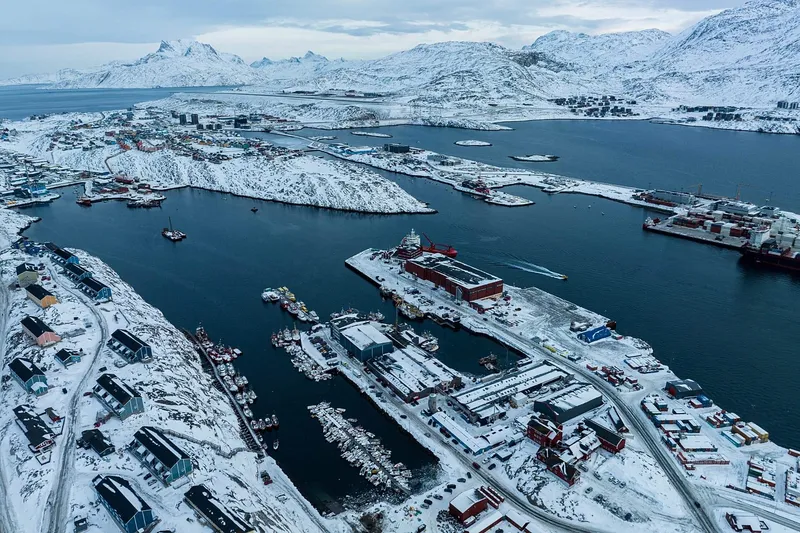
With an area of approximately 2.17 million square kilometers, Greenland is the world's largest island. Its territory is more than four times the size of metropolitan France, yet its population barely exceeds 57,000. Approximately 80% of its surface is covered by an ice sheet, while human activity is concentrated primarily along the coasts.
This disproportion between territorial size and available economic resources is the defining characteristic of Greenland's development. The island possesses an immense geographical area but has a tiny domestic market, a limited workforce and infrastructure that is exceptionally expensive to build and maintain.
Its economy relies heavily on fishing, public services and financial transfers from Denmark. The annual block grant provided by Copenhagen amounts to several billion Danish kroner and represents an essential component of Greenland's public finances.
This budgetary dependence does not mean the territory lacks natural wealth. Rather, it highlights the difficulty of converting geological potential into economic activities capable of sustainably financing public services.
Greenland contains deposits or geological indications of rare earth elements, graphite, zinc, lead, iron, copper, nickel and other minerals of considerable industrial interest. Several of these materials are essential for electrical equipment, batteries, electronic components, defense systems and energy infrastructure.
The difficulty lies in the conditions under which they can be extracted.
Distances between potential mining sites and port infrastructure are substantial. The road network is extremely limited and does not connect the main settlements. Industrial facilities may require energy supplies far beyond existing local generation capacity. Climatic conditions complicate construction, transportation and maintenance.
These constraints are compounded by financing costs, environmental requirements and the need to secure lasting political and social acceptance.
A geologically abundant resource can therefore remain economically inaccessible for decades.
This distinction is essential to understanding American ambitions. The existence of natural resources guarantees neither their extraction nor their commercial competitiveness nor their effective contribution to US industrial security.
Oil: Between Geological Potential and Commercial Reality
American interest in Greenland's hydrocarbons has a long history. Several exploration campaigns have been conducted offshore, particularly in western sedimentary basins, without establishing a commercial petroleum industry comparable to those of the North Sea or Alaska.
In 2008, the United States Geological Survey estimated that geological provinces north of the Arctic Circle could contain approximately 90 billion barrels of undiscovered, technically recoverable oil and 1,669 trillion cubic feet of natural gas. These estimates concerned the Arctic as a whole, not Greenland alone.
Moreover, they referred to undiscovered potential resources rather than proven reserves.
The distinction is fundamental.
A proven reserve represents a quantity of hydrocarbons whose commercial recovery can be established with a high degree of confidence under defined technical and economic conditions. A prospective resource, by contrast, represents geological potential that has yet to be confirmed through exploration.
It would therefore be incorrect to equate estimates of Arctic resources with Greenlandic petroleum reserves that could immediately be brought into production.
Production conditions constitute a second obstacle. Offshore facilities operating in Arctic environments must withstand extreme temperatures, difficult maritime conditions, prolonged periods of darkness and significant logistical constraints. Environmental risks are also substantial, particularly because emergency intervention can be extremely difficult.
Developing a field would require considerable investment before the first barrel could be produced. Operators would need sufficient visibility regarding oil prices, operating costs, taxation and regulatory stability.
Yet Greenland's government announced in July 2021 that it would stop issuing new oil and gas exploration licenses.
The decision reflected both environmental considerations and an unfavorable economic assessment of the commercial prospects for hydrocarbon development.
It did not necessarily extinguish every right associated with previously issued licenses, but it effectively closed the ordinary route to obtaining new exploration permits under the previous framework.
A new American petroleum initiative could therefore not simply result from a presidential decision in Washington. It would require changes to Greenland's political and regulatory framework, confirmation of commercially viable resources and investors willing to accept exceptionally high risks.
Greenlandic oil consequently represents a long-term strategic option rather than an immediately available new source of supply.
Critical Minerals: America's More Immediate Industrial Interest
Although hydrocarbons feature prominently in political rhetoric, critical minerals are probably more directly connected to American industrial vulnerabilities.
The energy transition, electrification, expansion of data centers and modernization of military systems are increasing demand for materials whose production and processing chains are highly concentrated.
Rare earth elements provide a particularly revealing example.
These materials are used to manufacture permanent magnets essential to electric motors, wind turbines, guidance systems, aerospace equipment and numerous industrial applications.
China occupies a dominant position across several stages of their value chain, particularly separation, refining and magnet manufacturing.
For Washington, diversifying supply therefore involves more than discovering new deposits. It requires developing industrial chains capable of extracting, processing and integrating these materials without systematically relying on Chinese facilities.
Greenland could contribute to this strategy.
Several mining projects, particularly in the southern part of the island, have attracted international attention because of their potential rare earth resources. However, their development has encountered technical, financial, environmental and political obstacles.
The Kuannersuit project, also known as Kvanefjeld, is the most prominent example. Its rare earth resources are associated with uranium-bearing materials, generating significant political and public opposition.
In 2021, Greenland adopted legislation restricting mining activities involving uranium concentrations above a specified threshold. This development profoundly affected the project's prospects and led to legal disputes.
The case illustrates a structural difficulty: some strategic mineral deposits cannot be exploited independently of their chemical characteristics, waste streams and environmental consequences.
American demand alone cannot make a project politically acceptable.
Nor can it make the project commercially profitable.
The investments required for extraction, processing and mineral exports can reach hundreds of millions or even several billion dollars, depending on the project and its associated infrastructure.
For companies, investment decisions depend on resource quality, production costs, energy availability, equipment and sufficiently predictable commercial demand.
For Greenland's authorities, they also depend on local benefits: employment, tax revenues, infrastructure, training and environmental oversight.
The real competition therefore concerns more than access to deposits. It is about the ability to offer Greenland an industrial development model that is credible, economically viable and politically acceptable.
The Paradox of America's Strategy Toward China
American efforts to reduce dependence on China face a difficult contradiction.
Washington wants to accelerate the development of new mining and industrial capacity, but these projects generally require much longer timelines than political decisions or technological cycles.
A mine can take ten to fifteen years, sometimes longer, to progress from initial studies to commercial production. Processing facilities also require substantial investment, specialized expertise and complex permitting procedures.
Meanwhile, Chinese companies benefit from advantages accumulated over several decades: industrial capacity, technical experience, economies of scale and integration across successive production stages.
Even when a mineral is extracted outside China, it may still be shipped to Chinese facilities for processing.
Geographical diversification of extraction does not automatically produce industrial autonomy.
This difficulty could encourage the United States to prioritize integrated partnerships combining mining finance, energy infrastructure, refining capacity and long-term purchasing agreements.
Under such an approach, Greenland would not merely be regarded as a potential supplier of raw materials. It could become part of a transatlantic industrial chain involving the United States, Denmark and several European partners.
But such a strategy would require economic coordination far more sophisticated than a simple exploration announcement.
It would also require American and European interests to converge.
Both economies are attempting to secure critical mineral supplies and could find themselves competing to finance particular projects or obtain their output.
Greenland could consequently enjoy greater negotiating leverage than its small population might suggest.
Pituffik: An Established American Presence With Renewed Strategic Importance
The American military presence in Greenland did not begin with the Trump administration.
During the Second World War and subsequently throughout the Cold War, the island's geographical position led Washington to establish facilities essential to monitoring the North Atlantic and the Arctic.
The 1951 defense agreement with Denmark provided the legal foundation for this presence.
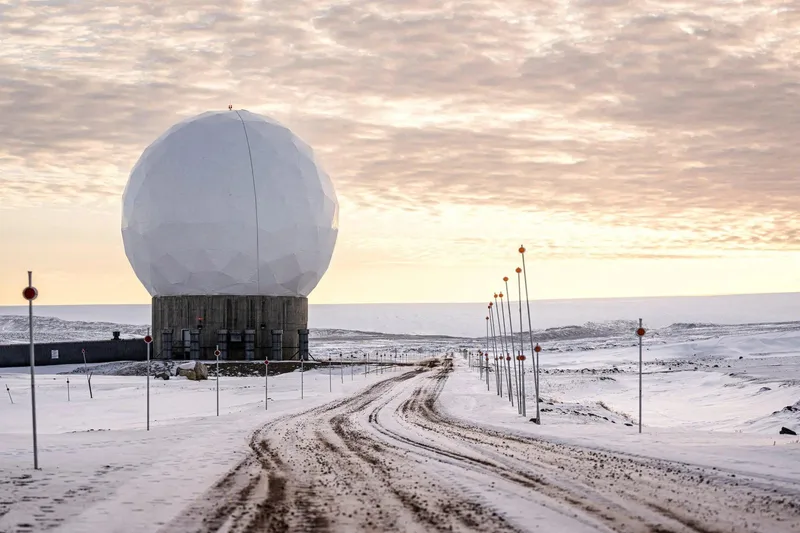
Pituffik Space Base, formerly known as Thule Air Base, remains an important component of American missile-warning, space-surveillance and high-latitude support capabilities.
Its position enables the monitoring of polar trajectories that are particularly relevant to the defense of North America.
Geography explains this importance.
Greenland lies between North America, Europe and the Arctic Ocean. It occupies a central position in the northern approaches to the Atlantic, close to air and maritime routes of considerable military significance.
The island also forms part of the strategic environment surrounding the Greenland-Iceland-United Kingdom gap, historically important for monitoring naval movements between the Arctic and the Atlantic.
The evolution of Russian military capabilities, the development of missile systems and the growing importance of space infrastructure have reinforced American interest in this region.
Greenland did not become strategically important because its mineral resources attracted Washington's attention. It was already strategically important for military reasons.
What has changed is the convergence of several priorities: missile defense, space surveillance, maritime security, critical minerals and industrial competition with China.
This convergence could lead the United States to pursue a more diversified presence combining military installations, economic investment and technological cooperation.
However, military presence does not automatically confer rights over natural resources.
Defense agreements, mining concessions and decisions concerning hydrocarbon development operate under distinct legal frameworks.
Strategic influence may facilitate political dialogue. It does not replace the authorizations required for economic activity.
Denmark: Sovereignty Guarantor and Indispensable Partner
Denmark's position constitutes another limitation on American ambitions.
Greenland forms part of the Kingdom of Denmark but enjoys extensive political autonomy. The 2009 Self-Government Act recognizes the Greenlandic people's right to self-determination and provides for the transfer of substantial powers to local institutions.
Denmark retains essential responsibilities in constitutional, diplomatic and military affairs, although Greenlandic authorities participate in decisions directly affecting their territory.
This arrangement produces a distinctive institutional balance.
Copenhagen cannot disregard Greenlandic political aspirations, while Nuuk does not yet possess all the sovereign instruments required to conduct an entirely independent defense policy.
The United States must therefore deal with two interlocutors whose interests do not always coincide.
For Denmark, the priority is to preserve the integrity of the Kingdom, the stability of the Atlantic alliance and the legitimacy of Greenlandic institutions.
For Greenland, relations with Washington represent both an opportunity for economic diversification and a potential source of political imbalance.
The situation is particularly delicate because Denmark and the United States are NATO allies.
An open confrontation over Greenlandic sovereignty would introduce tensions within an alliance whose cohesion remains essential to North Atlantic security.
Washington therefore has an evident interest in prioritizing negotiation over pressure that could undermine its relationships with Copenhagen and Nuuk.
Military cooperation can advance without changing territorial status.
American investment can also expand without challenging Danish sovereignty.
This distinction creates a pragmatic path: securing substantial strategic advantages without attempting to redraw borders.
Greenlandic Independence and the Resource Dilemma
The question of independence forms the political backdrop to these debates.
Greenland possesses a recognized right to self-determination. However, translating this legal possibility into effective independence raises considerable economic challenges.
Financing public services, monetary stability, external security, infrastructure and administrative capacity would all need to be addressed during any transition.
Natural resources could help reduce some of these dependencies.
A profitable mining industry would generate tax revenues, employment and exports. It could also support the development of ports, energy capacity and industrial services.
But this prospect carries several risks.
A small economy can become heavily dependent on a limited number of extractive projects. Changes in international commodity prices can then produce substantial fluctuations in public revenue.
Foreign investment can also create asymmetric relationships when capital, technology and commercial outlets are controlled by external actors.
Greenland could consequently reduce its fiscal dependence on Denmark while developing a new economic dependence on the United States or other partners.
Formal sovereignty does not automatically guarantee economic autonomy.
This question is especially sensitive in a territory where local communities maintain close relationships with their environment and where traditional activities retain considerable cultural and social importance.
Decisions concerning mines, hydrocarbons and infrastructure cannot therefore be evaluated exclusively in terms of financial returns.
They involve choices about the kind of society Greenland intends to become.
The island must determine not only which resources it wishes to exploit, but also what development model it intends to pursue and what role foreign investors should play.
The Arctic: A Strategic Region That Is Not Automatically Becoming Accessible
Renewed interest in Greenland forms part of a broader transformation of the Arctic.
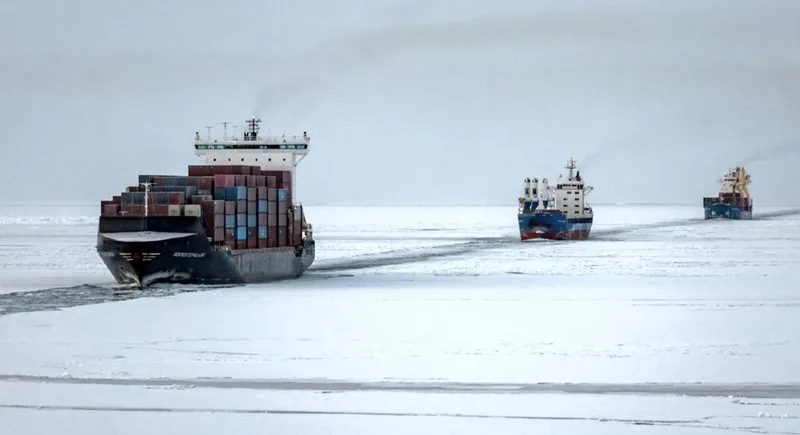
Climate change is progressing much faster in the region than the global average. The retreat of sea ice is gradually altering navigation conditions, prospects for resource access and opportunities for economic activity.
These developments encourage the perception of an Arctic increasingly open to industrial exploitation.
The reality remains considerably more complex.
Declining ice coverage does not eliminate storms, drifting ice hazards or the difficulties of navigation in waters with limited infrastructure.
Nor does it create the ports, energy systems and logistical networks required for industrial development.
Thawing permafrost can even undermine terrestrial infrastructure and increase construction and maintenance costs.
The relative opening of the Arctic is therefore accompanied by new vulnerabilities.
Geopolitically, Russia maintains an extensive territorial and military presence in the region. It also possesses considerable experience in hydrocarbon development and Arctic infrastructure.
China, although not an Arctic Ocean coastal state, has sought for years to expand its scientific, commercial and diplomatic activities at high latitudes.
The United States, Canada and the Nordic countries must consequently adapt their surveillance capabilities, infrastructure and economic strategies.
Within this environment, Greenland occupies a distinctive position.
It lies close to several strategic areas, possesses potentially significant mineral resources and belongs institutionally to the Euro-Atlantic sphere.
Yet its economic development cannot be compared directly with that of large continental territories.
The Arctic is not an empty space whose resources are simply waiting to be extracted. It consists of inhabited territories, distinct jurisdictions, fragile ecosystems and sometimes conflicting political interests.
Can Washington Obtain What It Wants Without Controlling Greenland?
American strategy may ultimately evolve toward an outcome less dramatic than presidential rhetoric suggests.
Washington does not necessarily need sovereignty over Greenland to benefit from its geographical position or natural resources.
Military cooperation already enables the United States to maintain strategic capabilities on the island.
Bilateral agreements could facilitate infrastructure financing, specialized workforce training and industrial development.
Long-term supply contracts could secure American access to certain raw materials without requiring territorial control.
Equity investments, public guarantees and investment-support mechanisms could also reduce the risks associated with mining projects.
Such an approach would offer several advantages.
It would preserve relations with Denmark, respect Greenlandic institutional authority and allow the United States to concentrate its resources on projects with genuine economic potential.
It would also avoid turning every industrial negotiation into a diplomatic confrontation over sovereignty.
But it would require Washington to accept a fundamental limitation: Greenlandic authorities would retain the ability to reject certain projects, impose environmental conditions or favor alternative partners.
That decision-making authority is precisely what distinguishes an economic partnership from a relationship of control.
Greenland could seek to exploit this situation by diversifying its partners and encouraging competition among American, European and other international investors.
Such a strategy could strengthen its negotiating position, provided the proposed projects are sufficiently credible and local institutions possess the capacity to oversee their development.
Three Possible Trajectories for the Coming Decade
The first trajectory would involve deeper economic integration with the United States.
Washington would finance strategic infrastructure, support several mining projects and expand military cooperation with Denmark and Greenland. This could increase investment and accelerate selected industrial developments without changing the island's political status.
The second trajectory would involve controlled diversification.
Greenlandic authorities would seek to distribute investment among several partners, particularly American and European, while maintaining significant restrictions on activities considered incompatible with environmental or social priorities. Development would probably be more gradual, but political and economic decision-making autonomy could be better preserved.
The third trajectory would involve a persistent gap between geopolitical ambitions and economic achievements.
American announcements would multiply, but projects would remain constrained by high costs, regulatory requirements and insufficient commercial profitability. Greenland would retain enormous military importance without becoming a major center of hydrocarbon or critical mineral production.
These trajectories are not entirely mutually exclusive. Expanded military cooperation could coexist with limited mining activity and continued restrictions on hydrocarbons.
In the near term, such a combination appears more plausible than a rapid transformation of the island into a new global energy frontier.
The decisive indicators will be less the political announcements than the concrete decisions that follow: changes to licensing rules, capital actually committed, environmental authorizations, infrastructure construction and the commercial production of economically viable deposits.
American Power and the Limits of Access
The initiative attributed to Donald Trump highlights a profound transformation in international relations.
Major powers are increasingly seeking to secure the resources, infrastructure and territories essential to their industrial and military capabilities. Supply chains are no longer regarded merely as commercial mechanisms. They are becoming components of national security.
Greenland brings several dimensions of this transformation together.
It possesses a strategically important geographical position, potentially significant mineral resources and a longstanding military value reinforced by emerging technologies.
But it also possesses political institutions, economic powers and a population whose choices cannot simply be subordinated to Washington's strategic priorities.
The United States can finance projects, propose partnerships, strengthen its military presence and seek to influence investment decisions. Under the existing legal framework, it cannot unilaterally transform Greenland's natural resources into American assets.
This distinction is the central issue.
Greenland does not necessarily lack resources. What many projects lack are the technical, financial and political conditions required for their sustainable exploitation.
The challenge of the coming decade will therefore be to determine whether American ambitions can produce cooperation that creates genuine value for Greenlanders, or whether they will remain primarily an expression of strategic rivalry among major powers.
The paradox of this emerging Arctic competition is straightforward: Washington may regard Greenland as indispensable to its security and industrial future, but that importance does not give it the authority to determine the island's destiny.
Main Sources
- United States Geological Survey (USGS) — Circum-Arctic Resource Appraisal: Estimates of Undiscovered Oil and Gas North of the Arctic Circle, Fact Sheet 2008-3049, 2008. Geological estimates of potential Arctic hydrocarbon resources.
- Government of Greenland (Naalakkersuisut) — July 15, 2021, announcement ending the issuance of new oil and gas exploration licenses.
- Kingdom of Denmark — Act on Greenland Self-Government, Act No. 473 of June 12, 2009. Institutional framework governing Greenland's autonomy and right to self-determination.
- Kingdom of Denmark and United States — Agreement Concerning the Defense of Greenland, April 27, 1951, and subsequent supplementary agreements. Historical legal framework for the American military presence.
- United States Space Force — Institutional documentation concerning Pituffik Space Base and its space-surveillance and missile-warning missions.
- Geological Survey of Denmark and Greenland (GEUS) — Geological assessments and publications concerning Greenland's mineral resources and critical raw materials.
- Government of Greenland — 2021 legislation restricting the extraction of uranium-bearing minerals.
- International Energy Agency (IEA) — Global Critical Minerals Outlook 2025. Assessment of concentration risks in critical mineral processing and supply chains.
Verification note — October 14, 2026: The statements attributed to Donald Trump concerning a new oil, gas and mining initiative, together with the detailed provisions of the reported September 22, 2026 trilateral agreement, originate from the initial information supplied for this article. They have not been independently corroborated here through primary documentation. Confirmation is required before publication. The Arctic resource estimates cited in this article must not be interpreted as proven petroleum reserves located in Greenland.
Atlas Limits Research Desk
Atlas Limits’ editorial and analytical desk.