By imposing sanctions directly on the International Criminal Court, Washington has taken its confrontation with international justice to a new level. The decision no longer targets only individual judges or disputed investigations: it threatens the operational foundations of an institution supported by 125 states. Behind the legal confrontation lies a deeper question: whether major powers can use their financial, technological and diplomatic dominance to determine the limits of international law.
On October 9, 2026, two events placed international justice at the center of global attention. In Oslo, the Norwegian Nobel Committee awarded the Nobel Peace Prize to South African jurist Navi Pillay, a former United Nations High Commissioner for Human Rights and former judge of the International Criminal Court. In Washington, Donald Trump's administration announced sanctions directly targeting that same institution, headquartered in The Hague.
The coincidence carried considerable symbolic weight. On one side stood international recognition of the principle that the gravest crimes should be prosecuted regardless of the identity or political position of their perpetrators. On the other stood the determination of a major power to shield its nationals and certain allies from a jurisdiction whose authority it rejects.
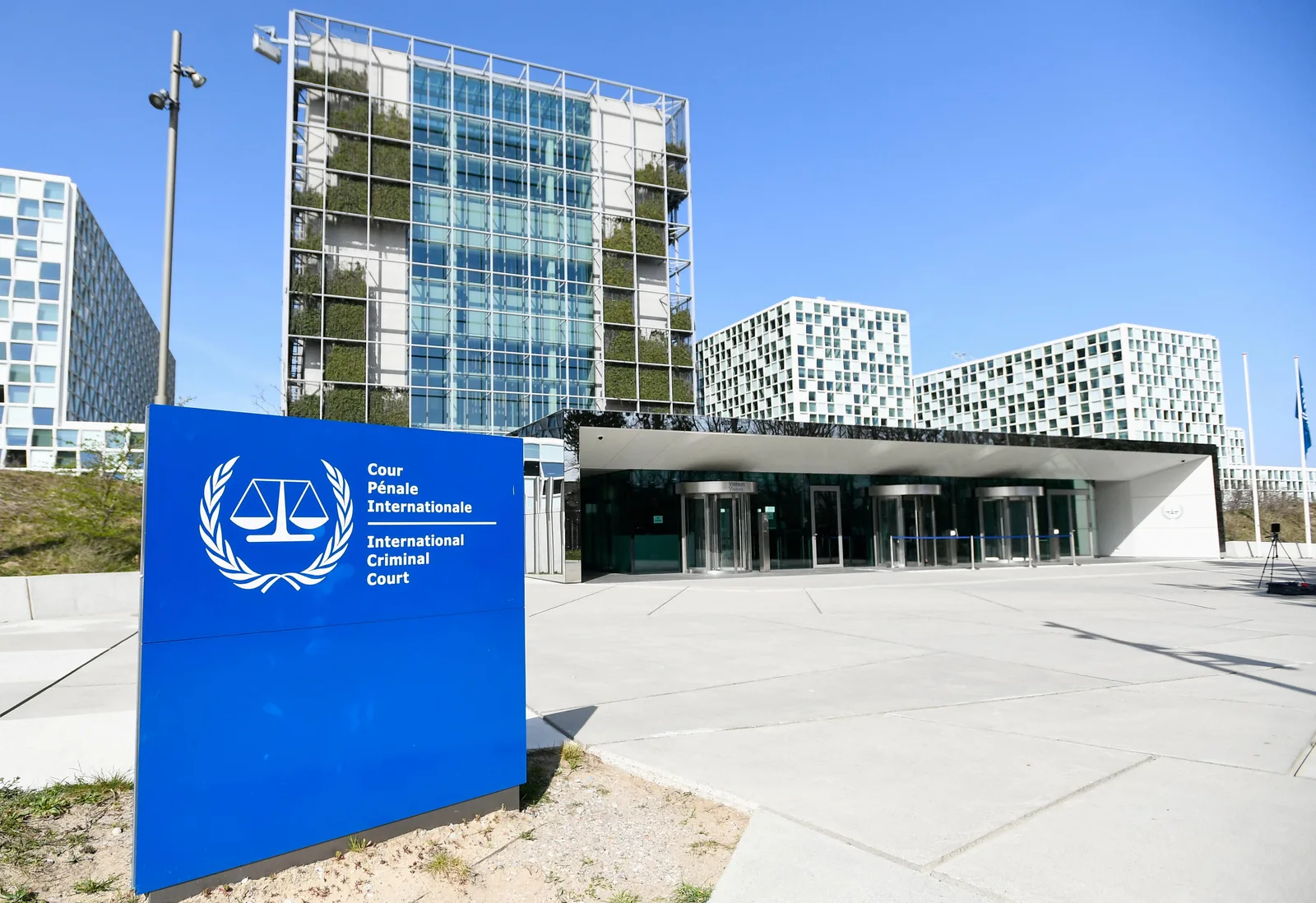
Yet the significance of the American decision extends beyond this contrast. For the first time, the United States has placed the International Criminal Court itself on its sanctions list. What had long been a dispute over judicial jurisdiction has become a direct confrontation over the institution's ability to operate.
The question is no longer simply whether Washington recognizes the Court's authority. It is whether an international judicial institution can continue functioning normally when a country controlling essential parts of the world's financial and technological infrastructure decides to restrict its access to them.
Sanctioning the institution itself
The American decision of October 9 represents a significant escalation in the sanctions policy directed against the International Criminal Court. Previous measures had primarily targeted individuals: judges, prosecutors and officials associated with particular investigations. The institution itself now appears on the list of Specially Designated Nationals and Blocked Persons maintained by the Office of Foreign Assets Control, the Treasury Department agency responsible for administering economic sanctions.
Placing an organization on this list produces consequences extending far beyond American territory. Subject to applicable exemptions, it freezes property and interests in property falling under US jurisdiction and prohibits certain transactions involving American persons.
In an international economy where dollar payments, correspondent banking, professional software, insurance and digital services remain deeply connected to the United States, these restrictions can affect an organization operating entirely within Europe.
The Treasury Department accompanied its decision with four general licenses, numbered 13 through 16, covering certain transitional operations, telecommunications and business software, pensions, and transactions involving certain detainees. These exemptions indicate that Washington does not intend to halt indiscriminately every activity associated with the Court. They do not, however, eliminate the broader structural effects of the designation.
Secretary of State Marco Rubio presented the policy as a defense of American sovereignty against an institution accused of exercising excessive jurisdiction over nationals of countries that have not joined its founding treaty. Washington has demanded, among other things, the abandonment of proceedings targeting certain Israeli officials, the closure of investigations involving American nationals and changes to the Court's jurisdictional framework.
A six-month period, extending to April 9, 2027, applies to certain authorized transitional transactions. It does not amount to a general suspension of the Court's designation.
The distinction is fundamental. Sanctions against individuals seek to influence particular officials. Sanctions against an institution seek to alter an organization's behavior by affecting its capacity to function.
By targeting the operational foundations of the Court, Washington has transformed a jurisdictional disagreement into an instrument of economic coercion.
A court born from the limits of sovereignty
The International Criminal Court was established under the Rome Statute, adopted in 1998 and entering into force on July 1, 2002. It became the first permanent international criminal tribunal responsible for prosecuting individuals accused of the gravest crimes under international law: genocide, crimes against humanity, war crimes and the crime of aggression, subject to the specific jurisdictional conditions applicable to each.
Its creation responded to a historical problem. National courts may be unable or unwilling to prosecute serious crimes when those responsible control state institutions, benefit from political protection or operate in circumstances of armed conflict.
The international tribunals established after the Second World War, followed by those created for the former Yugoslavia and Rwanda, had demonstrated that international criminal accountability was possible. Those mechanisms, however, were established in response to particular historical circumstances.
The ICC was intended to make that principle permanent.
Its operations rest on the principle of complementarity. The Court is not designed to replace national judicial systems systematically. It intervenes primarily when the relevant national authorities are unwilling or genuinely unable to investigate or prosecute.
This architecture attempts to reconcile state sovereignty with the requirement of individual criminal responsibility.
Yet it contains a profound political contradiction. International justice depends on cooperation from the very states whose officials or actions it may be called upon to examine.
The Court has neither an independent international police force nor military capabilities enabling it to enforce arrest warrants. It relies on national authorities to apprehend suspects, protect witnesses, obtain certain evidence and implement judicial decisions.
The system therefore rests on a distinction between legal authority and the material capacity to enforce it.
The two do not necessarily coincide.
Why Washington rejects the Court's jurisdiction
The United States signed the Rome Statute in 2000 under President Bill Clinton but never ratified it. The administration of George W. Bush subsequently notified the United Nations that the United States did not intend to become a party to the treaty.
This position is not unique to Donald Trump. It reflects a longstanding American reluctance to accept international judicial institutions capable of exercising authority over American military personnel or political officials without the direct consent of the United States.
The disagreement concerns a central legal question: can an international court prosecute a national of a non-member state when the alleged crimes were committed on the territory of a state that has accepted the Court's jurisdiction?
The Rome Statute allows this under certain conditions. Jurisdiction may be based on the territory where the alleged acts occurred, regardless of the perpetrator's nationality. It may also arise from a referral by the United Nations Security Council.
Washington disputes the consequences of this framework when it concerns American nationals or citizens of allied states that do not recognize the Court.
Supporters of the ICC argue that territorial jurisdiction is an established principle of criminal law. Individuals may be prosecuted for acts committed within a state's territory even when they hold foreign nationality.
American opponents maintain that an international tribunal established by treaty should not exercise authority over nationals of states that have not accepted its obligations.
The dispute cannot therefore be reduced to a simple confrontation between law and its rejection. It involves competing interpretations of sovereign consent, territorial jurisdiction and international criminal responsibility.
The sanctions, however, introduce an additional dimension. Washington is no longer merely challenging the Court's jurisdiction through legal and diplomatic arguments. It is using its own economic jurisdiction to pressure an international organization into changing its conduct.
Sovereignty becomes not only a defensive legal principle but also an instrument of external coercion.
Israel, Afghanistan and the boundaries of American exceptionalism
The most serious tensions between Washington and the ICC have emerged around investigations concerning Afghanistan and the Palestinian territories.
The Afghanistan investigation raised the possibility of examining crimes allegedly committed by different parties to the conflict, including alleged conduct involving American military personnel or intelligence officials. For Washington, that prospect directly challenged its ability to control judicial proceedings involving its own nationals.
The Palestinian investigation subsequently elevated the confrontation to a different level.
In November 2024, the ICC issued arrest warrants for Israeli Prime Minister Benjamin Netanyahu and former Defense Minister Yoav Gallant in connection with its investigation into the situation in Palestine. The warrants concern alleged crimes falling within the Court's jurisdiction and do not constitute findings of guilt.
Israel, which is not a party to the Rome Statute, rejects the Court's jurisdiction and disputes the allegations. The United States similarly argues that the ICC has exceeded its authority.
For defenders of the Court, the possibility of prosecuting officials from non-member states when the relevant jurisdictional requirements are satisfied is precisely what prevents nationality or political power from becoming absolute shields against accountability.
For Washington and Israel, that interpretation allows a judicial institution whose authority they have not accepted to exercise power over their leaders.
The dispute exposes an asymmetry that has long characterized international criminal justice. The most influential states possess diplomatic, military and economic resources enabling them to resist judicial decisions that weaker countries may find considerably harder to challenge.
The principle of universal accountability confronts the unequal distribution of political power.
The dollar as an instrument of global jurisdiction
Perhaps the most important aspect of the American decision lies not in the accusations against the ICC but in the mechanism chosen to pressure it.
The United States occupies an exceptional position within the international financial system. The dollar remains the world's principal reserve currency, a central medium for cross-border payments and a dominant instrument across numerous financial markets.
This centrality gives American authorities influence extending well beyond the direct regulation of their own territory.
An institution headquartered in the Netherlands may depend on banks using American correspondent institutions, suppliers with operations in the United States, software provided by American technology companies or contracts involving intermediaries concerned about sanctions exposure.
Even when a particular transaction is not directly prohibited under American law, private operators may choose to avoid it to minimize legal and commercial risks.
This phenomenon, commonly described as overcompliance, can amplify the effects of sanctions beyond their formal legal scope.
For an international court, the possible consequences are extensive: payment delays, contractual difficulties, restricted access to certain services, higher operating costs and uncertainty among institutional partners.
The Court may possess a legal mandate recognized by 125 states while encountering obstacles to paying personnel, financing missions or maintaining essential infrastructure.
This is where the confrontation acquires its geoeconomic dimension.
American sanctions demonstrate how a major power can attempt to exercise indirect authority over an international institution without controlling its territory, buildings or governing bodies.
Influence over the economic networks on which that institution depends may be sufficient.
The question extends beyond the ICC. It potentially concerns any international organization whose legal autonomy is not accompanied by sufficient financial and technological independence.
Europe confronts its own dependencies
Europe's response has become a decisive element of the crisis.
The European Union reaffirmed on October 10 its commitment to international criminal justice and to the principle that those responsible for the gravest crimes must be held accountable.
Several European governments have expressed opposition to the American sanctions. The Netherlands, as the Court's host country, occupies a particularly sensitive position. It must ensure the operating conditions of an international judicial institution located on its territory while preserving its strategic relationship with Washington.
Europe's challenge, however, is not exclusively diplomatic.
Governments may condemn sanctions without possessing the instruments needed to neutralize their effects on banks and businesses.
The European Union has encountered this contradiction before. Its Blocking Statute, designed to limit certain extraterritorial effects of foreign sanctions, demonstrates that legal protections can be constructed. Their effectiveness nevertheless depends on the behavior of economic operators, their exposure to American markets and their willingness to accept commercial risks.
A European bank forced to choose between maintaining a relationship with the ICC and preserving access to the American financial system may conclude that the two commitments carry radically different economic consequences.
Political solidarity does not automatically guarantee operational continuity.
If European governments intend to preserve the Court's autonomy, they will need to examine concrete solutions: secure payment arrangements, protections for service providers, continuity of digital infrastructure, legal guarantees and funding for essential operations.
Such measures would not necessarily require a rupture with Washington. They would, however, require acknowledging that support for an international institution cannot be confined to declarations.
Europe's ability to protect a court located on its own territory will become a test of its institutional sovereignty.
The victims may bear the consequences
The effects of the sanctions are not limited to the Court's judges or administrative departments.
The ICC operates in situations where victims frequently have limited opportunities to obtain justice or compensation through their own national institutions.
The Trust Fund for Victims, associated with the Rome Statute system, supports reparations and assistance programs for people affected by crimes falling within the Court's jurisdiction.
On October 9, the Fund warned that American sanctions could disrupt the financial channels, services and partnerships necessary for its programs.
This dimension changes the political interpretation of the confrontation.
Washington presents the sanctions as a means of protecting American and allied officials against a court it considers illegitimate. Yet their potential consequences extend to victims of crimes committed in conflicts having no direct connection to the United States or Israel.
Proceedings involving African countries, Ukraine or other situations could be indirectly affected by broader difficulties in the Court's operations.
The risk is that institutional sanctions distribute their costs across the entire judicial system, regardless of the particular cases that prompted the American decision.
Economic restrictions do not always distinguish between politically contested activities and those enjoying much broader international support.
A potentially significant imbalance therefore exists between the diplomatic objective being pursued and the consequences for access to justice.
Navi Pillay and the historical contradiction
The award of the 2026 Nobel Peace Prize to Navi Pillay adds a historical dimension to the crisis.
Born in South Africa under apartheid, Pillay developed part of her legal career within a system in which racial classification determined access to rights and institutions. She subsequently held major positions in international justice, including at the International Criminal Tribunal for Rwanda, the International Criminal Court and the United Nations Office of the High Commissioner for Human Rights.
Her career embodies an important development of the second half of the twentieth century: the idea that the protection of fundamental rights cannot depend exclusively on the willingness of national governments.
This development emerged through imperfect institutions, political compromises and frequently slow judicial procedures. It nevertheless introduced a new requirement into international relations: certain acts create individual criminal responsibility that cannot automatically disappear behind official authority.
Pillay's more recent work concerning the Palestinian territories has also generated considerable controversy, particularly following the conclusions of the United Nations commission of inquiry she chaired regarding conduct in Gaza.
The Nobel Committee's recognition does not resolve those disputes. It does, however, underline the importance its members attach to defending international justice.
The coincidence of the Nobel award and the American sanctions crystallizes two opposing movements.
One seeks to strengthen the authority of international legal norms. The other maintains that no institution should exercise authority over a major power or its allies beyond the limits that power accepts.
It would be reductive to interpret this merely as a confrontation between an individual and an administration. The two events expose a structural contradiction that has shaped the international order since its creation.
A crisis of legal universalism
The contemporary international system rests on two principles that coexist uneasily.
The first is the sovereign equality of states. Each state possesses its own legal personality and remains, in principle, independent in the exercise of its powers.
The second is the existence of international norms whose authority cannot be made entirely dependent on government preferences.
War crimes, crimes against humanity and genocide belong to this second category. Their gravity provides the justification for mechanisms of accountability extending beyond national borders.
The difficulty arises when these mechanisms affect the interests of states powerful enough to resist them.
The United States is not alone in defending a restrictive interpretation of the ICC's jurisdiction. Russia and China are also outside the Rome Statute. Other governments maintain ambivalent relationships with the Court, depending on the investigations and political circumstances involved.
This situation prevents international criminal justice from operating as a genuinely universal system.
Its legal ambitions are extensive, but their implementation remains uneven.
The Court can issue arrest warrants without always being able to enforce them. It can investigate certain territories while being denied access to others. It may enjoy substantial diplomatic support while struggling to secure the cooperation necessary to carry out its mandate.
These limitations existed before the sanctions of October 9.
What is new is that a major state is now using economic restrictions against the institution itself, rather than merely refusing to cooperate with it.
The precedent could encourage other governments to treat international judicial institutions as legitimate targets for economic retaliation when their decisions conflict with national interests.
The practical reach of international law would then depend increasingly on the ability of institutions to withstand such pressure.
American power and its contradictions
Washington's position contains a historical contradiction.
The United States played a major role in constructing the postwar international legal order. It participated in the Nuremberg trials, supported the creation of the United Nations and contributed to the development of numerous international instruments protecting fundamental rights.
At different moments, it has also supported mechanisms of criminal accountability for those responsible for mass atrocities.
That tradition has never eliminated its attachment to national sovereignty or its reluctance to accept certain international jurisdictions.
The current policy, however, takes this tension considerably further.
The issue is no longer simply preserving an American exception within an international system of rules. It is using American power to influence the conditions under which a multilateral institution can exercise its mandate.
The distinction matters.
A major power may refuse to join a treaty. It may challenge a legal interpretation, defend its nationals and use available diplomatic mechanisms.
But when it seeks to impair the material functioning of an international court, it transforms a legal disagreement into a systemic confrontation.
This development also carries risks for the United States.
The centrality of the dollar and American financial infrastructure rests partly on the confidence international actors place in their stability, predictability and accessibility.
The more these infrastructures become instruments of coercion in sensitive institutional disputes, the stronger the incentive for exposed states and organizations to seek alternatives.
That does not mean American financial dominance faces an immediate threat. Network effects, market depth and the international importance of the dollar remain substantial.
But each additional political use of that dominance strengthens incentives to reduce particular dependencies.
The sanctions against the ICC could therefore contribute, on their own scale, to a broader process of financial and institutional fragmentation.
The real test begins now
The American decision does not mean the disappearance of the International Criminal Court.
The institution remains established under a treaty in force, possesses its judicial organs and retains the support of its member states. American sanctions cannot, by themselves, abolish its mandate.
They can, however, reduce its effectiveness, increase its operating costs and discourage partners from cooperating with it.
The distinction between legal survival and operational capacity will be central in the coming months.
Three developments will determine the outcome of this confrontation.
The first will be the ability of the 125 states parties to maintain the funding and services necessary for the Court's operations. An institution can remain legally intact while gradually being weakened by administrative and financial constraints.
The second will concern measures adopted by the European Union and other ICC partners to limit the extraterritorial effects of American sanctions. Their credibility will depend less on the strength of their condemnations than on the practical protections they provide to economic operators.
The third will be the evolution of Washington's position. The United States could maintain pressure to obtain institutional concessions, strengthen restrictions or seek an arrangement that protects its interests without producing lasting paralysis of the Court.
None of these outcomes is predetermined.
One reality, however, is already apparent: international judicial independence can no longer be understood solely in terms of legal status, procedure or the appointment of judges.
It also requires the capacity to finance operations, access essential infrastructure and maintain economic relationships despite pressure from powerful states.
The sovereignty of law against the sovereignty of power
The crisis that began on October 9, 2026 reveals a profound transformation in the relationship between power and international institutions.
For several decades, the construction of international criminal justice rested on the belief that individual accountability could gradually be extended, even in a world organized around sovereign states.
That ambition never eliminated power politics. It sought to impose certain limits upon them.
The American sanctions now reverse the perspective. It is no longer only political authority that must answer before the law. An international judicial institution must demonstrate that it can withstand the economic pressure of a major power.
The distinction is essential.
The ICC lacks the means to enforce its authority independently. Its legitimacy rests on its founding treaty, judicial procedures and cooperation from its members. The United States, meanwhile, possesses financial instruments capable of affecting the Court's operations beyond American territory.
The confrontation therefore exposes an asymmetry between the normative reach of international law and the material resources of state power.
The question is not whether the International Criminal Court is beyond criticism. Like any judicial institution, it must remain subject to scrutiny, to the accountability mechanisms established by its statute and to reasoned legal objections.
The question is whether such disagreements can justify sanctions capable of obstructing the institution's overall functioning.
An international court whose operational existence depends on the continuing consent of the powerful states it may be required to investigate would lose part of the purpose for which it was created.
The Nobel Peace Prize awarded to Navi Pillay and the American sanctions against the ICC illustrate, within hours of each other, the two faces of the contemporary international order: an ambition for universal justice and a profoundly unequal distribution of coercive power.
The Court's future will not depend solely on the decisions of its judges. It will depend on the willingness and capacity of the states that established it to guarantee the resources necessary to fulfill its mandate.
International justice is entering a phase in which its independence will be measured not only by its ability to judge the powerful, but also by its ability to continue operating when those powers decide to sanction it.
Main Sources
- US Department of the Treasury, Office of Foreign Assets Control, International Criminal Court Designation and General Licenses, October 9, 2026.
- International Criminal Court, The ICC Strongly Rejects US Sanctions Against the Institution, statement of October 9, 2026.
- Council of the European Union, declaration by the High Representative on behalf of the European Union, October 10, 2026.
- International Criminal Court, Trust Fund for Victims, statement concerning the consequences of American sanctions, October 9, 2026.
- Human Rights Watch, US Sanctions on ICC Put Global Justice at Risk, October 9, 2026.
- Reuters, October 9, 2026 reporting on American sanctions and international reactions.
- Rome Statute of the International Criminal Court, adopted July 17, 1998; entered into force July 1, 2002.
Atlas Limits Research Desk
Atlas Limits’ editorial and analytical desk.