With the announced acquisition of more than 550 megawatts of solar capacity in Greece and a parallel partnership with Khazna Data Centers, Abu Dhabi is pursuing a strategy that extends well beyond renewable electricity generation. These agreements point toward a growing convergence between energy infrastructure, storage, industrial capital and computing power, as artificial intelligence reshapes the electricity requirements of European economies.
In Greece, a solar project becomes a strategic asset
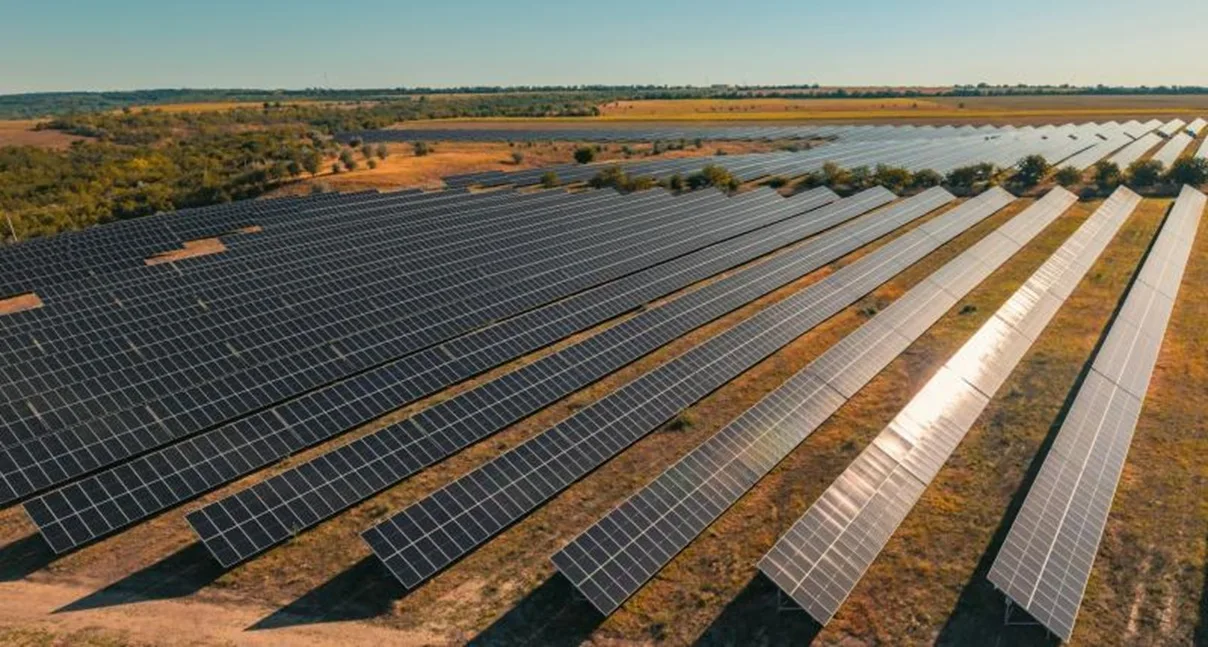
On October 24, 2026, the announcement of an energy acquisition involving an Emirati group and a British developer revealed a deeper transformation in international industrial strategies. Masdar, Abu Dhabi's renewable energy company, signed an agreement to acquire a Greek photovoltaic project exceeding 550 megawatts of capacity from Lightsource bp. At the same time, the group announced a cooperation agreement with Khazna Data Centers to explore the development of digital infrastructure powered by renewable energy.
The two agreements do not constitute a single legal transaction. The first concerns an electricity generation asset whose ownership transfer remains subject to regulatory approvals. The second establishes an industrial partnership that is still exploratory. Their simultaneous announcement nevertheless points toward a common direction: bringing electricity availability, infrastructure ownership and the growing requirements of the digital economy closer together.
The solar project is expected to begin operations by the end of 2026. According to Masdar, its annual electricity generation will be equivalent to the consumption of more than 200,000 households. The acquisition also includes two privately owned substations connected to the transmission grid, while the company intends to add battery energy storage capacity.
That final component is particularly significant. The investment does not concern photovoltaic generation capacity alone. It also includes infrastructure that enables electricity to reach the grid, improves its potential availability and may ultimately increase its commercial value.
In an energy system increasingly shaped by grid constraints and fluctuations in renewable generation, the economic value of a power asset depends not only on how much electricity it produces, but also on how effectively it integrates with the wider electricity system.
TERNA ENERGY: the platform for European expansion
The acquisition will be carried out through TERNA ENERGY, the Greek company that has become one of Masdar's principal European investment platforms.
This structure emerged from a transaction initiated in November 2024, when the Emirati group acquired an initial 70% stake in TERNA ENERGY, based on a valuation of €3.2 billion. In April 2025, Masdar completed its acquisition of full ownership.
The agreement with Lightsource bp represents Masdar's first strategic investment through this platform since its complete integration.
The choice of TERNA ENERGY reflects a clear industrial rationale. Rather than developing every European investment directly from Abu Dhabi, Masdar now controls a local company with established experience in regulatory procedures, renewable energy development, grid connections and relationships with participants in the Greek electricity market.
This structure combines international capital with local operational capabilities, two complementary resources in sectors where development timelines can extend over several years.
The regional ambition is substantial. Masdar has outlined a €5.5 billion investment programme to support its expansion across Central and Southeastern Europe, targeting 6 gigawatts of operational capacity by 2030.
For comparison, the Greek solar project represents more than 0.55 gigawatts, equivalent to slightly over 9% of that regional capacity target. This comparison illustrates the project's industrial scale, although it does not mean the acquisition alone accounts for that proportion of future portfolio growth.
The €5.5 billion figure refers to the broader regional investment programme, not the purchase price of the Lightsource bp project. Neither the acquisition consideration nor the transaction's financing structure has been disclosed.
Without a published price, it is impossible to calculate the acquisition multiple, estimate the expected investment return or determine whether a premium has been paid for the grid connection infrastructure and future storage potential.
Closing is expected before the end of 2026, subject to regulatory approvals and customary conditions. The agreement has therefore been signed, but the definitive transfer of ownership has not yet occurred.
Energy storage is changing the economics of solar power
The proposed addition of battery storage is among the most consequential aspects of the project.
Photovoltaic installations generate electricity primarily when sunlight is available. This creates a potential mismatch between the hours of electricity production and the periods when electricity commands its highest economic value.
When numerous solar facilities inject electricity into the grid simultaneously, wholesale market prices can decline, sometimes sharply. Conversely, electricity demand can remain elevated after sunset, when photovoltaic generation disappears.
Storage can shift part of the available energy across time, provided that sufficient capacity and appropriate technical and commercial conditions exist. It can help alleviate certain injection constraints, provide flexibility services and improve the management of differences between electricity production and consumption.
For investors, this development is gradually transforming the renewable infrastructure business model.
Value no longer depends exclusively on the annual quantity of electricity generated. It increasingly depends on the ability to determine when electricity is delivered, respond to grid requirements and structure supply contracts around customers' consumption patterns.
Masdar has not disclosed the proposed battery system's power rating, energy capacity, investment cost or precise implementation schedule. It would therefore be premature to quantify its financial benefits or assume that the installation could provide uninterrupted electricity.
This distinction becomes especially important when potential customers include data centers, whose electricity requirements can remain substantial around the clock.
Khazna and the changing geography of data centers
The second agreement announced on October 24 brings Masdar together with Khazna Data Centers, a specialist in digital infrastructure.
The companies intend to explore the development of data centers in Greece, combining Khazna's expertise in designing and operating such facilities with Masdar's capabilities in renewable electricity generation and storage.
The agreement does not yet represent a final construction decision. No quantified joint investment, new equity participation or electricity supply commitment directly linked to the Lightsource bp solar project has been announced.
Its strategic significance is nevertheless clear.
Artificial intelligence requires extensive physical infrastructure: specialized buildings, processors, cooling equipment, backup systems, telecommunications networks and substantial electricity capacity. The expansion of digital applications is therefore increasing the importance of a resource long treated as external to the core computing industry: electricity available in the right location, at the right time and at a competitive cost.
Data center location decisions no longer depend solely on proximity to users or the quality of digital connectivity. They also depend on the electricity grid's ability to accommodate substantial additional consumption, the reliability of supply and long-term economic conditions.
Greece is seeking to strengthen its position in this emerging industrial landscape.
Located at the intersection of Europe, Africa and Asia, the country benefits from a geography conducive to international exchanges and connectivity infrastructure. But geography alone cannot guarantee the emergence of a major digital hub.
Electricity connection availability, transmission capacity, permitting timelines, project financing and the competitiveness of long-term supply agreements will remain decisive.
The importance of the Masdar–Khazna partnership lies in bringing together, at least at the cooperation stage, two areas of expertise traditionally managed separately: electricity infrastructure development and computing infrastructure development.
Digital demand puts Greece's electricity grid to the test
Greece's digital ambitions already face significant physical constraints.
A study presented in 2026 and reported by Greek financial media indicated investor interest in data center projects representing more than 1 gigawatt of power demand, substantially exceeding the country's operational capacity at the time.
This interest should not be confused with facilities already built or fully financed. It nevertheless illustrates the potential scale of new demands on the electricity system.
In Attica, the Athens region particularly attractive to data center operators, the concentration of proposed projects is intensifying questions about available grid connections and possible competition between new industrial consumers.
The challenge extends beyond annual electricity production. It also concerns the infrastructure required to transport electricity to consumption sites and the distribution of demand throughout the day.
A solar facility located in a region with favorable land availability and sunlight cannot necessarily supply a distant data center without relying on the grid and its available transmission capacity.
Similarly, a photovoltaic installation rated at 550 megawatts does not provide a guaranteed 550 megawatts continuously. Its output depends on weather conditions and the day-night cycle.
Integrating renewable electricity with data centers therefore requires complementary arrangements: storage, electricity procurement contracts, demand flexibility, backup capacity and, depending on the configuration, other generation sources.
It is precisely within this complexity that the industrial value of the Masdar–Khazna partnership could emerge.
From energy capital to digital capital
The Emirati strategy extends beyond the geographical diversification of investment portfolios.
For several years, Abu Dhabi has been developing positions in renewable energy, technological infrastructure and artificial intelligence-related activities. These sectors operate according to different economic models, but their interdependencies are becoming increasingly significant.
Electricity generation requires substantial upfront investment, long-lived infrastructure and visibility over future revenues. Data centers also demand considerable capital expenditure while remaining exposed to rapid technological changes and evolving computing requirements.
Bringing the two sectors closer together creates several potential complementarities.
An electricity producer may seek customers capable of contracting substantial volumes over long periods. A data center operator may seek to secure its electricity supply and reduce exposure to price volatility. An investor with interests across both sectors may facilitate the coordination of complex industrial projects.
These complementarities do not automatically guarantee superior returns. Financing requirements, technological risks, storage costs and regulatory constraints can also accumulate.
They nevertheless create the possibility of an industrial integration strategy in which energy availability becomes a source of digital competitiveness.
Globally, Masdar reports a portfolio exceeding 65 gigawatts of capacity, encompassing different development stages and multiple renewable technologies. The group aims to reach 100 gigawatts by 2030.
These figures illustrate an international ambition, but they should not be interpreted as entirely operational capacity. Distinguishing announced projects, developments under construction and facilities actually connected to the grid remains essential when assessing the industrial strength of an energy portfolio.
Greece in Abu Dhabi's economic expansion strategy
The agreements come amid growing economic cooperation between the United Arab Emirates and Greece, two countries whose diplomatic relationship now extends beyond five decades.
For Athens, international capital flowing into renewable infrastructure can support investment, strengthen electricity capacity and facilitate the development of new industrial activities.
For Abu Dhabi, Greece offers an entry point into the European market, with potential expansion opportunities across the Balkans and Central Europe.
The transaction therefore illustrates a form of economic projection that relies neither on traditional hydrocarbon exports nor on the passive ownership of financial stakes.
Instead, it involves acquiring industrial platforms, developing physical infrastructure and establishing partnerships in sectors considered strategically important for future growth.
This development also raises questions for Europe.
The European Union is simultaneously seeking to accelerate its energy transition, expand its digital capabilities and strengthen technological autonomy. These objectives require substantial investment, part of which will necessarily originate from international capital.
The issue is therefore not whether every foreign investment represents a loss of sovereignty, but under what conditions strategic assets are owned, operated and regulated.
Ownership of a power plant does not, by itself, confer control over a national electricity grid. Similarly, a data center partnership does not automatically imply control over hosted data, deployed software or computing capacity that may eventually be installed.
The implications for European industrial autonomy will depend on project governance, geographical location, contractual arrangements and the applicable regulatory framework.
A promising but incomplete convergence
Several uncertainties remain.
The first concerns completion of the solar acquisition. Until the necessary approvals have been obtained, the transaction cannot be considered finalized.
The second relates to additional investment requirements. Integrating batteries involves technological choices, further capital expenditure and a business model capable of remunerating the services provided to the electricity system.
The third concerns the Khazna partnership. Its transformation into operational projects will depend on site selection, actual demand for digital capacity, available grid connections and financing decisions.
Finally, the strategic association between renewable generation and data centers does not yet establish the existence of an integrated industrial value chain. No published information demonstrates that electricity generated by the project acquired from Lightsource bp will be directly allocated to infrastructure operated by Khazna.
Three distinct levels must therefore be separated: the contracted acquisition of a solar asset, the announced cooperation between two companies and the possibility of deeper energy-digital integration.
Whether the second level eventually develops into the third will be one of the most important developments to monitor.
Electricity: the new frontier of industrial power
The Masdar–Lightsource bp transaction might initially appear relatively conventional in a European renewable energy market characterized by acquisitions, consolidation and cross-border investment.
Its association with the Masdar–Khazna agreement, however, gives it broader significance.
For decades, major energy strategies primarily sought to secure access to resources, control generation capacity and manage transportation infrastructure. The rise of artificial intelligence adds another dimension to this equation: the ability to convert reliable electricity availability into commercially viable computing power.
In this transformation, competitive advantages will not depend exclusively on ownership of advanced processors or sophisticated software. They will also depend on electricity networks, storage capacity, land availability, financing and energy procurement conditions.
The United Arab Emirates appears determined to position itself at the intersection of these different value chains. Greece could become one of the European locations where this strategy takes concrete industrial form.
There is no guarantee that the announced agreements will ultimately produce an integrated network of solar facilities, batteries and data centers. But they already indicate a change in how investors approach strategic infrastructure.
As artificial intelligence becomes an increasingly physical industry, digital power is becoming more dependent on electrical power. And the actors capable of financing, developing and coordinating both could occupy a central position in the emerging geography of global industry.
Principal sources
- Abu Dhabi Media Office / Masdar — Masdar expands portfolio in Greece with major solar project acquisition, October 24, 2026.
- Masdar — Institutional announcements concerning the acquisition of TERNA ENERGY and its regional investment programme.
- G42 — Announcements concerning cooperation with Greek partners in digital infrastructure and artificial intelligence, October 2026.
- Kathimerini — Who's afraid of data centers? Spata is, October 2026.
- Energygame / Powergame — Reporting on Khazna–G42–Copelouzos agreements and Greek data center developments, October 23, 2026.
Atlas Limits Research Desk
Atlas Limits’ editorial and analytical desk.