For decades, rising oil prices provided one of the most reliable forms of economic protection for the Middle East's major producers. When energy markets tightened, export revenues increased, government budgets gained additional flexibility, and sovereign wealth funds accumulated greater financial resources. This mechanism, long regarded as a defining feature of the Gulf economies, now faces a more fundamental constraint: an expensive barrel of oil generates no export revenue if it cannot be extracted, transported, or delivered.
The International Monetary Fund's latest economic projections illustrate this reversal. According to forecasts presented in October 2026, the broader regional grouping comprising the Middle East, North Africa, Afghanistan, and Pakistan is expected to contract by 1.3% this year, following estimated growth of 3.3% in 2025. The IMF anticipates a rebound of 6.6% in 2027, although that recovery depends heavily on the normalization of energy production, commercial exchanges, and security conditions.
These figures do not imply that every Middle Eastern economy is contracting at the same rate. They encompass countries with sharply different economic structures, from the Gulf's major hydrocarbon exporters to energy-importing economies across North Africa and Western Asia. Their significance lies precisely in this diversity: disruption to a regional energy system can simultaneously reduce production among exporters, increase import costs for consumers, and undermine the commercial networks on which both depend.
The region therefore faces a central contradiction. It remains one of the world's most important concentrations of energy resources, yet that wealth no longer guarantees the continuity of economic activity.
When Oil Prices Stop Protecting Growth
The distinction between the price of a commodity and the income it generates is the first element of this transformation. Oil revenues depend not only on international crude prices but also on production volumes, quantities actually exported, transportation costs, and buyers' ability to receive shipments.
A 30% increase in the price of a barrel does not necessarily compensate for a 50% decline in volumes sold. Under such circumstances, the gross value of sales would fall by 35%, even before accounting for additional costs. This is a hypothetical illustration, but it explains why an oil price surge can coexist with recession in producing economies.
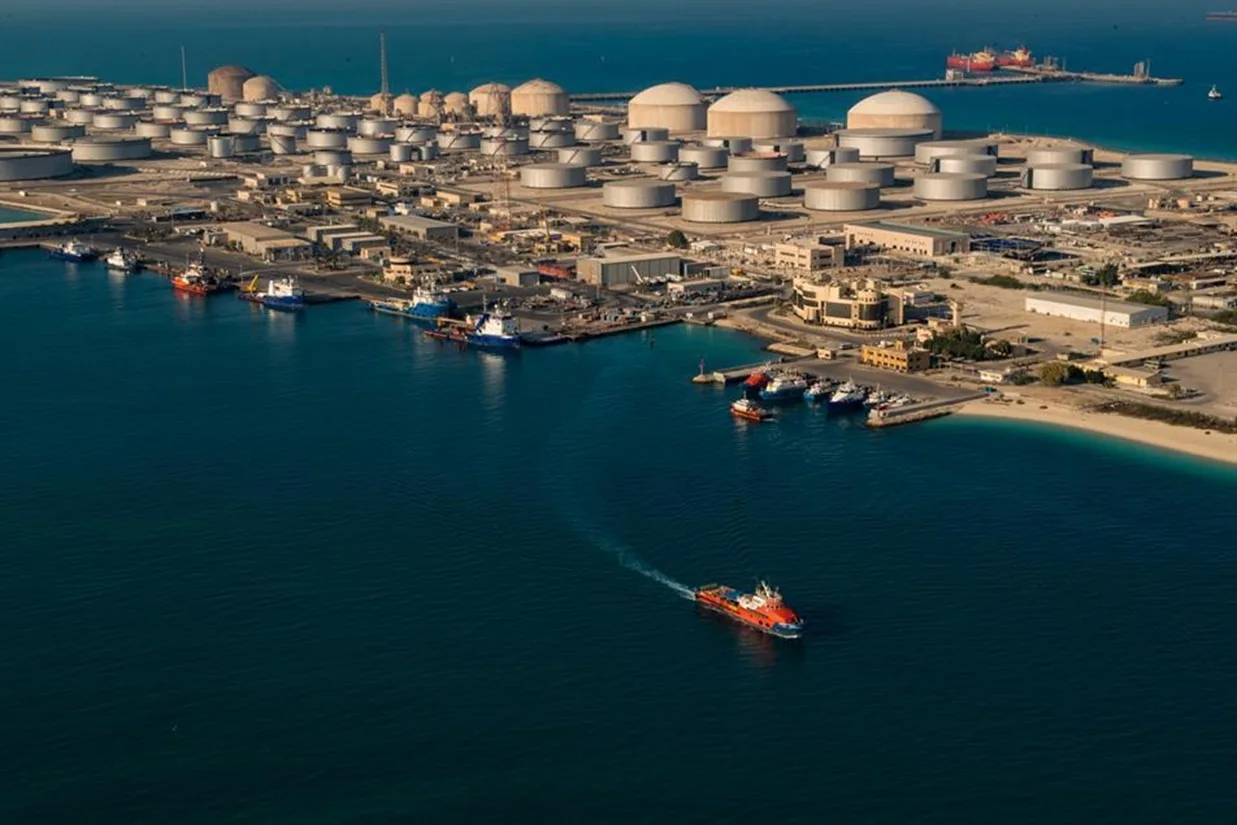
Conflict-related disruptions reinforce this contradiction. When a production facility, export terminal, or maritime corridor becomes unavailable, global prices may rise precisely because accessible supplies have diminished. Countries whose output is interrupted may therefore contribute indirectly to higher prices without necessarily benefiting from them.
This changes the nature of energy risk. The problem is no longer limited to price volatility, traditionally a central concern of fiscal policy in oil-producing states. It increasingly involves the physical continuity of supply, infrastructure security, and the ability to maintain exports under deteriorating geopolitical conditions.
For economies heavily dependent on hydrocarbons, the consequences extend far beyond the petroleum sector. A sustained decline in exports reduces fiscal revenues, weakens budget balances, and may force governments to postpone investments. Private businesses, whose activity often depends directly or indirectly on public expenditure, subsequently experience the slowdown.
Oil remains an enormous source of wealth, but it can no longer provide sufficient protection against regional shocks on its own.
The Strait of Hormuz: A Structural Vulnerability
This vulnerability is particularly evident around the Strait of Hormuz. Located between Iran and the Arabian Peninsula, the waterway connects the Persian Gulf to the Gulf of Oman and the Indian Ocean. It represents one of the principal export corridors for hydrocarbons produced by neighboring states.
Its importance extends beyond the quantities of crude oil passing through it. The strait also carries liquefied natural gas, refined petroleum products, industrial goods, and essential supplies supporting the Gulf economies.
Disruption to this maritime passage can therefore generate several simultaneous shocks. Producers face greater difficulties exporting hydrocarbons, importing countries encounter higher energy costs, and shipping companies reassess the risks associated with their operations.
Insurance premiums, freight costs, and delivery schedules become economic variables as consequential as the price of oil itself. Even when a cargo can technically leave an export terminal, transporting it may become more expensive, slower, or commercially uncertain.
Alternative routes are unevenly distributed. Saudi Arabia operates infrastructure capable of transferring part of its crude production toward the Red Sea, while the United Arab Emirates has a pipeline connection to Fujairah, on the Gulf of Oman. These systems reduce direct exposure to the strait without eliminating logistical constraints or necessarily replacing all volumes normally shipped through it.
Other producers have fewer alternatives. Substitute infrastructure requires substantial investment, sufficient available capacity, and appropriate port facilities. Such networks cannot be improvised once a crisis has begun.
The Strait of Hormuz consequently illustrates a fundamental characteristic of the region's economic geography: the concentration of energy resources does not imply diversification of the routes required to commercialize them.
Public Finances Exposed to Production Shocks
Gulf oil exporters have progressively strengthened their economic stabilization mechanisms. Financial reserves, sovereign wealth funds, diversified international investments, and access to capital markets provide instruments for absorbing cyclical fluctuations.
These protections remain important, but they cannot eliminate the consequences of a prolonged interruption in petroleum activity.
Several producing states continue to rely heavily on hydrocarbon revenues to finance public expenditure. Even as non-oil activities expand, energy income still supports a substantial share of infrastructure investment, public development programs, and national economic transformation strategies.
A contraction in export volumes can therefore simultaneously reduce government revenues and the value added generated by the energy sector. The shock affects two separate dimensions: the state's capacity to finance public policies and the level of national production recorded in economic accounts.
This distinction is essential when interpreting the IMF's projections. An economy may experience growth in services, tourism, or financial activities while recording an overall contraction if petroleum output falls sufficiently.
Conversely, a sharp increase in GDP following a year of contraction does not necessarily indicate comparable expansion throughout the productive economy. It may primarily reflect the reopening of energy facilities or the restoration of previously interrupted production.
The projected 6.6% regional growth rate in 2027 should be considered in this context. Part of that increase could represent a statistical recovery from the 2026 shock rather than a structural acceleration in productivity or investment.
Fiscal trajectories will also depend on the duration of disruptions. A brief interruption may be absorbed through existing reserves and financial instruments. A prolonged breakdown creates more difficult trade-offs between current expenditure, economic support, and long-term investment.
Economic Diversification Confronts Its Central Contradiction
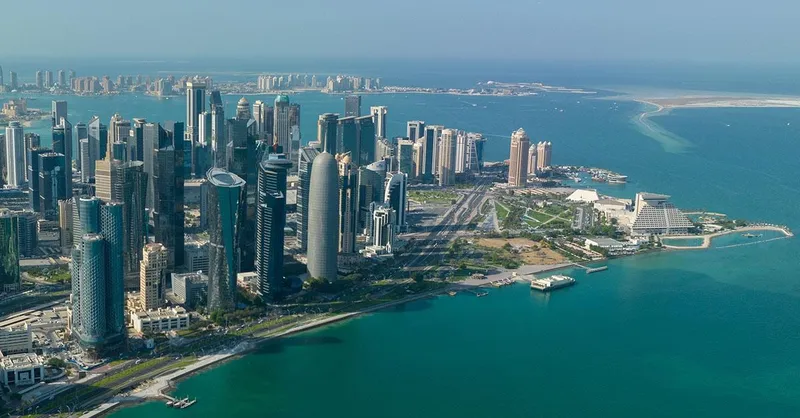
For several years, the Gulf's principal monarchies have pursued strategies intended to reduce their dependence on hydrocarbons. Saudi Arabia has developed industrial, tourism, logistics, and technology projects under Vision 2030. The United Arab Emirates has strengthened its position in financial services, transportation, technology, and international commerce. Qatar continues expanding its energy infrastructure while developing service industries and international investment activities.
These transformations have altered the region's economic structure. Non-oil sectors contribute an increasing share of value creation and occupy a central position in national development strategies.
Yet diversification reveals a contradiction when the resources required to finance it remain closely tied to hydrocarbons.
Major infrastructure projects, industrial investments, and urban development programs require enormous amounts of capital. Part of this financing comes directly from energy revenues, while another part depends on the strength of public balance sheets and investor confidence in governments' ability to maintain their commitments.
Vulnerability does not automatically disappear when oil represents a smaller share of GDP. It can migrate into financing mechanisms, supply chains, or the infrastructure supporting emerging industries.
Non-oil sectors are themselves exposed to regional instability. Tourism depends on safe travel conditions, logistics on the continuity of trade routes, manufacturing on the availability of components, and financial services on confidence in economic stability.
A diversified economy may therefore become less dependent on the price of oil while remaining deeply exposed to the strategic geography that enabled its development.
The meaningful measure of diversification is not simply the contribution of non-oil industries to growth. It is also their ability to continue operating when energy revenues, transportation systems, and financial flows face simultaneous disruptions.
Energy Importers Face the Opposite Pressure
For countries importing oil and natural gas, the economic mechanism operates differently. Rising international prices generally increase energy bills, weaken trade balances, and can fuel inflation.
Economies with limited fiscal resources are particularly exposed when governments attempt to contain increases in electricity, fuel, or transportation prices. Maintaining subsidies may temporarily protect households, but it can also place additional pressure on public finances.
The effects spread through the corporate sector. Energy-intensive industries face rising production costs, while transportation companies pass part of their additional expenses on to the prices of goods.
In countries heavily dependent on imported food, higher freight and energy costs can intensify consumer price pressures. An energy shock gradually becomes a purchasing-power shock, followed by weaker domestic demand.
The consequences nevertheless vary according to national economic structures. Countries with domestic natural gas production, long-term energy supply contracts, substantial foreign exchange reserves, or relatively favorable access to international financing possess greater room for adjustment.
This diversity explains why the IMF's regional aggregate must be interpreted carefully. It combines economies whose immediate interests may diverge in response to the same increase in petroleum prices.
For exporters able to maintain deliveries, higher prices can improve revenues. For producers facing operational interruptions, those prices may not compensate for lost volumes. For importers, they primarily represent an increase in costs.
The same geopolitical shock can therefore produce opposing economic effects while weakening growth across the broader region.
A Regional Crisis with Global Consequences
The Middle East's economic difficulties cannot be separated from the functioning of the global economy. The region occupies a central position in international energy supplies, but also in commercial exchanges linking Europe, Asia, and Africa.
Disruptions to its energy infrastructure can change the decisions of refiners, shipping companies, and major importers. Trade flows are redirected, transportation costs increase, and businesses seek to strengthen inventories to reduce their exposure to supply interruptions.
These adjustments help preserve some commercial activity, but they require additional resources. Longer, more expensive, or less predictable supply chains reduce the efficiency of international trade.
Asia, which receives a substantial share of the Gulf's energy exports, is particularly exposed to the continuity of these supplies. Major industrial economies depend on regular flows of oil, natural gas, and petrochemical products to support factories, transportation networks, and electricity systems.
Europe also remains vulnerable, both directly through energy imports and indirectly through international prices, industrial costs, and tensions in natural gas markets.
A contraction in Middle Eastern economic activity can therefore coexist with rising energy bills elsewhere. Lost regional production translates into higher international costs, placing pressure on corporate margins and household disposable income.
This transmission mechanism reflects a broader transformation in the global economy. Natural resources retain their strategic importance, but their economic value increasingly depends on resilient infrastructure, reliable commercial corridors, and stable relations between states.
The 2027 Rebound: Recovery Without Certainty
The prospect of 6.6% regional growth in 2027 might suggest that the 2026 contraction represents a temporary disruption that will quickly be reversed.
Such an interpretation would be incomplete.
Restoring petroleum production can indeed generate a substantial acceleration in GDP following an interruption. When existing capacity returns to operation, economic output increases rapidly without requiring the immediate construction of an entirely new productive system.
But this mechanism does not guarantee the full recovery of lost revenues or the disappearance of the vulnerabilities responsible for the initial contraction.
Postponed investments, disrupted supply chains, additional security expenditure, and persistent risks along maritime routes may continue to weigh on activity after energy production resumes.
Growth in 2027 will consequently depend on several conditions: the effective restoration of production and export capacity, the stabilization of commercial exchanges, the containment of logistical costs, and the continuation of non-oil investment.
It will also depend on governments' ability to preserve economic transformation programs without excessively increasing fiscal vulnerabilities.
The IMF's projections therefore describe a region capable of experiencing a powerful statistical rebound, but whose economic outlook remains closely linked to the evolution of geopolitical risks.
Energy Wealth Is No Longer Enough
The contraction projected for 2026 exposes an important limitation of the region's economic model. Hydrocarbons continue to generate considerable financial resources, but their presence underground guarantees neither commercial availability nor a stable contribution to economic growth.
The Middle East does not lack oil. Its vulnerability lies in the conditions required to transform that resource into production, exports, government revenues, and ultimately economic development.
Diversification strategies have begun to modify this dependence, without yet eliminating the deep connections between energy income, infrastructure, and the financing of emerging industries.
The paradox of 2026 lies precisely in the separation between the global value of oil and the prosperity of the territories producing it. Prices can rise while economies contract because the scarcity that theoretically increases a resource's value can also prevent its commercialization.
The next stage of regional development will therefore depend on more than hydrocarbon reserves, sovereign wealth fund assets, or the expansion of non-oil sectors. It will depend on states' ability to keep their productive systems open and functioning in a persistently unstable international environment.
Oil can still finance the transformation of the Middle East. It can no longer, by itself, protect the region from the economic consequences of its geography.
Principal Sources
- International Monetary Fund, World Economic Outlook — October 2026, October 13, 2026. https://www.imf.org/en/publications/weo/issues/2026/10/13/world-economic-outlook-october-2026
- International Monetary Fund, Middle East and Central Asia Department — Press Briefing, October 15, 2026. https://mediacenter.imf.org/news/imf-middle-east-and-central-asia-department-press-briefing/s/56766665-b5a3-4df2-8fd0-5c79b8bd9a97
- International Monetary Fund, Regional Economic Outlook: Middle East and Central Asia, regional economic publications and analyses of energy-exporting and energy-importing economies. https://www.imf.org/en/Publications/REO/MECA
- International Energy Agency, Oil Market Report — October 2026, analysis of petroleum markets and supply constraints. https://www.iea.org/reports/oil-market-report-october-2026
Atlas Limits Research Desk
Atlas Limits’ editorial and analytical desk.