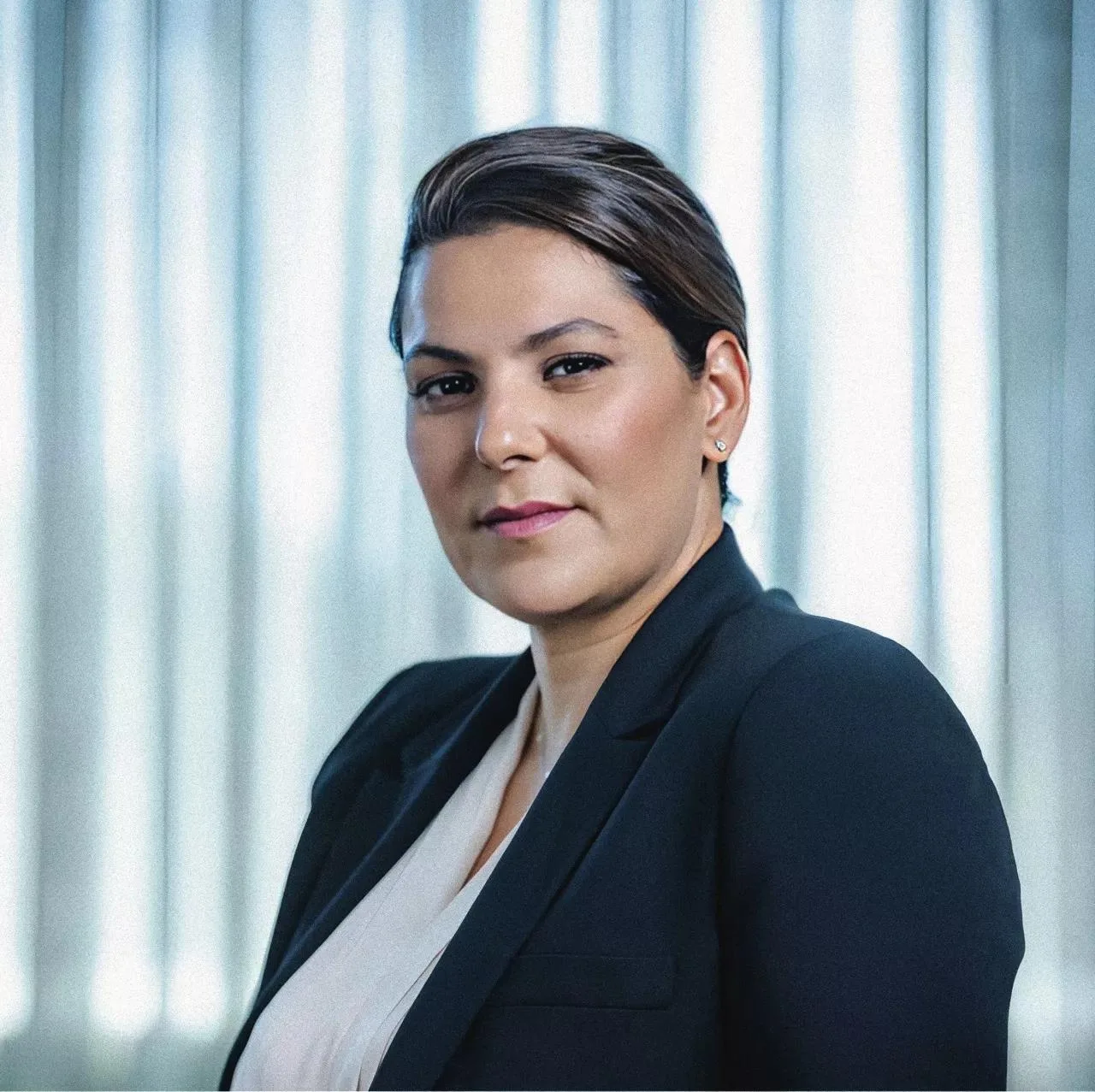
On September 29, 2026, at the Royal Palace in Rabat, one photograph marked Morocco’s entry into a new political sequence. Six days after the parliamentary elections, Mohammed VI appointed Fatima Ezzahra El Mansouri Head of Government and tasked her with forming the new executive. For the first time in the Kingdom’s history, a woman has reached this position.
The image represents a break. The political landscape from which it emerged is considerably more complex.
El Mansouri comes neither from the opposition nor from outside the governing system. Minister of National Territorial Planning, Urban Planning, Housing and City Policy under Aziz Akhannouch, mayor of Marrakech and coordinator of the collective leadership of the Authenticity and Modernity Party, she belonged to the coalition that had governed since 2021. So did her party.
Morocco has therefore not experienced alternation in the conventional sense. Voters have substantially changed the balance of power within the very bloc that was already governing the country.
This is probably the first key to understanding the 2026 elections.
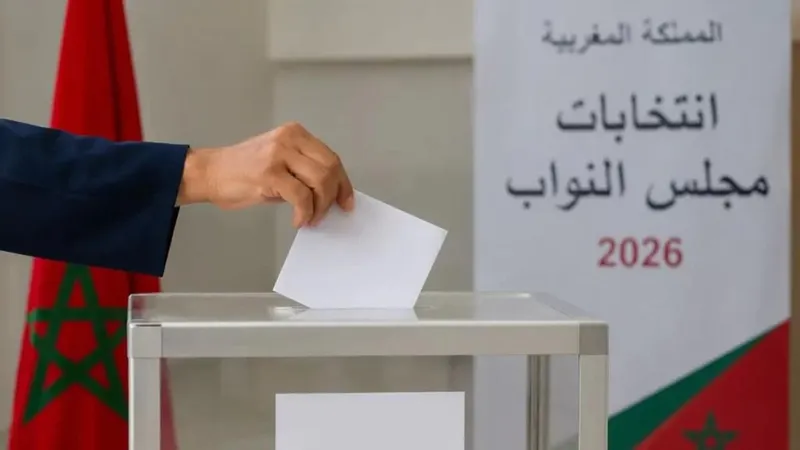
The Verdict of 2026
In 2021, the National Rally of Independents won 102 of the 395 seats in the House of Representatives. The PAM held 87 and the Istiqlal Party 81. Together, these three parties formed the governing majority led by Aziz Akhannouch.
Five years later, the order has been reshuffled.
The PAM came first with 97 seats, ten more than in 2021. The RNI fell to 66 seats, losing 36 MPs and more than a third of its parliamentary representation. Istiqlal secured 65 seats. The Justice and Development Party, which had been almost eliminated from the chamber in 2021 with just 13 MPs, returned with 54 seats.
The change is substantial enough to constitute a political recomposition, but not a reversal. The PAM, RNI and Istiqlal — the three components of the outgoing majority — still hold a combined 228 seats. Together, they would remain comfortably above the 198-seat threshold required for an absolute majority.
The political change of 2026 therefore begins with a shift in the centre of gravity within the existing governing space: the RNI is no longer its dominant force, and the PAM has taken its place.
But another number may be politically more significant than the PAM’s 97 seats.
38.02%.
That was the reported turnout, compared with around 50% in 2021. Of roughly 27 million citizens of voting age, only about 15.8 million were registered to vote.
The party that finished first therefore holds just 24.6% of the seats in the House, while a large majority of the potential electorate remains outside electoral participation.
This does not diminish the legality of the election or its result. It does, however, affect its political interpretation. The 2026 contest did more than determine the balance between political parties. It also highlighted the distance that remains between a significant part of Moroccan society and the party system.
Five Years of Akhannouch: Two Overlapping Records
This is also what makes the record of the Akhannouch government difficult to reduce to a simple judgment.
Between 2021 and 2026, Morocco experienced a succession of shocks: the aftermath of the pandemic, global inflation, surging commodity prices, repeated droughts, the Al Haouz earthquake, geopolitical tensions, and then a dramatic acceleration of infrastructure investment and preparations for the 2030 World Cup.
At the same time, several major components of the social state were effectively deployed.
The expansion of health insurance is the most significant example. By 2025, more than 4 million households, representing over 11.4 million people, benefited from the mandatory health insurance scheme for people unable to pay their own contributions. The state was covering approximately 9.5 billion dirhams a year in contributions. According to government figures, the proportion of Moroccans covered by mandatory health insurance increased from 42.2% before the reform to around 88%.
This was accompanied by the direct social assistance programme launched at the end of 2023.
By 2025, it covered 3.9 million households, including 5.5 million children and 1.7 million elderly people. Around 60% of beneficiaries lived in rural areas. By February 2026, family payments ranged from 500 to 1,350 dirhams per month depending on household circumstances.
This is not a marginal transformation. A national infrastructure for redistribution and social targeting has gradually been built around the National Population Register, the Unified Social Register, mandatory health insurance and direct cash transfers.
Budgetary resources allocated to public services have also increased substantially.
According to the government’s record presented in April 2026, the education budget had reached 97 billion dirhams, compared with 68 billion in 2019. The health budget had risen from 19.7 billion dirhams in 2021 to 42.4 billion in 2026 — more than doubling in five years.
The healthcare programme included the renovation of 1,400 health centres at a cost of 6.4 billion dirhams and the construction of five university hospitals representing 20 billion dirhams in investment.
These figures describe resources mobilised and programmes launched. They do not, by themselves, measure their effectiveness or the quality of services actually experienced by citizens.
That is precisely where the second assessment begins.
The Economy Advances, Society Waits
From a macroeconomic perspective, the Morocco inherited by Fatima Ezzahra El Mansouri is not an economy in crisis.
The International Monetary Fund estimates that real GDP growth reached 4.9% in 2025, after 3.8% in 2024. In March 2026, it projected growth of 4.4% for the year and 4.5% in 2027. More recently, the World Bank put its 2026 forecast at 4.2%.
The agricultural rebound and investment in major infrastructure projects are two important drivers of this expansion.
Macroeconomic balances also remain relatively contained. The IMF estimated the budget deficit at 3.5% of GDP in 2025 and projected 3.4% in 2026. Central government debt was expected to decline from 67.1% of GDP in 2025 to 65.9% in 2026. After averaging only 0.8% in 2025, inflation was projected at 1.6% in 2026.
Investment, meanwhile, has accelerated considerably.
Since the new Investment Charter came into effect in 2023, 391 agreements representing 520 billion dirhams had been signed by the summer of 2026, according to the government. Foreign direct investment reached approximately 56.1 billion dirhams in 2025.
The country has also entered a new wave of infrastructure development: railway lines, airports, roads, stadiums and urban infrastructure. Investments associated with preparations for 2030 exceed 190 billion dirhams, or approximately $20 billion.
Taken in isolation, these indicators tell the story of a country that is investing, expanding social protection and maintaining relatively strong economic growth.
The social indicators tell a more difficult story.
Employment, the Model’s Weak Point
The labour market remains one of the central challenges.
As recently as March 2026, the IMF described sustainable job creation as an urgent priority. Based on the statistical series then available, it projected unemployment at 12.3% in 2026.
But Morocco’s High Commission for Planning fundamentally redesigned its statistical methodology in 2026. Its new Labour Force Survey is not directly comparable with the former National Employment Survey. This methodological break requires caution when comparing recent data with historical series.
The new figures nevertheless reveal where the principal fractures lie.
In the second quarter of 2026, the labour-force participation rate stood at only 42.2%. It reached 66.5% among men but just 18.1% among women. Women represented only 21.5% of the labour force. Among 15- to 24-year-olds, participation fell to 22.9%.
These figures give particular significance to the appointment of a woman as Head of Government. A political ceiling has been broken at the top while women’s economic participation remains exceptionally low at the base.
The contrast is striking.
It becomes even clearer when household perceptions are considered.
In the second quarter of 2026, 57.2% of households expected unemployment to increase over the following twelve months, compared with 18.4% expecting it to decline. Meanwhile, 38.7% reported having to borrow or draw on savings to cover their expenses. Only 2.6% said they were able to save part of their income. And 65.3% considered it an unfavourable time to purchase durable goods.
This is probably one of the fundamental contradictions of the political cycle that has just ended.
The state is investing more, but part of society does not yet sufficiently experience the return on that investment in everyday life.
This gap helps explain how a government can display relatively solid macroeconomic indicators, substantially expand social protection and nevertheless see its leading party lose 36 seats.
It does not allow the election result to be mechanically attributed to any single cause. Elections aggregate local, partisan, economic and social considerations that vary considerably across the country. But the data on employment, household finances and electoral participation show that translating economic growth into improvements in living standards will remain a central issue for the new government.
2030 Changes the Scale
This challenge comes as Morocco enters an investment phase rarely seen in its recent history.
The 2030 World Cup is only the most visible component of this transformation. Investments in railways, ports, airports, water infrastructure, energy and cities serve objectives that extend far beyond the tournament itself.
They can increase the country’s productive capacity, improve connectivity and strengthen its industrial attractiveness. But they also create a political constraint: the more spectacular the infrastructure becomes, the more immediate the comparison with the condition of everyday public services.
A high-speed railway, a new airport terminal or a major stadium is immediately visible. Improvements to the education system, the quality of a regional hospital or the creation of productive jobs for hundreds of thousands of young people are much less so.
Yet it is on this second terrain that much of the next political cycle will be determined.
The challenge for the El Mansouri government will therefore probably not be to invent an economic model from scratch. It inherits an investment machine already in motion, a social protection system that has become institutionalised, and major programmes whose timelines extend well beyond a single parliamentary term.
Its challenge will be one of conversion: converting investment into productivity, productivity into employment, social coverage into quality of service, and national economic growth into sufficiently perceptible improvements in living standards.
A First Woman in a Predominantly Male Labour Market
The appointment of Fatima Ezzahra El Mansouri therefore carries a significance that extends beyond the succession of Aziz Akhannouch.
Morocco has had women ministers, MPs, mayors and political leaders. Never before had a woman headed the government.
Her accession comes at a time when female labour-force participation remains, according to the HCP’s new data, at only 18.1%.
The symbolism is therefore considerable, but its political effects cannot be assumed. Having a woman at the head of the executive and achieving the economic empowerment of Moroccan women are two different realities.
It is precisely because the gap remains so large that the appointment carries particular weight.
It creates a new image of political power in Morocco. It does not automatically resolve the economic and social constraints facing Moroccan women.
The Monarchy and the Government: Two Political Timelines
The 2026 recomposition must finally be understood within Morocco’s institutional architecture.
Under the 2011 Constitution, the King appoints the Head of Government from the political party that finishes first in elections to the House of Representatives. Members of the government are subsequently appointed by the King on the proposal of the Head of Government. The Council of Ministers is chaired by the sovereign.
This architecture creates two overlapping timelines.
The first is electoral. Governments change, coalitions are reconstructed, parties advance or retreat, and elected officials are accountable to voters.
The second is the timeline of the state’s long-term strategies: social protection, infrastructure, water, energy, diplomacy, security, major investments and, increasingly, the 2030 horizon.
The next government will operate at the intersection of the two.
This also explains why the 2026 election does not necessarily imply a general break in public policy. Several transformations currently under way were designed according to horizons that extend far beyond a single parliamentary term.
Continuity will therefore be substantial.
But continuity does not preclude changes in method, budgetary priorities or the execution of public policy.
The PAM Must Now Build a Majority
Before governing, Fatima Ezzahra El Mansouri must still form a government capable of commanding a parliamentary majority.
With 97 of the 395 seats, the PAM controls only 24.6% of the House. It is 101 seats short of the 198 required for an absolute majority.
The parliamentary arithmetic allows several possible configurations. More fundamentally, it reveals a persistent characteristic of Morocco’s party system: no political party is currently dominant enough to govern alone.
The question is therefore no longer who won the election. It is which coalition will translate that victory into governing power.
That coalition will partly determine the real depth of the 2026 political recomposition.
If the PAM broadly reconstructs the alliance with the RNI and Istiqlal, the change will primarily amount to an internal rebalancing of the previous majority. A substantially different coalition would produce a different political configuration.
At this stage, the composition of the government therefore remains an open question and must be distinguished from the election results that have already been established.
The Moroccan Paradox
Morocco enters this new parliamentary term with a paradox.
The country has probably never invested so heavily in modern infrastructure. Economic growth reached 4.9% in 2025. Health insurance coverage has expanded dramatically. Nearly four million households receive direct social assistance. Health and education budgets have increased substantially. Private investment agreements are measured in hundreds of billions of dirhams.
And yet almost 62% of registered voters did not participate in the September 23 election. Participation is even lower when the entire voting-age population is used as the reference. The RNI, the leading political force in 2021, lost more than a third of its seats. A substantial share of households remains concerned about employment and under financial pressure.
This is not necessarily the contradiction of a country that is failing to change.
It may be the contradiction of a country changing faster in its infrastructure than in the everyday experience of part of its population.
It is within this gap that the El Mansouri government begins.
Her appointment will remain historic because, for the first time, a woman is leading the Moroccan government. But the challenge of the coming years will be less symbolic: whether the Kingdom’s immense transformation effort can generate enough employment, social mobility and perceptible improvements in public services to bring closer together two Moroccos that still too often appear side by side — the Morocco of major projects and the Morocco of everyday expectations.
Morocco in 2026 is not entering a rupture. It is entering the test of results.
Main Sources
- Royal Cabinet / Maroc.ma — appointment of Fatima Ezzahra El Mansouri as Head of Government, September 29, 2026.
- Ministry of the Interior / Maroc.ma — final results of the September 23, 2026 parliamentary elections.
- House of Representatives — parliamentary composition following the 2021 elections and the Constitution of the Kingdom of Morocco.
- High Commission for Planning — Situation of the Labour Market in Morocco, second quarter of 2026, new Labour Force Survey.
- High Commission for Planning — Permanent Household Economic Survey, second quarter of 2026.
- International Monetary Fund — 2026 Article IV Consultation and review under the Flexible Credit Line arrangement, March 2026.
- World Bank — Morocco economic outlook, 2026.
- Government of the Kingdom of Morocco — 2021–2026 record on healthcare, education and social protection policies.
- National Social Support Agency — data on the direct social assistance programme.
- National Investment Commission / Maroc.ma — investment agreement data.
- Reuters — coverage of Morocco’s September 23, 2026 parliamentary elections, election results and the appointment of the new Head of Government.
Atlas Limits Research Desk
Atlas Limits’ editorial and analytical desk.