For four years, Rabat and Madrid had managed to achieve something more difficult than reconciliation: they had learned to separate their disputes.
The rapprochement initiated in 2022 rested precisely on that ability. Spain substantially shifted its position on Western Sahara, describing Morocco’s autonomy plan as the most serious basis for resolving the conflict. Morocco, in turn, rebuilt migration, security and economic cooperation with Madrid to a level deep enough to prevent Ceuta and Melilla from once again becoming the central issue in the bilateral relationship.
The arrangement erased none of the underlying claims. It simply made them manageable.
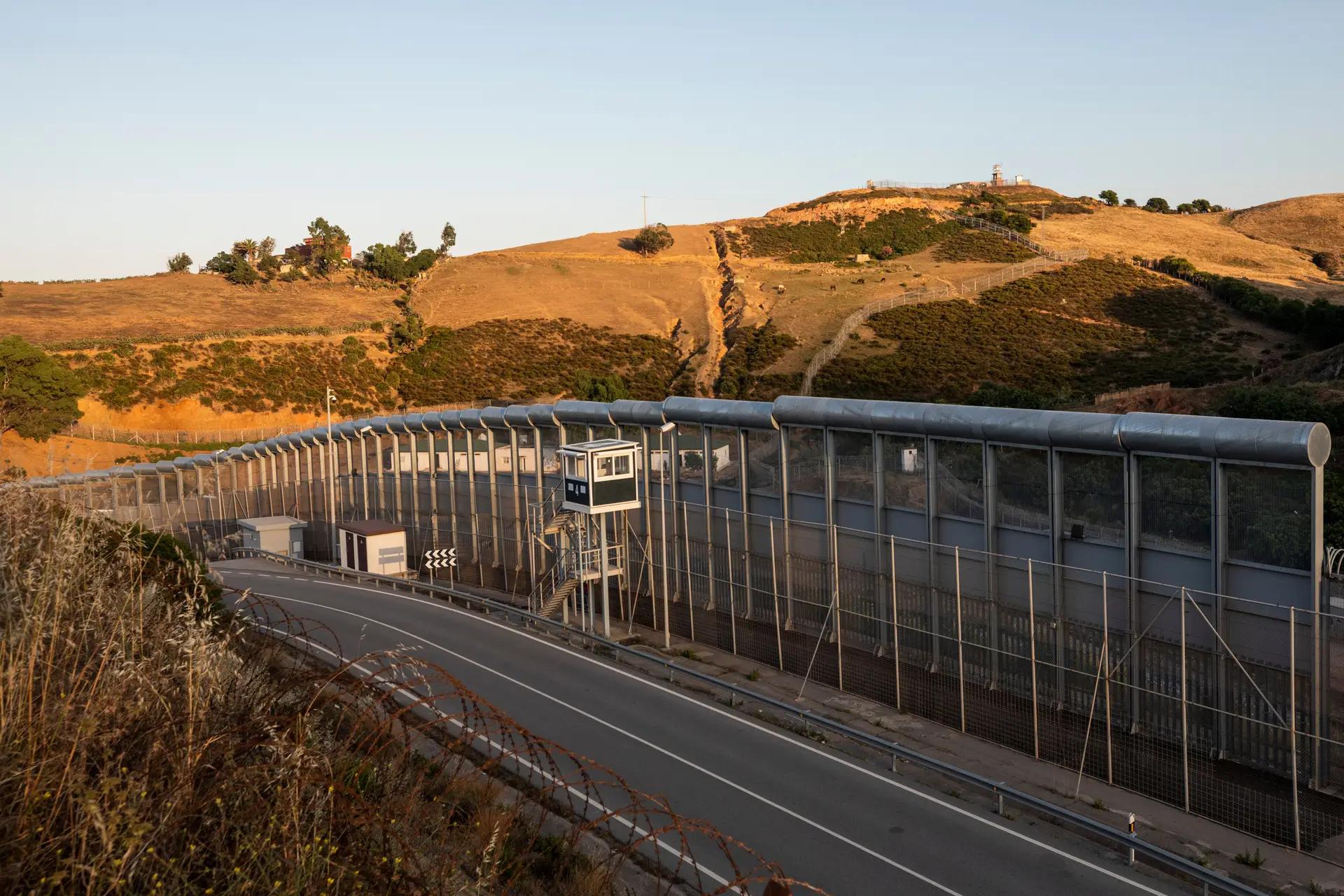
The migration crisis of summer 2026 is beginning to alter that architecture. Since the mass arrivals in Ceuta in late July, Madrid has not merely sought to reinforce its borders. Spain has begun embedding Ceuta and Melilla more deeply within Europe’s political, security and institutional framework.
For Rabat, that development creates a problem extending far beyond the two cities.
Madrid changes the scale
On 2 September, Spanish Foreign Minister José Manuel Albares took the issue directly to his European counterparts. His argument was explicit: Spain’s borders at Ceuta and Melilla are also the European Union’s southern land borders and should receive the same solidarity afforded to the Union’s eastern frontiers. (exteriores.gob.es)
A few days later, Madrid went further.
In Brussels, Albares discussed a permanent presence for Frontex, Europol and the European Union Agency for Asylum in the two cities. Spain is also working to deepen their integration into European mechanisms and is examining with the European Commission possibilities for closer incorporation into the EU customs framework. Brussels has meanwhile announced €114.7 million in funding for Ceuta. (exteriores.gob.es)
Taken separately, each of these measures may appear technical. Together, they point to something considerably more important.
Madrid is gradually transforming what has traditionally been a Spanish-Moroccan question into a European one.
That is precisely where Rabat’s strategic difficulty begins.
Different territories, different legal statuses
The temptation would be to place Western Sahara, Ceuta and Melilla on the same plane. Legally, that would be incorrect.
Western Sahara has appeared on the United Nations list of Non-Self-Governing Territories since 1963. The UN continues to address its status within the framework of decolonisation and still maintains specific documentation concerning the territory in 2026. (un.org)
Ceuta and Melilla do not have that international status. They are administered by Spain as autonomous cities and form part of the European Union.
Moroccan and Spanish territorial claims are therefore not legally symmetrical.
Diplomacy, however, is not built exclusively on legal categories. It also operates through principles, precedents and balances of power. It is on this terrain that Rabat increasingly risks finding itself in an awkward position.
For years, Morocco has asked its partners to approach Western Sahara through the principle of its territorial integrity. That strategy has produced significant diplomatic results and notably contributed to Spain’s shift in 2022.
Madrid can now deploy comparable political language regarding Ceuta and Melilla: Spanish territorial integrity, the European Union’s external borders, European solidarity and the protection of EU territory.
The legal situations remain different. The political vocabulary is beginning to converge.
Morocco’s paradox
Rabat consequently faces a delicate equation.
The more Morocco makes recognition of its sovereignty over Western Sahara a central component of its foreign relations, the more difficult it becomes to simultaneously maintain an active territorial claim against a partner from which it expects recognition of its own conception of territorial integrity.
For a long time, that contradiction could be contained because both Madrid and Rabat had an interest in avoiding a direct test of it.
Spain could support Morocco’s autonomy plan without requiring Morocco formally to abandon its historical positions on Ceuta and Melilla. Rabat could preserve those claims without turning them into an immediate condition of cooperation with Madrid.
The relationship functioned because both sides accepted a degree of ambiguity.
The crisis of 2026 is narrowing that space.
The Spanish government is no longer merely reaffirming its sovereignty. It is seeking to give that sovereignty additional European depth. Frontex, Europol, EU funding, customs integration and solidarity among member states are gradually constructing an architecture around the two cities that extends beyond Spain itself.
The question therefore becomes less whether Rabat maintains its claim than what it can still do with it.
Western Sahara returns through another door
At the same time, the Western Sahara question is resurfacing in Spanish domestic politics.
Spain’s Congress approved legislation in September opening access to Spanish citizenship for Sahrawis born when the territory was under Spanish administration, as well as certain descendants. Up to 110,000 people could be affected, according to reported estimates. (reuters.com)
The decision does not, by itself, reverse the strategic shift undertaken by Pedro Sánchez in 2022.
But it underlines a reality that the Moroccan-Spanish rapprochement never eliminated: Spain retains a distinctive historical, political and human relationship with Western Sahara, while the issue remains present within its institutions and domestic political debate.
The balance is therefore becoming more complicated.
Rabat wants to prevent Madrid from reversing its rapprochement with the Moroccan position on Western Sahara. Madrid wants to prevent Ceuta and Melilla from becoming instruments of pressure in the bilateral relationship. Both are now attempting to consolidate their positions without destroying a partnership that has become too important to sacrifice easily.
A crisis Sánchez does not want to open
The Spanish government’s behaviour illustrates this contradiction.
Pedro Sánchez has so far declined to directly attribute the mass arrivals of July to the Moroccan authorities. In early September, he said there was no concrete evidence establishing that Rabat had orchestrated the operation, despite questions raised by the behaviour of Moroccan security forces for several hours. Morocco, for its part, categorically rejected the accusations and stressed the importance of bilateral cooperation. (reuters.com)
Madrid is therefore hardening the protection of its territorial positions while avoiding turning the crisis into a direct confrontation with Rabat.
Even the proposed visit by King Felipe VI to Ceuta and Melilla illustrates this approach. Sánchez confirmed on 9 September that the government and Royal Household were working on an upcoming visit to the two cities, arguing in particular that a trip to Ceuta had become especially necessary. (lamoncloa.gob.es)
The symbolism would be powerful: the Spanish state would respond to the crisis through an institutional reaffirmation at the highest level without necessarily engaging Morocco in direct diplomatic escalation.
Europe as a force multiplier
This is probably the most durable transformation emerging from the current episode.
For Madrid, Europeanising Ceuta and Melilla offers a considerable advantage. A bilateral dispute can be negotiated between two capitals. A border embedded in European mechanisms, protected by European agencies and progressively incorporated into common policies becomes much harder to treat as a purely Moroccan-Spanish dispute.
The balance of power then changes in scale.
Rabat would no longer be dealing solely with Madrid. It would have to take Brussels and, potentially, the other 26 member states into account.
This does not mean that the European Union will adopt Spain’s positions on every historical dimension of the dispute. But the more deeply Ceuta and Melilla become functionally integrated into the European architecture, the greater the political cost of challenging their status.
The border gradually ceases to be merely Spanish in its operation and becomes European.
The cost of symmetry
Morocco still possesses significant leverage.
Spain needs Moroccan cooperation on migration, security and counterterrorism. Economic ties have reached a depth that would make a rupture costly for both economies. Infrastructure, energy, investment and joint preparations for the 2030 World Cup are adding further layers of interdependence.
But those interdependencies can also become constraints.
The more Rabat and Madrid build together, the less either side can exploit old territorial disputes without putting much broader interests at risk.
For Morocco, the dilemma is particularly visible. Continuing to internationalise recognition of its sovereignty over Western Sahara while maintaining an active claim over two territories belonging to its principal European trading partner exposes Rabat to an increasingly visible diplomatic contradiction.
Spain appears to have understood that vulnerability.
It is not responding by directly reopening the Western Sahara question. It is consolidating Ceuta and Melilla within the European space.
It is a less spectacular strategy than diplomatic confrontation, but potentially a more durable one.
Ambiguity becomes more expensive
The framework constructed in 2022 has not yet collapsed. For both Rabat and Madrid, it probably remains preferable to the alternative.
But its original logic depended on keeping the disputes separate.
Western Sahara could move in one direction. Ceuta and Melilla could remain in another. Migration could constitute an area of cooperation. Trade could provide insurance against escalation.
The crisis of 2026 is now drawing those lines closer together.
Western Sahara remains legally distinct from Ceuta and Melilla. Yet within the political relationship between Morocco and Spain, each increasingly points back to the same fundamental question: how far can one ask a neighbour to recognise one’s territorial integrity while simultaneously contesting its own?
For four years, Rabat and Madrid had found a pragmatic answer: avoid asking both questions at the same time.
That option is beginning to narrow.
Main sources
Spanish Ministry of Foreign Affairs — statements and European initiatives concerning Ceuta and Melilla, 2, 8 and 9 September 2026.
Spanish Presidency of the Government — Pedro Sánchez interview, 9 September 2026.
United Nations — Western Sahara, list of Non-Self-Governing Territories and 2026 documentation of the Special Committee on Decolonization.
Reuters — Ceuta migration crisis, Moroccan response, Pedro Sánchez’s position and Spanish legislation concerning citizenship for Sahrawis, September 2026.
Atlas Limits Research Desk
Atlas Limits’ editorial and analytical desk.