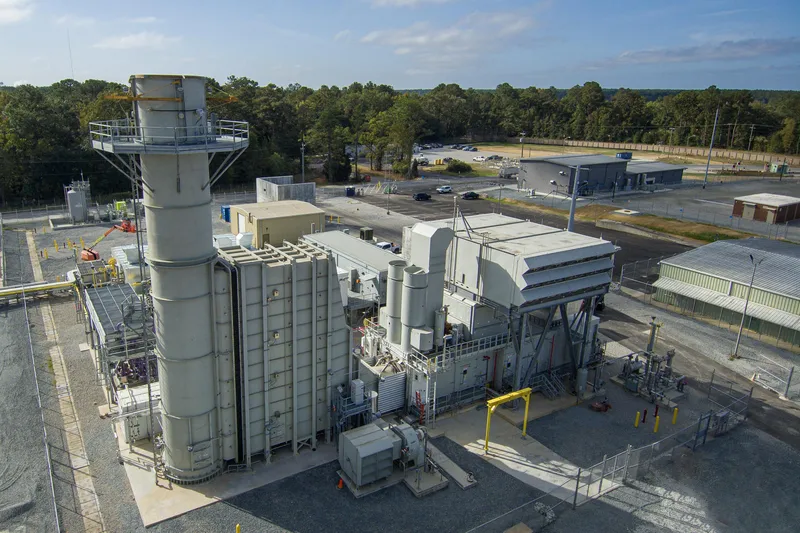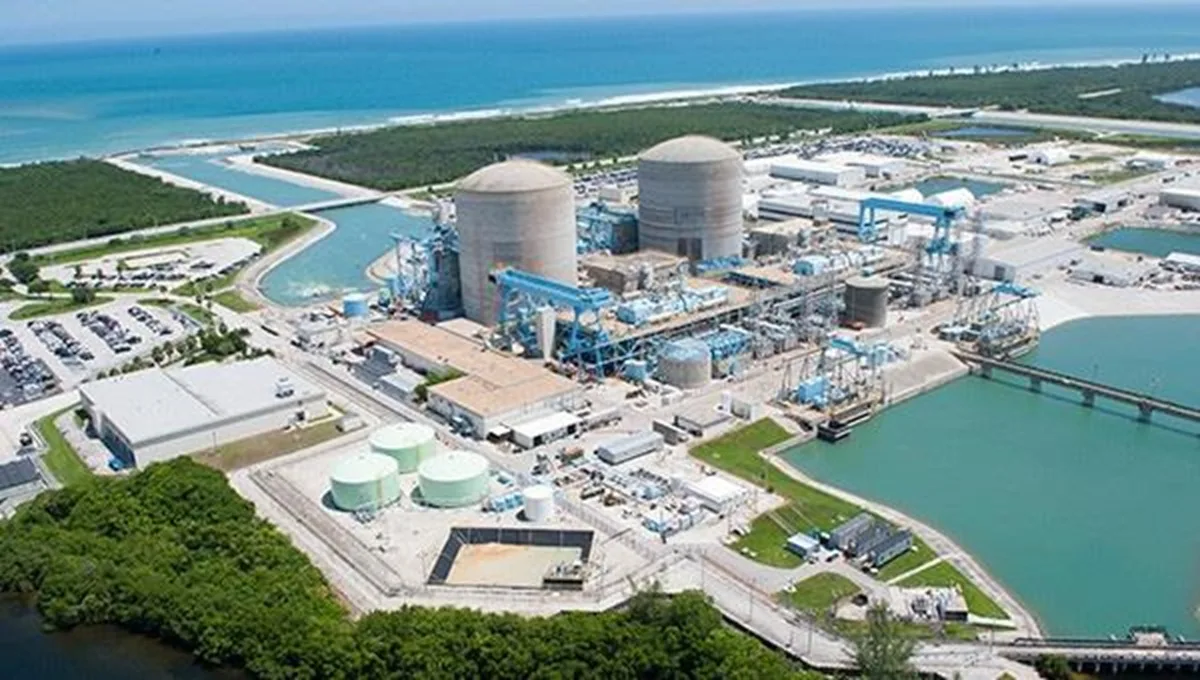
The $66.8 billion combination of NextEra Energy and Dominion Energy could create the world's largest regulated electric utility business. Behind the transaction lies a structural transformation of the American economy: artificial intelligence, data centers and industrial electrification are turning electricity infrastructure into a central determinant of technological competitiveness and capital allocation. The US Justice Department's decision to close its antitrust investigation on November 19, 2026, marks an important milestone, but questions concerning market concentration, infrastructure financing and electricity affordability remain unresolved.
For decades, the American electricity industry evolved through partial market liberalization, the expansion of independent power generation and the development of increasingly sophisticated wholesale electricity markets. The energy transition subsequently redirected investment toward renewable generation, battery storage and grid modernization. A further transformation is now underway. Rapidly expanding digital infrastructure, industrial electrification and growing demand for reliable power are changing both the scale and the economics of electricity investment.
In this environment, generating additional electricity is only part of the challenge. Power must also be transported to where it is needed, delivered reliably during periods of peak demand and supported by infrastructure capable of operating over several decades. The availability of financing, equipment, transmission capacity and regulatory approvals increasingly determines whether new industrial and technological investments can proceed.
The agreement announced on May 18, 2026, between NextEra Energy and Dominion Energy reflects this changing environment. Valued at $66.8 billion, the all-stock transaction would bring Dominion into a combined company operating under the NextEra Energy name. Existing NextEra shareholders would own approximately 74.5% of the combined group, while Dominion shareholders would hold around 25.5%.
The resulting company would serve approximately ten million utility customer accounts across Florida, Virginia, North Carolina and South Carolina, with roughly 110 gigawatts of generating capacity. More than 80% of its operations would be regulated, providing a substantial foundation of relatively predictable earnings and long-term investment opportunities.
The strategic rationale extends beyond corporate size. NextEra contributes an extensive energy development and financing platform, including Florida Power & Light and NextEra Energy Resources. Dominion brings established regulated utility operations in Virginia and the Carolinas, together with access to some of the most important electricity demand centers in the United States.
Virginia is particularly significant. Northern Virginia hosts one of the world's largest concentrations of data centers, supported by extensive telecommunications infrastructure, proximity to major technology customers and a highly developed digital services ecosystem. This concentration has become an important economic advantage, but it has also created growing pressure on electricity infrastructure.
Artificial intelligence is intensifying that pressure. Advanced computing facilities require substantial power capacity, continuous electricity supply and sophisticated cooling systems. Their expansion can generate demand that grows faster than transmission networks, substations and generating facilities can be developed.
The resulting constraints are not limited to the total quantity of electricity produced. A generating facility may be located far from the demand it is intended to serve. Transmission capacity may be insufficient, even when electricity is available elsewhere. Equipment shortages, interconnection queues, permitting requirements and construction schedules can delay projects for years.
Electricity infrastructure is consequently acquiring a new strategic value. The ability to deliver reliable power at a specific location and within a commercially acceptable timeframe can be as important as the cost of producing that power.
Dominion's regulated operations provide NextEra with a stronger position in territories where these constraints are becoming particularly consequential. NextEra's development capabilities, procurement scale and access to capital could, in turn, support the expansion of generation and network infrastructure.
The transaction is therefore not simply a consolidation of existing generating assets. It represents an attempt to assemble the financial, operational and geographic capabilities required to support a much larger electricity system.
The financial projections associated with the merger illustrate the scale of this ambition. The companies have identified a combined regulated rate base of approximately $138 billion, with expected annual growth of around 11% through 2032. They also anticipate adjusted earnings-per-share growth exceeding 9% annually over that period.
These expectations reflect the distinctive economics of regulated utilities. Unlike businesses whose revenues depend primarily on market prices, regulated electricity companies generally earn authorized returns on approved investments. Expanding transmission networks, distribution systems and generation facilities can therefore increase the asset base on which regulated earnings are calculated.
This model creates an opportunity for sustained growth when electricity demand is increasing. It also imposes an important constraint: regulators must determine whether proposed investments are necessary, whether their costs are reasonable and how those costs should be distributed among customers.
The $66.8 billion transaction is structured principally as an exchange of shares rather than a conventional cash acquisition financed through new borrowing. Dominion shareholders are entitled to receive 0.8138 NextEra shares for each Dominion share, subject to the agreed terms.
This structure limits the immediate cash financing requirement associated with the acquisition price. It does not eliminate financial risk. Shareholders remain exposed to changes in market valuations, while the combined company must manage the substantial debt and capital expenditure requirements characteristic of the utility industry.
The transaction value should also be distinguished from the enterprise value of the combined group. Estimates at the announcement placed the latter at approximately $420 billion, reflecting the scale of the underlying businesses and their financial obligations.
The central financial proposition is that a larger company, supported by diversified regulated earnings and a stronger balance sheet, may be able to borrow more efficiently, negotiate better procurement terms and deploy capital across a broader range of projects.
These advantages could be material. Electricity infrastructure requires transformers, turbines, transmission equipment, specialized engineering services and substantial construction capacity. When demand for these resources rises across the industry, purchasing power and supply-chain management become increasingly important competitive advantages.
Nevertheless, economies of scale are not automatic. A larger corporate structure does not necessarily produce lower electricity prices, particularly when investment requirements are increasing simultaneously. The distinction between benefits accruing to shareholders and those reaching customers is therefore fundamental to the regulatory assessment.
That distinction became central to the antitrust investigation conducted by the US Department of Justice.
On November 19, 2026, the department announced that it had closed its investigation after the companies made commitments addressing competition concerns in New England's electricity capacity market.
The concern involved the potential ability of the combined company to influence capacity prices by retiring generating units that remained economically viable.
Capacity markets compensate generators for maintaining resources available to meet future electricity demand, particularly during periods of system stress. These payments are distinct from revenues earned by selling electricity.
An operator controlling a sufficiently large portfolio of generating assets could potentially benefit from withdrawing some capacity if the resulting reduction in supply increased payments to its remaining facilities. Such conduct could raise electricity system costs even without an immediate increase in ordinary wholesale energy prices.
The independent market monitor for ISO New England proposed safeguards against this possibility. Under the arrangement accepted by the companies, proposed plant retirements would be subject to scrutiny for five years beginning with the capacity auction scheduled for May 2028. If the monitor determined that a generating unit retained economic value, the combined company would be prevented from retiring it under the agreed mechanism.
The Justice Department concluded that the commitment adequately addressed its identified concern and closed its investigation.
This decision is significant, but it does not mean that the merger has been completed or that every regulatory approval has been granted. The Federal Energy Regulatory Commission and other relevant federal and state authorities retain responsibilities in the approval process.
Shareholders of both companies approved the combination on September 3, 2026. The companies continue to expect closing in the second half of 2027, subject to the remaining regulatory decisions and customary conditions.
The debate is particularly consequential at the state level, where electricity affordability has become increasingly sensitive.
NextEra and Dominion initially proposed $2.25 billion in customer bill credits across Virginia, North Carolina and South Carolina. They subsequently strengthened their commitments in Virginia, including extending residential bill credits from two years to four years.
Additional measures included $100 million in support for customer assistance programs through 2038, $100 million for workforce development and a Virginia supplier initiative involving potential spending commitments of up to $5 billion over five years.
These commitments reflect a broader shift in the political economy of electricity infrastructure.
Regulators and policymakers are no longer evaluating utility mergers solely through the traditional criteria of financial efficiency and operational reliability. They must also consider whether large industrial customers are contributing appropriately to the infrastructure they require.
Data centers make this question especially important.
A relatively small number of technology companies can account for substantial additions to forecast electricity demand. Meeting those requirements may involve new generation facilities, transmission lines, substations and other network investments.
If the expected demand materializes, these investments can support economic growth and generate additional revenue for utilities. If projects are delayed, abandoned or operated below anticipated capacity, the question becomes who ultimately bears the cost of infrastructure constructed in anticipation of that demand.
The allocation of these risks is increasingly central to utility regulation.
Technology companies seek reliable power and predictable costs. Utilities require sufficient confidence in future demand to justify long-lived investments. Regulators must preserve network reliability while protecting households and smaller businesses from disproportionate financial burdens. Investors expect adequate returns on the capital committed.
The interests of these groups overlap, but they are not identical.
The merger also reflects a broader evolution in the American energy mix. Renewable generation and battery storage continue to expand, while nuclear power and natural gas remain important components of strategies designed to provide reliable electricity around the clock.
The growth of digital infrastructure has reinforced the importance of combining different technologies rather than relying on a single source of generation.
NextEra's portfolio illustrates this approach. Its operations encompass regulated utilities, renewable energy, storage, transmission infrastructure and conventional generation. The company is also pursuing initiatives involving nuclear generation and dedicated power infrastructure for large industrial and digital customers.
Dominion would strengthen this platform through established utility operations in regions where electricity demand is expected to remain an important source of investment.
The competitive implications extend beyond the utility industry.
Artificial intelligence infrastructure is frequently assessed through semiconductor capacity, computing performance, cloud platforms and software capabilities. Yet these technologies depend on a physical industrial system involving electricity generation, transmission networks, cooling equipment, construction materials and specialized engineering expertise.
The ability to expand computing capacity therefore depends increasingly on the ability to expand electricity infrastructure.
This connection gives energy investment a wider geoeconomic significance. Countries and regions capable of delivering reliable electricity at competitive prices may enjoy advantages in attracting data centers, advanced manufacturing and other electricity-intensive activities.
Conversely, delays in network development, rising electricity costs or insufficient generating capacity can constrain technological investment even where capital and computing equipment are available.
Large energy companies are positioning themselves to respond to these conditions through scale, financial strength and more integrated infrastructure development.
But consolidation introduces its own risks.
Greater corporate scale may improve procurement efficiency and financing capacity while simultaneously increasing market concentration, regulatory complexity and the economic influence of a limited number of infrastructure operators.
The NextEra–Dominion transaction embodies this tension. Its supporters argue that combining the two businesses will accelerate investment and improve affordability. Regulators must determine whether those benefits are sufficiently credible and whether competition and consumer protections will remain effective.
The Justice Department's November decision demonstrates that specific competitive concerns can be addressed through enforceable commitments. It does not establish that every anticipated financial or operational benefit will materialize.
The decisive test will extend beyond the expected closing in 2027.
The combined company would need to demonstrate that growth in regulated assets produces measurable improvements in reliability, infrastructure delivery and long-term affordability. Its financial performance would need to justify the scale of capital committed without transferring excessive risk to consumers.
The transaction may also influence the structure of future consolidation in the American electricity industry. If the integration succeeds, it could strengthen the argument that rapidly growing electricity demand requires larger, better-capitalized infrastructure platforms. If financial, operational or regulatory constraints limit the expected benefits, it may demonstrate the boundaries of consolidation as a response to physical infrastructure shortages.
Ultimately, the significance of NextEra–Dominion extends well beyond the creation of another corporate giant.
The American digital economy is entering a period in which the expansion of computing capacity depends increasingly on infrastructure that is expensive, geographically constrained and slow to build. Electricity availability, grid access and financing capacity are becoming strategic conditions for technological growth.
The proposed merger captures this shift in industrial power. In the competition surrounding artificial intelligence, competitive advantage no longer rests exclusively on processors, algorithms or computing platforms. It also depends on the ability to generate, transport and reliably deliver the electricity on which the digital economy operates.
Atlas Limits Research Desk
Atlas Limits’ editorial and analytical desk.