The geography of natural resources no longer coincides with that of industrial power. Countries may possess considerable reserves of strategic minerals without mastering the technologies required to exploit them economically. Others may import part of their raw materials while controlling the industrial processes on which the global economy depends. China has methodically built its power in this second domain, between the mineral deposit and the manufactured product.
The global competition over rare earths offers one of the clearest illustrations of this transformation. While the United States, Europe, Australia and several emerging economies are expanding their mining investments, Beijing retains a dominant position in chemical separation, refining, metallization and permanent magnet manufacturing. Opening new mines is therefore no longer sufficient to guarantee industrial independence. Without alternative processing capacities, new mining projects may even supply the industrial facilities of the very country on which Western economies are seeking to reduce their dependence.
The Methodical Construction of Industrial Dominance
Rare earths comprise seventeen chemical elements whose magnetic, optical and electronic properties are essential to numerous industrial applications. Their name is somewhat misleading. Some are relatively abundant in the Earth's crust, but finding them in economically viable concentrations and subsequently separating them to industrial-grade purity presents considerably greater challenges.
Neodymium and praseodymium are particularly important in the manufacture of high-performance permanent magnets. Dysprosium and terbium enhance their resistance to elevated temperatures. These materials are used in certain electric motors, wind turbines, electronic equipment, robotics, aerospace applications and numerous defense systems.
China recognized relatively early that the strategic value of these resources extended far beyond their extraction.
In Baotou, Inner Mongolia, the exploitation of the Bayan Obo mining complex gradually gave rise to an integrated ecosystem encompassing concentrate producers, chemical companies, metallurgical specialists, magnet manufacturers, research institutions and downstream industries. Companies such as China Northern Rare Earth, China Rare Earth Group and JL MAG Rare-Earth now occupy different positions within this industrial architecture.
This geographical and sectoral concentration facilitates the circulation of expertise, reduces production costs and allows capital expenditure to be amortized across substantial volumes. It also provides producers of intermediate materials with an established domestic industrial customer base.
China's advantage therefore stems less from absolute geological superiority than from decades of accumulated industrial capital, scientific knowledge and manufacturing capabilities.
The Real Industrial Bottleneck
Data from the International Energy Agency illustrate how market concentration increases further downstream in the value chain.
In 2024, China accounted for 60% of global mining production of magnet rare earth elements, 91% of their refined production and 94% of sintered permanent magnet manufacturing.
The disparity between these three figures reveals the nature of the imbalance. Diversification is relatively more advanced in mining than in the chemical and metallurgical processes required to manufacture industrial components.
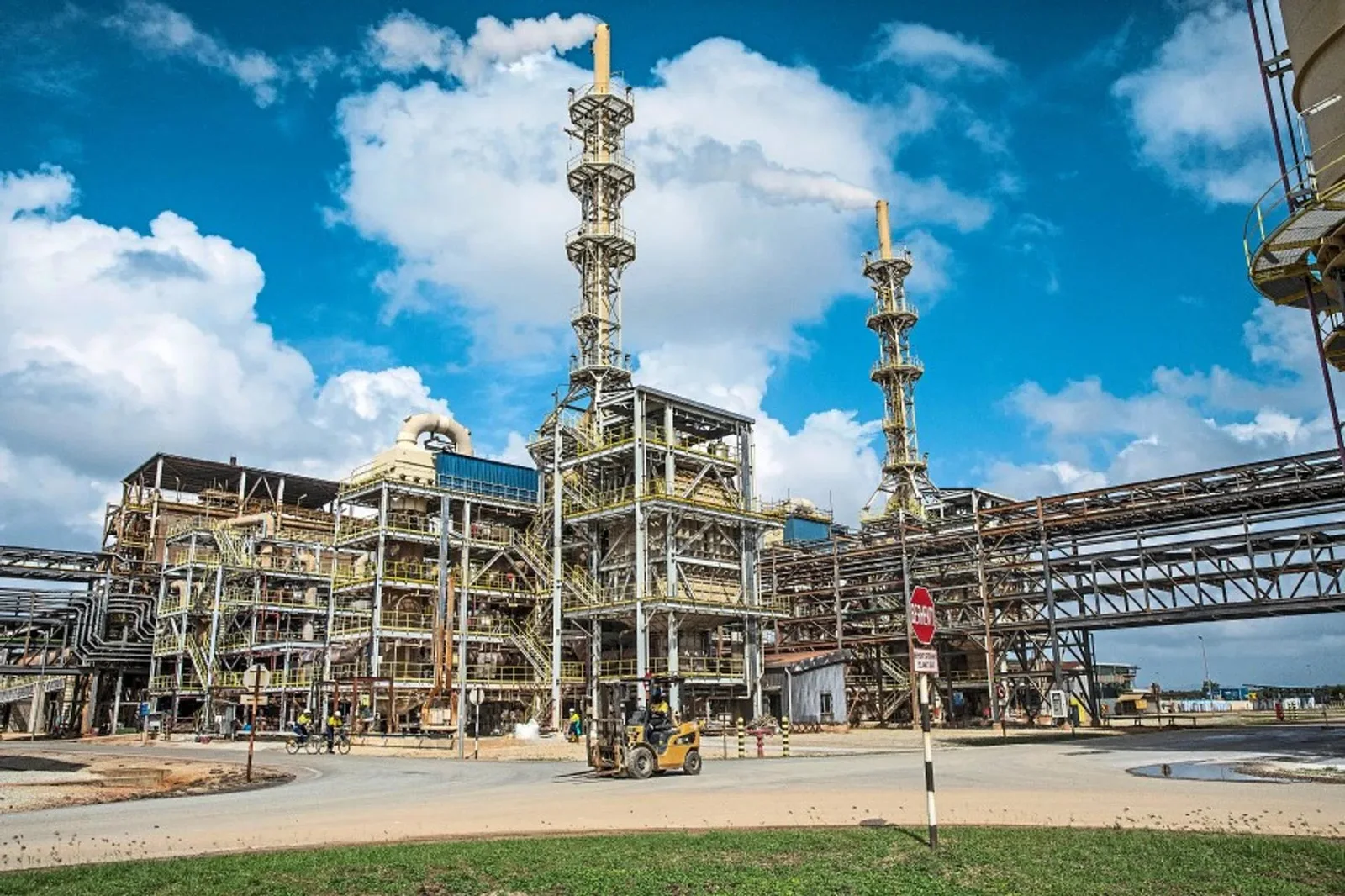
Once extracted, ore must be concentrated, chemically treated and subjected to separation processes that isolate individual elements. Their closely related chemical properties make this stage particularly complex. The resulting oxides must then be converted into metals, alloys and powders suitable for magnet manufacturing.
Each operation requires specialized equipment, precise process control, substantial capital investment and expertise that cannot be recreated overnight. Managing chemical effluents and potentially radioactive residues associated with certain ores introduces additional environmental and financial constraints.
Industrial qualification represents another significant barrier. Automotive and aerospace manufacturers cannot immediately substitute one supplier for another. The physical properties, thermal stability, purity and reliability of materials must satisfy demanding technical specifications.
A newly constructed separation facility does not necessarily represent immediately available commercial capacity. Several years may elapse between commissioning, the stabilization of production yields and the qualification of materials by industrial customers.
International Trade as an Instrument of Power
Chinese export restrictions introduced in April 2025 on seven rare earth elements and certain derivative products exposed the vulnerability of international industrial supply chains. Supply disruptions forced some foreign automotive manufacturers to temporarily reduce or suspend production.
In October 2025, Beijing announced an expansion of its control regime, covering additional elements, processing equipment, industrial technologies and certain categories of products manufactured abroad using Chinese materials or processes.
This extension altered the strategic scope of trade controls. The objective was no longer simply to regulate the international circulation of raw materials, but also to control access to the knowledge and technical capabilities required by other economies to develop independent industrial capacity.
On November 9, 2026, Chinese authorities extended the suspension of certain restrictions announced in October 2025 until January 10, 2027. Measures introduced in April 2025 nevertheless remain in force.
The distinction is essential. A partial suspension does not amount to the dismantling of the export control regime. Licensing requirements remain an instrument capable of influencing the procurement conditions of foreign manufacturers.
For Beijing, however, this instrument has limitations of its own. Excessive restrictions could accelerate the development of competing supply chains, stimulate research into substitute materials and undermine the commercial position of Chinese manufacturers.
The source of leverage lies precisely in the ability to regulate access without necessarily interrupting trade indefinitely.
The Fragmentation of Global Prices
The expansion of trade restrictions is producing another consequence: the emergence of regional markets in which prices reflect not only the physical availability of materials but also their origin and associated geopolitical risks.
On October 30, 2026, S&P Global Energy assessed the price of dysprosium oxide delivered in North America at $4,100 per kilogram, compared with $1,200 when the assessment was introduced on March 31, an increase of approximately 242%.
Over the same period, samarium oxide rose from $175 to $1,200 per kilogram, while terbium oxide increased from $4,900 to $8,100.
These movements do not necessarily indicate growing geological scarcity. They reflect, among other factors, restricted access to processed materials, regulatory uncertainty and the search for secure sources of supply.
Two chemically identical materials can consequently acquire different economic values depending on their origin, contractual availability and the restrictions governing their circulation.
An industrial security premium is gradually being incorporated into the price of raw materials.
This fragmentation could become permanent if major powers institutionalize protected markets in which producers and consumers are connected through industrial agreements operating independently of Chinese price benchmarks.
The Return of the State to Industrial Finance
Rebuilding Western processing capabilities raises a fundamental financial question: how can expensive industrial facilities be financed when their future profitability remains exposed to the commercial and production decisions of a dominant competitor?
A company investing in a new refinery or magnet manufacturing facility must be able to forecast sales volumes, operating margins and capital recovery periods. A prolonged decline in international prices can undermine these projections and make conventional bank financing particularly difficult.
Governments are beginning to intervene directly in this equation.
In July 2025, an agreement between the US Department of Defense and MP Materials established a ten-year price floor of $110 per kilogram for neodymium-praseodymium products.
The guarantee is designed to reduce revenue volatility and support the investments required to establish an integrated American rare earth supply chain.
MP Materials operates the Mountain Pass mining complex in California and is expanding its separation, metallurgical and magnet manufacturing capabilities, including downstream operations in Texas. Its objective is to retain within the United States an increasing share of the industrial processes historically performed abroad.
Japan and Australia are pursuing a comparable strategy.
In March 2026, Lynas Rare Earths restructured its supply agreements with Japanese partners through 2038. A minimum price of $110 per kilogram applies to an annual volume of 5,000 tonnes of neodymium-praseodymium oxide.
Lynas exploits Australia's Mount Weld deposits and operates substantial processing facilities in Malaysia. In 2025, the company also began producing separated dysprosium and terbium oxides, establishing an industrial alternative in a particularly concentrated market segment.
These arrangements represent a significant evolution in the economic policies of industrialized countries. Supply security increasingly depends on contractual revenue stabilization, long-term purchasing commitments and, in certain cases, the transfer of part of the commercial risk to public institutions.
Markets continue to operate, but market outcomes alone are no longer considered sufficient to guarantee the existence of industrial capabilities deemed strategically essential.
Europe and the Cost of Autonomy
Under the Critical Raw Materials Act, the European Union has established several objectives for 2030: domestic extraction capacity equivalent to at least 10% of annual strategic raw material consumption, processing capacity equivalent to 40% and recycling capacity equivalent to 25%. The legislation also seeks to limit dependence on any single third country to 65% at each relevant processing stage.
The central question remains industrial execution.
In France, Solvay is expanding its rare earth separation activities at its historic La Rochelle facility. In Estonia, Neo Performance Materials represents another important participant in the reconstruction of a European supply chain, combining separation capabilities with magnet manufacturing activities.
Europe must nevertheless overcome several constraints simultaneously: energy costs, financing availability, administrative lead times, access to specialized equipment and the development of sufficiently large industrial markets.
A refinery whose principal customers are located in Asia contributes only partially to the reconstruction of a European industrial supply chain. Conversely, a magnet manufacturing facility dependent on metals or alloys imported from China merely relocates the vulnerability rather than eliminating it.
The effectiveness of these investments therefore depends on their coordination. Mining, chemical processing, metallurgy and manufacturing capabilities must develop according to compatible schedules, supported by commercial commitments sufficiently long to make projects financially viable.
Emerging Economies and the Capture of Industrial Value
Brazil, several African countries, India and Southeast Asian economies are assuming a growing role in international diversification strategies.
For mineral-producing countries, competition among major powers creates new investment opportunities. It also raises a longstanding question: how the value generated by natural resources is distributed.
Exporting mineral concentrates generates revenue, employment and infrastructure investment. Local processing, however, creates opportunities to develop technical expertise, chemical and metallurgical industries, and more durable industrial relationships.
Resource-producing countries may increasingly seek to negotiate technology transfers and investment in intermediate processing stages rather than reproduce an exclusively extractive economic model.
The competition for rare earths is consequently becoming a competition over the geographical location of future industrial capabilities.
The most consequential partnerships may not necessarily be those securing the largest extraction volumes, but those enabling resource-producing economies to retain a greater share of the value created.
An Uneven Diversification
The latest data from the International Energy Agency indicate genuine but still insufficient progress.
China's share of rare earth refining declined from more than 90% in 2023 to 85% in 2025. If identified projects are successfully implemented, that share could fall to approximately 70% by 2035.
By that date, however, existing and announced refining capacity outside the dominant supplier would cover only around two-thirds of projected diversified mining output. Magnet manufacturing capacity would cover approximately one-third.
This imbalance suggests that mining diversification could advance considerably faster than the development of downstream industrial markets.
The IEA also estimates that full implementation of China's expanded export restrictions could expose up to $6.5 trillion in annual downstream economic output outside China. This is not a forecast of actual losses, but an assessment of the economic activity potentially exposed to a major supply disruption.
The contrast between the relatively modest size of the rare earth market and the economic importance of the industries that depend on it explains the growing involvement of governments.
The additional cost of diversification can be understood as a form of industrial insurance. The question is who should bear that cost: producers, consumers, taxpayers or some combination of all three.
Recycling and substitution technologies offer complementary opportunities. Recovering magnets from electric vehicles, electronic equipment and wind turbines could reduce demand for primary extraction. Certain motor architectures also make it possible to reduce or eliminate the use of rare earth materials.
These solutions will not, however, eliminate near-term demand for high-performance materials or the industrial constraints associated with their processing.
Beyond Mineral Sovereignty
The global confrontation over rare earths foreshadows a broader transformation in economic geopolitics. In complex industries, power increasingly depends less on the possession of resources than on control over the processes that make them usable.
The same principle applies to lithium, graphite, semiconductors, advanced materials and certain pharmaceutical products. The most consequential dependencies often emerge in intermediate segments of industrial supply chains, relatively inconspicuous activities whose replacement requires years of investment.
China has built part of its international influence by occupying precisely these positions. Its competitors are now attempting to reclaim them through industrial policies, financial guarantees and new commercial alliances.
The geographical redistribution of mining capacity represents a first step. Redistributing chemical, metallurgical and manufacturing capabilities will prove considerably more difficult.
In the contemporary industrial economy, those who possess the ore hold a resource. Those who master its transformation hold power.
Atlas Limits Research Desk
Atlas Limits’ editorial and analytical desk.