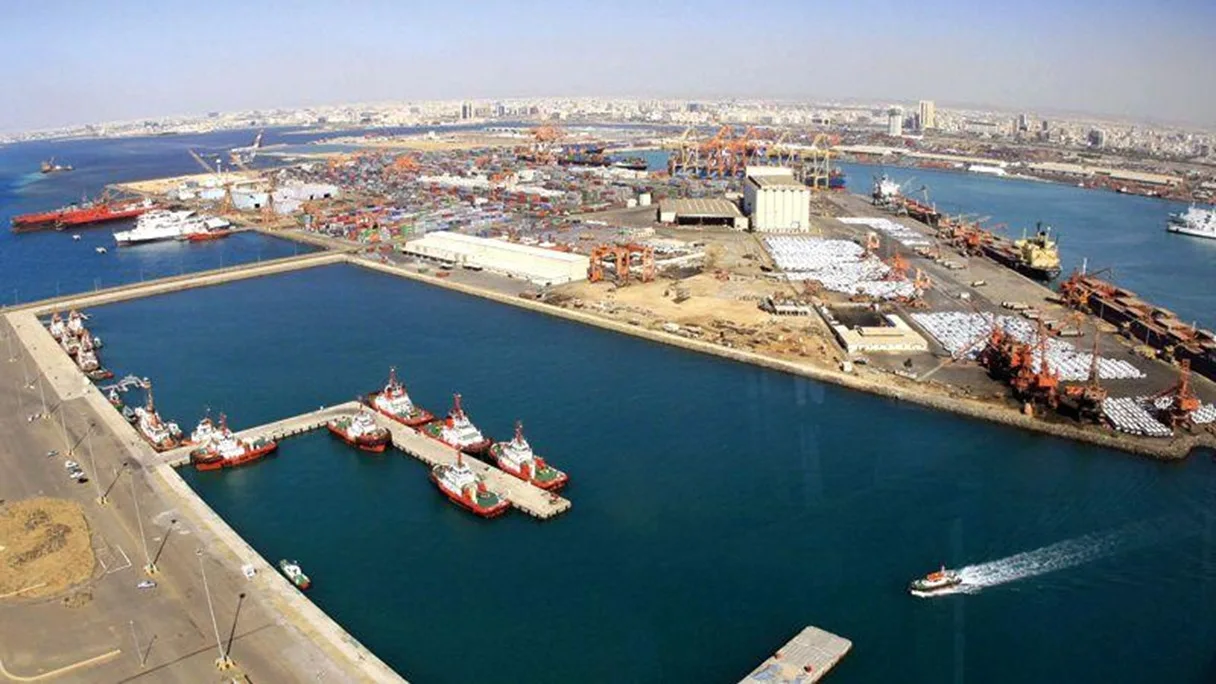
For years, the Red Sea was treated as a maritime problem. Frigates escorted merchant vessels, destroyers intercepted drones, missiles were shot down above shipping lanes, and international coalitions tried to keep one of the world’s main commercial arteries open. Yet in early October 2026, the response taking shape in Riyadh is no longer merely naval.
Saudi Arabia is preparing, alongside Yemeni government-aligned forces, an offensive aimed at retaking territory captured by the Houthis along Yemen’s western coast and restoring control around Bab el-Mandeb. According to six regional and Western officials interviewed by Reuters, several scenarios are under consideration: a concentrated push along the Red Sea coastline or a much broader operation conducted simultaneously across several fronts. Under the latter option, more than 100,000 Yemeni fighters could be mobilized. Local forces would conduct most of the ground operations under Saudi supervision, while Riyadh would provide support including air power.
What is taking shape, however, goes beyond another battle in Yemen’s long war. The real objective lies a few dozen kilometers farther south: a maritime passage narrow enough to turn geography into power.
Bab el-Mandeb has once again become a land frontier. 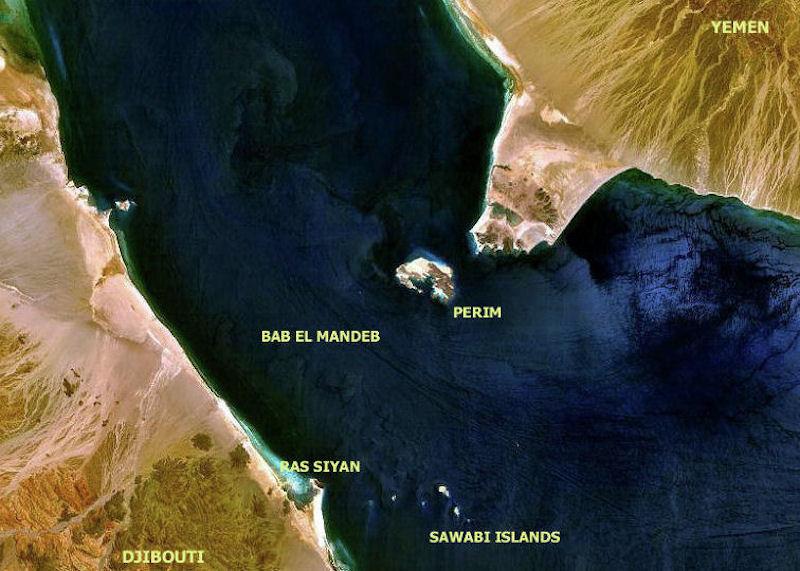
The War Returns to the Strait
The shift happened quickly.
In September, the Houthis launched an offensive that substantially altered the balance of power in western Yemen. Their advance reached the Red Sea coast and the strategic area around Mokha, bringing their positions directly closer to Bab el-Mandeb. Fighting subsequently intensified around Taiz, where around 80 combatants were reported killed within twenty-four hours, according to sources from both sides cited by AFP.
The advance comes after several years in which the war appeared to have settled into an imperfect equilibrium. The UN-brokered truce of 2022 never produced a political settlement, but it considerably reduced the intensity of fighting between the Houthis and the Saudi-led coalition.
Regional warfare gradually destroyed that equilibrium.
The Houthis transformed their arsenal of missiles and drones into an instrument of long-range coercion. Attacks against Saudi infrastructure resumed while the Red Sea itself became a military theater. Houthi territorial gains around Bab el-Mandeb now simultaneously increase the risks facing shipping, energy infrastructure and Saudi territory.
For Riyadh, the nature of the problem has therefore changed.
It is no longer simply a matter of intercepting what is launched from Yemen. It is about changing the geography from which those weapons can be used.
What Warships Cannot Do
Since 2024, much of the international response to attacks on commercial shipping has relied on naval power.
The European Union deployed Operation Aspides. The United States and several of its allies mobilized warships and air assets. Missiles and drones were intercepted, merchant vessels escorted and Houthi positions struck.
These deployments can protect a shipping lane temporarily. They can raise the cost of an attack and reduce the probability that a projectile reaches its target. They can also maintain an international military presence in waters that shipping companies might otherwise abandon almost entirely.
But they cannot move the coastline.
Italian Defense Minister Guido Crosetto said as recently as October 2 that European contributions to the naval mission protecting the Red Sea remained insufficient, calling on allies to increase their commitment around Bab el-Mandeb.
The problem, however, has moved beyond the number of frigates available.
A naval force can defend a ship passing through a strait. It is far more difficult for it to permanently neutralize a military organization possessing land positions, drones, missiles, artillery and strategic depth extending hundreds of kilometers inland.
The closer the Houthis move toward the strait, the more obvious this contradiction becomes.
The security of Bab el-Mandeb once again depends on who controls its shores.
Geography Reasserts Itself
The strait connects the Red Sea to the Gulf of Aden and then the Indian Ocean. It therefore forms the southern entrance to the maritime route that reaches the Suez Canal in the north.
That geography explains its value.
A closure or prolonged degradation of Bab el-Mandeb would not eliminate trade between Europe and Asia. It would force ships to sail around Africa via the Cape of Good Hope. That diversion means additional days at sea, more fuel consumption, more vessels required to transport the same volume of goods and, ultimately, more capital immobilized throughout each logistics chain.
A strait therefore does not need to be physically closed to produce economic consequences.
It only needs to become dangerous enough to cross.
That is precisely what Houthi attacks have demonstrated. The power of a relatively limited actor can become disproportionate when concentrated on a passage that the global economy cannot easily reproduce elsewhere.
The phenomenon is not unique to Yemen. Hormuz operates according to the same logic for Gulf hydrocarbons. Suez concentrates trade between the Mediterranean and the Red Sea. Malacca connects the Indian Ocean with East Asia.
Globalization multiplied trade routes, but it did not eliminate chokepoints. In some respects, it did precisely the opposite: the larger the volumes moving between major economic regions, the more important certain narrow passages become.
Bab el-Mandeb belongs to this geography.
And that geography has returned to the center of Yemen’s war.
Riyadh Does Not Want to Repeat 2015
For Saudi Arabia, however, a ground offensive contains a major contradiction.
Riyadh already knows the cost of a Yemeni war without a sufficiently limited military objective.
The intervention launched in 2015 was intended to prevent the Houthis from consolidating control over the country and to restore the internationally recognized government. It became a prolonged, costly and politically difficult conflict without eliminating the Houthi movement. Instead, over the following years, the group developed increasingly sophisticated military capabilities and a growing ability to strike deep inside Saudi territory.
The strategy now under consideration appears designed precisely to avoid repeating that experience.
Saudi troops would not necessarily be tasked with conquering the territory themselves. Riyadh-backed Yemeni forces would bear most of the ground fighting, while Saudi Arabia would provide supervision, intelligence and air power. The United States is also providing intelligence and targeting information but, according to information available in early October, Washington does not plan to participate directly in the offensive.
The distinction is fundamental.
In 2015, the war pursued a maximalist political objective: changing the balance of power across Yemen.
In 2026, the objective could be considerably more geographic: pushing the Houthis far enough back to create strategic depth around Bab el-Mandeb and the southern Red Sea coast.
It would be a war for a strip of territory rather than a war for Yemen as a whole.
But military maps rarely display the discipline of planning maps.
One Hundred Thousand Men Do Not Necessarily Make an Army
The figure discussed for the most ambitious option — more than 100,000 fighters — is striking. Yet it obscures the principal weakness of the forces opposing the Houthis.
Yemeni anti-Houthi forces do not constitute a perfectly homogeneous bloc.
They include military, political and territorial formations whose interests do not always coincide. Some are close to Riyadh, while others have historically maintained stronger relations with Abu Dhabi. Rivalries between government authorities, local forces and southern separatist movements have not disappeared simply because a common adversary is advancing.
The Houthis, by contrast, possess a more centralized command structure and more than a decade of experience in a war that has become simultaneously terrestrial, aerial and ballistic.
The real test of the offensive will therefore not simply be the ability to assemble men.
It will be the ability to transform a fragmented coalition into a coherent military instrument.
A limited coastal operation could reduce that difficulty. A simultaneous offensive across multiple fronts would increase it considerably. Such an operation might force the Houthis to disperse their forces, but it would also multiply requirements for coordination, logistics, intelligence and command.
Riyadh must therefore solve a familiar equation: generate enough mass to alter the balance of power without recreating the open-ended war the kingdom spent years trying to leave behind.
The Strait and the Kingdom
There is also a deeper reason why Saudi Arabia cannot treat Bab el-Mandeb as an external problem.
The kingdom has gradually shifted part of its strategic vision toward the Red Sea.
Economic projects along the western coast, ports, energy infrastructure and new development zones have made this space an increasingly important component of Saudi Arabia’s economic transformation. The Red Sea is no longer merely the kingdom’s western coastline. It is becoming one of the axes of its development.
A permanently vulnerable Bab el-Mandeb would mean that the southern entrance to this space could be disrupted by a hostile organization equipped with missiles and drones.
The threat is therefore not merely commercial.
It reaches into the economic geography Riyadh is trying to build.
This also explains why the Yemeni question, which Saudi Arabia had tried first to contain and then to negotiate, is suddenly returning to the center of its security policy.
The kingdom can accept a fragmented Yemen. It can probably live with a Houthi government entrenched in Sanaa.
What is considerably harder to accept is a Houthi power controlling enough territory to turn the southern entrance to the Red Sea into a permanent instrument of coercion.
Taking Back the Land to Reopen the Sea
The offensive has not yet begun, and its final scope remains uncertain. Another path also remains open: members of the Mecca defense pact are due to discuss in Riyadh an Iranian proposal to explore political engagement with the Houthis, indicating that the military option is not yet the only one on the table.
But the preparations themselves already constitute a strategic shift.
For several years, the powers concerned tried to solve the Red Sea’s vulnerability from the sea. They added warships, missile-defense systems, escorts and air strikes. This architecture contained some risks without eliminating the Houthis’ ability to disrupt shipping.
The movement of the front toward Bab el-Mandeb is now returning the problem to its most elementary form.
Global shipping routes appear abstract on economic maps: lines connecting ports, markets and continents. Yet in certain places, those lines pass between two pieces of land close enough together that whoever controls the coast can exert power over what crosses the water.
Bab el-Mandeb is one of those places.
After trying to protect the strait with warships, Riyadh therefore appears to be returning to a truth far older than globalization: to control the sea over the long term, sometimes you have to start by taking back the land.
Main Sources
Reuters, “Saudis plan assault on Houthis to break Red Sea chokehold,” October 2, 2026.
Reuters, “Italy says EU naval mission in Red Sea still insufficient,” October 2, 2026.
AFP, “Battle in Yemen's Taiz kills scores of combatants,” October 3, 2026.
ACLED, “Houthi gains around Bab al-Mandab raise risks to Red Sea shipping and global oil markets,” 2026.
Atlas Limits Research Desk
Atlas Limits’ editorial and analytical desk.