The risk had so far remained concentrated in infrastructure. It is now appearing in cargoes.
Days after the shutdown of Saudi Arabia’s East-West pipeline, crude deliveries to Europe are beginning to be cancelled and some refiners are seeking replacement supplies. The disruption at Yanbu is therefore no longer merely a threat to the kingdom’s export capacity: it is beginning to alter the physical allocation of available oil.
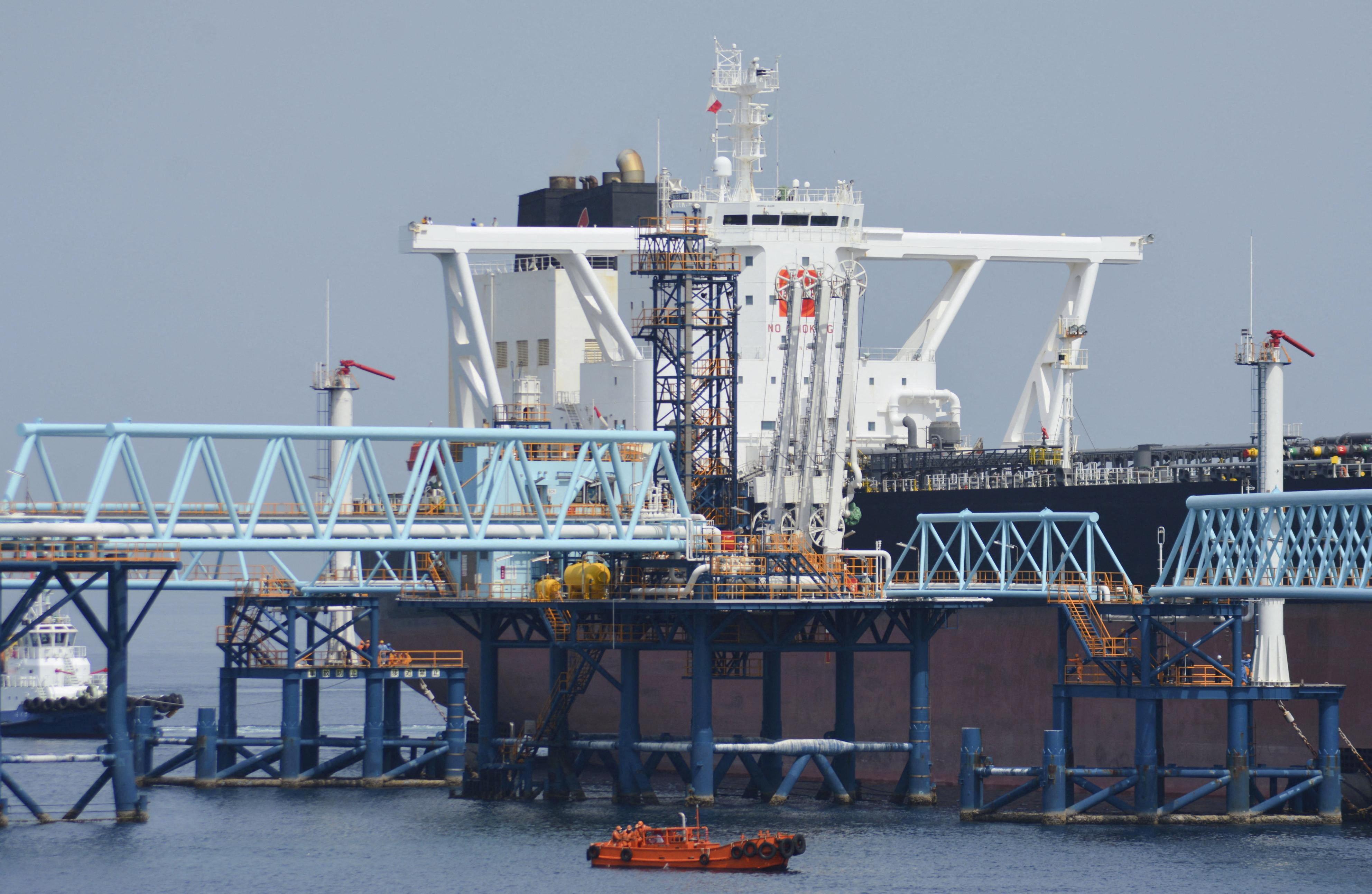
According to several trading and maritime sources cited by Reuters on September 15, Saudi Arabia informed European customers that some cargoes scheduled for loading in September would be cancelled. Crude-loading operations at the Red Sea terminal of Yanbu have also been suspended. Saudi Aramco declined to comment on the reports.
The development changes the nature of the crisis.
The East-West pipeline connects Saudi Arabia’s eastern producing regions with the Red Sea coast. As disruptions around the Strait of Hormuz intensified, the infrastructure acquired additional strategic importance: it allowed Riyadh to move several million barrels per day toward Yanbu without relying directly on the maritime passage between the Persian Gulf and the Indian Ocean.
Its shutdown weakens precisely that redundancy at the moment when it is most valuable.
From theoretical capacity to actual cargoes
When the pipeline initially stopped operating, the main uncertainty concerned the inventories available at Yanbu. As long as storage tanks at the terminal and crude already positioned within the system could supply vessels, the loss of the pipeline did not necessarily imply an immediate interruption of exports.
That buffer now appears to be reaching its limits.
The cancellations reported on September 15 show that at least part of the imbalance is beginning to be transmitted to customers. The exact number of affected cargoes and their combined volume remain unknown, but the signal is significant: European refiners are no longer dealing solely with hypothetical supply scenarios. Some must now find barrels elsewhere.
Polish energy group Orlen provides the clearest example.
Around 40% of the crude supplied to the group comes from Saudi Aramco. According to Reuters, Orlen has turned to alternative sources, seeking cargoes from the North Sea, the United States, Kazakhstan, Algeria and Guyana.
Its refineries in Poland, Lithuania and the Czech Republic continue to operate normally for now. That distinction matters: the Saudi disruption has not yet translated into a shortage of refined products in Europe. Its first effect is a reorganisation of crude procurement.
But that reorganisation has a price.
When the physical market separates from paper
On September 15, some physical crude cargoes available in Europe traded above $130 per barrel. North Sea Forties reached $136.75 according to LSEG data cited by Reuters, while Brent futures closed at $108.75.
That does not mean that global oil suddenly costs $136 a barrel.
It primarily reflects the immediate value attached to a barrel that is available in the right place, of the right quality and at the right time.
Futures contracts express market expectations across different maturities. A refinery facing the disappearance of a cargo expected within weeks, however, cannot feed its processing units with a financial contract. It needs a vessel, a grade compatible with its configuration and a cargo that physically exists and can be delivered.
When several buyers simultaneously search for the same alternatives, the premium attached to those barrels can rise rapidly.
That is precisely what the increase in Forties indicates.
The Saudi disruption is therefore beginning to produce a geography of prices that the Brent benchmark alone cannot fully describe. Oil remains available globally, but not every barrel is immediately accessible or perfectly interchangeable.
Europe shifts its dependencies again
Orlen’s position carries a particular significance.
Since Europe sharply reduced its imports of Russian crude, several Central European refiners have diversified their supplies toward the Middle East, the North Sea, the United States, North Africa and Kazakhstan.
Saudi crude became part of that new architecture.
The disruption of the Yanbu route is now forcing some of those same companies to diversify a diversification strategy that was itself designed to reduce an earlier dependency.
The episode illustrates an increasingly important characteristic of the global energy system: security of supply depends not only on the existence of resources, but on the number of viable routes through which those resources can move.
A barrel produced in Saudi Arabia can theoretically reach Europe through several channels. But when the Strait of Hormuz is heavily disrupted while the pipeline providing direct access to the Red Sea is simultaneously unavailable, the system’s effective flexibility contracts sharply.
The kingdom retains export terminals on the Gulf and could increase shipments from that coast if maritime conditions permit. Cargoes can also be rescheduled, while partial pipeline operations could eventually resume.
For that reason, the current shutdown cannot yet be treated as the permanent removal of several million barrels per day from the global market.
It nevertheless reveals something more structural.
Saudi redundancy under pressure
The East-West pipeline was never simply a transport asset. It was a form of geographical insurance.
By connecting Saudi Arabia’s eastern oil-producing regions with Yanbu, it gave the kingdom access to two maritime fronts and reduced its dependence on Hormuz. That capability has long represented one of the principal strategic advantages of the Saudi oil system.
The current crisis exposes the limits of that architecture when several corridors come under pressure simultaneously.
The nominal capacity of a pipeline alone does not guarantee resilience. Pumping stations must remain operational, terminals must function, intermediate inventories must be available, tankers must be accessible and the maritime routes at either end of the system must remain usable.
When one element fails, the others absorb the shock. When several become constrained at once, the market has to find redundancy elsewhere.
For Europe, that redundancy is currently being sought across the Atlantic basin, the North Sea, North Africa, Central Asia and, increasingly, the Americas.
Such a shift can lengthen shipping routes, alter the crude grades processed by refineries and intensify competition among buyers for immediately available cargoes.
Duration is now the critical variable
The central question is therefore no longer whether the pipeline shutdown can affect exports.
It already is.
The question is for how long.
Available estimates remain widely divergent. Some scenarios envisage a relatively rapid restart, potentially involving partial operations. Others point to several weeks of disruption. No sufficiently precise timetable published by the Saudi authorities currently resolves that uncertainty.
That makes it premature to extrapolate today’s physical prices or the first cargo cancellations into a lasting structural deficit.
A rapid restart could ease the physical market and allow Aramco gradually to rebuild its loading programme. A prolonged interruption would create a different dynamic: replacement purchases would cease to be temporary and could begin to reshape flows between oil-producing basins more durably.
That is now the threshold to watch.
The attack on the East-West pipeline exposed the vulnerability of infrastructure designed to bypass a vulnerable strait. September’s cargo cancellations show that this vulnerability has moved beyond pipeline maps and into commercial contracts.
The global oil market has not yet permanently lost the Saudi capacity normally routed through Yanbu.
But Europe is already looking for the barrels that were supposed to come out of it.
Main sources
Reuters, September 15, 2026 — suspension of loading operations at Yanbu, cancellation of Saudi cargoes destined for Europe and developments in oil markets.
Reuters, September 15, 2026 — Orlen’s search for alternative crude cargoes following reduced Saudi supplies.
Reuters / LSEG, September 15, 2026 — European physical crude market developments and Forties at $136.75 per barrel.
Reuters, September 13–14, 2026 — East-West pipeline shutdown, transit capacity, inventories available at Yanbu and potential consequences for Saudi exports.
Atlas Limits Research Desk
Atlas Limits’ editorial and analytical desk.