Russia no longer holds the position in Syria that it enjoyed under Bashar al-Assad. But it has not left.
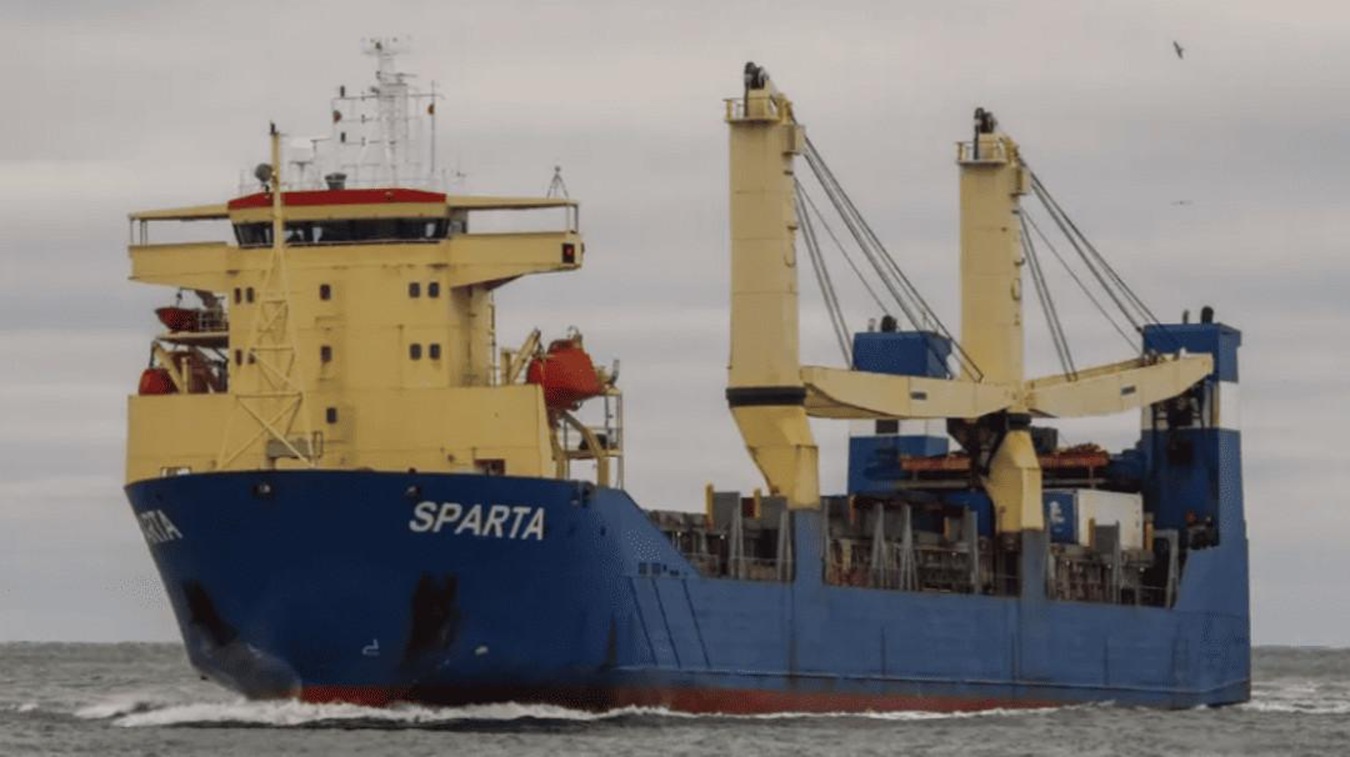
On September 7, four Russian vessels arrived at the Syrian port of Tartus: the roll-on/roll-off cargo ship Sparta, the tanker General Skobelev, the replenishment ship Akademik Pashin and the destroyer Admiral Levchenko. Their arrival marks the first documented resupply of Russian facilities since Moscow and Syria’s new government reached an agreement on August 9 over the future of Tartus and Hmeimim.
Satellite imagery showed the Sparta and Akademik Pashin docked the following day. Their presence was subsequently observed on the ground. According to two Syrian sources cited by Reuters, the Sparta unloaded equipment intended for the facilities at Tartus and Hmeimim airbase, including ammunition. The precise nature of the cargo, however, could not be independently verified.
At this stage, the movement itself matters more than the contents of the shipment. For the first time since Russia’s presence in Syria was formally redefined, Moscow has demonstrated that its facilities are not merely being preserved on paper. They remain connected to a military logistics chain capable of crossing the Mediterranean and supplying them.
A reduced but operational presence
The August 9 agreement ended eighteen months of uncertainty triggered by the fall of Bashar al-Assad in December 2024.
Syria’s new authorities inherited an unusually asymmetric relationship with Moscow. Under the former regime, Russia operated its principal Mediterranean naval support facility at Tartus and used Hmeimim as an air hub for operations in Syria and, more broadly, for military connections with other theaters.
The collapse of the Assad government suddenly transformed infrastructure that Moscow had long treated as secure into negotiable assets.
The compromise reached in August substantially changes their status. Commercial infrastructure previously operated by Russia is to be progressively returned to Syrian administration. The military facilities at Tartus and Hmeimim, meanwhile, are to become joint training and qualification centers.
Russian control over these sites is therefore diminished. Their military function, however, has not disappeared.
The September convoy provides the first tangible demonstration of that distinction.
Tartus after Assad
For Moscow, the difference is fundamental.
Russia built its Syrian presence around a privileged political relationship with Damascus. It must now preserve its interests in a country whose government no longer owes its survival to Russian intervention.
Tartus retains disproportionate value in this equation. The facility gives Russia a support point in the eastern Mediterranean and reduces the dependence of its naval forces on much more distant infrastructure. Hmeimim, in parallel, provides an air facility capable of receiving military aircraft and supporting long-range logistical movements.
Together, they provide something that occasional naval deployments cannot: permanence.
It was precisely this permanence that came into question after December 2024.
The September convoy does not mean Russia has restored the military posture it maintained under Assad. The facilities operate under greater constraints, Syrian control has increased, and the precise arrangements governing personnel, storage, command and operational use remain largely unknown.
But Moscow appears to have accepted the loss of exclusivity in order to preserve access.
It is a significant compromise, and probably a rational one.
The Syrian Express changes its mission
The movement of the four vessels also demonstrates that the maritime dimension of Russia’s Syrian presence can continue to function.
After passing Gibraltar, the ships stopped transmitting their identification signals. At least two vessels in the group are subject to Western sanctions. Their passage across the Mediterranean nevertheless ended at Tartus.
The route recalls the “Syrian Express,” the maritime logistics network Moscow used for years to transport personnel, vehicles, ammunition and equipment to Syria.
Its purpose may now be changing.
Russia no longer necessarily needs to sustain a large-scale military intervention designed to protect an allied government. The priority is increasingly to maintain enough logistical throughput to preserve the operational viability of its remaining positions.
That distinction matters. A reduced military footprint requires fewer resources than a wartime deployment while still allowing Moscow to retain a strategic option in the eastern Mediterranean.
The infrastructure could also continue supporting Russia’s connections with Africa. Hmeimim has played a role in air movements linking Russia with several African theaters, while Tartus provides complementary maritime depth. The future extent of that function, however, remains to be established.
Damascus turns the bases into leverage
The agreement also reveals something about the strategy of Syria’s new government.
Damascus could have sought the complete removal of Russian forces as a symbolic break with the military architecture of the former regime. Instead, it chose a more transactional arrangement.
Syria is progressively recovering control over parts of its civilian infrastructure while maintaining military cooperation with Moscow.
Above all, this allows Damascus to avoid turning its rapprochement with Arab and Western states into another exclusive dependency.
The Russian facilities therefore become bargaining instruments.
Moscow can offer military cooperation, training, equipment, economic ties and diplomatic support. Western and regional partners, meanwhile, may seek to reduce Russian influence by offering their own economic, security or financial arrangements.
The more options Damascus retains, the greater its negotiating room.
Paradoxically, Russia’s presence could therefore become less dominant while becoming more useful to the Syrian government as an element of balance among competing partners.
Losing privilege, preserving access
A single convoy cannot establish the depth of Russia’s new military posture.
The number of Russian personnel remaining in Syria is uncertain. Moscow’s rights regarding storage, command and access are not fully public. The future frequency of naval and air rotations remains unknown, as does the precise destination of the equipment unloaded in September.
It would therefore be premature to describe the development as a return to the level of Russian activity that existed before Assad’s fall.
But that may no longer be the objective.
The transformation lies elsewhere.
For years, Russian power in Syria rested on an ally dependent on Moscow and on military facilities enjoying an exceptional status. That architecture disappeared with the former regime.
In its place, a more modest arrangement is emerging: joint facilities, greater Syrian sovereignty, a negotiated Russian presence and a functioning logistics chain.
Moscow has lost the privilege. It has preserved the access.
In a Mediterranean where Russia briefly faced the prospect of losing its permanent naval foothold altogether, that distinction may be enough to preserve what matters most.
Main sources
Reuters — “Russian convoy resupplies Syria coastal facilities for first time since Moscow-Damascus deal,” September 14, 2026.
SANA — Syria-Russia agreement on the future of the Hmeimim and Tartus facilities, August 9, 2026.
Euronews — reporting on the renewed “Syrian Express” and Russian naval activity in the Mediterranean, September 2026.
The Maritime Executive — reporting on Russian Mediterranean logistics and the Tartus presence, August–September 2026.
Atlas Limits Research Desk
Atlas Limits’ editorial and analytical desk.