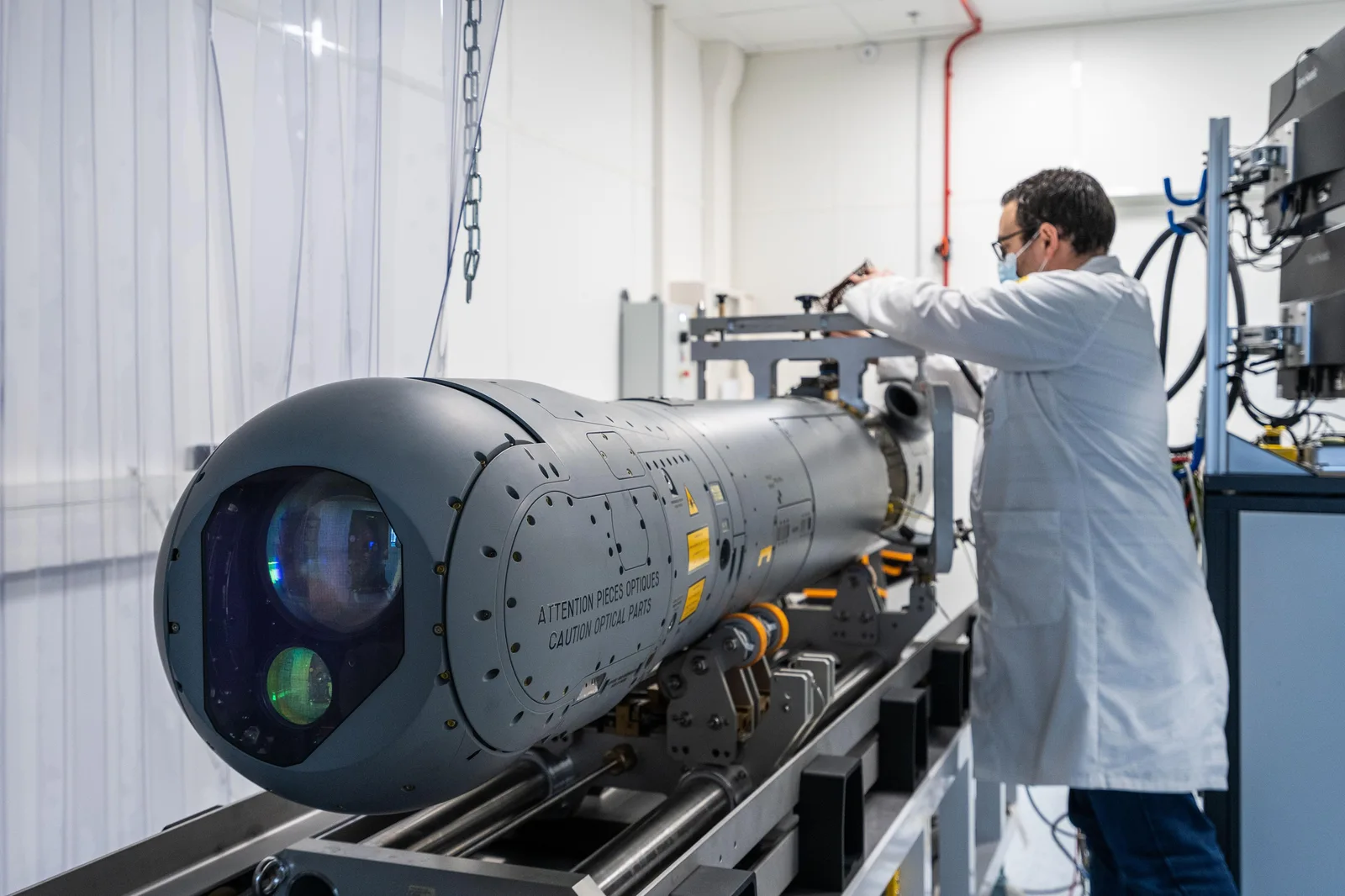
Thales’s proposed acquisition of a controlling stake in Lumibird highlights a profound transformation across strategic industries. At the intersection of defence, semiconductors, artificial intelligence, telecommunications and quantum technologies, photonics is emerging as one of the essential technological infrastructures of the global economy. Mastering light is becoming both a matter of technological sovereignty and an instrument of industrial power.
An acquisition beyond its financial dimensions
On 27 November 2026, Thales announced that it had entered into exclusive negotiations to acquire 51.6% of Lumibird’s share capital from entities controlled by its chairman, chief executive and majority shareholder, Marc Le Flohic. The proposed transaction values the shares at €30.10 each, representing a 24.7% premium to the volume-weighted average share price over the month preceding the announcement. Contingent additional payments could increase this amount to €32.66.
The transaction is contingent, however, on a prior restructuring of Lumibird’s business portfolio. Its medical division is to be sold to US-based IPG Photonics, allowing Thales to concentrate its investment on photonics activities. The proposed consideration incorporates an exceptional distribution of €11.34 per share associated with the disposal.
On this basis, the photonics division is valued at approximately €440 million in enterprise value, equivalent to nearly 23 times the operating profit expected for 2027 according to analyst consensus. Completion of the controlling stake acquisition is anticipated in the second quarter of 2027, subject to the necessary regulatory approvals and completion of the medical division’s disposal. A subsequent tender offer for the remaining shares could lead to Lumibird’s delisting.
Relative to Thales’s overall scale, the investment remains modest. Its strategic significance, however, is considerable. The group is seeking not merely to expand its product portfolio but to strengthen its control over a foundational technology on which several generations of industrial and military systems depend.
This distinction between the financial size of an acquisition and the strategic value of the underlying assets is becoming increasingly central to capital allocation across major technology groups.
Lumibird and the creation of a strategic asset
Lumibird’s history illustrates how a mid-sized technology company can acquire industrial significance far beyond its economic weight. Formed through the combination of Keopsys and Quantel in 2017, the Brittany-based group has progressively assembled a portfolio of expertise spanning fibre lasers, solid-state lasers and associated optical technologies.
Its development strategy has combined organic growth with international acquisitions. The acquisition of Swedish defence group Saab’s laser rangefinder activities and US laser manufacturer Continuum helped expand its technological portfolio, manufacturing capabilities and access to international markets.
This strategy has gradually transformed Lumibird into a supplier of critical technologies for aerospace, defence, space, scientific research and selected industrial and medical applications. Its products contribute to systems associated with the Rafale fighter aircraft, European armoured vehicles, and optical surveillance and measurement equipment.
In 2025, the group generated revenue of €225.6 million, an increase of 8.9%, while EBITDA reached €45.6 million, compared with €32.9 million a year earlier. Its EBITDA margin consequently rose from 15.9% to 20.2%, alongside an increase in net income from €5.7 million to €14 million.
The photonics division, which constitutes the business perimeter targeted by Thales, generated revenue of €113.4 million in 2025, up 14.1%. It maintained its growth trajectory during the first half of 2026, with revenue increasing by 15.3% and EBITDA by 20.2%.
Beyond these financial results, Lumibird’s value lies in the accumulation of scientific expertise, manufacturing processes, intellectual property and industrial qualifications that would take years to replicate. In strategic industries, such technological depth often constitutes a more formidable barrier to entry than access to capital.
Photonics: the invisible infrastructure of the global economy
While electronics relies on the manipulation of electrons, photonics harnesses the properties of photons to generate, transmit, detect and process information, as well as to transfer energy.
Long associated with scientific laboratories, precision instruments and telecommunications, photonics now underpins a growing share of contemporary industrial infrastructure. Fibre-optic networks carry data between continents, industrial lasers cut and assemble materials, advanced optical systems enable semiconductor manufacturing, and photonic sensors extend the capabilities of observation, measurement and diagnostics.
This breadth of application gives photonics a distinctive position within global value chains. Unlike many technologies marketed directly to consumers, it often operates several layers upstream from the final product. Its presence remains largely invisible, even though its absence could disrupt entire segments of industrial activity.
The automotive industry uses lasers in battery manufacturing, welding and certain onboard perception systems. Medical applications include surgery, ophthalmology and diagnostics. Energy infrastructure relies on optical sensors to monitor complex installations, while the space industry employs photonic instruments for Earth observation and the development of new communications capabilities.
Advances in photonics therefore do more than improve the performance of existing equipment. They also make entirely new technological architectures possible.
Artificial intelligence opens a new industrial cycle
The expansion of artificial intelligence infrastructure is becoming one of the principal forces reshaping the photonics industry.
The concentration of thousands of processors within data centres requires enormous volumes of information to move between accelerators, servers and storage systems. As computing architectures expand, the physical limitations of electrical interconnects become increasingly restrictive in terms of energy consumption, transmission distance and data throughput density.
Optical communications offer a partial solution to these constraints. Already widely deployed across data centre networks, optical technologies are moving progressively closer to processors themselves through silicon photonics and co-packaged optics.
This evolution is extending technological competition beyond processor manufacturers. Nvidia, Broadcom, Intel, Marvell and TSMC are pursuing different approaches to bringing electronic processing and optical transmission closer together. Specialist companies such as Lightmatter and Ayar Labs are also developing new interconnect architectures.
Mastering light could consequently become one of the determining factors in the economic efficiency of computing infrastructure. The operating cost of a data centre no longer depends solely on the processing power of its chips, but also on its ability to move data between them without disproportionately increasing energy consumption.
This does not imply that Lumibird’s existing technologies will automatically find applications in data centres. It nevertheless demonstrates how photonics, across its diverse technological segments, stands to benefit from a structural transformation in global demand.
A global industry shaped by geographical specialisation
The photonics value chain is characterised by a particularly complex international structure. It encompasses optical materials and semiconductor components, laser sources, detection systems, control software and the integration of complete equipment.
The United States possesses a powerful ecosystem built around companies such as Coherent, Lumentum, IPG Photonics and MKS Instruments. Their activities span industrial lasers, optical communications, scientific equipment and technologies essential to semiconductor manufacturing.
The proximity of these industrial groups to major American cloud computing and artificial intelligence companies encourages closer integration between end-user requirements and the development of photonic components.
Japan holds a longstanding position in materials science, precision optics, scientific instrumentation and detection systems. Hamamatsu Photonics, Nikon, Canon and Fujikura illustrate different areas of specialisation, ranging from light detection and lithography to communications infrastructure.
China, meanwhile, has developed a competitive industry in industrial lasers, optical communications and associated components. Companies such as Raycus, Maxphotonics and Accelink benefit from the scale of the Chinese manufacturing market and substantial domestic investment in digital infrastructure and advanced technologies.
Europe nevertheless retains several decisive positions. Germany’s TRUMPF ranks among the world’s leading industrial laser specialists, while ZEISS possesses essential expertise in ultra-high-precision optical systems. In the Netherlands, ASML occupies a central position in advanced lithography equipment, whose operation depends heavily on sophisticated optical technologies and light sources.
The European ecosystem also includes Jenoptik, Exail, ams OSRAM and numerous specialist manufacturers. It benefits from world-class scientific infrastructure, notably France’s CEA-Leti, Belgium’s imec and Germany’s Fraunhofer institutes.
Europe’s relative weakness therefore lies not necessarily in its scientific mastery of photonics, but in its ability to transform dispersed expertise into industrial platforms with sufficient financial, commercial and manufacturing resources to accompany the expansion of global markets.
The proposed Thales–Lumibird transaction fits directly within this challenge.
Defence accelerates the strategic valuation of optical technologies
The return of large-scale military investment is transforming the economic prospects of numerous companies specialising in photonic technologies.
Contemporary defence systems rely on a combination of electronic, radar, optical and computing capabilities. Photonic technologies contribute to observation, surveillance, distance measurement, communications and the detection of phenomena that are difficult to identify through other means.
The proliferation of drones and the diversification of aerial threats are also increasing industrial interest in new generations of protective systems, including directed-energy technologies.
Their development responds partly to an economic challenge. Intercepting relatively inexpensive threats with sophisticated conventional equipment can create an unfavourable financial asymmetry. Under certain operational conditions, laser systems could help reduce the marginal cost of protection.
Their widespread deployment nevertheless remains subject to significant physical, energy, industrial and environmental constraints. Rather than providing a universal substitute for conventional systems, they represent a complementary capability within increasingly diversified defence architectures.
For Thales, Lumibird offers an opportunity to strengthen its existing optronics activities while consolidating its position in emerging markets.
This strategic direction comes at a particularly favourable moment for the French group. In 2025, Thales generated revenue of €22.1 billion, including €12.2 billion from defence activities. Its order backlog reached €53.3 billion at year-end, providing substantial commercial visibility and a strong incentive to secure its supply chains over the long term.
From technology customer to technology owner
For several decades, major industrial groups favoured organisational models based on outsourcing an increasing proportion of their value chains. These structures reduced capital requirements, provided access to specialist expertise and improved industrial flexibility.
Geopolitical fragmentation, export restrictions and growing pressure on manufacturing capacity are progressively challenging some of the foundations of this model.
When a supplier controls a technology that is difficult to substitute, its independent ownership can become a source of risk for its principal customers. A change in ownership, a regulatory restriction or a reallocation of manufacturing capacity can affect programmes whose development cycles extend across several decades.
Vertical integration offers a response to this exposure. By acquiring Lumibird, Thales would seek to bring the design of critical components closer to the development of the complex systems into which they are integrated.
Such an organisational structure could improve coordination of research and development investment, accelerate innovation cycles and secure manufacturing capacity. It could also create opportunities to share scientific, industrial and commercial infrastructure.
The economic rationale therefore extends beyond the conventional cost synergies associated with mergers and acquisitions. It encompasses the value of avoided industrial risks, greater control over delivery schedules, the preservation of expertise and the ability to directly influence the development of future technologies.
From this perspective, acquiring a critical supplier becomes a form of strategic insurance embedded within the company's capital structure.
The new economics of strategic value
The proposed €440 million enterprise valuation of Lumibird’s photonics business represents approximately 3.9 times its 2025 revenue and 23 times its forecast operating profit for 2027.
This valuation reflects substantial growth expectations. It must also be interpreted in light of the nature of the underlying assets.
Conventional financial valuation methods assess a company primarily through its ability to generate future cash flows. In strategic technology sectors, this approach must be complemented by an assessment of the assets’ specific value to an industrial acquirer.
Rare scientific expertise, a qualified manufacturing process or a technology embedded within a military programme can carry considerable additional value for a group whose future revenues, potentially amounting to billions of euros, depend indirectly on their availability.
This value is not necessarily reflected in the supplier’s historical financial statements. It becomes apparent through replacement costs, supply disruption risks, the time required to develop alternative solutions and the competitive advantages that integration could deliver.
An acquisition premium may therefore compensate not only for the target company’s financial prospects but also for the reduction of its acquirer’s industrial uncertainty.
This rationale does not, however, guarantee value creation. Retaining expertise, maintaining relationships with existing customers, delivering synergies and preserving innovation will determine the investment’s ultimate profitability. At 23 times forecast EBIT, Thales would be acquiring a future development trajectory as much as an existing industrial capability.
The European consolidation paradox
The proposed transaction follows Lumibird’s decision to sell its medical division to IPG Photonics. This sequence of transactions illustrates the complexity of European industrial sovereignty.
On one side, a major French industrial group is seeking to consolidate European control over optical technologies considered strategic. On the other, a medical business originating from the same industrial group is set to become part of an American company.
This restructuring should not be interpreted as a straightforward contradiction. It reflects specialisation strategies through which industrial groups concentrate their resources on markets where they believe they can achieve the strongest technological and commercial complementarities.
It nevertheless raises questions about the boundaries of technological sovereignty. Medical, scientific and industrial technologies can share expertise, materials and manufacturing processes with military applications. The legal separation of business activities does not always correspond to a clear separation of technological knowledge and capabilities.
Europe’s challenge is to encourage the emergence of industrial groups large enough to finance the necessary investments without undermining the diversity of its industrial ecosystem.
Integrating specialist suppliers into major corporations can secure critical expertise, but it can also reduce the independence of certain companies and alter their relationships with competing customers. Maintaining an open, innovative and competitive industrial base will therefore be essential as consolidation progresses.
Technological sovereignty cannot be measured solely by the nationality of shareholders. It also depends on the location of research and manufacturing capabilities, the availability of skilled professionals, control over intellectual property and the resilience of supply chains.
Light as an instrument of power
Modern industrial history has been shaped by the successive mastery of foundational technological infrastructures. Electricity transformed manufacturing, electronics enabled automation, semiconductors accelerated digitalisation, and communications networks globalised the circulation of information.
Photonics now stands at the intersection of several of these transformations. It extends the capabilities of electronics, supports the development of artificial intelligence, renews scientific instrumentation and contributes to the evolution of defence systems.
The proposed combination of Thales and Lumibird will not, on its own, reshape the global balance of the photonics industry. It nevertheless reveals a significant evolution in the strategy of major European industrial groups: a determination to reduce their exclusive reliance on external markets for access to the technologies that will shape their future.
In an economy where competitive advantages increasingly depend on scarce components and knowledge that is difficult to replicate, ownership of foundational technologies is becoming an instrument of power.
Following the competition for energy, raw materials, semiconductors and computing capacity, the industrial mastery of light is opening a new chapter in technological sovereignty.
Atlas Limits Research Desk
Atlas Limits’ editorial and analytical desk.