In the ports of Kingston, Bridgetown, and Santo Domingo, goods arrive daily from distant continents. Food products, fuel, industrial equipment, vehicles, and consumer goods cross the Atlantic or the Gulf of Mexico before being distributed across economies whose geographical proximity contrasts with the relatively limited volume of trade between neighboring territories. Separated by only a few hundred kilometers, two islands may maintain stronger commercial relationships with the United States or Europe than with each other.
This reality captures one of the Caribbean's fundamental paradoxes. Located at the intersection of the Western Hemisphere's major maritime routes, the region remains deeply fragmented in its economic and political organization. Its territories contributed for centuries to the formation of the global economy without consistently developing the foundations of sufficiently autonomous growth.
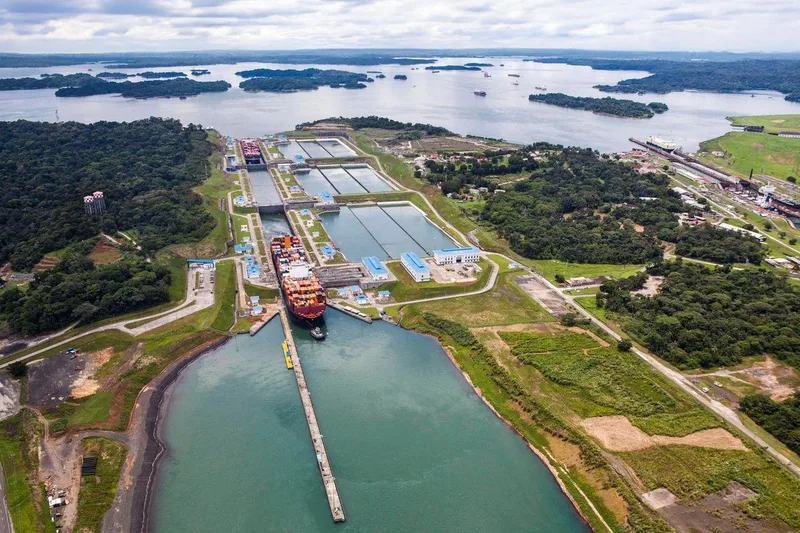
The Caribbean Sea connects North America, Central America, and South America. It opens onto the Atlantic and provides access, through the Panama Canal, to Pacific shipping routes. Its islands and continental coastlines overlook strategic maritime passages, accommodate port infrastructure, and form areas of influence for several international powers.
Yet this geographical centrality has not translated into comparable collective economic power.
Caribbean countries have followed markedly different trajectories. The Dominican Republic has developed a diversified economy based on tourism, services, and export-oriented manufacturing zones. Jamaica continues a long economic transformation under fiscal constraints. Trinidad and Tobago possesses a relatively developed energy industry. Guyana is experiencing exceptional expansion driven by oil production, while Haiti remains confronted with a prolonged collapse of institutional capacity.
These differences should not obscure a shared condition: most Caribbean economies remain particularly exposed to decisions, markets, and shocks originating beyond their borders.
According to the OECD, central government debt in the Caribbean countries examined averaged 68.6% of gross domestic product in 2024, compared with 54.1% in Latin America. Merchandise imports represented an average of 36.6% of GDP, revealing the structural importance of external supplies.
Dependence, however, extends beyond trade. It also concerns infrastructure, capital, migration, energy systems, technology, and the capacity to respond to natural disasters.
Understanding why a region so central to global economic history continues to face such constraints requires examining how its economic space was originally organized.
A Region Built to Serve External Economies
The Caribbean's economic geography is not simply the consequence of dispersed islands or small domestic markets. It bears the imprint of a history during which its territories were gradually incorporated into commercial systems designed and controlled from abroad.
Beginning in the sixteenth century, European powers transformed the region into one of the principal arenas of colonial expansion.
Spain established its earliest possessions in the Greater Antilles. France, Britain, and the Dutch Republic subsequently developed their own colonial, commercial, and military networks.
Sugarcane became one of the principal engines of the Atlantic economy.
In Saint-Domingue, Jamaica, Barbados, and Cuba, plantations supplied European markets. Their operations depended heavily on slavery and the forced transportation of African populations, within a system where local production was organized to satisfy external demand.
Ports, roads, and administrative structures were developed according to this orientation.
The objective was not to construct an integrated Caribbean market, but to connect each territory to its colonial metropolis.
That distinction produced lasting consequences.
Commercial infrastructure prioritized transatlantic connections rather than links between neighboring islands. Local economies specialized in a limited number of export commodities. Political and legal institutions developed within separate colonial frameworks.
The region's linguistic, administrative, and monetary fragmentation partly originates in this history.
Even today, the Caribbean encompasses English-, French-, Spanish-, and Dutch-speaking countries and territories, alongside territories maintaining constitutional relationships with external powers.
This diversity represents considerable cultural wealth. It also creates difficulties when governments seek to harmonize trade, taxation, financial regulation, or migration policies.
The independence movements of the twentieth century profoundly transformed the political status of numerous territories. Jamaica and Trinidad and Tobago gained independence in 1962, Barbados in 1966, the Bahamas in 1973, and several Eastern Caribbean states during the following decades.
But political independence could not, by itself, immediately transform the productive structures inherited from colonial rule.
Economies remained specialized, domestic markets were limited, and commercial networks continued to be oriented toward former colonial powers or the United States.
Tourism gradually replaced certain agricultural commodities as a principal source of foreign exchange, without necessarily transforming the underlying logic of external dependence.
Visitors came predominantly from foreign markets. Investment frequently originated from international companies. Much of the equipment, energy, and merchandise consumed by tourism establishments had to be imported.
The nature of exports changed, but the structural constraints persisted.
This historical continuity does not mean that Caribbean societies are condemned to reproduce their colonial past. It does, however, explain why regional integration could not emerge from geographical proximity alone.
For centuries, the Caribbean had been organized as a succession of commercial peripheries rather than as a common economic space.
Tourism: Prosperity Exposed to External Shocks
Tourism represents one of the most significant economic achievements of the contemporary Caribbean.
It has enabled several countries to develop infrastructure, create employment, attract international capital, and increase foreign-exchange earnings.
The Bahamas, Antigua and Barbuda, Saint Lucia, Barbados, and the Dominican Republic have built substantial parts of their development strategies around this industry.
According to the OECD, international tourist arrivals in the Caribbean increased from approximately 10 million in 1995 to 34.2 million in 2024.
This expansion demonstrates the region's ability to capitalize on its natural heritage, geographical position, and international attractiveness.
Yet it also reveals considerable sectoral concentration.
Across the Caribbean economies examined by the OECD, services accounted for approximately 63% of total exports, while tourism represented an average of 71% of service exports.
This specialization exposes countries to fluctuations beyond their control.
An American or European recession can reduce travel expenditure. Higher airfares can affect visitor numbers. A pandemic can abruptly interrupt international tourism flows. A hurricane can destroy infrastructure built over several decades in a matter of hours.
The health crisis of 2020 provided a particularly striking illustration of this vulnerability.
International travel restrictions caused a sharp contraction in tourism activity, depriving several economies of a substantial share of their revenues.
The problem does not lie in tourism itself, but in the insufficient development of activities capable of offsetting its fluctuations.
The question of how much economic value remains within host countries also deserves attention.
A destination may receive large numbers of visitors without converting all their expenditure into national income.
Airlines, booking platforms, certain international hotel groups, and foreign suppliers capture part of the value generated by travel.
When tourism establishments import a significant proportion of their food, equipment, and energy, tourism revenues simultaneously generate foreign-exchange outflows.
The distinction between visitor numbers and domestic wealth creation therefore becomes essential.
It is particularly visible in the cruise industry.
According to an IMF analysis published in 2026, cruise passengers represented nearly two-thirds of tourist arrivals in the Caribbean in 2024, but their local expenditure was generally much lower than that of visitors staying overnight.
In Dominica, estimates cited by the IMF indicated that in 2023 a cruise passenger generated less than $200 in tourism receipts, compared with more than $2,000 for an overnight visitor.
These figures are not averages applicable to the entire region. They nevertheless illustrate a fundamental difference between visitor volumes and economic value creation.
Tourism development therefore raises a strategic question: how can countries increase the proportion of revenues retained locally?
The answer depends partly on agricultural capacity, professional training, domestic businesses, energy infrastructure, and the connections between tourism and other productive sectors.
Without these linkages, tourism growth can reinforce dependence on imports even as it increases external revenues.
Commercial Fragmentation as an Economic Constraint
One of the Caribbean's most remarkable characteristics is the difficulty of organizing efficient exchanges between territories that are geographically close.
Maritime distance cannot be measured in kilometers alone.
It depends on the availability of regular shipping services, port capacity, transport costs, customs procedures, and logistics infrastructure.
Two islands separated by a few hundred kilometers may be economically more distant from each other than either is from Miami.
This situation partly reflects the organization of international shipping networks.
Major transport companies prioritize routes carrying the largest commercial volumes. Small island markets rarely generate sufficient traffic to justify frequent direct connections.
Goods may consequently transit through external logistics hubs before reaching their regional destinations.
Transport costs increase, delivery times lengthen, and local companies face greater difficulties expanding their commercial activities.
An IMF study published in 2026 identifies weak maritime connectivity as one of the structural obstacles to Caribbean trade.
These constraints do not concern merchandise alone.
Regional air connections are equally important for the movement of people, professional services, higher education, and tourism between islands.
When regional travel requires multiple connections or becomes prohibitively expensive, geographical proximity loses part of its economic value.
This fragmentation limits economies of scale.
A food-processing company based in Saint Lucia may struggle to access markets in Barbados, Grenada, or Antigua on a regular basis.
A Jamaican manufacturer may find it easier to organize certain commercial relationships with North America than with several smaller Caribbean economies.
Domestic markets consequently remain too narrow to sustain some industrial activities, while logistics costs reduce the competitiveness of regional production.
The problem becomes circular.
Limited trade discourages infrastructure development. Insufficient infrastructure, in turn, prevents trade from expanding.
Breaking this cycle requires more than reducing customs duties.
It requires constructing the material foundations of a regional market: ports, maritime transport, compatible customs procedures, common standards, payment systems, and distribution networks.
Economic integration cannot function sustainably when goods move less efficiently between neighboring countries than between each territory and the major international trading powers.
Energy, Food, and Debt: The Mechanisms of Vulnerability
Caribbean dependence has a particularly tangible dimension. It appears in electricity bills, food prices, and the fiscal capacity of governments.
Many small island economies have historically depended on imported fossil fuels to generate electricity.
This situation produces high energy costs and direct exposure to fluctuations in international oil prices.
When prices rise, import expenditure increases, public finances may come under pressure, and businesses face higher production costs.
The World Bank has emphasized that electricity prices in the Caribbean are among the highest in Latin America and the Caribbean region.
This constraint directly affects industrialization prospects.
An economy characterized by expensive electricity and a small domestic market faces greater difficulties attracting manufacturing activities requiring reliable and competitively priced energy.
Food dependence produces comparable effects.
Island territories have limited agricultural land, sometimes constrained by difficult topography and climatic conditions. Urbanization, tourism development, and changes in agricultural production systems have also contributed to increasing food imports.
The situation is not uniform.
Some countries possess significant agricultural capacity, while others have much more limited production possibilities.
At the regional level, however, food security remains closely connected to international trade and logistics infrastructure.
An increase in maritime transport costs or a disruption of supply chains can rapidly translate into higher retail prices.
Vulnerability becomes particularly concerning when combined with elevated public debt.
In 2024, according to the OECD, central government debt averaged 68.6% of GDP across the Caribbean economies examined.
This figure conceals considerable national differences, but it reveals a persistent regional constraint.
Governments must finance expensive infrastructure, provide public services, and respond to natural disasters while relying on relatively narrow tax bases.
Reconstruction following a hurricane can require expenditure equivalent to a substantial proportion of national economic output.
Such spending may necessitate additional borrowing, increasing future debt-service costs and reducing resources available for investment.
External dependence then assumes a fiscal dimension.
A politically sovereign state may possess limited room for independent decision-making when its investment capacity depends on international creditors, concessional financing, or developments in financial markets.
This does not mean that all borrowing represents an obstacle to development.
Debt can finance essential infrastructure and support future growth.
But when investment needs are permanent and natural disasters repeatedly destroy productive capital, indebtedness can become a mechanism of cumulative vulnerability.
Caribbean economies must therefore finance both their development and the protection of that development against external risks.
Unequal Sovereignties in a Region of Strategic Rivalries
Caribbean fragmentation is not exclusively economic. It also extends to political status and international relations.
The region includes independent states, autonomous territories, and jurisdictions remaining integrated into external political systems.
Martinique and Guadeloupe are French overseas departments and regions. Puerto Rico is a territory of the United States. Aruba, Curaçao, and Sint Maarten are autonomous constituent countries within the Kingdom of the Netherlands.
These institutional arrangements produce markedly different conditions regarding citizenship, taxation, trade policy, and public financing.
They also complicate the development of a unified regional strategy.
The Caribbean has long occupied a central position in rivalries between major powers.
European colonial competition gradually gave way to particularly strong American influence.
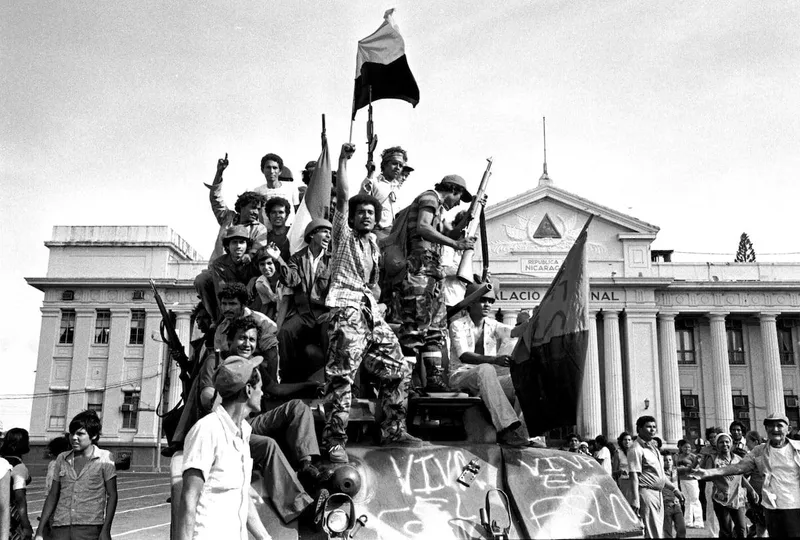
The Spanish-American War of 1898, military interventions during the early twentieth century, and the Cuban Missile Crisis of 1962 confirmed the region's strategic importance to Washington.
Proximity to the American coastline, maritime routes, military installations, and migration issues continue to structure relations between the United States and Caribbean countries.
But American influence is no longer exclusive.
China has expanded its commercial, diplomatic, and financial relationships with several states in the region.
Its investments and infrastructure projects form part of a broader international strategy of diversifying economic partnerships.
European powers also retain a significant presence through their territories, commercial relationships, and cooperation mechanisms.
The region consequently lies at the intersection of several spheres of influence.
This situation can create opportunities for diplomatic and financial diversification.
It can also reinforce asymmetries when small states negotiate individually with partners possessing far greater economic and political resources.
Legal sovereignty does not guarantee equality of negotiating power.
A state with a population of only a few tens of thousands does not possess the same instruments as a major power when negotiating trade agreements, financing infrastructure, or influencing international standards.
The Caribbean's challenge is therefore not merely to preserve political independence.
It is to develop collective capacities capable of transforming independence into negotiating power.
Regional Integration: An Unfinished Ambition
The Caribbean Community, or CARICOM, represents the principal attempt to overcome the fragmentation inherited from history.
Established in 1973 through the Treaty of Chaguaramas, it currently comprises fifteen member states and eight associate members.
Its institutional reach extends beyond the Caribbean islands, including Belize, Guyana, and Suriname.
This configuration illustrates that the Caribbean is as much a historical, cultural, and economic space as a strictly insular geographical region.
The organization pursues several objectives: economic cooperation, diplomatic coordination, regional mobility, and the development of a common market.
The CARICOM Single Market and Economy seeks to facilitate the movement of goods, services, capital, and certain categories of workers.
Progress has been achieved in several areas, particularly functional cooperation and regional coordination.
The Organisation of Eastern Caribbean States represents another particularly interesting experiment in integration.
Several of its members share a common currency, the Eastern Caribbean dollar, administered by a regional central bank.
This architecture demonstrates that deeper institutional cooperation remains possible among small states.
Nevertheless, the limitations of regional integration remain substantial.
Differences in economic size, productive structures, tax policies, and national priorities complicate convergence.
Professional mobility remains subject to varying conditions, while transport infrastructure continues to restrict exchanges.
Political and commercial integration also encounters a more fundamental difficulty: Caribbean economies frequently produce similar goods and services destined for the same external markets.
Several countries consequently compete to attract tourists, hotel investment, financial activities, and real estate development.
Such competition can encourage certain economic improvements, but it can also reduce incentives to develop collective strategies.
Regional cooperation therefore requires an evolution of the productive model.
It cannot be limited to facilitating the circulation of goods that local economies do not manufacture.
It must encourage the creation of regional value chains in which the agricultural, industrial, energy, and logistics capacities of different territories become complementary.
Guyana could play an increasingly important role in this transformation, particularly through its energy resources and agricultural potential.
Trinidad and Tobago possesses industrial expertise in natural gas and petrochemicals.
The Dominican Republic has a more developed manufacturing base, although it is not a CARICOM member.
Jamaica, Barbados, and several other economies have developed capabilities in services, logistics, financial activities, and technology.
These potential complementarities do not guarantee automatic integration.
They do, however, demonstrate that the region possesses more diversified resources than its predominantly tourism-oriented international image might suggest.
The challenge is to organize these resources within a coherent economic space.
Guyana's Oil and the Transformation of Regional Balances
Guyana's oil boom represents a major turning point in the Caribbean's economic geography.
Long regarded as a relatively poor small economy, the country has experienced exceptional expansion since offshore oil production began in 2019.
The development of resources in the Stabroek Block has profoundly transformed its fiscal, commercial, and industrial prospects.
Guyana now possesses revenues and investment capacities capable of altering its regional influence.
This transformation is clearly visible in economic statistics.
According to the Caribbean Development Bank, growth across its borrowing member countries reached 4.7% in 2025 when Guyana was included, compared with only 0.6% when it was excluded.
The difference reveals a widening divergence between resource-exporting economies and states primarily dependent on tourism and services.
Oil can create new opportunities to finance infrastructure, agriculture, and economic diversification.
It can also reinforce regional imbalances if wealth remains concentrated in a limited number of territories.
International experience demonstrates that natural resources do not automatically generate diversified development.
Their contribution depends on institutions, fiscal management, professional training, and the capacity to develop productive activities beyond extraction.
For Guyana, the central question will therefore be how to transform petroleum revenues into lasting economic capital.
For the Caribbean, it will be whether that wealth can generate broader regional benefits.
The emergence of a Caribbean energy power could help reduce certain dependencies, particularly in energy, infrastructure, and investment.
But this possibility remains conditional.
Regional energy markets are fragmented, infrastructure is insufficiently interconnected, and national interests sometimes diverge.
Guyana's oil will not, by itself, eliminate the Caribbean's historical constraints.
It could nevertheless alter the resources available to address them.
Climate Change: A Constraint Reshaping Sovereignty
Climate vulnerability is perhaps the most profound expression of the limits imposed on Caribbean economic sovereignty.
The region's states contribute relatively little to global greenhouse gas emissions, yet several rank among the territories most exposed to the consequences of climate change.
Hurricanes, rising sea levels, coastal erosion, droughts, and ecosystem degradation directly affect infrastructure and economic activity.
According to the OECD, Caribbean countries experienced 357 climate-related extreme weather events between 1980 and 2024. The number of such events increased by 84% during 2004–2024 compared with the preceding twenty years.
This exposure has a distinctive economic dimension.
In a large continental economy, a natural disaster may affect one region without destroying a substantial proportion of national productive capacity.
In a small island state, a hurricane can simultaneously damage ports, roads, hotels, electricity networks, schools, and healthcare facilities.
The resulting losses can represent a considerable share of annual GDP.
Dominica provided a particularly striking example when Hurricane Maria devastated the island in September 2017.
Reconstruction required substantial investment while exposing the vulnerability of a territory with limited fiscal resources.
Climate change is therefore transforming the development equation.
It is no longer sufficient to finance infrastructure capable of supporting growth.
Countries must build infrastructure resilient enough to prevent that growth from being repeatedly erased by disasters.
This requirement increases initial investment costs.
It also strengthens the need for international financing mechanisms adapted to climate risks.
Caribbean governments have advocated reforms to development financing for several years, arguing that vulnerability should not be assessed solely through income per capita.
Barbados has played an important role in bringing this debate to the international stage through the Bridgetown Initiative, which proposes reforms to global financial instruments to better address the needs of vulnerable countries.
The issue extends beyond climate solidarity.
It concerns states' ability to preserve fiscal autonomy and essential infrastructure against risks they cannot individually control.
Sovereignty can no longer be measured solely by the capacity to control a territory.
It also depends on the ability to protect that territory, rebuild it, and maintain the material conditions necessary for collective life.
A Regional Power Yet to Be Built
The Caribbean is not an economically homogeneous region.
The contrast between Guyana's petroleum-driven growth, the Dominican Republic's tourism development, Haiti's structural difficulties, and the constraints facing small island economies makes any uniform interpretation misleading.
But these differences do not eliminate regional interdependence.
Caribbean states share several vulnerabilities: climate exposure, commercial dependence, logistics costs, limited access to financing, and difficulties developing sufficiently large markets.
They also possess considerable advantages.
Their geographical position places them close to the Western Hemisphere's principal economies. Their maritime space retains lasting commercial and strategic importance. Their cultural heritage exercises an international influence far exceeding their demographic weight.
Energy resources, tourism, financial services, human capital, and opportunities in the maritime economy provide potential foundations for productive transformation.
But these advantages will not automatically produce regional power.
The Caribbean's economic history demonstrates precisely that geographical centrality can coexist with dependence.
A territory may occupy a strategic position in global trade without controlling the infrastructure, capital, or decisions organizing that trade.
An economy may welcome millions of visitors without possessing a sufficiently diversified productive base.
A state may be legally independent while remaining highly exposed to economic and financial decisions made beyond its borders.
Transforming this situation requires a change in regional priorities.
Commercial integration must be accompanied by investment in transport, energy, food production, and digital infrastructure.
Economic diversification must allow more value added to remain within local economies.
Diplomatic cooperation must strengthen collective negotiating capacity with major powers and international financial institutions.
Finally, climate policy must be integrated into development strategies rather than treated as a separate field.
None of these transformations will eliminate the constraints of island geography.
But geography does not entirely determine a region's economic destiny.
It establishes a set of conditions to which institutions, infrastructure, and collective strategies can provide different responses.
For centuries, the Caribbean was organized around vertical relationships connecting each territory to an external power, market, or financial center.
Its future will depend partly on its ability to build sufficiently strong horizontal relationships to transform this succession of dependencies into a space of cooperation.
The central question, therefore, is not whether the Caribbean can one day escape global interdependence. No region can truly do so.
It is whether these interdependencies will continue to be primarily imposed upon Caribbean societies or whether they can become instruments of a collective economic strategy.
For centuries, the Caribbean helped enrich powers located beyond its horizons.
Its contemporary challenge is to organize prosperity in which decisions, infrastructure, and benefits belong more fully to the societies inhabiting the region.
Dependence, after all, is not merely a question of resources. It is also a question of how economic power is organized.
And in the Caribbean, where the sea has long connected islands to the wider world more effectively than it has connected them to one another, emancipation may begin with an apparently simple transformation: turning geographical proximity into genuine economic proximity.
Main Sources
OECD — Caribbean Development Dynamics 2026. Analysis of Caribbean economic structures, public debt, international trade, tourism, investment, and climate vulnerability.
International Monetary Fund — Mind the Gaps: Caribbean Trade Patterns and the Connectivity Constraint, 2026. Study of logistics constraints, maritime and air connectivity, and their consequences for regional economic integration.
International Monetary Fund — Eastern Caribbean Currency Union: 2026 Discussion on Common Policies of Member Countries. Analysis of Eastern Caribbean economies, tourism, and commercial constraints.
World Bank — The Caribbean, Regional Overview. Regional economic prospects, productive diversification, energy, infrastructure, and climate resilience.
Caribbean Development Bank — Caribbean Economic Review and Outlook 2025–2026. Economic performance, regional divergences, and the contribution of Guyana's petroleum-driven expansion.
Caribbean Community — CARICOM, Who We Are. Institutional composition and regional cooperation framework.
United Nations Economic Commission for Latin America and the Caribbean — Preliminary Overview of the Economies of Latin America and the Caribbean, 2025. Regional growth, investment, public finances, and structural constraints.
Atlas Limits Research Desk
Atlas Limits’ editorial and analytical desk.