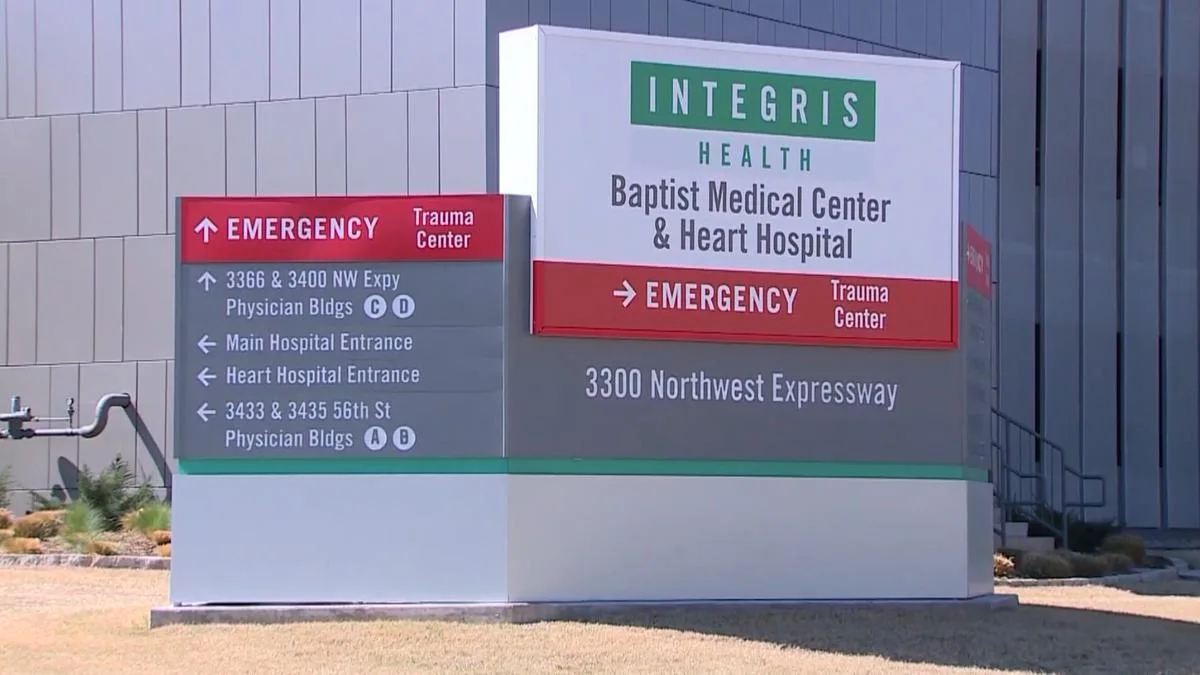
With the planned integration of INTEGRIS Health into Risant Health, Kaiser Permanente is advancing the development of a national hospital network built around a distinctive principle: bringing nonprofit healthcare organizations together while preserving their local identities and progressively integrating their financial, technological, and organizational capabilities. Behind this structure lies a new form of consolidation in American healthcare, one in which institutional control no longer necessarily requires the disappearance of the organizations being integrated.
On October 21, 2026, Risant Health and INTEGRIS Health announced a definitive agreement under which Oklahoma's largest nonprofit healthcare system would become part of a national organization established three years earlier by Kaiser Permanente. The transaction remains subject to regulatory approvals, but its significance already extends beyond the hospitals directly involved.
INTEGRIS Health employs approximately 13,000 people, operates ten acute-care hospitals and ten specialty facilities, and maintains Oklahoma's largest physician network. Its activities range from primary care and complex medical procedures to rehabilitation, mental healthcare, and community-based services. According to financial figures reported by LevinPro, its annual revenue approaches $2.9 billion, with EBITDA of approximately $164 million.
The proposed integration would make INTEGRIS the third healthcare system to join Risant Health, following Geisinger in Pennsylvania and Cone Health in North Carolina. Three different regions, three historically autonomous organizations, but a common ambition: to build shared infrastructure capable of transforming the economic and clinical conditions under which hospitals operate.
This expansion reflects an important shift. Hospital consolidation in the United States is no longer confined to combining assets and pursuing economies of scale. It is increasingly becoming a strategy for integrating information systems, investment capabilities, and models of patient care.
Consolidation Without the Disappearance of Local Identities
The distinctive feature of the agreement lies first in its structure.
Risant Health and INTEGRIS Health are both nonprofit organizations. Neither an acquisition price nor an investment amount specific to this transaction was disclosed when the agreement was announced. It would therefore be misleading to automatically characterize the arrangement as a conventional acquisition in which shareholders sell their equity interests in exchange for financial consideration.
That distinction, however, does not mean that control remains unchanged.
According to information published by Becker's Hospital Review, Risant Health would become INTEGRIS Health's parent organization once the necessary approvals have been obtained. INTEGRIS would retain its name, brand, medical teams, and operational leadership. It would also continue working with multiple insurers, healthcare networks, and independent physicians.
Institutional identity would therefore be preserved, while the organization would become part of a broader governance structure.
This model can reduce some of the resistance traditionally associated with hospital consolidation. Local institutions may retain their visibility, patient relationships, and managerial continuity while gaining access to resources they could not develop independently.
Operational autonomy, however, should not be confused with strategic independence. The true implications of the agreement will depend on governance rights, budgetary authority, appointment mechanisms, and decisions reserved for the parent organization.
These arrangements will require closer examination once regulatory and institutional documents become available.
Technology Becomes an Instrument of Consolidation
Kaiser Permanente's initiative rests on a central proposition: improving hospital productivity depends not only on institutional size, but also on the ability to coordinate care and use medical information effectively.
Established in April 2023, Risant Health was designed to extend practices associated with value-based care. The underlying principle is to prioritize clinical outcomes and the overall cost of treatment rather than the volume of billable procedures.
Such an approach requires substantial investment.
It depends on information systems capable of tracking patient journeys, clinical decision-support tools, preventive care programs, coordination between specialists and primary-care physicians, and analytical capabilities that identify the most effective interventions.
For an independent hospital network, the cost of developing this infrastructure can represent a major constraint.
This is precisely the argument advanced by Timothy Pehrson, INTEGRIS Health's chief executive: the partnership is expected to enable investments that the organization could not undertake independently, either at the same scale or at the same pace.
Technology is therefore becoming a driver of institutional integration. A hospital system no longer joins a larger organization solely to obtain additional financial resources. It also seeks access to shared medical and digital infrastructure.
This evolution brings certain mechanisms of hospital consolidation closer to those found in platform-based industries: local organizations retain their activities but become progressively dependent on common resources to improve performance.
Operational Gains That Still Need to Be Demonstrated at Scale
Risant Health has highlighted several results achieved within its existing networks to illustrate the potential benefits of its model.
At Geisinger Community Medical Center, a program reorganizing emergency department admissions reportedly reduced the measured admission process time by approximately 60% through May 31, 2026.
Clinical referral tools introduced at Geisinger are also reported to free up approximately 490 specialist appointments per month by directing certain patients toward more appropriate care pathways.
At Cone Health, a digital clinical documentation assistant reportedly reduced the time physicians spent writing consultation notes by nearly 14%.
Risant has also indicated that operational improvements at Geisinger have contributed to a margin improvement approaching one percentage point.
These figures are meaningful, but they require careful interpretation.
They originate from the organization itself, concern specific initiatives, and do not constitute an independent assessment of the overall model. A reduction in administrative processing time, for example, does not automatically demonstrate a proportional improvement in clinical quality or an equivalent reduction in healthcare expenditure.
They nevertheless reveal where Risant intends to create value: operational processes, coordination, digital tools, and more efficient use of existing capacity.
The challenge now is to reproduce these outcomes across hospitals with different characteristics without allowing standardization to become organizational rigidity.
The Financial Power Behind the Model
Risant Health's creation forms part of a long-term financial strategy.
When the organization was launched, Kaiser Foundation Hospitals outlined plans to commit up to $5 billion to support Risant's technological capabilities, shared infrastructure, and future investments.
That historical funding commitment should not be confused with the financing of the INTEGRIS transaction, whose specific financial terms have not been disclosed.
It nevertheless illustrates the economic logic behind the initiative.
Building a national network allows certain fixed investments to be distributed across a growing number of institutions. Software platforms, data infrastructure, training programs, and clinical improvement systems can be developed on a scale that would be difficult for a single regional network to achieve.
The objective is therefore not exclusively to reduce expenditure. It is also to expand investment capacity, improve the efficiency of deployed capital, and overcome the constraints that prevent independent institutions from modernizing their operations.
In a sector where demand for equipment, personnel, and technology remains substantial, access to long-term financial resources can become a decisive determinant of genuine institutional autonomy.
A paradox consequently emerges: some hospitals may need to accept deeper institutional integration in order to preserve their ability to fulfill their missions locally.
Nonprofit Status Does Not Eliminate Competition Concerns
The nonprofit nature of the organizations involved represents an essential distinction from consolidation led by commercial hospital groups. It does not, however, eliminate competitive concerns or the potential risks associated with concentration.
An organization may distribute no profits to shareholders while still exercising considerable economic power.
That power can influence negotiations with insurers, relationships with suppliers, the organization of physician networks, and territorial investment decisions.
Integrating several hospital systems into a national structure may strengthen their negotiating capacity and operational efficiency. Depending on the markets concerned, it may also reinforce certain imbalances between healthcare providers, insurers, medical professionals, and patients.
The consequences will depend particularly on the geographical distribution of activities, the degree of decision-making centralization, and the contractual arrangements established.
It would be premature to claim that the Risant–INTEGRIS agreement will lead to higher prices, reduced services, or deteriorating access to care. None of these outcomes has been established at this stage.
The regulatory question is precisely whether the anticipated benefits of integration can be achieved without weakening competitive conditions or the autonomy required by healthcare institutions.
INTEGRIS's stated intention to maintain relationships with multiple insurers and independent physicians is therefore an important component of the proposed model.
The question is how that commitment will operate over time.
A New Geography of Hospital Power
Risant Health's expansion also has a territorial dimension.
Geisinger, Cone Health, and INTEGRIS Health operate in distinct regional markets. Their integration does not simply represent the consolidation of competing hospitals within a single metropolitan area.
Instead, it contributes to the creation of a national network of locally established healthcare organizations.
This architecture potentially allows capabilities to be shared without immediately reproducing the effects of direct geographic concentration. Yet it also creates an additional level of institutional authority above regional hospital systems.
The central issue consequently becomes the distribution of decision-making power.
Who will determine investment priorities? To what extent will hospitals retain control over their clinical programs? How will the needs of territories with different demographic, medical, and economic characteristics be balanced?
These questions become particularly important when the organizations involved provide essential public-health services.
Rationalizing resources can improve healthcare delivery. It can also lead institutions to prioritize certain activities, facilities, or territories. Nonprofit status does not remove the need to make such choices.
Risant's future will therefore depend as much on its ability to generate measurable improvements as on the strength of the mechanisms ensuring an appropriate balance between national coordination and local accountability.
Consolidation as a Response to the Limits of Independence
The agreement between Risant Health and INTEGRIS Health illustrates a deeper transformation in the economics of American healthcare.
For decades, consolidation was primarily understood through hospital ownership, regional mergers, and economies of scale. The model advanced by Kaiser Permanente introduces another dimension: the integration of technological, clinical, and financial capabilities through a national organization that preserves local identities.
This strategy could provide certain nonprofit hospital systems with an alternative to financial and technological isolation.
It does not, however, guarantee efficiency or offer a universal solution to the difficulties facing the American healthcare system. Its success will depend on the quality of integration, governance transparency, clinical independence, and the ability to demonstrate lasting improvements for patients.
The agreement announced on October 21 represents another step in the development of Risant Health, without prejudging its final regulatory approval or its future consequences.
Above all, it highlights a structural change: in a hospital system facing growing investment requirements, preserving genuine independence may become more difficult than preserving institutional identity.
A hospital can retain its name, its physicians, and its local presence. Yet the power to determine its future may gradually move elsewhere.
Main Sources
- Risant Health and INTEGRIS Health, joint announcement, “INTEGRIS Health to Become Part of Risant Health,” October 21, 2026. https://www.prnewswire.com/news-releases/integris-health-to-become-part-of-risant-health-302915273.html
- Becker's Hospital Review, Kristin Kuchno, “Integris to Join Kaiser's Risant Health,” October 21, 2026. https://www.beckershospitalreview.com/hospital-transactions-and-valuation/integris-to-join-kaisers-risant-health/
- Healthcare Innovation, David Raths, “Integris Health to Become Third Health System to Join Kaiser-Backed Risant Health,” October 21, 2026.
- LevinPro Healthcare M&A, Dylan Sammut, “INTEGRIS Health Joins Risant Health,” October 21, 2026.
- Kaiser Permanente, “Kaiser Permanente and Geisinger Come Together to Launch Risant Health and Expand Access to Value-Based Care,” April 26, 2023.
- Kaiser Foundation Health Plan and Kaiser Foundation Hospitals, consolidated financial statements and disclosures relating to Risant Health, interim 2023.
Atlas Limits Research Desk
Atlas Limits’ editorial and analytical desk.