On October 30, 2026, the United Nations Security Council failed to renew MINURSO's mandate. Russia vetoed a US-sponsored draft resolution supported by eleven members, before a competing proposal from Moscow was rejected for lack of a majority. Hours later, Morocco's Royal Cabinet announced its intention to draw the consequences of the deadlock: the mission's departure, an end to the Council's periodic consideration of the dispute, and the continuation of Morocco's diplomatic strategy beyond a framework it now challenges. Thirty-five years after MINURSO's establishment, Western Sahara is entering a phase in which the changing diplomatic balance of power, the limitations of multilateralism and realities on the ground may no longer move in the same direction.
The Day the Council Could No Longer Decide
It took thirty-five years for MINURSO's institutional continuity to become dependent on two votes that, considered separately, tell different stories and, taken together, reveal a more profound transformation.
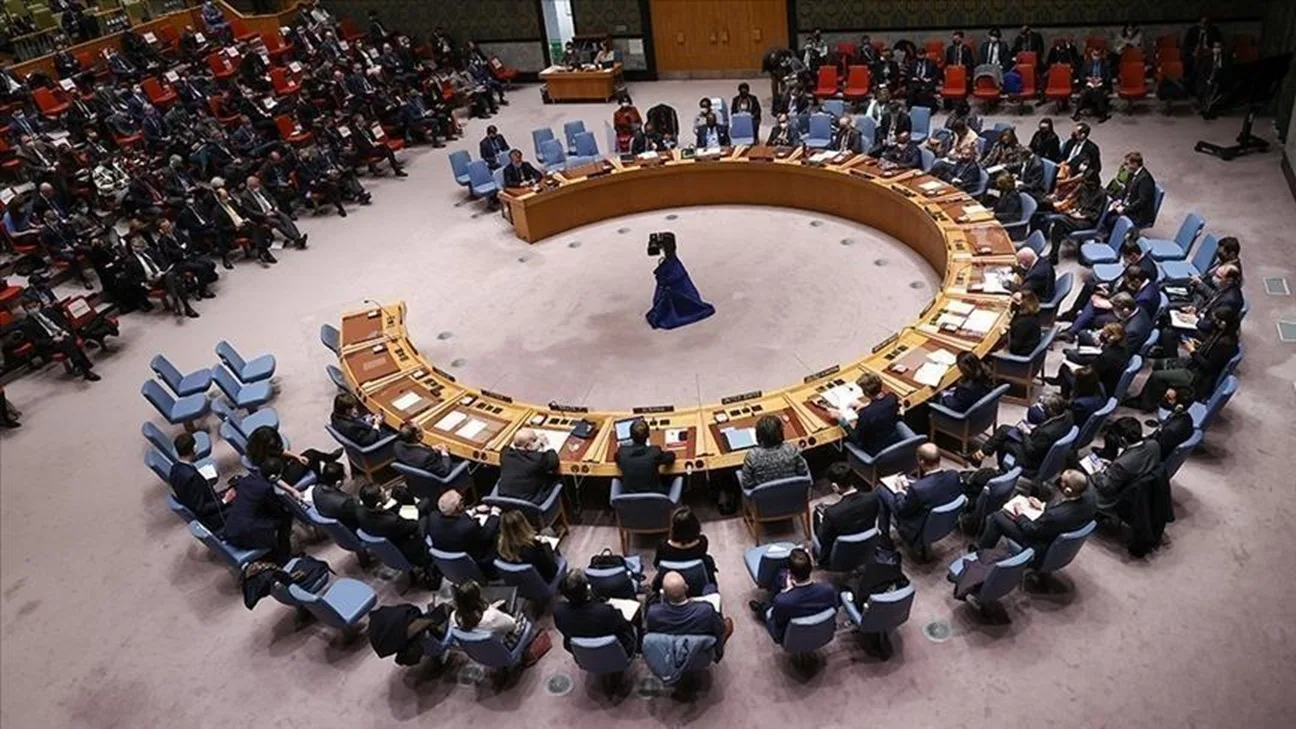
On Friday, October 30, 2026, the Security Council was expected to decide the future of a mission established in 1991 to monitor a ceasefire and prepare a referendum on self-determination that was never held. The discussion was no longer confined to the annual renewal of its personnel and resources. It now concerned the very definition of the political process the mission was supposed to support.
The first draft, presented by the United States, received eleven votes in favor, three abstentions and one vote against. That negative vote, cast by Russia, was sufficient to prevent its adoption. The text had nevertheless secured the necessary majority. Its failure was therefore that of a proposal supported by a majority but blocked by the veto of a permanent member.
The second draft, presented by Russia, received three votes in favor, eleven abstentions and one vote against, cast by the United States. Unlike the first, it did not obtain the nine votes required for adoption. The American negative vote expressed political opposition, but it was not the decisive cause of the draft's rejection under the Council's voting rules: the text would have failed even without that opposition.
This asymmetry is essential. Washington demonstrated that a majority of the Council was prepared to support a substantial transformation of the UN framework. Moscow demonstrated that it retained the power to prevent that transformation, without being able to assemble a majority behind its own alternative.
Russia could block change, but it could no longer secure the renewal of the existing arrangement. The United States could mobilize eleven votes, but could not translate that majority into a decision.
With MINURSO's mandate due to expire the following day, no resolution had been adopted.
What was supposed to be a renewal, however politically difficult, had become a crisis of continuity. And what might have remained a diplomatic confrontation between major powers acquired another dimension when Rabat decided to offer its own interpretation of the outcome.
A Mission That Became the Symbol of an Unfinished Process
To understand the significance of this day, it is necessary to return to the contradiction MINURSO has embodied since its establishment.
Western Sahara, a former Spanish colony, is at the center of a sovereignty dispute whose origins long predate the mission's deployment. Morocco administers most of the territory and claims sovereignty over all of it. The Polisario Front advocates independence and asserts the Sahrawi people's right to self-determination. Algeria provides political and diplomatic support to the Polisario, whose refugee camps are located near Tindouf.
In 1991, the United Nations supported the entry into force of a ceasefire and established a mission intended, among other responsibilities, to prepare a referendum. The mechanism was supposed to provide a transition from military confrontation to a political decision.
But the referendum never took place. Disagreements over voter eligibility, consultation procedures and, more fundamentally, the conditions of an acceptable settlement progressively paralyzed that prospect.
MINURSO nevertheless continued to operate.
Its presence served practical monitoring and liaison functions, but its name preserved the reference to a vote that had become, over the decades, one of the principal points of disagreement between the parties. The mission had thus become the symbol of a process the United Nations could neither bring to completion nor entirely replace.
This contradiction intensified as international diplomacy evolved. Since Morocco presented its autonomy initiative in 2007, several countries have gradually assigned the proposal a central place in their assessment of the dispute. The United States' recognition of Moroccan sovereignty in 2020, followed by the evolution of France's position in 2024, reinforced that momentum.
The adoption of Resolution 2797 on October 31, 2025, represented another step by giving greater prominence to the Moroccan initiative in the search for a settlement.
Yet the shift in diplomatic priorities had not produced an equivalent transformation of the UN instrument itself.
It was this distance between political positions and institutions inherited from the past that Washington intended to narrow.
What the United States Wanted to Transform
The American draft submitted to the vote went beyond a simple extension.
It proposed renewing the mission until October 31, 2027, while renaming it, effective November 1, 2026, the United Nations Mission in Western Sahara, or MINUSO. Removing the word "referendum" would have formally marked a departure from the institutional objective that originally justified its creation.
This change of name was not incidental. In international organizations, words do not replace decisions, but they often define their boundaries. Eliminating the reference to the referendum would have signaled that the Council now intended to support a different kind of political process.
The American text also proposed using Morocco's autonomy plan as the sole basis for negotiations. Such language would have represented a considerable deepening of the political direction adopted in 2025.
Washington was seeking to bring the Security Council's language into closer alignment with a diplomatic environment increasingly favorable to Rabat.
The proposed transformation also concerned the mission itself. The Secretary-General would have been asked to present, before the end of January 2027, proposals concerning its structure, personnel and deployment locations. Reductions in uniformed personnel and the closure or consolidation of certain facilities were among the options to be examined.
Monitoring arrangements and demining activities were nevertheless to be preserved during this transitional phase.
Earlier versions of the draft had been more radical, contemplating the termination of the peacekeeping component in the spring of 2027. That deadline was subsequently abandoned during negotiations, indicating that Washington was still seeking to assemble the necessary consensus.
The final text therefore rested on an internal compromise: temporarily maintain the UN presence while changing its political purpose and preparing to reduce its operational footprint.
The American ambition was clear. The objective was no longer merely to manage a prolonged conflict, but to transform the international architecture responsible for accompanying it.
That ambition nevertheless encountered a fundamental limitation: a diplomatic majority favorable to autonomy does not mean that all parties to the dispute accept that solution, or that the legal questions concerning self-determination and the territory's status have been definitively resolved.
It was along this dividing line that the Russian veto intervened.
Moscow Prevents Transformation Without Preserving Continuity
Russia justified its opposition by rejecting an approach it considered unbalanced and liable to predetermine the outcome of negotiations.
Its position should not be interpreted solely through the bilateral relationships it maintains with Morocco and Algeria. It also reflects a conception of the Security Council in which Moscow seeks to preserve its ability to influence the terms of political settlements and prevent Washington from defining those terms unilaterally.
The veto fulfilled that purpose.
It did not, however, enable Russia to restore consensus around the existing mission.
Moscow's counterproposal called for a one-year extension of MINURSO without changing its name or introducing a comparable transformation of its mandate. Presented as a continuity measure, it was intended to preserve a UN presence while political negotiations continued.
But the eleven abstentions revealed the limits of that approach.
A majority of Council members did not necessarily want the mission to disappear immediately. Several had emphasized its importance for stability and the monitoring of the military situation. They were nevertheless unwilling to support an extension that might have been interpreted as a return to the previous framework following the rejection of the American draft.
France, in particular, explained its abstention on the Russian text by criticizing Moscow's obstruction. The United Kingdom regretted the veto and called for a solution building on the American proposal, which had secured eleven votes.
These positions reveal a more complex division than one between supporters and opponents of MINURSO.
Some countries support political transformation while seeking to preserve the mission's operational functions. Others defend institutional continuity without possessing the votes required to secure it. Still others prioritize a compromise capable of avoiding an abrupt rupture.
The Council thus found itself in a situation where its members' political preferences could no longer produce a common decision.
It was in the space opened by the failure of both drafts that Morocco decided to intervene.
The Royal Cabinet Turns Deadlock Into a Break
Hours after the votes, a statement from Morocco's Royal Cabinet, reportedly distributed by the official MAP news agency and relayed by several Moroccan media outlets, gave the day's events a new political significance.
The statement did more than acknowledge the non-renewal of MINURSO. It described the development as an important step toward the definitive closure of the Western Sahara question within the United Nations.
The language marked a change of approach.
For years, Rabat had sought successive advances through Security Council resolutions. Its strategy consisted of strengthening recognition of autonomy as a political solution while consolidating bilateral and regional support.
The American draft would have allowed another step forward: the transformation of the institutional framework itself.
Its rejection could have been presented as a setback. The Royal Cabinet's statement adopted a different interpretation. Since the Council had not renewed the mission, Morocco considered that the absence of a decision should now produce consequences.
The statement argued that MINURSO's presence in Morocco's southern provinces, including its personnel, vehicles, equipment and symbols, should end in the coming days.
This demand went well beyond a disagreement over the mandate.
It expressed the intention to end the visible presence of an international operation Rabat regards as inherited from an outdated context. The Royal Cabinet portrayed the mission as an instrument that had helped sustain the internationalization of a dispute Morocco now intends to address within a different political framework.
The message was also symbolic. The United Nations' presence is not merely a matter of military personnel. On the ground, it embodies the persistence of an unresolved international question. By demanding the departure of personnel and the physical signs of that presence, Rabat was challenging not only the mission's operational usefulness, but also what it represents.
The statement linked this development to the Unity Day established by Mohammed VI and to a transformation in the Kingdom's approach to the dispute: no longer simply managing a prolonged process, but seeking to change the conditions under which it is addressed.
This was therefore not an individual royal address delivered to the nation, but a position expressed by the Royal Cabinet, with direct political significance for the course defended by Rabat.
The distinction matters. The statement announced an intention and identified consequences Morocco believes should follow from non-renewal. It did not, by itself, constitute a United Nations decision ordering the mission's withdrawal.
The Most Consequential Demand Concerns the Council Itself
Perhaps the most significant passage in the statement did not concern MINURSO's physical departure.
It concerned Western Sahara's place in the functioning of the Security Council.
Rabat argued that the expiration of the mandate should lead to the termination of the Council's periodic consideration of the dispute, the removal of the question from its agenda, and the end of regular reports by the Secretary-General and briefings by his Personal Envoy, Staffan de Mistura.
The Royal Cabinet also considered the UN political process, as conducted until now, to have reached a point of suspension. It announced forthcoming démarches within other United Nations bodies, without specifying their modalities.
This position represents a major strategic shift.
Morocco is no longer merely asking the Council to give greater recognition to the relevance of its autonomy initiative. It is calling on the Council to stop maintaining a monitoring arrangement Rabat now considers unjustified.
The logic is different.
Under the first approach, the objective was to secure an evolution in Security Council resolutions. Under the second, the absence of a resolution becomes the basis for challenging the continuation of the mechanism itself.
But this ambition encounters a fundamental institutional distinction.
The mandate of a peacekeeping operation and the inclusion of a question on the Security Council's agenda are not legally identical. The expiration of the former does not automatically remove the latter.
The Council remains competent to examine situations it considers relevant to its responsibilities for international peace and security. It may consider new developments, adopt a subsequent resolution or continue deliberations under its procedures.
Likewise, the possible end of MINURSO would not automatically remove Western Sahara from the United Nations list of Non-Self-Governing Territories. That status belongs to an institutional history and mechanisms distinct from the mission's annual mandate.
The Moroccan statement therefore expresses a political position of rupture. Its translation into international decisions remains to be established.
It is precisely in this difference between a state's political intention and the authority of multilateral institutions that part of the next diplomatic phase will unfold.
Is Morocco Changing Its Strategy?
The answer requires distinguishing what is changing from what remains constant.
Morocco's objective remains the consolidation of its claimed sovereignty over Western Sahara and the recognition of autonomy as the framework for settlement. On that point, the statement does not signal a change.
What is changing is the place assigned to the UN process in pursuing that objective.
For several years, Rabat has operated simultaneously in two diplomatic arenas. The first is multilateral, organized primarily around Security Council resolutions. The second is bilateral and regional, built on recognition, economic partnerships, strategic cooperation and government positions.
These two arenas reinforced one another. Support obtained from individual states contributed to changes in the language of resolutions, while those resolutions were subsequently used to reinforce diplomatic momentum.
The failure of October 30 weakens that connection.
It demonstrates that a Security Council majority is insufficient to produce a new decision when a permanent member exercises its veto. It also shows that a technical extension of an established mechanism no longer necessarily commands sufficient support.
Morocco now appears determined to draw a strategic conclusion from this situation: if the institution cannot accompany the desired evolution, diplomatic progress may be pursued more directly through bilateral and regional relationships.
The statement thus asserted that more than two-thirds of UN member states support autonomy under Moroccan sovereignty as the framework for settlement.
This claim forms part of Morocco's official position. It should not be confused with a vote by the General Assembly or Security Council establishing collective recognition of sovereignty. International support takes different diplomatic forms, not all of which are legally equivalent.
The political momentum nevertheless remains important.
Morocco enjoys the backing of major powers, notably the United States and France, and seeks to convert the accumulation of national positions into an international reality increasingly difficult to reverse.
The paradox is that this strategy may now advance without the Security Council being able to accompany it at the same pace.
October 30 therefore does not necessarily signal Rabat's abandonment of multilateral diplomacy. Rather, it reveals an intention no longer to make its entire strategy dependent on a mechanism that can be immobilized by the veto of a major power.
A Mission Without a Renewed Mandate Is Not a Mission Already Withdrawn
The operational urgency remains considerable.
MINURSO's mandate expires on October 31, 2026. Without a new resolution, it does not benefit from an automatic extension.
This situation is legally significant, but it does not establish that the mission's complete withdrawal has already been decided, organized and carried out.
The expiration of a mandate, the administrative dismantling of an operation and the physical departure of its personnel are separate stages.
The United Nations must ensure the safety of its personnel, determine the disposition of facilities and equipment, organize logistical movements and clarify the conditions under which existing activities can be terminated or transferred.
The timetable sought by Rabat is therefore not necessarily the operational timetable the UN will adopt.
This distinction is particularly important because MINURSO's responsibilities extended beyond organizing a referendum.
The mission also performed observation, liaison and military-monitoring functions. The strategic review submitted to the Council in October 2026 had examined several possible transformations, including a reduced military presence, greater reliance on technical surveillance and a reassessment of the mission's usefulness in light of the political process.
Those considerations demonstrate that questions about MINURSO's future predated the October 30 crisis.
But they were based on the assumption of an orderly transformation.
The absence of renewal creates a different situation: the possibility of an institutional rupture before a replacement arrangement has been agreed.
Moreover, the ceasefire established in 1991 broke down in November 2020. Since then, the military situation cannot be equated with the conditions that prevailed during the mission's first decades.
In this context, the disappearance of international observation and communication capabilities could make it more difficult to verify incidents and prevent escalation.
The Royal Cabinet stated that Morocco remains committed to the ceasefire, in full respect of its territorial integrity, national security and the protection of its citizens.
That declaration is politically significant. It does not, however, mean that the conditions of a mutually recognized ceasefire have been restored, or that other actors share the same assessment of the situation.
The real question will therefore concern not only whether MINURSO leaves the territory, but the conditions under which any departure could take place without creating new vulnerabilities.
Diplomatic Progress Does Not Close the Dispute
The interpretation of the day's events depends on the level at which they are examined.
For Morocco, the eleven votes supporting the American draft represent an important indication of the changing diplomatic balance of power. The proposal went further than previous resolutions in the centrality assigned to autonomy and the transformation envisaged for the mission.
The Russian veto prevented those changes from being enshrined in a new resolution.
But the Russian proposal to preserve the existing arrangement also failed, revealing that the Council, in its current configuration, was no longer prepared simply to renew the previous framework.
Rabat can therefore consider that MINURSO's institutional continuity no longer enjoys the political protection that had long sustained it.
That observation should not, however, be equated with definitive international recognition of Moroccan sovereignty.
The American draft was not adopted. The Council did not decide to rename the mission. It did not establish autonomy as the exclusive basis for negotiations in a new resolution. Nor did it adopt a decision removing the Western Sahara question from its agenda.
Resolution 2797 of 2025 remains a diplomatic and institutional achievement, but it does not, by itself, constitute a definitive legal settlement of the dispute.
For the Polisario Front, the situation presents an opposite contradiction. The Russian veto prevented a further transformation of the UN framework in favor of Morocco's proposal. But the failure of the extension draft also means that the mission whose name preserves the reference to the referendum has not been renewed.
Algeria faces the same strategic difficulty: preventing a transformation favorable to Rabat does not guarantee the preservation of the previous international architecture.
The outcome is therefore neither a complete institutional victory for one side nor a complete defeat for the other.
It is more destabilizing than that. Each actor can identify an element favorable to its position, but none possesses an international decision capable of bringing the disagreement to an end.
The political conflict remains, while the instrument established to accompany it enters a period of uncertainty.
The United Nations Faces a Question It Cannot Avoid
The crisis now raises a problem extending beyond the relationship between Morocco and MINURSO.
What can an international organization do when an operation's mandate expires without agreement on either its transformation or its continuation?
One possibility remains a technical extension. The Council could decide temporarily to preserve certain mission functions without immediately settling disagreements over its name and political purpose.
But that option has become more difficult following the Royal Cabinet's statement. Rabat has publicly indicated that it expects the mission's presence to end. Any renewal, even a provisional one, would therefore have to take account of a more demanding Moroccan position. 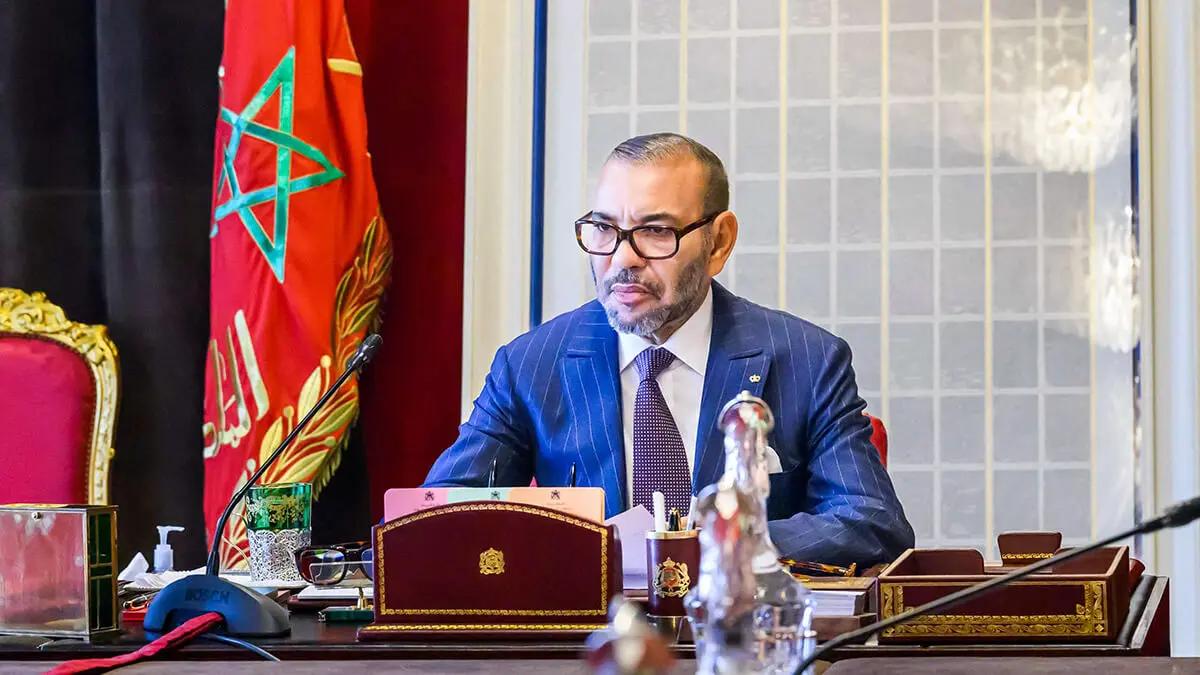 A second possibility would be the negotiation of a new institutional framework. Such an arrangement could draw a clearer distinction between operational presence on the ground and the political process conducted under the Secretary-General's authority.
That solution would nevertheless require a compromise between Washington and Moscow, as well as a realistic assessment of the parties' positions and security conditions.
A third trajectory would involve the gradual termination of the operational presence without immediate agreement on a replacement mechanism.
This possibility would correspond more closely to the direction expressed by Rabat, but it would raise major practical and diplomatic questions.
The Secretary-General would then have to determine how to manage the administrative and security consequences of the mandate's expiration, while the Council would remain confronted with its broader responsibilities for international peace and security.
It would be premature to conclude that UN diplomatic efforts must necessarily end with the mission. The Secretary-General's authority and the Council's prerogatives are not identical to the existence of any particular operation.
It would be equally unwise to assume that the political process can continue unchanged when one of its principal institutional instruments has lost its mandate and Morocco is now demanding a break with the existing framework.
Multilateralism thus faces a contradiction: preserving a role without necessarily possessing the instrument that embodied it, or recognizing that an instrument has reached its limits without achieving the settlement that was supposed to justify its disappearance.
The Real Turning Point
October 30, 2026, may be remembered in the history of the Western Sahara dispute for a reason different from the one that initially occupied diplomats.
The American draft was intended to establish a new political direction while temporarily maintaining a transformed mission. The Russian veto prevented that transition.
The Russian draft was intended to preserve institutional continuity. Its failure to secure a majority prevented that fallback solution.
Morocco then chose not to interpret the deadlock as a simple suspension of the process. The Royal Cabinet presented non-renewal as a step toward closure and called for consequences to follow, both on the ground and within international institutions.
These three developments cannot be reduced to a confrontation between Morocco and its diplomatic opponents. They reveal that the mechanisms established to manage the conflict no longer fully correspond to the balance of power that has developed around it.
Morocco benefits from international momentum favorable to its autonomy proposal, but it does not possess a new resolution enshrining the next step it sought. Russia retains the power to block change, but cannot impose renewal of the previous framework. The United Nations remains competent to address the dispute, but its principal mission on the ground is approaching the expiration of its mandate without agreement on its future.
It would therefore be inaccurate to describe the dispute as already legally closed. It would be equally inadequate to portray the day's events as a mere continuation of the status quo.
The status quo assumed that, despite disagreements, the institutions would continue to function. Yet it is precisely that continuity which is no longer assured.
The next phase will depend on decisions that remain open: a possible new resolution, the conditions governing MINURSO's continued presence or withdrawal, the reactions of the other parties, the position of the United Nations Secretariat and the ability of major powers to prevent a diplomatic disagreement from producing an operational vacuum.
The issue now extends beyond the renewal of a mandate. It concerns the possibility of replacing an architecture designed to manage a conflict without having secured the political agreement that architecture was supposed to make possible.
Thirty-five years after MINURSO's establishment, Western Sahara is entering an unusual phase. Diplomatic support has shifted, institutional ambitions have changed, and the old guarantees of continuity are no longer sufficient.
October 30 did not end the dispute. It ended the certainty that the dispute would continue to be managed in the same way. And when institutions cease to guarantee continuity before politics has produced a settlement, history does not come to an end. It moves onto different ground.
Atlas Limits Research Desk
Atlas Limits’ editorial and analytical desk.