Beijing is preparing a new phase in the regulation of its strategic technologies. By proposing to place 40 categories of technology under export prohibitions or restrictions, China is seeking not merely to protect its industrial capabilities but also to control the conditions under which its innovations can be transferred, reproduced and exploited abroad. The initiative could reshape the international balance of power in artificial intelligence, biotechnology and solar energy, while accelerating a broader transformation of global industrial relations.
For several decades, China's industrial rise depended on an international circulation of technology from which Beijing was primarily a beneficiary. Foreign investment, technology transfers, industrial partnerships and integration into global production networks gradually transformed the country's position in the world economy. Once regarded principally as a vast manufacturing base, China has become a centre of research, engineering and production capable of competing with the most advanced industrial economies.
On October 16, 2026, that transformation acquired a new regulatory dimension. China's Ministry of Commerce and Ministry of Science and Technology issued Joint Announcement No. 48, proposing revisions to the national catalogue of technologies prohibited or restricted from export. The proposal covers 40 technological categories across artificial intelligence, biotechnology and the photovoltaic industry.
Fourteen categories would be prohibited from export, while another 26 would be subject to licensing requirements. A public consultation remains open until November 15, but an interim measure has already taken effect: companies must register certain technology transfers before completing them.
The significance of the initiative extends beyond a technical adjustment to trade regulations. It reflects a change in how Beijing understands the international role of Chinese technology. Having spent decades developing manufacturing capabilities and expanding into foreign markets, China is strengthening the instruments through which it can determine which industrial competencies may be transferred beyond its borders.
The distinction between selling a product and transferring the knowledge required to manufacture it is becoming central to international economic competition.
From Manufacturing Power to Control Over Industrial Knowledge
The proposed regulations target three sectors in which civilian technologies may also have strategic applications. Artificial intelligence accounts for 23 categories, biotechnology for five and photovoltaic manufacturing for twelve.
The proposal does not amount to a general prohibition on exporting products manufactured in these industries. Chinese authorities explicitly distinguish between technologies, manufacturing processes, intellectual property rights and finished goods. In most cases, products manufactured using the technologies concerned would not themselves fall under the proposed restrictions.
This regulatory distinction is essential to understanding Beijing's objectives.
A country can continue exporting solar panels on a massive scale while limiting the transfer of processes required to manufacture the most advanced solar cells. An artificial intelligence company can provide services to international customers without necessarily transferring the underlying technologies that would allow those customers to reproduce its models or infrastructure.
China is therefore seeking to preserve a distinction between international access to its products and access to the industrial capabilities that sustain its competitiveness.
This approach is not entirely new. Major technological powers have long used export licences, restrictions on sensitive equipment and intellectual property regulations to protect strategic interests. Its simultaneous extension across several Chinese industrial sectors, however, represents a change in scale.
Regulatory control no longer concerns only rare materials or critical components. It increasingly extends to knowledge, technical architectures and industrial processes that make it possible to transform resources into productive capabilities.
Artificial Intelligence Between Commercial Openness and Strategic Protection
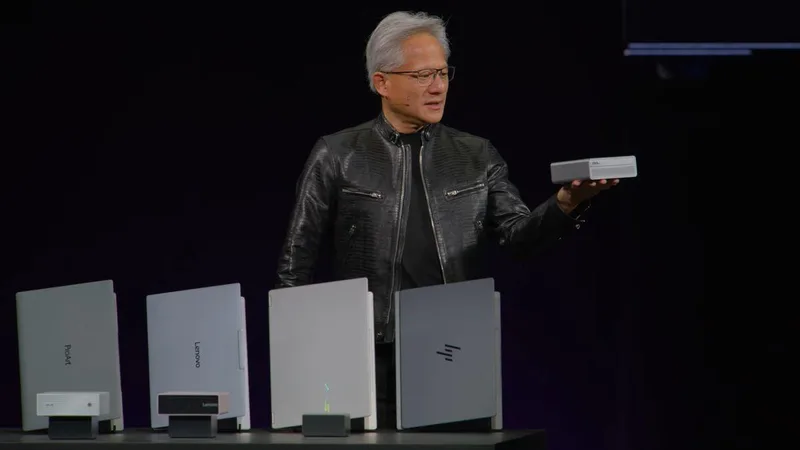
Artificial intelligence occupies the largest share of the Chinese proposal. The 23 categories include technologies associated with large-scale models, intelligent agents, computing infrastructure and certain information-processing systems.
Among the technologies proposed for prohibition are systems capable of automatically generating or modifying malicious computer code. Other capabilities, including certain AI-assisted vulnerability identification technologies, would fall under the restricted export regime.
Beijing justifies these measures by pointing to the risks of misuse against critical infrastructure, government systems and defence installations. The growing autonomy of some artificial intelligence systems does raise questions about the international dissemination of sensitive capabilities, although the precise nature of those risks depends on their technical characteristics and intended applications.
The proposed regulations nevertheless contain a particularly revealing distinction.
Chinese authorities specify that technologies already available in the public domain, including through scientific publication or open-source distribution, would not be subject to the new controls. They also envisage simplified procedures for several forms of international cooperation, including certain joint research activities, overseas semiconductor manufacturing and the operation of computing centres owned by Chinese companies.
The provision of artificial intelligence services through application programming interfaces, applications, websites or remotely accessible software would not, by itself, constitute an export of the underlying technologies covered by the restricted categories.
This distinction would allow Chinese companies to continue expanding internationally while retaining greater control over certain transfers of technological capabilities.
It also exposes a fundamental tension within the artificial intelligence economy. The commercial value of a model depends partly on its distribution, adoption by developers and integration into economic systems. Yet that same diffusion can facilitate the emergence of competitors and weaken the technological advantage of its original developer.
Beijing appears to be seeking a regulatory framework for managing this contradiction rather than choosing between openness and technological isolation.
Solar Manufacturing and the Industrial Foundations of the Energy Transition
The photovoltaic component could have particularly significant consequences for countries attempting to develop domestic solar manufacturing capabilities.
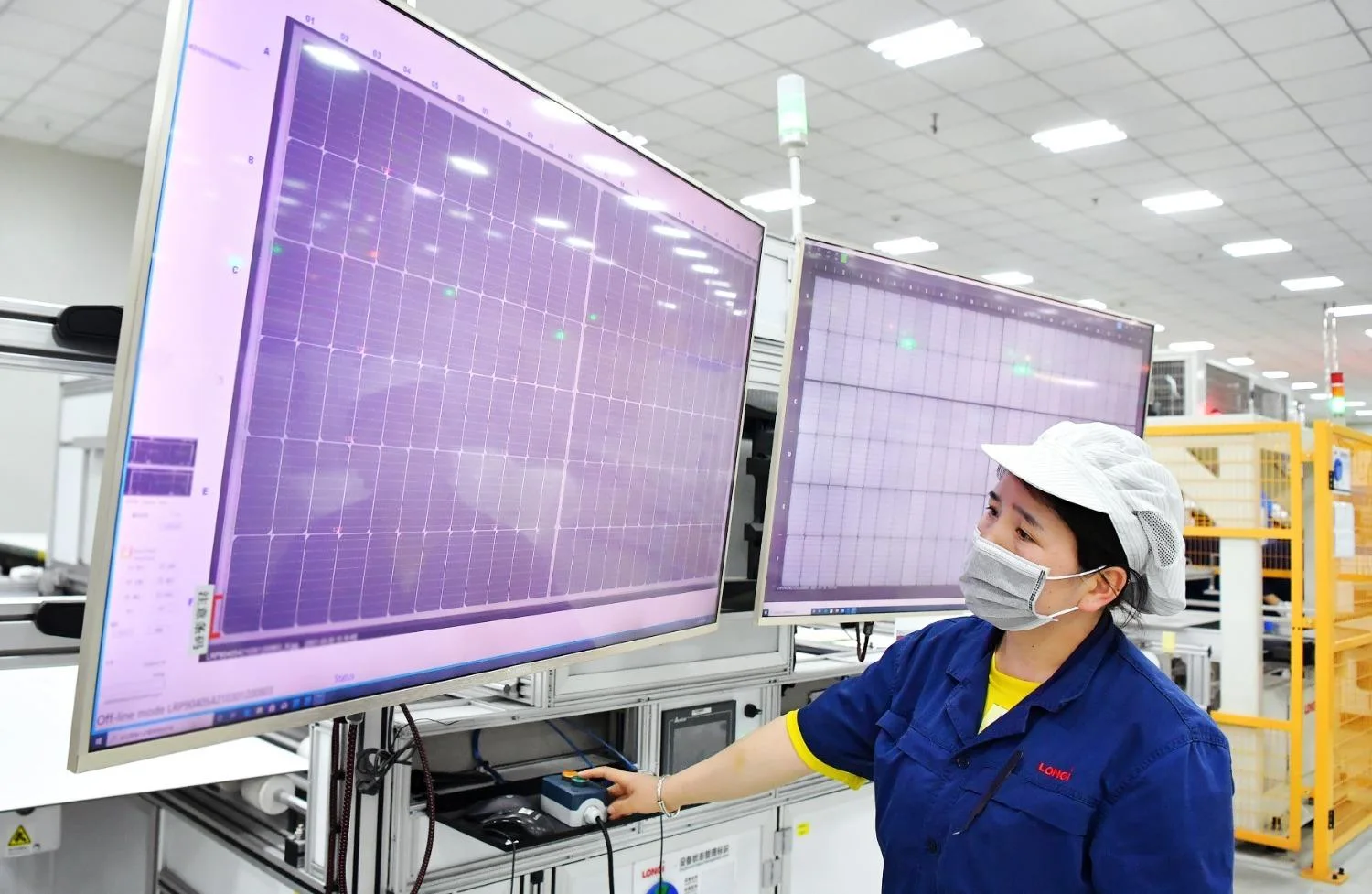
The twelve categories cover different stages of the manufacturing chain, including polysilicon production, silicon wafer manufacturing and solar-cell production processes.
Certain advanced technologies, particularly those associated with perovskite solar cells and tandem architectures, are among the processes Beijing proposes to prohibit from export. Other industrial technologies would be subject to authorisation, including processes associated with large-scale polysilicon manufacturing.
Chinese authorities have also indicated that certain critical equipment incorporating or transferring the technologies concerned would fall within the regulatory framework.
This provision is especially important. In complex manufacturing industries, technology transfer is not limited to patents or technical documentation. It can occur through the installation of production lines, equipment calibration, process optimisation and industrial upgrading.
A foreign company may purchase industrial equipment without acquiring all the knowledge required to operate it efficiently, modify its parameters or develop a more advanced technological generation.
Control over those capabilities often constitutes the real barrier to industrial entry.
For the United States, Europe, India and emerging economies seeking to establish domestic photovoltaic industries, the issue therefore extends beyond the price of imported solar panels.
Building factories and mobilising capital are not sufficient. Industrial development also requires access to production processes, engineering expertise, appropriate equipment and the accumulated knowledge of established manufacturers.
If the proposed restrictions are adopted, they could slow certain industrial technology transfers, increase the costs of localising production or force new manufacturers to develop alternative technological solutions.
These consequences are not inevitable. They will depend on which technologies ultimately enter the catalogue, which licences are granted, the scope of applicable exemptions and the technical capabilities already available in individual countries.
The global energy transition could therefore continue to benefit from Chinese exports of finished products while facing additional obstacles to the international replication of certain manufacturing capabilities.
Biotechnology and the Control of Scientific Capabilities
The third sector is biotechnology, with five categories covering technologies associated with cell and gene therapies, small nucleic acid-based medicines and certain processes involving pathogenic microorganisms.
China's Ministry of Commerce presents the proposed restrictions as measures intended to protect biosafety and prevent the uncontrolled dissemination of sensitive technologies.
Medical technologies, however, have a particular characteristic: their development frequently depends on international collaboration between laboratories, universities, pharmaceutical companies and research institutions.
Excessively restrictive regulations could slow certain partnerships, limit opportunities for joint development or complicate agreements involving the transfer of medical manufacturing technologies.
The Chinese proposal therefore includes several facilitation mechanisms. Certain licensing arrangements that do not transfer ownership of the underlying technology would be excluded from controls or benefit from simplified procedures. Special provisions are also envisaged for international research, public health emergencies and humanitarian operations.
China is attempting to preserve its participation in international scientific networks while strengthening control over technological assets it considers strategically important.
The challenge will be determining where scientific cooperation ends and the transfer of sensitive industrial capabilities begins.
A Structural Response to Global Technological Fragmentation
The international context gives the Chinese initiative a significance extending beyond its official justifications.
For several years, the United States has used export restrictions to limit China's access to certain advanced technologies, particularly semiconductors, manufacturing equipment and infrastructure required for artificial intelligence.
These measures are grounded in national security considerations and the objective of preserving technological advantages regarded as strategically important.
China is now developing its own instruments of control in sectors where it possesses substantial industrial capabilities.
The two approaches are neither legally identical nor perfectly symmetrical. Washington seeks, among other objectives, to restrict Chinese access to certain foreign technologies, while Beijing intends to regulate the international diffusion of technologies developed within China.
Nevertheless, both reflect the same structural transformation: governments increasingly regard advanced technologies as strategic assets whose circulation cannot be left entirely to commercial decisions.
The Chinese government maintains that the catalogue revision is a routine regulatory process undertaken under its foreign trade legislation and that it is not directed against any particular country, territory or organisation.
That official position must be distinguished from the potential geoeconomic consequences of the measures. A regulation can be formulated in general terms while producing very different effects depending on the technological dependence of individual trading partners.
A country with domestic research capabilities, alternative industrial equipment and an extensive supplier network will be better positioned to adapt than an economy heavily dependent on foreign technological transfers.
The proposed Chinese regulations could therefore reinforce industrial asymmetries that already exist.
Technology Transfers as an Instrument of Sovereignty
One of the most consequential provisions of the October 16 announcement concerns the period preceding the definitive adoption of the revised catalogue.
From the date of publication, companies must register transactions falling within the proposal's scope before completing the relevant technology transfers. This obligation includes certain intellectual property assignments, overseas licensing agreements and changes of corporate control that transfer technologies to foreign entities.
It also applies to transactions already initiated but not yet completed.
The information required includes the identities of the companies involved, the destination country or territory, the nature of the technology, its intended use and the estimated value of the transaction.
This does not yet constitute a general prohibition on transfers covered by the proposal. It does, however, provide Chinese authorities with broader administrative visibility over international movements of strategic technologies.
It also allows regulators to identify transfer channels, foreign partners and intended industrial applications before the new restrictions formally enter into force.
For multinational companies, the change is significant. A transaction previously governed primarily by commercial negotiations or intellectual property agreements may now require an additional regulatory procedure.
Technological sovereignty is therefore no longer exercised solely through public investment, industrial subsidies or research policy. It increasingly operates through administrative control over the conditions under which technology leaves national territory.
The Dilemma Facing Developing Economies
The potential consequences of this transformation are particularly important for economies seeking to move into higher-value segments of global production networks.
For decades, industrialisation in many countries has depended on imported equipment, foreign investment and the gradual acquisition of technological competencies.
This development model assumes that industrial knowledge can circulate internationally, even when obtaining it involves considerable costs and complex negotiations.
The expansion of export controls could make certain forms of technological acquisition more difficult.
In photovoltaics, for example, a country may possess substantial solar resources, industrial land, capital and growing electricity demand without controlling the technologies necessary to manufacture the most advanced solar cells.
In artificial intelligence, access to commercial applications does not guarantee the ability to develop domestic models, computing infrastructure or the corresponding software architectures.
In biotechnology, the capacity to import a medical treatment does not necessarily mean that domestic companies can reproduce the processes used to manufacture it.
These distinctions reveal a growing separation between access to technological products and ownership of the capabilities required to produce them.
For emerging economies, the challenge will therefore extend beyond diversifying suppliers. It will involve developing scientific competencies, industrial infrastructure and institutions capable of reducing dependence on foreign technology transfers.
China has repeatedly expressed its intention to support technological development across the Global South, and the proposed regulations provide facilitation mechanisms for certain forms of international cooperation. The practical significance of those commitments, however, will depend on implementation.
The broader risk is the consolidation of a global economy in which technologies circulate extensively as products and services while the capacities required to design and manufacture them remain concentrated in a limited number of industrial powers.
Such a system would not necessarily reduce international trade. It could instead reinforce a hierarchy between economies that consume advanced technologies and those capable of reproducing, modifying and improving them.
The New Geography of Industrial Power
Beijing's proposed catalogue revision does not mean China is pursuing comprehensive technological isolation. The framework preserves exemptions, provides simplified procedures and explicitly distinguishes transfers of industrial knowledge from sales of finished products.
Its significance lies elsewhere.
China now possesses industrial sectors sufficiently advanced for its government to regard certain domestic technologies as strategic assets requiring protection against uncontrolled international dissemination.
This development partially reverses the logic that accompanied China's economic ascent.
Previously, access to foreign technologies was one of the foundations of its industrial development. Today, access to Chinese technologies has itself become an important consideration in the industrial strategies of other countries.
The transformation extends beyond the rivalry between Washington and Beijing. It affects the conditions under which companies invest, governments formulate industrial policies and emerging economies attempt to advance within the international productive hierarchy.
The public consultation running until November 15 will help determine the final scope of the restrictions. Subsequent decisions will establish which technologies are prohibited, which may be transferred under licence and which forms of cooperation qualify for simplified procedures.
Yet the principle underlying the reform is already apparent.
In a global economy long organised around the relatively open movement of capital, goods and technology, the ability to determine who can access industrial knowledge is becoming an increasingly important component of economic power.
China is no longer seeking merely to occupy a central position in global production networks. It is also seeking to influence the conditions under which those networks can be replicated elsewhere.
The new frontier of industrial sovereignty no longer runs exclusively through factories, resources or markets. It increasingly runs through the knowledge required to control them.
Main Sources
- Ministry of Commerce of the People's Republic of China and Ministry of Science and Technology, Joint Announcement No. 48, October 16, 2026. Official proposal revising the catalogue of technologies prohibited or restricted from export.
https://www.mofcom.gov.cn/zfxxgk/gkml/art/2026/art_ccd0391072a94c809ae7e820abe2536b.html
- Ministry of Commerce of the People's Republic of China, Official explanations of the proposed technology export controls, including the 40 categories, 14 proposed prohibitions, 26 restrictions and applicable exemptions, October 16, 2026.
https://www.mofcom.gov.cn/zwgk/zcjd/art/2026/art_b11d5c1e9374421e93e85dc87eba6e38.html
- Reuters, China proposes adding 40 AI, biotech, solar technologies to export control list, October 16, 2026.
https://www.reuters.com/world/asia-pacific/china-proposes-adding-40-ai-biotech-solar-technologies-export-control-list-2026-10-16/
- Reuters, China proposes export controls on solar-manufacturing technologies, October 18, 2026.
https://www.reuters.com/business/autos-transportation/china-proposes-export-controls-solar-manufacturing-technologies-2026-10-18/
Atlas Limits Research Desk
Atlas Limits’ editorial and analytical desk.