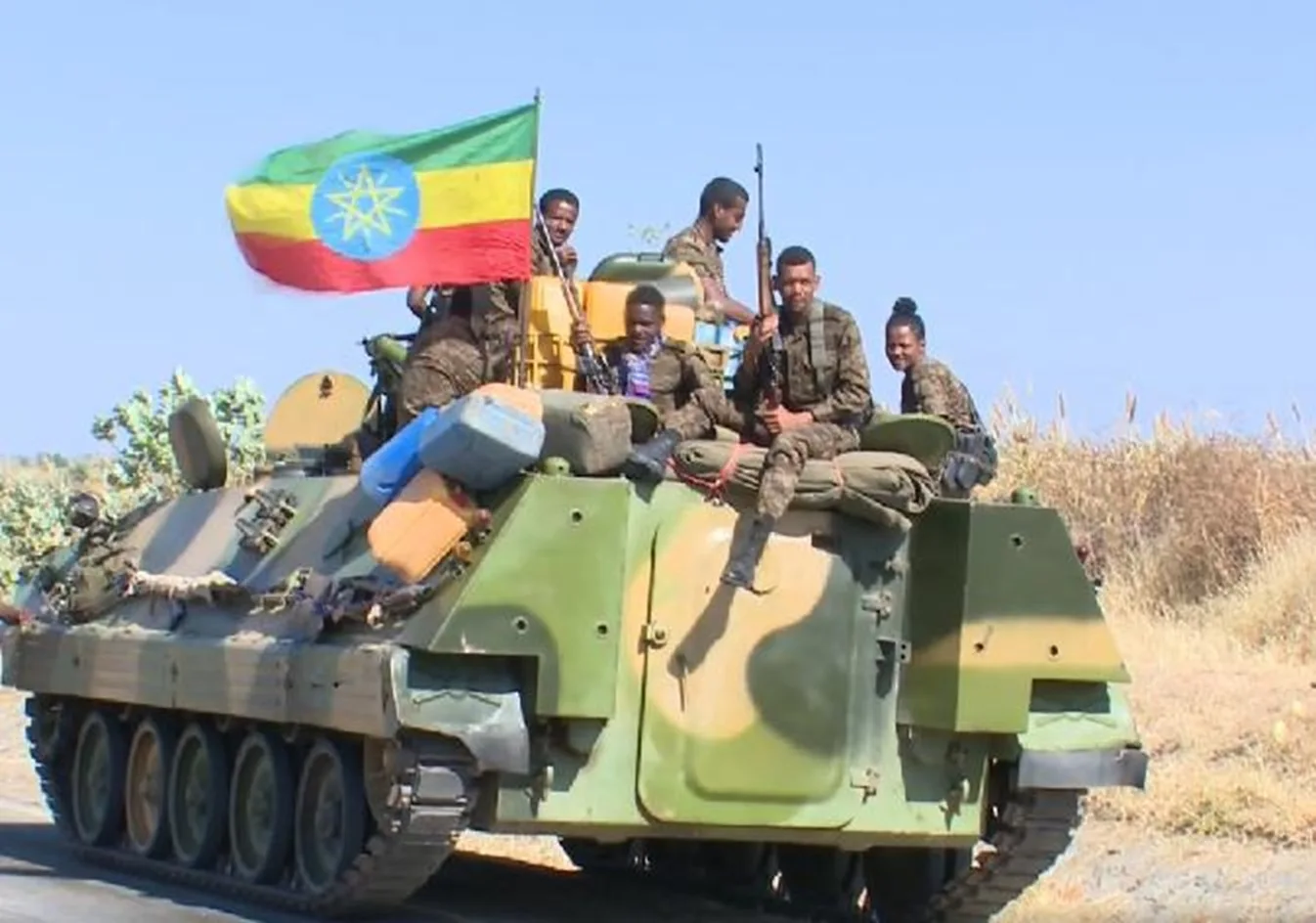
On October 9, 2026, Ethiopia brought an accusation before the United Nations Security Council whose consequences could extend far beyond the borders of the Horn of Africa. In a letter dated the previous day, Foreign Minister Gedion Timothewos claimed that Eritrean military units, including mechanized formations, had advanced as far as 60 kilometers into Ethiopian territory. Addis Ababa denounced the incursion as an invasion and formally invoked its right to self-defense. In Asmara, the Eritrean government rejected that interpretation, accusing its neighbor of preparing a war intended to impose a new territorial order.
The presence of Eritrean soldiers in northern Ethiopia has been reported by witnesses and organizations monitoring the conflict. However, the precise extent of military movements, their chronology, and their objectives remain partly uncertain. The two governments disagree not only over responsibility for the escalation but also over the very nature of what is taking place on the ground.
The confrontation comes as Ethiopian federal forces have retaken Mekelle, the capital of Tigray, following a renewed rebel offensive. It threatens to transform an already complex internal war into an interstate conflict. Behind the immediate accusations lie the unresolved fractures of a shared history: Eritrean independence, border wars, political rivalries in Tigray, and a question that has never truly been settled — Ethiopia's access to the Red Sea.
A Border That Never Returned to Peace
Ethiopia and Eritrea shared a political, economic, and military space for decades. When Eritrea gained independence in 1993 after a prolonged liberation struggle, Ethiopia lost its coastline and became a landlocked state. Political separation gradually transformed infrastructure, commercial routes, and border territories into instruments of competing sovereignty.
The rupture became military in 1998. For two years, the countries fought over disputed territories, particularly Badme, in a conventional war whose human toll is generally estimated in the tens of thousands, often between 70,000 and 100,000 deaths. The conflict ended in 2000 with the Algiers Agreement, but normalization remained suspended. International border delimitation proved insufficient to produce political reconciliation.
For nearly two decades, the two states existed in an intermediate condition, neither permanently engaged in open warfare nor genuinely at peace. Military deployments remained substantial, trade was restricted, and the border became an area of surveillance, mobilization, and mutual suspicion.
Abiy Ahmed's rise to power in 2018 appeared to interrupt that trajectory. The Ethiopian prime minister initiated a rapprochement with Eritrean President Isaias Afwerki. Both leaders announced the end of the state of war and restored diplomatic relations. The initiative contributed to Abiy Ahmed receiving the Nobel Peace Prize in 2019.
Yet reconciliation depended more on an agreement between leaders than on the construction of common institutions capable of resolving disputes permanently. Borders, economic interests, and domestic political balances remained fragile.
The Tigray war, which began in November 2020, quickly exposed that weakness. Eritrean forces intervened alongside Ethiopia's federal army against the Tigray People's Liberation Front, or TPLF, the former dominant force in Ethiopian politics and a longstanding adversary of Asmara. International organizations documented serious violations of humanitarian law during the conflict, involving several parties, including Eritrean forces.
Former enemies had become military partners. But their cooperation rested on a common objective rather than a lasting convergence of strategic interests.
When the Pretoria Agreement ended the principal hostilities between the federal government and the TPLF in November 2022, Eritrea was not a signatory. Arrangements intended to facilitate demobilization, the withdrawal of foreign forces, and the stabilization of Tigray did not resolve Asmara's security concerns.
The war officially ended without all the actors who had participated in it being integrated into the political settlement. That contradiction remains one of the origins of the present crisis.
Tigray, the Territory of an Unfinished War
Tigray occupies a distinctive position within Ethiopia's political architecture. Bordering Eritrea, it is simultaneously a historical area of movement, a major political center, and a zone of confrontation between federal authority and regional political movements.
The war from 2020 to 2022 produced a human and material catastrophe. Mortality estimates vary considerably depending on methodology, but several studies suggest hundreds of thousands of direct and indirect deaths. Healthcare infrastructure, electricity networks, schools, and agricultural systems suffered extensive destruction.
The Pretoria Agreement was intended to begin a period of reconstruction and reintegration. Four years later, stabilization remains incomplete. Disputed territories, combatant disarmament, the return of displaced populations, and internal rivalries within the TPLF continue to fuel tensions.
On September 23, 2026, a new offensive by an alliance of armed groups against federal forces opened another phase of the conflict. Fighting spread across Tigray, Amhara, and Afar. The TPLF joined a coalition of seven organizations opposing Abiy Ahmed's government.
On October 4, forces aligned with the federal government retook Mekelle following the withdrawal of TPLF fighters. Yet the recapture did not signify the disappearance of the rebellion. It changed military positions without resolving the conflict's political causes.
It was during this sequence that reports emerged of Eritrean forces advancing into northern Tigray. Movements were reported around Adigrat and Idaga Hamus, along the road connecting the Eritrean border to the region's interior. Drone strikes attributed to the Ethiopian military reportedly targeted Eritrean units.
Ethiopia also accused Eritrea of supporting the rebel coalition. Asmara denied the allegations.
This apparent reversal of alliances illustrates the fluidity of regional power relationships. During the previous war, Addis Ababa and Asmara fought together against the TPLF. Now, the Ethiopian government accuses its former partner of supporting forces seeking its overthrow.
Shared hostility toward a particular actor is therefore insufficient to sustain an alliance when territorial, political, and security interests diverge.
The Red Sea at the Heart of the Dispute
To understand the depth of the confrontation, it is necessary to leave the mountains of Tigray momentarily and look toward the Red Sea.
With an estimated population exceeding 130 million, Ethiopia is one of the world's most populous landlocked countries. Its demographic growth, industrial ambitions, and import requirements reinforce its dependence on external transport corridors.
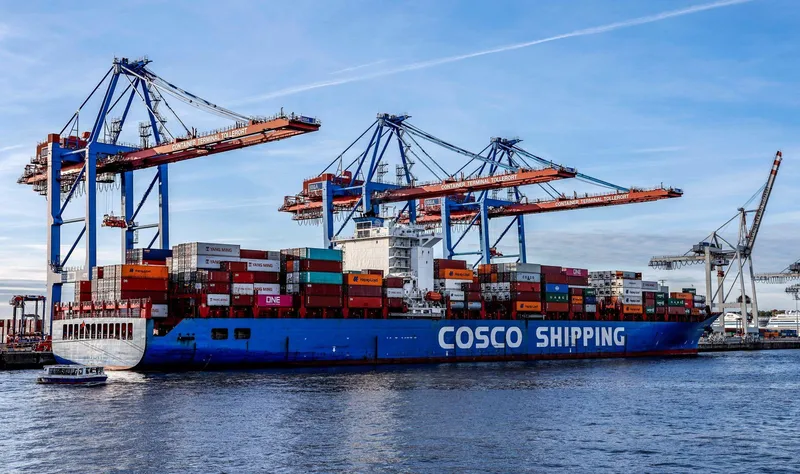
Since Eritrean independence, most Ethiopian maritime trade has passed through Djibouti. Depending on the year and categories considered, this corridor accounts for approximately 90 to 95 percent of Ethiopia's seaborne commercial flows.
This concentration represents both an economic cost and a strategic vulnerability. Goods must cross an international border, use foreign infrastructure, and incur port, logistics, and transit charges. Disruptions in the Red Sea, regional tensions, or restrictions affecting transport corridors can directly affect Ethiopian supplies.
For Addis Ababa, diversifying maritime access is therefore an understandable economic objective. But the means of achieving it raise a question of sovereignty.
In October 2023, Abiy Ahmed publicly emphasized the vital importance of maritime access for his country. His statements generated considerable concern among neighboring states, particularly Eritrea, which interpreted them as potentially challenging the borders established following its independence.
The port of Assab crystallizes these concerns. Located on the Eritrean coast, near the Bab el-Mandeb Strait, it holds historical significance for Ethiopia, which used the port before the two countries separated. Its location also gives it logistical and military value.
For Asmara, however, Assab is not an infrastructure asset available for negotiation without Eritrean consent. It forms an integral part of national territory. Any attempt to acquire control of it through force would violate Eritrean sovereignty.
The dispute therefore reveals two positions that become difficult to reconcile when expressed in absolute terms. Ethiopia regards its landlocked geography as a structural constraint limiting development and autonomy. Eritrea regards exclusive control over its coastline as a fundamental condition of independence.
One seeks to reduce geographic dependence. The other fears that this ambition could become a territorial claim.
Yet commercial access to the sea and sovereignty over a coastline are not legally equivalent. Port agreements, logistical concessions, secure transit corridors, and regional cooperation mechanisms can facilitate trade for a landlocked state without altering international borders.
International law recognizes principles of access and transit for landlocked countries under conditions established by applicable agreements. It does not, however, grant them a general right to acquire foreign coastal territory.
It is precisely this distinction that risks disappearing when governments present their economic interests as imperatives of national security.
Two States, Two Vulnerabilities
The demographic and economic imbalance between the countries is considerable.
Ethiopia has a population several dozen times larger than Eritrea's, a much greater territory, and a substantially larger economy. It possesses an extensive agricultural base, developing energy infrastructure, and superior industrial potential.
Eritrea, by contrast, retains a highly militarized political organization inherited from its independence struggle and decades of regional confrontation. National service, whose duration can extend far beyond initially prescribed obligations, structures a significant part of society and its mobilization capacity.
This asymmetry does not automatically determine the outcome of a confrontation. Military balances also depend on terrain, unit cohesion, logistical networks, air capabilities, intelligence, and the possible existence of multiple fronts.
Ethiopia must also distribute its resources across several domestic crises. Tensions in Amhara, instability in Tigray, and security challenges in other regions limit its ability to concentrate military forces freely.
A prolonged external operation could therefore increase the pressures on the federal army, even if it possesses greater overall resources than its neighbor.
Eritrea faces a different vulnerability. Its economy is relatively small, narrowly diversified, and isolated. A prolonged war would mobilize already limited human and financial resources while intensifying pressure on trade and supplies.
Border geography further complicates military calculations. Highlands, mountain roads, and limited crossing points favor defensive positions and can make ground advances costly.
Drones nevertheless introduce an important transformation. Their deployment enables attacks against troop concentrations, vehicles, and logistical infrastructure without immediately committing large ground formations. They reduce certain tactical costs associated with the use of force but can also accelerate escalation by making cross-border strikes more accessible.
Under these circumstances, the principal danger is not necessarily an immediately planned general offensive. It also lies in the accumulation of limited operations that each government considers legitimate acts of self-defense.
The Security Council and the Battle for Legitimacy
Ethiopia's letter of October 8 marks an important diplomatic development.
By formally presenting its accusations to the Security Council, Addis Ababa is seeking to place the confrontation within the legal framework of collective security. Its invocation of the right to self-defense refers to Article 51 of the United Nations Charter, which recognizes that right in the event of an armed attack.
The move may serve several purposes. It establishes an official position, draws the Council's attention, and prepares an international justification for possible military operations.
However, notification of a threat or attack does not automatically validate the legal characterization advanced by the state concerned. The reality of the events, their gravity, and the requirements of necessity and proportionality remain decisive.
Eritrea is simultaneously attempting to establish the opposite interpretation. Its information minister, Yemane Gebremeskel, argues that Ethiopian statements concerning access to the Red Sea have, since 2023, signaled an aggressive policy. According to Asmara, accusations of invasion are being used to prepare an operation against Eritrean territory.
Both states are therefore attempting to portray their own actions as defensive and those of their adversary as offensive.
This competition between narratives serves a strategic purpose. In interstate crises, responsibility for the outbreak of hostilities can influence diplomatic positions, sanctions decisions, mediation efforts, and the terms of a possible ceasefire.
It can also reduce governments' room for compromise. Once an invasion or existential threat has been publicly denounced, accepting a limited settlement becomes politically more difficult.
Diplomacy can then become trapped by the arguments constructed to justify military mobilization.
Egypt, Sudan, and the Balance of the Horn of Africa
The crisis is unfolding in a regional environment that is far from neutral.
For several years, Ethiopia has maintained a major dispute with Egypt over the Grand Ethiopian Renaissance Dam, built on the Blue Nile. The project, with planned installed capacity exceeding 5,000 megawatts, is central to Ethiopia's energy strategy.
For Addis Ababa, the dam represents a means of expanding electrification, supporting industrial development, and exporting electricity. For Cairo, which depends heavily on Nile waters, its filling and operating arrangements raise concerns over water security.
This disagreement has sustained a long-running diplomatic rivalry. Egypt has strengthened its exchanges with several actors in the Horn of Africa, while Ethiopia has sought to consolidate its regional environment and commercial outlets.
Ethiopian authorities have accused Egypt, Sudan, and Eritrea of supporting domestic adversaries. The countries concerned have disputed these accusations. None of these elements, taken alone, establishes the existence of a coordinated military coalition against Addis Ababa.
Sudan adds another layer of instability. Since 2023, the war between the Sudanese Armed Forces and the Rapid Support Forces has severely disrupted the state, displaced millions of people, and transformed border areas into zones through which weapons, combatants, and vulnerable populations circulate.
A new war between Ethiopia and Eritrea could increase pressure on these borders, disrupt trade, and complicate humanitarian operations.
Somalia and Djibouti are also affected by changes in the regional balance. Djibouti depends economically on its role as Ethiopia's principal port gateway, while Somalia closely monitors Ethiopian initiatives to diversify maritime access.
The memorandum concluded in January 2024 between Ethiopia and Somaliland had already demonstrated the sensitivity of this issue. By considering maritime access through a territory whose sovereignty is contested, Addis Ababa triggered a crisis with Mogadishu before a Turkish-mediated rapprochement process began.
The Red Sea thus appears less as a simple commercial outlet than as the meeting point of several unresolved territorial questions.
The Red Sea as a Global Arena of Rivalry
The international dimension of the conflict derives from the geographical position of the Horn of Africa.
Between the Suez Canal and the Bab el-Mandeb Strait lies one of the world's principal maritime trade corridors. Before disruptions caused by Houthi attacks on commercial shipping, the Suez route accounted for approximately 12 to 15 percent of global trade by volume, depending on the methodology and year considered.
The Red Sea connects European markets with Asian economies, Gulf hydrocarbon producers, and major industrial centers across the Indian Ocean.
Military tensions in Yemen have already demonstrated the vulnerability of this space. Shipping diversions around the Cape of Good Hope have increased distances, extended delivery times, and altered maritime transport costs.
An Ethiopian-Eritrean war would not automatically produce another closure of commercial shipping routes. Ethiopia has no coastline, and the current areas of confrontation remain distant from the principal navigation lanes.
But an expansion of the conflict toward Eritrean port facilities, logistical infrastructure, or regional partners could increase risks in an already heavily militarized maritime environment.
Gulf powers have significant interests in these balances. The United Arab Emirates previously used facilities at Assab in connection with its operations during the Yemen war. Saudi Arabia, for its part, regards Red Sea security as an important component of its economic and defense strategy.
Turkey maintains political, economic, and military interests in the region, particularly in Somalia. China operates its first permanent overseas military base in Djibouti and has substantial commercial interests in regional infrastructure. The United States also maintains a major military presence in Djibouti, notably at Camp Lemonnier.
These installations do not mean that the powers concerned intend to intervene in a war between Addis Ababa and Asmara. They do, however, demonstrate that prolonged destabilization of the Horn of Africa could affect interests extending far beyond the continent.
The region embodies an increasingly visible contradiction: the infrastructure connecting it to the global economy is developing faster than the political mechanisms capable of guaranteeing its stability.
The Economic Cost of Another War
For Ethiopia, another interstate confrontation would come at a difficult moment in its economic transformation.
The country is attempting to modernize infrastructure, expand exports, attract investment, and reform its exchange-rate regime. These objectives require external financing, sufficient macroeconomic stability, and reliable logistical corridors.
War produces the opposite effects. It diverts budgetary resources toward military expenditure, increases demand for strategic imports, and weakens investor confidence.
It can also delay energy, industrial, and agricultural projects, particularly when the regions affected play an important role in domestic transport and trade.
Tigray already illustrates these consequences. After years of war, infrastructure reconstruction, business recovery, and the restoration of public services remain incomplete. Renewed fighting threatens to prolong this economic disruption.
For Eritrea, the potential consequences would also be substantial. Military mobilization can reduce labor availability, weigh on productive activity, and deepen commercial isolation.
War also carries a regional cost that is rarely reflected in military budgets alone. Population displacement places pressure on neighboring countries, humanitarian organizations, and host communities. Transport interruptions increase local prices. Investors tend to assess zones of risk rather than political borders alone.
A sustained deterioration in security could therefore affect financing and development conditions across several Horn of Africa economies.
The paradox is particularly striking for Ethiopia. Its pursuit of greater logistical autonomy could, if it resulted in prolonged confrontation, undermine the very economic capacities needed to achieve that autonomy.
A War Whose Borders No One Fully Controls
As of October 9, the situation does not yet justify concluding that a general war has begun between Ethiopia and Eritrea. Troop movements and strikes have been reported, diplomatic relations have broken down, and official accusations have intensified. Yet the scale of operations, military intentions, and prospects for de-escalation remain uncertain.
Several trajectories remain possible.
Both governments could seek to contain the fighting while maintaining their diplomatic positions. Regional or international mediation could facilitate a negotiated withdrawal of forces from disputed areas and restore mechanisms of military communication.
Conversely, additional strikes, the mobilization of new formations, or the extension of operations toward strategic infrastructure could transform the current incidents into a prolonged campaign.
A third danger lies in the interaction between the border confrontation and Ethiopia's internal war. If armed groups, federal forces, and foreign units simultaneously pursue distinct objectives, securing a ceasefire could become considerably more complex.
The experience of Tigray has already demonstrated that a local military victory does not necessarily produce a durable political settlement. Recapturing a regional capital, withdrawing an armed formation, or signing an agreement is insufficient when territorial, institutional, and security questions remain unresolved.
Regional stability will therefore depend less on any single troop movement than on the ability of the actors involved to separate three problems that have become intertwined: Ethiopia's internal political organization, the security of the Eritrean border, and economic access to the Red Sea.
These questions are connected, but they are not identical. Treating them as one conflict risks making every compromise dependent on the simultaneous resolution of all the others.
Ethiopia has substantial economic reasons to diversify its maritime corridors. Eritrea possesses an unquestionable right to sovereignty over its territory. Tigray needs a political settlement capable of moving beyond provisional military arrangements.
None of these realities necessarily requires war. But their gradual transformation into incompatible security imperatives has made confrontation possible once again.
In 2018, reconciliation between Addis Ababa and Asmara was presented as the end of a long conflict. Eight years later, the two capitals are once again exchanging accusations of aggression before the international community.
The border had not disappeared behind the peace. It was simply waiting for the unresolved contradictions of the past to bring it back to the center of history.
Main Sources
- Reuters, October 9, 2026 — Ethiopia's communication to the United Nations Security Council, allegations of an Eritrean incursion, and invocation of the right to self-defense.
- Associated Press, October 8–9, 2026 — Military movements in Tigray, developments around Adigrat and Idaga Hamus, the recapture of Mekelle, and civilian consequences.
- Critical Threats Project / Institute for the Study of War, October 9, 2026 — Assessment of military movements and geographical verification of visual material.
- Reuters, October 4, 2026 — Recapture of Mekelle and developments involving the rebel coalition.
- Pretoria Agreement, November 2, 2022 — Agreement for Lasting Peace through a Permanent Cessation of Hostilities between the Ethiopian government and the TPLF.
- Eritrea–Ethiopia Boundary Commission, 2002 — Legal delimitation of the international border following the Algiers Agreement.
- United Nations Convention on the Law of the Sea, Part X — Provisions governing access to and from the sea for landlocked states.
- United Nations Charter, Articles 2 and 51 — Prohibition of the use of force and the right to self-defense.
- UNCTAD and World Bank — Structural data on maritime trade, landlocked economies, and logistical corridors.
Atlas Limits Research Desk
Atlas Limits’ editorial and analytical desk.