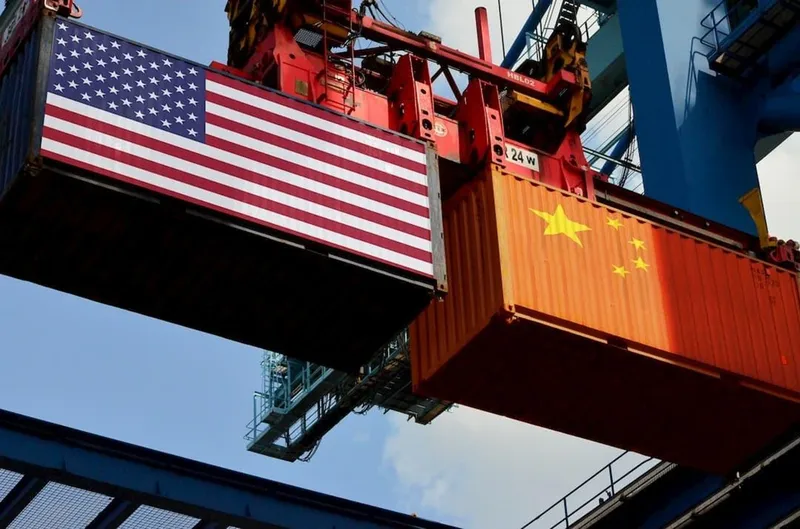
In Milwaukee on September 30, ministers gathered to discuss the global steel crisis were not merely talking about blast furnaces. They were beginning to confront a much harder question: what remains of a common trade rule when the countries applying it increasingly believe that their economies no longer operate under the same rules?
Twenty-eight economies gathered within the Global Forum on Steel Excess Capacity adopted the “Milwaukee Framework,” designed to coordinate their response to growing excess capacity in the global steel industry. It notably calls for better information-sharing on supply chains, action against subsidies that sustain non-viable capacity, and the possible use of trade defense instruments — anti-dumping duties, countervailing duties, safeguards, or broader measures against imports originating from economies with excess capacity. It does not, however, establish a common tariff or a uniform timetable: individual governments retain control over their trade instruments. (oecd.org)
The legal distinction matters. This is not yet a formal tariff coalition against Beijing. Politically, however, the shift is considerable. U.S. Trade Representative Jamieson Greer is no longer merely asking Washington’s partners to acknowledge the existence of Chinese overcapacity. The United States now wants responses to become more coordinated. Asked about possible higher duties on Chinese steel, Greer stressed that each country would decide what it considered appropriate, while arguing that it would make sense for other economies to adopt stronger measures. (investing.com)
Steel is therefore becoming the laboratory for a much larger problem.
745 Million Tonnes
The numbers explain why.
The OECD estimates that global excess steelmaking capacity could reach 745 million tonnes by 2028. It was estimated at 640 million tonnes in 2025. Between 2026 and 2028, as much as 139 million tonnes of additional capacity could still be added, while demand would increase by only around 34 million tonnes. The global capacity utilisation rate, already limited to roughly 76% in 2025, could fall to 74% or below by 2028. (oecd.org)
The imbalance is therefore less cyclical than arithmetic: the ability to produce is expanding much faster than the market’s ability to absorb that production.
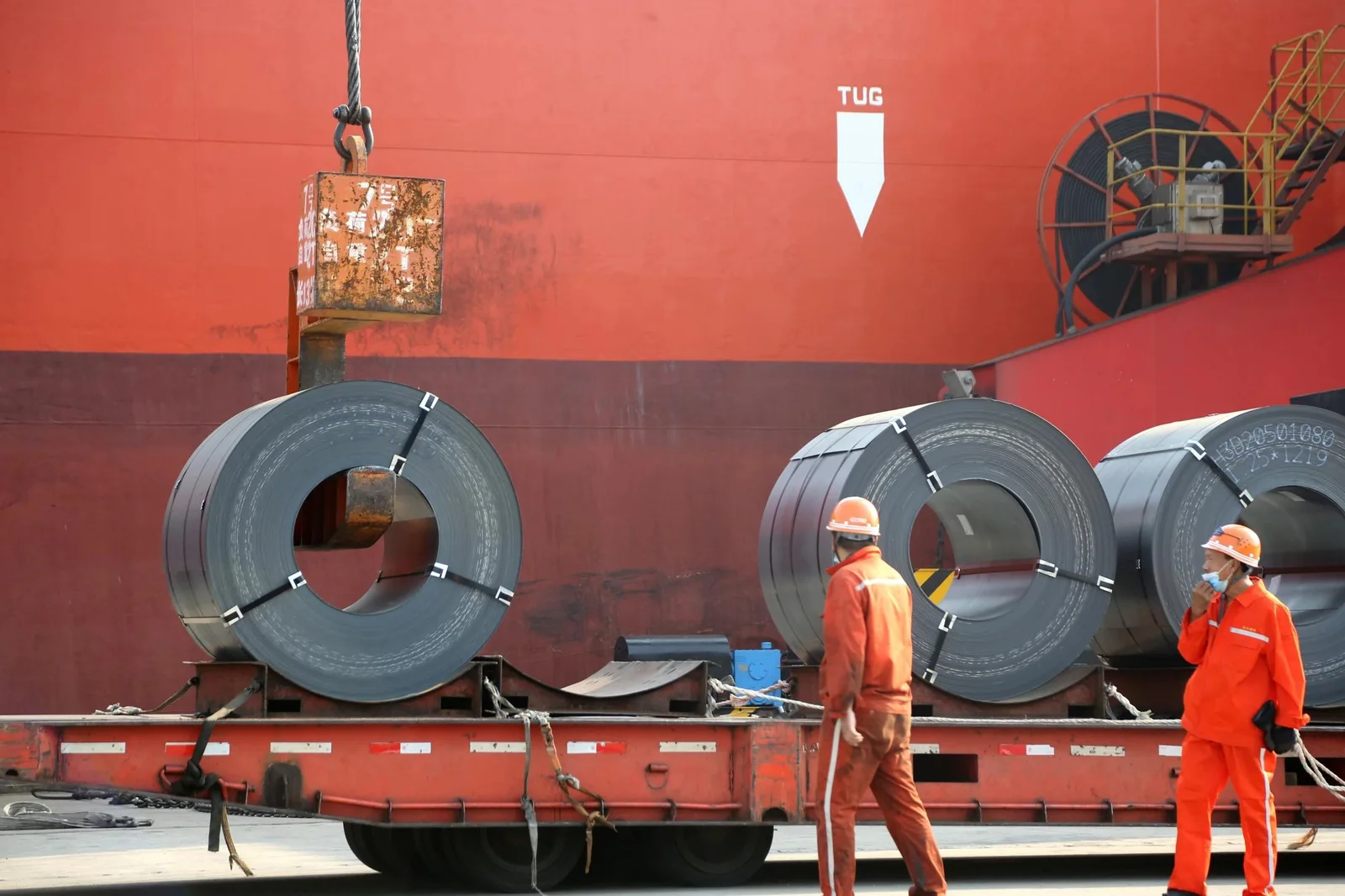
China occupies a central position in this equation. According to the OECD, it accounted for 54% of the global gap between capacity and demand in the third quarter of 2025. As the slowdown in property and infrastructure compressed domestic demand, a growing share of Chinese production found an outlet abroad. Chinese steel exports reached a record 131 million tonnes in 2025, an increase of 153% since 2020 and a volume greater than the entire steel output of the European Union that same year. (oecd.org)
Yet the problem does not lie in volumes alone.
The OECD estimates that in 2024, relative to assets, subsidies received by the median Chinese steel company were fifteen times higher than those received by the median producer elsewhere. For economies in which companies are more constrained by profitability, the cost of capital and energy prices, that difference eventually raises a question that traditional trade instruments are finding increasingly difficult to contain. (oecd.org)
A producer can be more efficient than a competitor. It can also benefit from lower labour costs, cheaper energy or a better organised logistics chain. That is precisely what international trade is supposed to arbitrate.
But what happens when governments believe that the price gap also results from financing mechanisms, subsidies, capacity targets or industrial policies they cannot reproduce?
That is where the discussion leaves steel behind.
The Rule That Made Globalisation Possible
Since the creation of the GATT and later the World Trade Organization, much of the international trading system has rested on an extraordinarily powerful idea: non-discrimination.
Its best-known expression is the most-favoured-nation principle. In its general logic, a trade advantage granted to one member should be extended to other members, subject to the exceptions provided for under the agreements. A product’s country of origin should therefore not, by itself, arbitrarily determine how that product is treated.
This principle helped replace dozens of politically managed bilateral trade relationships with a largely predictable system of common rules.
Washington is now beginning to challenge explicitly how that principle operates in its current form.
Ahead of the G20 trade ministers’ meeting in Milwaukee, the U.S. Trade Representative listed among its official objectives the need to “update” the most-favoured-nation principle. The issue appeared alongside eliminating forced labour from supply chains, addressing structural overcapacity and confronting the use of food trade as an instrument of coercion. (ustr.gov)
The debate then changes in nature.
The question is no longer simply whether a tariff of 10%, 25% or 50% adequately protects an industry. It is whether economies organised around profoundly different industrial models can continue automatically to receive the same conditions of market access.
For Washington, the answer is increasingly tending towards no.
But what makes Milwaukee particularly important is that the American diagnosis is beginning to converge with that of other economies, even when those countries simultaneously oppose U.S. tariff policy.
The Problem Becomes Collective
This convergence does not mean that Europe, Canada, Japan or the other participants are adopting American trade doctrine.
It means something subtler.
They are increasingly encountering the same problem.
In 2025, 27 new anti-dumping or countervailing investigations were initiated against China in the steel sector alone, representing more than one-third of all such investigations launched worldwide that year. Governments are therefore no longer responding solely to American diplomatic pressure: their own producers are demanding protection against trade flows they regard as structurally distorted. (oecd.org)
And steel is probably only the sector in which the phenomenon is oldest and most visible.
The same equation is appearing in different forms across electric vehicles, batteries, solar panels, certain machinery, industrial equipment and several technologies required for the energy transition: Chinese domestic demand that does not always expand at the same pace as installed capacity, enormous industrial investment and, as a consequence, a growing need to find markets abroad.
Weak domestic consumption, high investment, expanding capacity: the surplus becomes exportable.
For a long time, this mechanism was one of the engines of globalisation. Foreign consumers received cheaper products; Chinese companies gained markets; importing economies reallocated their resources towards other activities.
The calculation becomes much harder when the industries concerned are steel, automobiles, energy, batteries or technological equipment — sectors that governments now increasingly regard as strategic.
The lowest price is no longer necessarily the only objective.
Security of supply, industrial employment, technological autonomy, potential military capacity and the resilience of production chains enter the calculation.
And once those criteria appear, the common trade rule inevitably begins to fragment.
The Birth of a Clause That Does Not Exist
There is currently no “Chinese clause” in international trade law.
Yet the expression describes rather precisely the direction in which the system could be moving.
Instead of applying essentially one tariff to a category of products, governments could increasingly determine their treatment through a much more complex combination of factors: country of origin, subsidies received, company ownership, production conditions, local content, carbon footprint, possible forced labour, national security or strategic dependence.
The tariff would then no longer answer only one question: “What is this product?”
It would also answer another: “Under what economic system was it produced?”
This evolution is already visible.
Anti-dumping duties attempt to measure the gap between an export price and a value considered normal. Countervailing duties seek to neutralise certain subsidies. European carbon-related mechanisms introduce another criterion. U.S. technology restrictions already distinguish between products and transactions according to destination, end user and strategic importance.
Each of these instruments has its own legal logic. Their accumulation nevertheless gradually sketches an architecture in which the economic origin of a product matters as much as its customs classification.
Milwaukee adds another piece: coordination between several economies confronting the same phenomenon.
A Conditional Globalisation
The contradiction is all the more striking because Washington and Beijing can simultaneously seek to reduce certain barriers.
Only days before Milwaukee, the two countries unveiled reciprocal lists each covering around $30 billion of non-sensitive products that could benefit from tariff reductions. More than 90% of the goods concerned are expected to return to most-favoured-nation rates, while strategic sectors remain largely outside this détente. (apnews.com)
This movement is not necessarily inconsistent with the fragmentation of the system. It may instead foreshadow its future form.
Trade would no longer be divided simply between openness and protectionism. It would become compartmentalised.
Toys, certain agricultural products or consumer goods could continue to circulate under relatively low tariffs. Steel, semiconductors, batteries, electric vehicles or certain energy technologies would operate under much more differentiated regimes.
Globalisation would therefore not disappear.
It would become conditional.
The Chinese Precedent
This is probably the most important question raised by Milwaukee.
If several major economies conclude that a country whose industrial model relies on forms of public intervention they consider excessive can no longer receive exactly the same treatment as a market economy, the problem does not stop with China.
Criteria must then be established.
At what level does a subsidy become incompatible with common treatment? How should indirect public financing be measured? Does administered energy pricing constitute a subsidy? What about bank lending directed by the state? Land supplied below market price? Public procurement guaranteeing volumes? A tax advantage offered to attract a factory?
Western economies themselves are making increasing use of such instruments.
The United States subsidises strategic industries. Europe supports clean technologies and defence. Japan and South Korea assist their semiconductor industries. India is developing its own industrial incentive mechanisms.
A rule designed to respond to the Chinese model must therefore be precise enough not to become a general licence to discriminate between trading partners.
That is where the fundamental difficulty lies.
The WTO system has never prohibited every difference in treatment. It contains anti-dumping procedures, countervailing duties, safeguards, security exceptions and preferential trade agreements. But these exceptions were constructed around a general rule of non-discrimination.
If the exception gradually becomes the normal method by which major industrial powers manage one another, the architecture is reversed.
For three decades, global trade attempted to integrate China into a common rule.
In Milwaukee, another possibility is beginning to emerge: preserve the common rule, but multiply the conditions under which it no longer has to be applied to China in the same way.
Steel would merely be the first laboratory.
And if that logic spreads tomorrow to automobiles, batteries, energy, machinery and technology, the question will no longer be whether the trade war that began in Washington has spread to the rest of the world.
It will be whether, when dealing with China, global trade is gradually replacing the common rule with a permanent exception.
Main Sources
— OECD, OECD Steel Outlook 2026 and work of the Global Forum on Steel Excess Capacity: capacity projections, demand, Chinese exports, subsidies and trade instruments. (oecd.org)
— Global Forum on Steel Excess Capacity, September 30, 2026 ministerial meeting: adoption of the Milwaukee Framework and joint action framework. (oecd.org)
— Office of the United States Trade Representative, statements by Jamieson Greer and G20 Trade Ministerial agenda: Milwaukee Framework, excess capacity and reconsideration of the MFN principle. (ustr.gov)
— Reuters, September 30 and October 1, 2026: steel negotiations, the U.S. position on China, excess capacity and G20 trade discussions. (reuters.com)
— Associated Press, September 28, 2026: U.S.-China agreement on lists of non-sensitive products and the planned return to MFN rates for most products concerned. (apnews.com)
Atlas Limits Research Desk
Atlas Limits’ editorial and analytical desk.