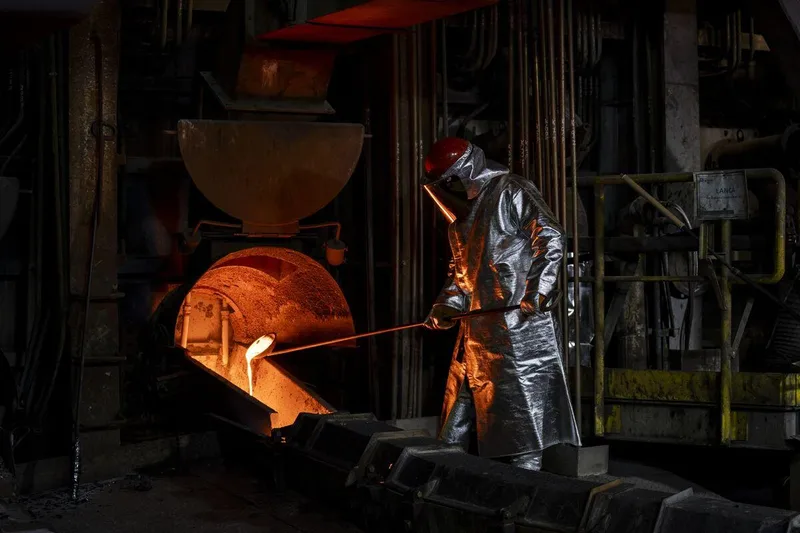
In the Gulf, the economic crisis can first be measured in barrels no longer produced. According to data presented by the World Bank, oil production stood at approximately 26 million barrels a day before the conflict began in February 2026. By March, it had fallen to around 16 million, with a partial recovery following several months of depressed output. That disruption exposes the paradox of the current shock: a region can possess some of the world’s most sought-after energy resources and still become poorer when their movement becomes uncertain.
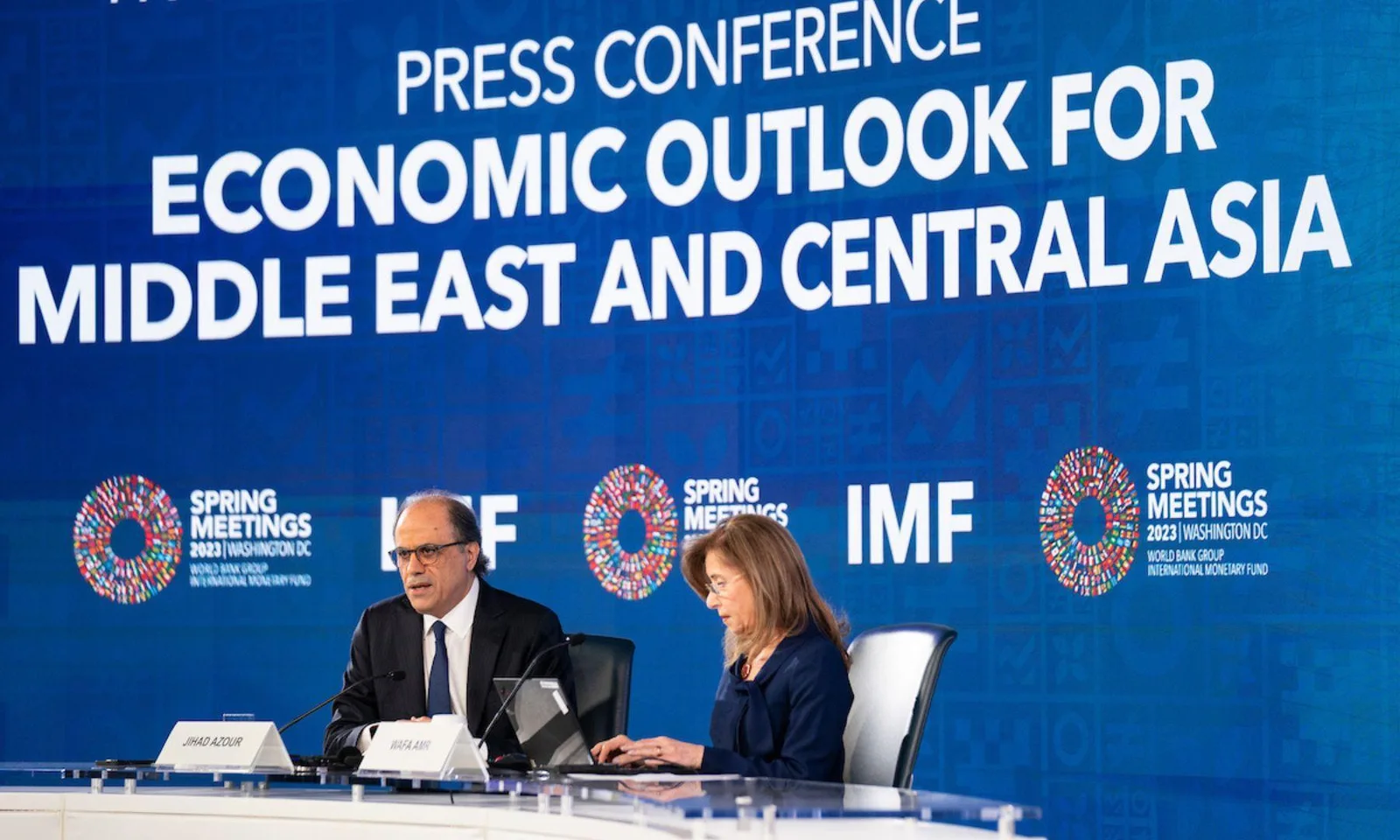
On October 22, the International Monetary Fund forecast a contraction of 1.3% in 2026 across the Middle East, North Africa and Pakistan. It expects growth of 6.6% in 2027, assuming the conflict subsides early next year and trade gradually normalizes. Even under that scenario, affected economies would generally remain below the output trajectories projected before the war.
The geographical distinction matters. This figure describes neither North Africa alone nor a uniform recession across every country concerned. It combines economies with profoundly different resources, infrastructure and exposure to the conflict. That combination is precisely what gives the forecast its significance: severe contractions in some countries can push an entire regional aggregate into negative territory while others continue to grow.
Wealth Depends on Access to Markets
An oil shock caused by tighter supply can raise revenues for producers that retain the ability to sell. The mechanism reverses when disruption reaches their own facilities or export routes. A higher oil price then guarantees neither higher receipts nor greater production.
These effects must be distinguished. Export revenues depend on prices and quantities sold; real GDP measures changes in the volume of economic activity. Rising crude prices can therefore support some income without preventing the real economy from contracting. When export volumes fall far enough, even that financial protection weakens.
The World Bank highlights this reversal from earlier energy shocks. The closure of the Strait of Hormuz concentrates losses among Gulf exporters. It forecasts a 4.3% contraction in 2026 for the Gulf Cooperation Council economies, while its group of developing oil-importing countries would maintain growth of 4.3%. These estimates reflect the Bank’s own country groupings and should not be confused with the IMF’s regional aggregate.
Behind this divergence lies a dimension often treated as secondary in assessments of energy power: a resource’s commercial availability. Underground reserves are not enough. They must be extracted, processed, stored, insured and transported. A failure anywhere along that chain turns available wealth into deferred income—and sometimes income permanently lost.
Infrastructure security and alternative transport routes therefore become components of economic capacity. Their value cannot be measured solely by their profitability under normal conditions. It also lies in how much activity they preserve when established routes close.
Uneven Exposure Across the Region
The shock extends beyond hydrocarbons. The World Bank also identifies disruption to tourism, aviation and logistics. These industries illustrate why economic diversification, however necessary, does not automatically eliminate exposure to regional risk.
Developing aviation hubs, tourist destinations and international commercial centres creates additional sources of income. Yet these activities can share a common dependency: the reliable movement of people, goods and capital. Sectors that appear separate in national accounts can therefore be hit simultaneously by an airspace closure, maritime disruption or loss of confidence.
The issue is less whether diversification is desirable than how deeply it changes an economy’s exposure. Spreading activity across several industries offers greater protection when those industries are not all vulnerable to the same event.
Elsewhere in the region, energy importers face a different combination of pressures. The IMF notes that remittances, tourism receipts, financial conditions and government measures have supported their resilience in 2026. It nevertheless warns that their room for manoeuvre is narrowing.
Resilience does not mean the shock is painless. An economy can continue growing while facing a higher energy import bill and greater pressure on household purchasing power. Governments must then decide whether to allow higher prices to reach consumers or absorb part of the cost through public budgets. In the first case, households cut other spending; in the second, resources available for other policies may shrink.
North Africa cannot therefore be described as a single bloc mechanically drawn into the Gulf’s recession. Exposure depends on each economy’s import structure, foreign-currency earnings, fiscal position and domestic growth drivers. The regional average captures the scale of a shock; it does not replace country-level analysis.
A Rebound Does Not Restore Lost Time
The growth expected in 2027 requires equally careful interpretation. After a production interruption, bringing capacity back online can generate a sharp increase in GDP. The growth rate then partly reflects a restart from a depressed base.
A simple calculation illustrates the distinction between recovery and catching up. An economy whose output falls from an index of 100 to 98.7 after a 1.3% contraction, then grows by 6.6%, reaches approximately 105.2. It has surpassed its initial level. But had it grown by 4% in each year—a purely illustrative assumption—it would have reached 108.2. A return to growth can therefore leave a substantial gap relative to the interrupted trajectory.
That gap may be compounded by less immediately visible effects: postponed investment, contracts moved elsewhere, interrupted workplace learning, or reconstruction spending that absorbs resources previously intended to expand future capacity. Repairing infrastructure restores a service; it does not recover every opportunity lost while that infrastructure was unavailable.
For governments, the challenge is to support the economy without exhausting the resources needed for recovery. The IMF recommends preserving price stability and fiscal sustainability, favouring temporary, targeted assistance for the most affected households over broad subsidies.
This trade-off is also political. Targeted assistance requires administrative systems capable of identifying needs and reaching recipients quickly. Institutional strength therefore determines how much social protection a government can provide with limited resources.
Ultimately, the contraction forecast by the IMF exposes a vulnerability extending beyond the oil cycle. Economic power rests on resources, but also on the conditions that allow those resources to become lasting income, investment and employment. A resumption of trade could lift growth figures quickly. The more demanding question is whether the region can make that growth less dependent on passages whose security it never fully controls.
Atlas Limits Research Desk
Atlas Limits’ editorial and analytical desk.