The political geography of the Sahel is changing without its borders having to move. To the north, Niger is seeking new arrangements with the military authorities of eastern Libya. To the west, Mali is pursuing a territorial reconquest whose achievements remain fragile. Between them, Algeria is attempting to preserve its influence over a region it has long regarded as an essential part of its strategic depth. Further afield, the United Arab Emirates and Russia are involved in different configurations, but around the same underlying reality: security in the Sahel has become inseparable from the rivalries running through North Africa.
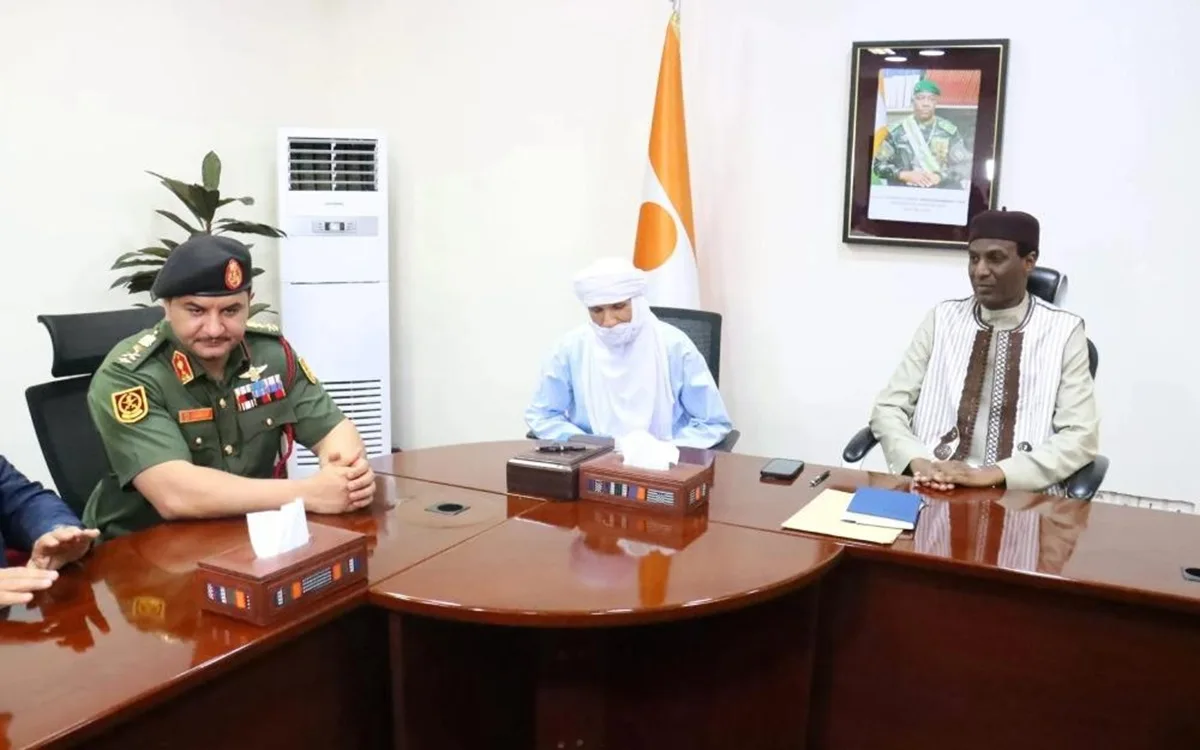
The reported rapprochement between General Abdourahamane Tiani, Niger's military leader, and the camp of Marshal Khalifa Haftar, which dominates eastern Libya and exercises decisive influence over much of the country's south, illustrates this transformation. Described by Jeune Afrique as a new arrangement intended to stabilize relations between the two sides, it potentially extends beyond cooperation between military establishments. It could alter the balance of power around Fezzan, the vast desert region of southern Libya where commercial routes, armed networks and the security interests of several states converge.
Meanwhile, the consultations undertaken by Mali's transitional president, Assimi Goïta, with his partners in the Alliance of Sahel States (AES) highlight another development: the political unity proclaimed by Mali, Niger and Burkina Faso must now accommodate the diversification of their external relationships.
These events do not necessarily form part of a coordinated strategy. Considered together, however, they reveal a deeper transformation. Having broken with some of their former partners, the Sahel's military governments have not escaped power politics. They are attempting to reorganize those relationships to their advantage.
Fezzan Returns to the Centre of the Game
For years, crises in the Sahel were primarily interpreted through their western dimensions: French intervention in Mali, counterterrorism operations, relations with ECOWAS, and the growing presence of Russian forces. This perspective remains necessary, but it is no longer sufficient to explain the region's emerging dynamics.
Southern Libya is once again becoming a decisive strategic space.
Since the overthrow of Muammar Gaddafi in 2011, Libya has remained fragmented among rival authorities, armed groups and competing economic networks. This fragmentation has profoundly affected neighbouring countries. The movement of weapons, fighters and goods across desert borders has helped transform security conditions in Niger, Mali and Chad.
Fezzan occupies a distinctive position within this system. It connects northern Libya with the Sahara and the Sahel, while serving as a transit zone for both legal and illicit trade. Its importance derives less from its population density than from the geography of its corridors, its energy infrastructure and the ability of locally established actors to control or disrupt movement.
For Niger, whose economy depends heavily on external transport corridors, stabilizing relations with the authorities controlling southern Libya offers clear advantages. It can facilitate border surveillance, reduce the risk of incidents and establish channels of negotiation with actors exercising effective authority on the ground.
For Khalifa Haftar and his entourage, closer relations with Niamey provide another opportunity to expand their regional recognition. Haftar's camp does not represent the Libyan state as a whole, but its territorial control allows it to conduct a parallel form of security diplomacy, particularly in border regions.
The actual significance of the agreement nevertheless depends on its operational provisions. A non-aggression pact, intelligence cooperation or a border coordination mechanism does not entail the same commitments as a military alliance. Without detailed publication of its terms, it would be premature to portray this rapprochement as the emergence of a fully constituted strategic bloc.
Its importance already lies elsewhere: it confirms that Libya's southern borders have become a field of political negotiation among military authorities seeking to convert territorial control into diplomatic influence.
Algeria Confronts the Diversification of Sahelian Alliances
For Algiers, this development comes amid an increasingly complex regional environment.
Algeria shares extensive borders with Mali, Niger and Libya. Its Sahel policy has historically rested on several imperatives: preventing armed groups from establishing a lasting presence near its territory, limiting foreign military intervention in its immediate neighbourhood and preserving a central diplomatic role in resolving regional conflicts.
The peace agreement signed in Algiers in 2015 between the Malian government and several armed movements from northern Mali was one of the most visible expressions of this strategy. Its termination by the Malian authorities in January 2024 marked a significant rupture. It weakened a diplomatic framework in which Algeria had occupied a privileged position, while Bamako increasingly favoured a military response to the conflict in the north.
Relations between Algiers and Niamey follow a different pattern. Niger retains structural reasons to cooperate with its northern neighbour, whether in border security, energy projects or the movement of goods. This interdependence does not disappear with changes of government or diplomatic disagreements.
Rapprochement with Haftar's camp therefore does not necessarily mean that Niamey is seeking to distance itself from Algeria. It may instead reflect a diversification strategy: multiplying diplomatic and security contacts to avoid relying exclusively on one partner for the protection of its regional environment.
It is precisely this diversification that complicates Algeria's position.
Algiers' influence has partly depended on its ability to present itself as an indispensable interlocutor in the crises of the central Sahara. Yet Sahelian authorities now have access to a broader range of military and diplomatic relationships, even when those relationships are fragile, asymmetric or mutually competitive.
Algeria is not automatically losing its influence. Its geographical proximity, military capabilities and infrastructure continue to provide advantages that more distant powers cannot easily reproduce. But it must deal with governments demanding greater freedom in their choice of partners.
Algeria's challenge is therefore less about preventing every new alliance than ensuring that those alliances do not diminish its ability to influence decisions directly affecting its security.
Abu Dhabi: Influence Through Libya
The Emirati dimension adds another layer to this realignment.
The United Arab Emirates has maintained close relations with Khalifa Haftar's camp for years. Its involvement in the Libyan conflict, including documented military support during earlier phases of the war, helped establish Abu Dhabi as an important external actor in the country's balance of power.
This relationship gives the rapprochement between Haftar and Niger's authorities particular regional significance. It creates the possibility of connections between influence networks established in Libya and the new partnerships being pursued by Sahelian military governments.
Three realities must nevertheless be distinguished: Emirati influence over Haftar's camp, the independent decisions of the Libyan military authorities, and the possible existence of direct coordination between Abu Dhabi and Niamey. The first two do not automatically demonstrate the third.
This distinction is essential. Geopolitical analysis can identify converging interests without presenting that convergence as proof of a coordinated strategy.
For the Emirates, Africa has become an important arena of diplomatic, commercial and logistical expansion. Port investments, infrastructure, security relationships and political partnerships form part of a projection strategy extending well beyond Libya.
Yet the Sahel does not lend itself to a straightforward expansion of external influence. Local networks are fragmented, political authorities possess varying degrees of autonomy, and the interests of partners can diverge rapidly.
The possibility of indirect rivalry between Algiers and Abu Dhabi should therefore be examined through the concrete mechanisms of influence: financing, access to military decision-makers, logistical support, security cooperation and control of transport corridors. It cannot be reduced to an image of two capitals competing over a territory whose local actors supposedly lack agency.
Niger, like the authorities of southern Libya, pursues its own objectives. It is this relative autonomy that makes the emerging balance of power difficult to stabilize.
Mali and the Limits of Territorial Reconquest
To the west of this realignment, developments in Mali demonstrate why external alliances cannot be separated from military realities on the ground.
The question of Kidal remains particularly revealing.
This northern Malian city has political significance far beyond its demographic weight. For decades, it has been a major centre of Tuareg autonomist and separatist movements, as well as a symbol of the Malian state's difficulty in exercising lasting authority across its territory.
The recapture of Kidal by government forces in November 2023 represented a major symbolic victory for Bamako. It occurred amid the withdrawal of the United Nations mission and the transformation of Mali's military alliances, with growing reliance on Russian partners.
That victory did not establish uninterrupted government control. Kidal subsequently returned to the control of Azawad separatist forces in April 2026, before Malian forces and their Russian partners recaptured the city on 6 October 2026.
This succession of reversals illustrates a fundamental distinction: controlling a regional capital does not guarantee control over the surrounding territory.
In desert regions, armed groups can avoid conventional confrontations, disperse their units, disrupt transport routes and retain operational capabilities beyond major settlements. Temporary military superiority does not automatically translate into permanent administrative authority.
The developments reported in early November, approximately one month after the latest recapture of Kidal, must be interpreted through this distinction. Available reporting on government and Russian positions indicates important tactical developments, but does not establish the lasting pacification of northern Mali.
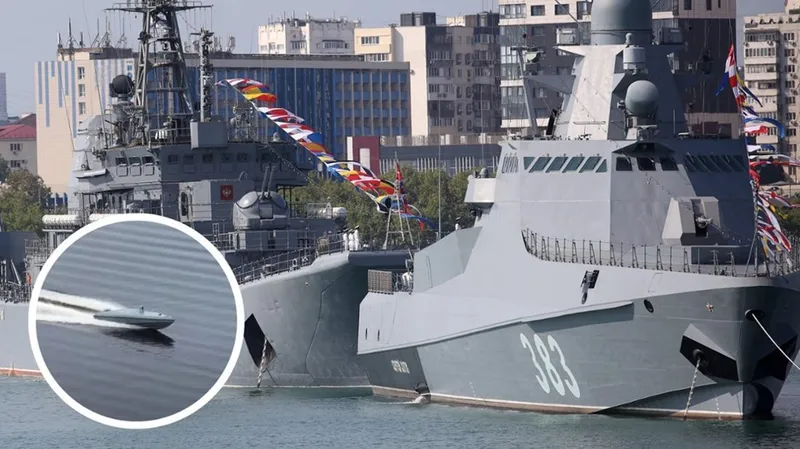
The Russian presence, now associated notably with Africa Corps following the transformation of the former Wagner deployment, has changed the resources available to Mali's authorities. It has also introduced a new dependence on external training, equipment, operational support and specialized military capabilities.
The paradox is central. Sovereignty is one of the principal foundations of the transitional authorities' political discourse, yet exercising that sovereignty requires military, financial and technological resources that continue to be supplied partly by external partners.
This problem is not unique to Mali. It affects states confronting prolonged insurgencies and severe fiscal constraints. What distinguishes Bamako is the speed with which it replaced its former security arrangements with new ones.
Territorial reconquest can therefore strengthen a government's political legitimacy while increasing the cost of securing the territories recovered. As the state expands its positions, it must protect more garrisons, supply routes, administrative facilities and civilian populations.
A military victory consequently opens a second, generally longer challenge: transforming the presence of armed forces into the capacity to govern.
The AES: Political Solidarity and National Interests
Established in September 2023 by Mali, Niger and Burkina Faso, the Alliance of Sahel States has gradually become the principal framework for political and security coordination among these three military-led governments.
Its transformation into a confederation in July 2024 strengthened that ambition. The project now extends beyond mutual assistance against armed threats. It seeks to construct a political space distinct from ECOWAS, from which the three countries formally withdrew in January 2025.
This development reflects a desire to break with regional institutions considered insufficiently respectful of their sovereign choices. It also rests on solidarity among governments confronting comparable security challenges and questions about their constitutional legitimacy.
Institutional unity, however, does not eliminate geographical differences.
Mali remains deeply connected to the political and security dynamics of the western and central Sahara, its relations with Algeria and the conflicts affecting its northern territories. Niger occupies a pivotal position between the Maghreb, the Lake Chad basin and commercial corridors connecting West Africa to the Mediterranean. Burkina Faso, located further south and also landlocked, is directly exposed to the spread of violence towards the borderlands of the Gulf of Guinea.
These configurations generate different priorities.
Stronger cooperation between Niamey and Haftar's camp may offer advantages to Niger without becoming an equivalent priority for Bamako or Ouagadougou. Likewise, relations between Mali and Algeria do not automatically determine those between Niger and Algiers.
Assimi Goïta's consultations with his AES partners, reported in early November, acquire their significance in this context. They can be interpreted as an effort to coordinate responses to regional developments that do not affect all three states in the same way.
The real test of the AES will not simply be its ability to present a common position. It will be whether it can manage divergent interests without turning every bilateral disagreement into a collective crisis.
This distinction is fundamental to understanding the organization's future resilience. An alliance can be politically coherent while remaining operationally uneven. It can also strengthen its members' negotiating positions without eliminating their individual dependencies.
Russia: A Military Partner, Not a Universal Arbiter
Russia occupies a distinctive place in this landscape.
Its military presence in Mali, its rapprochement with several Sahelian governments and its relations with the authorities of eastern Libya give it a foothold in different parts of the Saharan and Sahelian strategic space.
This presence does not mean that Moscow controls the relationships among these actors. Russian partnerships respond to distinct needs negotiated within different national contexts.
In Mali, the principal issue remains security assistance and the consolidation of government military capabilities. In Libya, Russia's relations with Haftar's camp are rooted in an older political and territorial conflict involving Mediterranean and African strategic considerations.
These relationships may create diplomatic or logistical connections, but they can also expose Moscow to conflicting interests.
Russia must notably accommodate the relationships its partners maintain with other powers. Algeria itself remains a longstanding Russian partner in defence procurement, while pursuing an autonomous foreign policy and defending interests that sometimes differ from those of the Sahelian authorities.
It would therefore be misleading to portray the region as a collection of perfectly aligned blocs. Russia can maintain relationships with several actors whose objectives do not coincide, without necessarily possessing the means to resolve their disagreements.
This situation is both a diplomatic asset and a strategic limitation.
It allows Moscow to maintain channels of communication across several capitals. It also requires Russia to preserve balances whose stability depends largely on decisions taken locally.
Sovereignty and the Power of Corridors
Beyond diplomatic rivalries, the Sahel's realignment rests on a material reality frequently relegated to the background: the region's states depend on networks of circulation they do not entirely control.
Mali, Niger and Burkina Faso are landlocked. Their access to international markets depends on corridors crossing other countries, external port infrastructure and commercial relationships that cannot be rapidly replaced.
Saharan borders add a security dimension to this dependence. They cross territories where permanent surveillance is costly, where community and commercial networks predate contemporary states, and where the distinction between formal and informal economic activity can be difficult to establish.
Control over transport routes consequently becomes an instrument of power.
The issue is not merely the movement of merchandise. Corridors also determine the delivery of fuel, military equipment, food supplies and the resources necessary for public administration.
From this perspective, relations between Niger and southern Libya should not be interpreted exclusively as a matter of political alliances. They also concern Niamey's ability to secure additional options in an environment where supply disruptions can rapidly become economic and political crises.
The same logic applies to Mali, where protecting transport routes remains an essential condition for territorial stabilization.
Sovereignty is therefore measured neither solely by the presence of a flag over a city nor by the signing of a military agreement. It depends on the ability to sustain the flows that allow the state to function.
This explains why apparently secondary actors controlling a border crossing, a logistical hub or a desert zone can acquire diplomatic importance disproportionate to their formal political status.
A Realignment Without an Established New Order
Three broad trajectories may now emerge.
The first would involve pragmatic stabilization. Sahelian authorities would multiply bilateral arrangements, while Algeria, Libyan actors, Russia and other external partners sought to preserve their interests without direct confrontation. The AES could then function as a sufficiently flexible coordination framework, allowing its members to maintain differentiated foreign policies.
The second would involve intensifying competition among influence networks. Rivalries surrounding southern Libya, tensions between Bamako and Algiers, and the presence of external military partners could complicate regional cooperation mechanisms. Sahelian states would gain access to more interlocutors, but at the cost of greater exposure to conflicts among their partners.
The third would involve progressive fragmentation. National imperatives would take precedence over confederal solidarity, security arrangements would remain concentrated around a limited number of urban centres, and armed groups would exploit the discontinuities between different zones of control.
None of these trajectories is inevitable. Their development will depend less on diplomatic declarations than on several concrete variables: the ability of armed forces to secure territories over time, the strength of fiscal resources, the continuity of commercial corridors and the possibility of rebuilding political mechanisms for conflict resolution.
The civilian dimension will also be decisive. Sahelian populations bear the consequences of forced displacement, food insecurity, disrupted trade and weakened public services. A realignment of alliances that fails to improve these conditions could alter external power relationships without addressing the underlying causes of instability.
The Sahel's New Strategic Equation
The rapprochement between Tiani and Haftar's camp, consultations among AES leaders and military developments around Kidal do not yet constitute a new regional order. Rather, they demonstrate that the previous system of influence has lost part of its coherence without being replaced by another.
Algeria retains considerable geographical and diplomatic advantages, but can no longer assume its centrality in every Sahelian negotiation. The Emirates may benefit from their Libyan networks without necessarily possessing direct and uniform influence over Niger. Russia supplies sought-after military capabilities, but cannot permanently substitute for the political and economic institutions of the states it supports.
As for the Sahelian governments, their pursuit of autonomy confronts a contradiction that runs through the history of landlocked states: reducing one external dependence often means organizing several others.
The difference is that multiplying partners can also become a source of leverage, provided governments retain the capacity to negotiate among them, limit their commitments and preserve functional relationships with their neighbours.
The Sahel is therefore not simply moving from one sphere of influence into another. It is becoming an arena of permanent negotiation, in which every actor seeks to convert geographical position, military capability or logistical access into political advantage.
The map of alliances is being redrawn. The map of vulnerabilities, far less so.
Principal Sources
- Jeune Afrique, 6 November 2026 — Reporting on the Tiani–Haftar rapprochement and the competition for influence between Algiers and Abu Dhabi.
- RFI Afrique, November 2026 — Reporting on Assimi Goïta's consultations with the leaders of Niger and Burkina Faso, and military developments around Kidal.
- Alliance of Sahel States, Liptako-Gourma Charter, 16 September 2023, and founding documents of the AES Confederation, July 2024.
- Agreement for Peace and Reconciliation in Mali Resulting from the Algiers Process, 2015; announcement of its termination by Mali's authorities, January 2024.
- United Nations Security Council, reports concerning the situation in Mali, the withdrawal of MINUSMA, and political and security developments in Libya.
- United Nations Panel of Experts on Libya, reports concerning armed networks, equipment transfers and external interference.
- ECOWAS, statements concerning the withdrawal of Mali, Niger and Burkina Faso, effective 29 January 2025.
Methodological note: Recent diplomatic reporting is distinguished from established institutional developments. Strategic intentions attributed to individual actors are analytical interpretations rather than demonstrated facts. The detailed provisions of the Tiani–Haftar agreement and recent military developments require independent documentary verification before definitive publication.
Atlas Limits Research Desk
Atlas Limits’ editorial and analytical desk.