For more than a year, Saudi Arabia was no longer part of mBridge. Almost no one knew.
On May 13, 2025, the Saudi Central Bank (SAMA) completed its participation in the experimental platform for cross-border central bank digital currency payments. Riyadh had become a full participant in the project less than a year earlier. Its departure only became public in September 2026.
The timing is almost as interesting as the decision itself.
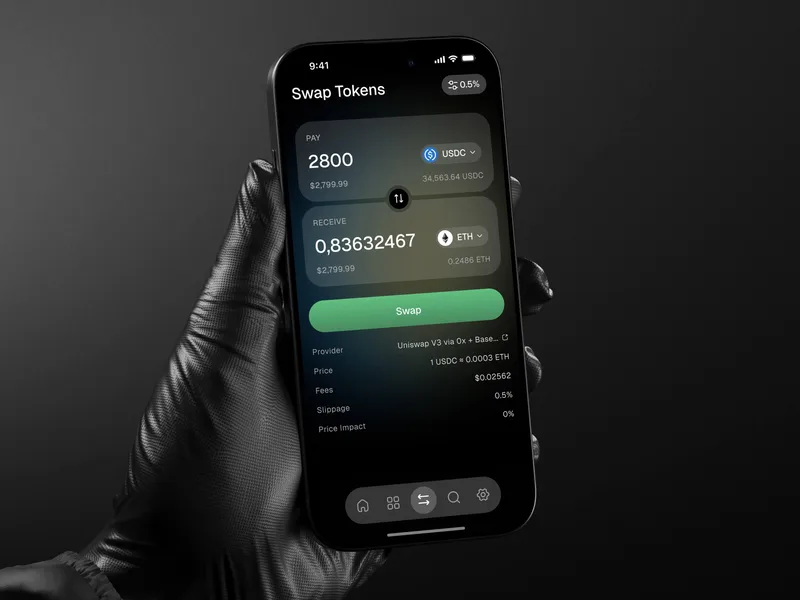
mBridge is neither a cryptocurrency nor a direct substitute for SWIFT. The project is built on a distributed-ledger infrastructure designed to allow central banks and commercial banks to conduct cross-border payments and settlements directly using central bank digital currencies. Launched in 2021 around the Bank for International Settlements, the People’s Bank of China, the Hong Kong Monetary Authority, the Bank of Thailand and the Central Bank of the United Arab Emirates, it reached the “minimum viable product” stage in June 2024. That was when Saudi Arabia became a full participant.
Eleven months later, it was no longer part of it.
The official Saudi position is cautious. SAMA says its participation was a limited proof of concept, successfully completed on May 13, 2025, after which it was no longer a participating member of mBridge. Nothing in that formulation establishes that Riyadh rejected the technology or decided to abandon monetary cooperation with Beijing.
That is precisely what makes the episode interesting.
When infrastructure becomes political
mBridge originally addressed an essentially technical problem. International payments remain costly, fragmented and dependent on layers of intermediaries. A common infrastructure using central bank digital currencies could allow certain transactions to be completed almost instantaneously, with final settlement, while reducing some of those frictions.
But monetary infrastructure rarely remains just infrastructure.
Allowing two financial institutions to settle a transaction directly in central bank money through a common architecture also reduces their dependence on parts of the traditional international financial system. When that architecture brings together China, Hong Kong, the United Arab Emirates and several Asian economies, it inevitably acquires a geopolitical dimension.
That interpretation requires caution. When the Bank for International Settlements stepped away from mBridge in 2024 and handed the project over to its participating institutions, then BIS General Manager Agustín Carstens explicitly rejected the idea that it had been designed to circumvent sanctions or become a “BRICS bridge.” The BIS presented its withdrawal as the normal conclusion of its incubator role, rather than a political rupture.
The underlying question nevertheless remains: the technical capabilities of an infrastructure and the political intentions of those building it are not the same thing.
A system capable of directly settling transactions between central bank digital currencies can be designed to improve the efficiency of international payments while simultaneously creating some of the technical building blocks for a financial system less dependent on dollar-centred channels.
Saudi Arabia had to navigate precisely that ambiguity.
Diversifying without choosing
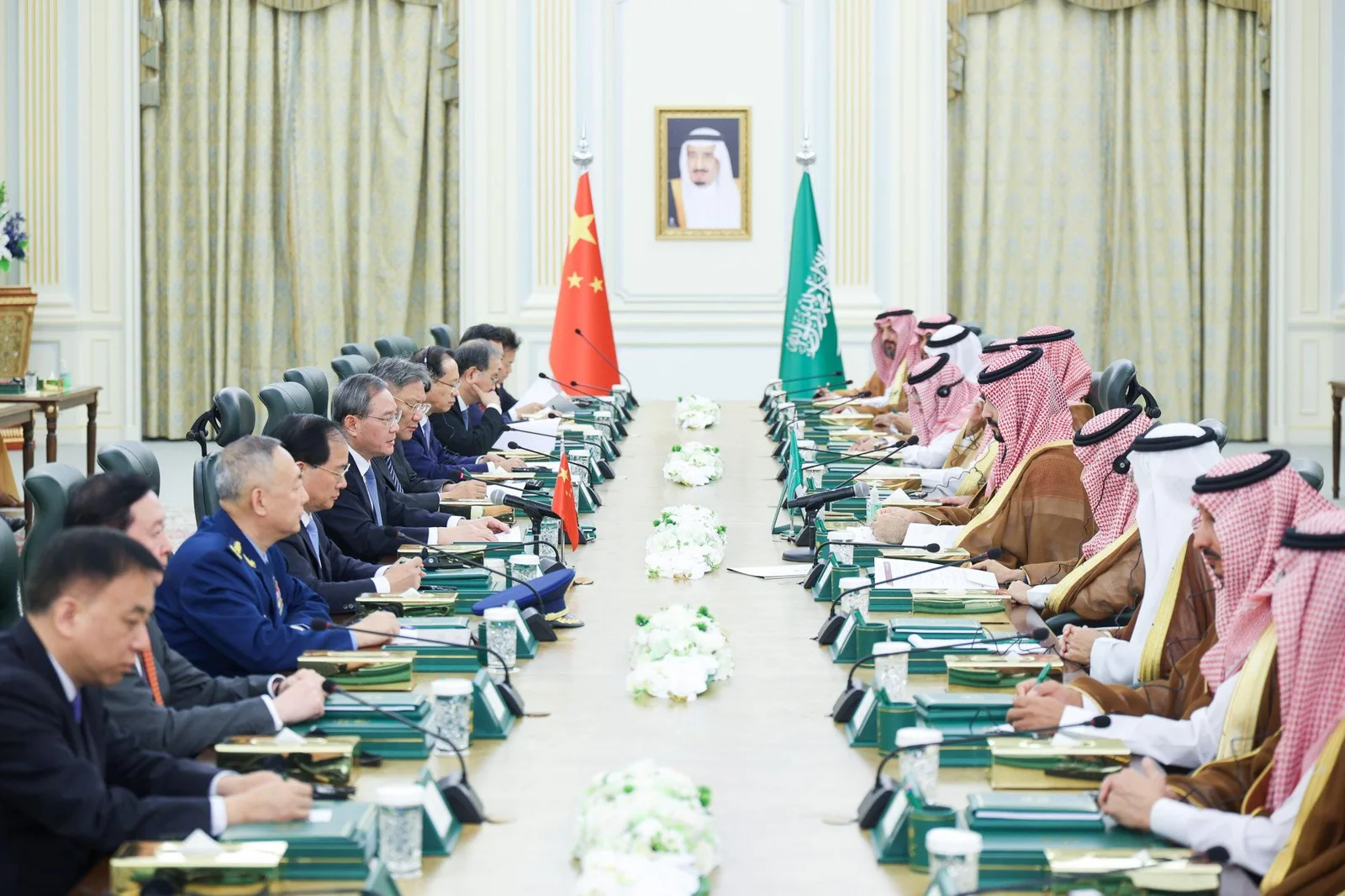
For several years, Saudi Arabia has deepened its economic and financial relationship with China without formally challenging the monetary architecture underpinning its own economy.
In November 2023, SAMA and the People’s Bank of China signed a currency swap agreement worth up to 50 billion yuan, or 26 billion Saudi riyals. Days earlier, Saudi central bank governor Ayman Al-Sayari had publicly called for deeper relations with Chinese and Hong Kong monetary authorities, particularly in fintech and digital assets.
Yet this opening does not amount to an exit from the dollar system.
The Saudi riyal remains pegged to the US dollar. The United States remains a central financial and security partner of the kingdom. China, meanwhile, has become indispensable to Saudi energy trade and increasingly important across investment, infrastructure and industrial cooperation.
Saudi strategy is therefore less about replacing one system with another than about multiplying its options.
mBridge pushed that logic somewhat further. This was no longer simply a currency swap agreement with Beijing or a willingness to conduct more transactions in local currencies. Riyadh was directly participating in the construction of an infrastructure that could eventually allow international payments to circulate without reproducing exactly the financial architecture built around the dollar.
This is where a limit appears.
The Financial Times, which brought the Saudi departure to wider public attention, reported that SAMA described the end of its participation as part of the planned experimental process. The newspaper also cited sources describing a Saudi desire to avoid continued public association with the project as mBridge’s geopolitical implications attracted growing attention in Washington. There is, however, no public evidence establishing that direct US pressure caused the Saudi decision.
The distinction matters.
The withdrawal is a fact. Its geopolitical cause remains an interpretation.
The UAE stays
A regional comparison makes the Saudi decision even more instructive.
The United Arab Emirates did not follow Riyadh.
Abu Dhabi was one of the project’s original participants and remains involved in its development alongside China, Hong Kong and Thailand. Macao also joined the infrastructure in 2026, with eleven banks authorised to begin conducting transactions through the platform.
mBridge therefore continues without Saudi Arabia.
Its development also suggests that the project is moving beyond a purely technical experiment. By mid-2026, cumulative transaction volumes on the platform had reached hundreds of billions of yuan, while major Chinese banks were beginning to conduct increasingly large cross-border operations through the infrastructure.
Saudi Arabia’s departure therefore threatens mBridge less than it reveals the different strategies being adopted by Gulf powers as the international monetary system evolves.
Abu Dhabi is, for now, prepared to go further with the experiment. Riyadh appears to have chosen greater distance.
The difference is worth watching.
The dollar does not need to be replaced
The debate over de-dollarisation is often framed as a binary competition: either the dollar retains its dominance or another currency eventually replaces it.
The evolution of payment infrastructure suggests something more complicated.
The international monetary system could remain overwhelmingly dollar-dominated while gradually becoming less dependent on the infrastructure accompanying that dominance. Bilateral local-currency arrangements, regional payment systems, central bank digital currency platforms and alternative settlement networks can coexist without any single one replacing the existing system.
mBridge belongs to this transformation.
Its importance therefore does not necessarily lie in its ability to dethrone the dollar. It lies in the possibility that, alongside other infrastructures, it could make some transactions possible without it.
For China, that evolution gradually creates more room around the renminbi. For emerging economies, it potentially creates more choice. For the United States, it raises a longer-term question about the power embedded not only in its currency, but also in the financial infrastructure surrounding it.
For Saudi Arabia, the calculation is more delicate.
Riyadh wants to trade more with China, attract Chinese capital, deepen technological cooperation and develop a more diversified financial architecture. At the same time, it must preserve its strategic relationship with the United States and the stability of a domestic monetary system still built around the dollar.
The kingdom has therefore not stopped moving closer to Beijing. Its currency swap with the People’s Bank of China, its financial cooperation and its broader economic relationship demonstrate otherwise.
It simply stopped at one particular infrastructure.
Perhaps that is where the real frontier of monetary multipolarity lies today: not in whether states want alternatives, but in the moment when using those alternatives begins to look like a choice.
Main Sources
- Financial Times — “Saudi Arabia quits China-led cross-border currency platform” — Saudi Arabia’s withdrawal from mBridge, the timeline of its participation and SAMA’s position. Financial Times
- Bank for International Settlements (BIS) — “Project mBridge” — institutional documentation on the project, its multi-CBDC architecture, participants and transition to the MVP stage. BIS — Project mBridge
- Saudi Central Bank (SAMA) — Saudi CBDC experimentation and the broader monetary-policy framework surrounding Saudi Arabia’s participation in mBridge. Saudi Central Bank — CBDC experimentations
- Central Bank of the UAE — documentation on the Digital Dirham and mBridge, including the MVP and its use for wholesale cross-border payments. Central Bank of the UAE
- South China Morning Post — analysis of what Saudi Arabia’s departure means for mBridge and the wider debate over de-dollarisation. South China Morning Post
Atlas Limits Research Desk
Atlas Limits’ editorial and analytical desk.