The energy transition was supposed to help economies reduce their exposure to international oil and gas markets. Yet as solar panels, batteries, and electric vehicles become increasingly essential to economic development, another vulnerability is emerging: dependence on the countries and companies that control their manufacturing.
On October 27, 2026, the International Energy Agency (IEA) drew attention to this contradiction, which is particularly significant in Southeast Asia. In a region where electricity demand is rising rapidly, the geographical concentration of industrial capacity required for electrification is becoming a matter of economic and energy security.
The warning followed the publication of an IEA report examining energy technology supply chains in Southeast Asia. The study shows that the region has developed substantial manufacturing capabilities, but that their expansion remains heavily dependent on foreign investment, technologies, and components.
The challenge therefore extends beyond the availability of equipment. It concerns the ability of economies to secure their supplies, develop the technologies required for manufacturing, and retain a sustainable share of the industrial value they help generate.
A Region Confronting Two Forms of Energy Dependency
Southeast Asia occupies an increasingly important position in the global economy. Industrialization, urbanization, expanding digital infrastructure, and rising living standards are driving sustained growth in energy consumption.
According to the IEA, regional energy demand has increased by nearly 140% over the past twenty-five years. Under currently announced policies, Southeast Asia could account for approximately one-fifth of global energy demand growth over the coming decade.
This expansion is accompanied by a transformation in consumption patterns. Industrial electrification, air conditioning, data centers, and electric vehicles are increasing electricity requirements, while several countries remain heavily dependent on imported fuels.
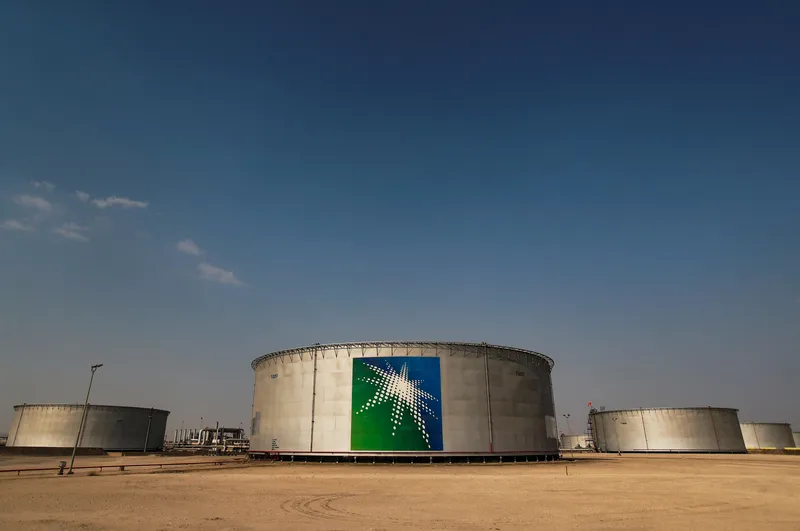
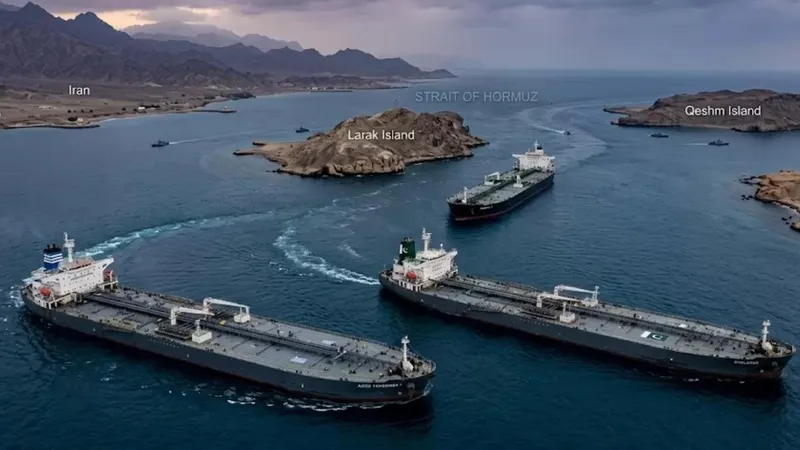
The energy crisis triggered by the conflict in the Middle East has highlighted the consequences of this exposure. Before the disruptions, approximately 60% of the region's crude oil imports originated in the Middle East, according to IEA estimates.
Supply tensions have strengthened the economic rationale for renewable energy, energy efficiency, and electrification. Producing more electricity from domestic resources can reduce fuel imports and limit exposure to fluctuations in international markets.
But this transformation changes the nature of dependency rather than automatically eliminating it.
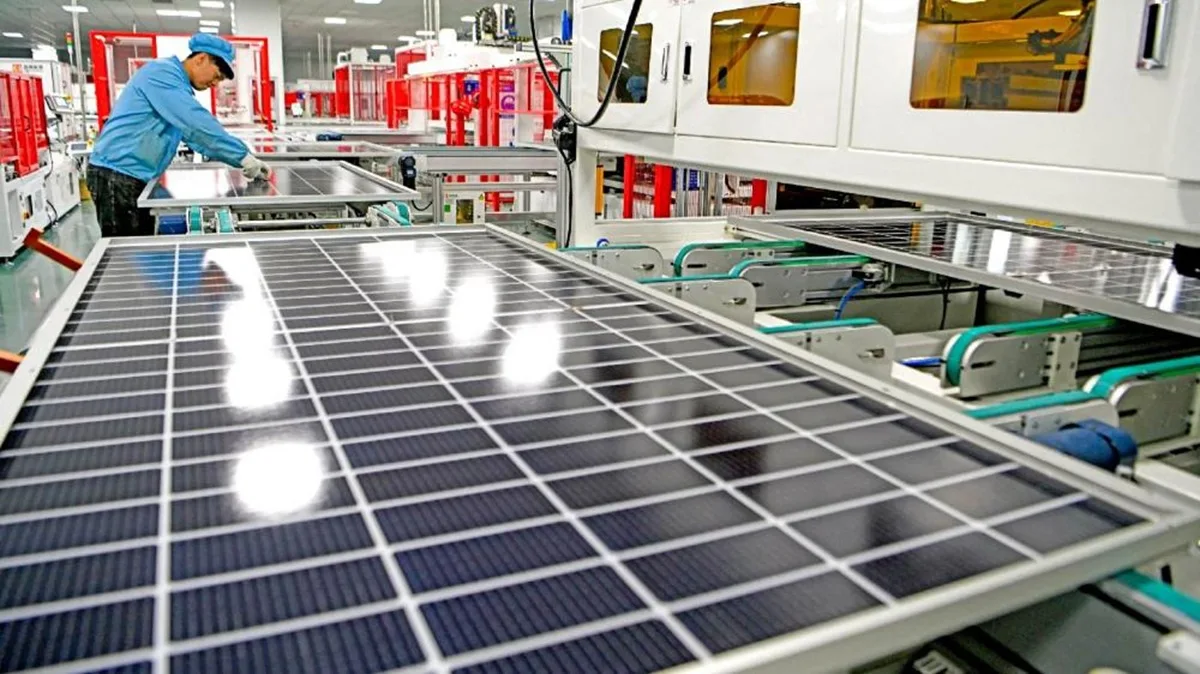
A solar power plant can generate electricity for decades without importing oil or natural gas. Its construction nevertheless requires photovoltaic cells, electrical equipment, processed materials, and industrial components. Electricity storage introduces additional requirements, particularly batteries and specialized materials.
Energy security no longer depends exclusively on the ability to purchase and transport fuels. It increasingly depends on access to the technologies needed to generate, store, distribute, and consume electricity.
This is precisely where the concentration of global industrial production becomes decisive.
China at the Center of the New Energy Value Chains
China occupies a dominant position in the manufacturing of many technologies essential to the energy transition.
According to the IEA's Energy Technology Perspectives 2026, China accounts for approximately 85% of photovoltaic manufacturing capacity and 80% of lithium-ion battery manufacturing capacity. This concentration reaches roughly 95% for photovoltaic wafers and 97% for anode active materials.
These figures do not mean that every facility or company belongs to a single industrial actor. They do, however, demonstrate that certain essential manufacturing stages are concentrated in a remarkably limited number of locations.
A production chain can therefore appear geographically diversified while remaining dependent on a dominant supplier for an indispensable component.
This distinction is fundamental.
Establishing a battery assembly plant outside China does not guarantee industrial autonomy if active materials, manufacturing equipment, or critical production technologies remain concentrated in the same industrial centers.
Similarly, developing a domestic photovoltaic industry does not necessarily secure the entire production process if cells, wafers, or essential materials must still be imported.
The IEA emphasizes that every major technology supply chain examined contains at least one manufacturing stage where capacity outside China would satisfy only a limited proportion of demand beyond the Chinese market.
This industrial structure reflects decades of investment, economies of scale, manufacturing specialization, and infrastructure development.
It has contributed to substantial reductions in the cost of clean energy technologies, accelerating their international deployment.
Yet the economic advantages of concentration are accompanied by systemic vulnerabilities. When an essential manufacturing stage depends on a limited number of suppliers, a localized disruption can have industrial consequences worldwide.
Trade restrictions, sanctions, natural disasters, financial difficulties affecting major producers, or logistical interruptions can disrupt companies located thousands of kilometers from the original point of failure.
The question is therefore not whether Chinese technologies inherently constitute a risk. It is whether excessive dependence on a single industrial base can undermine the resilience of other economies.
Southeast Asia: A Manufacturing Powerhouse Without Complete Industrial Autonomy
This challenge is particularly significant for Southeast Asia because the region is not merely a consumer of clean energy technologies.
It has also become a major manufacturing center.
Vietnam, Thailand, Malaysia, and Indonesia participate, to varying degrees, in the industrial supply chains of photovoltaics, batteries, electric vehicles, and energy equipment.
Southeast Asia now possesses the world's second-largest photovoltaic manufacturing capacity.
This industrial expansion reflects several factors: competitive production costs, substantial manufacturing experience, national investment incentives, and the determination of international companies to diversify their production locations.
Chinese companies have played a considerable role in this transformation.
According to the IEA, announced project-level Chinese manufacturing investment in the region's clean energy technologies reached approximately $10 billion in 2025, following a peak of $31 billion in 2023.
Indonesia was the largest cumulative recipient of these investments between 2015 and 2025.
These capital flows have accelerated factory construction, expanded manufacturing capacity, and integrated several regional economies into international industrial networks.
However, they also raise questions about economic control.
A factory established within a country contributes to domestic economic activity, exports, and employment. This does not necessarily mean that strategic decisions concerning its technology, suppliers, customers, or future investments are made locally.
The physical location of production and the economic control of a value chain are two distinct realities.
This difference becomes particularly important when governments seek to transform foreign investment into lasting industrial capabilities.
Without the development of domestic suppliers, engineering expertise, research capacity, and technological ownership, an economy can host a substantial manufacturing sector while retaining limited autonomy over its development.
From Solar Manufacturing to Batteries: A Shifting Industrial Center of Gravity
Recent developments in the photovoltaic industry illustrate the vulnerabilities of an industrial model closely tied to international markets.
After several years of rapid expansion, regional solar module manufacturing capacity has begun to decline.
It fell from approximately 106 gigawatts in 2023 to 82 gigawatts in 2025. The IEA projects a further decline to around 72 gigawatts by 2030.
This contraction comes amid global manufacturing overcapacity and changes in trade policies, particularly in the United States.
Southeast Asia's photovoltaic industry developed largely around exports. This orientation enabled manufacturers to benefit from international demand, but it also exposed them to changes in tariffs, rules of origin, and trade protection measures.
The existence of substantial manufacturing capacity does not therefore guarantee its long-term utilization.
As commercial conditions change, investments may be redirected, production capacity reduced, and projects suspended.
Meanwhile, other industrial segments are expanding.
Electric vehicle and battery manufacturing are becoming increasingly important drivers of regional investment.
According to projects identified by the IEA, electric vehicle manufacturing capacity could increase from approximately one million vehicles in 2025 to 1.8 million by 2030.
Battery cell manufacturing capacity, estimated at around 40 gigawatt-hours in 2025, could exceed 100 gigawatt-hours by the end of the decade.
These projections remain conditional on announced investments being completed.
Nevertheless, they reveal a shift in industrial priorities, from photovoltaic manufacturing toward electricity storage and electric mobility technologies.
This transformation creates opportunities for economic diversification, but it also reproduces many of the same questions surrounding technological dependency.
Companies headquartered in China account for approximately half of the region's existing electric vehicle manufacturing capacity and more than 70% of the additional capacity announced for 2030.
Their share of battery manufacturing could also increase if planned projects materialize.
Southeast Asia is therefore developing industrial capabilities in strategically important sectors while remaining closely connected to the investment strategies of foreign companies.
Mineral Resources Do Not Guarantee Industrial Control
The issue becomes even more significant when examining the region's natural resources.
Indonesia holds a major position in global nickel production, a metal used in several battery technologies.
According to figures cited by the IEA, Indonesia accounted for approximately 63% of global nickel mining production in 2024 and more than 40% of refined nickel output.
The Philippines also possesses substantial mineral resources, while Malaysia and Myanmar occupy specific positions within several critical mineral and material supply chains.
This resource wealth represents a considerable strategic advantage.
Yet it guarantees neither technological autonomy nor the capture of the full value generated by industrial transformation.
Mining, refining, active material manufacturing, battery cell production, and battery assembly are distinct industrial activities. Each requires different investments, expertise, technologies, and infrastructure.
A country may dominate the extraction of a mineral while remaining dependent on foreign partners for its processing or incorporation into manufactured products.
In Indonesia, the IEA estimates that approximately 75% of nickel refining capacity is associated with investment by Chinese companies. A substantial proportion of processed nickel is subsequently exported to China.
This structure has supported rapid industrialization, but it also concentrates financial, technological, and commercial relationships around a limited number of partners.
Control over a natural resource should therefore not be confused with control over the industrial value chain built around it.
This distinction extends far beyond the energy sector.
It concerns every economy seeking to transform mineral resources into manufacturing and technological power.
A New Geography of Global Vulnerabilities
Industrial concentration is not only a concern for producing or consuming countries.
It also changes the mechanisms through which economic disruptions spread internationally.
In traditional hydrocarbon markets, supply interruptions can trigger higher prices, the redirection of trade flows, and intensified competition among importers.
In clean energy manufacturing supply chains, the consequences can take a different form.
An interruption in the delivery of a specialized component can halt an entire factory, even when other materials and manufacturing capacity remain available.
The IEA estimates that a one-month interruption in Chinese exports of battery-related components could result in approximately $17 billion in lost production at electric vehicle factories elsewhere in the world.
For photovoltaics, a one-month interruption in Chinese exports of essential components could affect production by module manufacturers outside China by approximately $1 billion.
These estimates represent disruption scenarios rather than losses that have actually occurred.
Nevertheless, they illustrate the economic significance of concentrated supply chains.
The vulnerabilities are also logistical.
A considerable share of international trade in clean energy technologies moves through major Asian maritime routes, particularly the Strait of Malacca.
The IEA estimates that approximately half of global trade in these technologies passes through this strategic waterway.
Industrial concentration and transportation concentration can therefore reinforce one another.
A value chain may simultaneously depend on a limited number of suppliers, a handful of specialized facilities, and strategically important maritime passages.
Supply security can consequently no longer be assessed solely by examining total available production capacity.
It also requires an understanding of where manufacturing facilities are located, who controls them, how easily suppliers can be replaced, and how resilient international transportation networks remain.
Between Competitiveness, Sovereignty, and Industrial Cooperation
Faced with these constraints, Southeast Asian governments must balance several objectives that are not always compatible.
They seek to accelerate electrification, maintain affordable prices, attract international investment, and develop domestic industries.
Importing inexpensive equipment can enable countries to deploy the technologies required for the energy transition more rapidly.
However, systematically prioritizing imports may limit the emergence of domestic manufacturing capabilities.
Conversely, supporting local production can strengthen skills and employment, while requiring substantial investment and, in some sectors, higher manufacturing costs than those achieved by dominant international producers.
The IEA nevertheless observes that the competitiveness gap between Southeast Asia and China has narrowed across several technologies.
Estimated cost differences are below 1% for certain battery materials, approximately 4–6% for electric vehicles and wind turbine towers, and between 10% and 30% for battery cells and photovoltaic equipment.
These differences suggest that some manufacturing segments could offer opportunities for competitive industrial development, although they do not guarantee the profitability of individual projects.
National strategies will therefore need to distinguish sectors where domestic manufacturing can be developed sustainably from those where international partnerships will remain essential.
Regional cooperation represents another dimension of this challenge.
The economies of the Association of Southeast Asian Nations do not possess identical resources, infrastructure, or industrial specializations.
Indonesia can build on its mineral resources, Thailand on its automotive industry, Malaysia on its electronics and manufacturing capabilities, and Vietnam on its assembly and industrial production capacity.
Greater coordination among these specializations could support the development of more integrated regional value chains.
Such a transformation would nevertheless require moving beyond an exclusively national competition for foreign investment toward stronger industrial complementarities, shared capabilities, and technological cooperation.
It would not eliminate dependence on global markets.
It could, however, reduce certain vulnerabilities by expanding the number of suppliers, markets, and available alternatives.
The Energy Transition Is Redefining the Foundations of Economic Power
The IEA's warning reveals a deeper transformation of the global economy.
For decades, energy security was primarily associated with access to fossil fuel resources, the protection of maritime routes, and the stability of producing countries.
These dimensions remain essential.
But electrification introduces another component: control over the industrial systems that make electricity generation and consumption possible.
Energy power increasingly depends on the ability to manufacture batteries, photovoltaic equipment, electrical components, and specialized materials.
This transformation is redistributing comparative advantages among economies.
Countries with substantial natural resources can benefit from new industrial opportunities, but their position within global value chains will depend on their ability to process those resources and develop technological expertise.
Economies with established manufacturing capabilities can attract new industries, but they must also manage their exposure to decisions made by international corporations and the trade policies of major markets.
Countries already dominating manufacturing technologies and production capacity possess considerable industrial advantages, while remaining exposed to trade tensions and the risks of overcapacity.
The challenge is therefore not to mechanically oppose traditional energy dependence and emerging technological autonomy.
Electrification can genuinely improve energy security by reducing recurring requirements for imported fuels. But it does not automatically guarantee industrial sovereignty.
For Southeast Asia, the strategic question now extends beyond the speed at which clean energy technologies can be deployed.
It concerns the position the region will occupy in their design, manufacturing, financing, and commercialization.
Building more factories is an important step. Diversifying suppliers, developing domestic expertise, and progressively mastering critical technologies will ultimately determine the depth of this industrial transformation.
The energy transition does not eliminate the relationships of dependency that structure the global economy. It changes the resources, infrastructure, and decision-making centers around which those relationships are organized.
And within this emerging industrial geography, possessing the resources required for the transition, hosting the factories that transform them, and controlling the technologies that give them economic value will remain three fundamentally different forms of power.
Atlas Limits Research Desk
Atlas Limits’ editorial and analytical desk.