
A brand gives a face to an organisation the consumer almost never sees. Behind its products lie arrangements that allocate rights, income and risk. From production lines to boardrooms, this dossier examines how large corporations build power, share it and lose it.
1. Behind the price, a world
The payment takes a few seconds. On the counter, a white box holds a phone whose buyer knows the brand, sometimes the chief executive’s name, rarely the companies that made its components. The receipt shows a price. It says almost nothing about how that money will be divided. The product comes with warranties and terms of use. The geography of interests that made it possible remains outside the packaging.
Yet it took skills that no single participant possesses in full. Designing circuits, producing chips, manufacturing a screen, organising assembly, developing an operating system, transporting the device and making it available in the right place. Before the sale, workers had been paid, equipment installed and industrial capacity reserved. Some participants committed capital years earlier; others will be paid after delivery. The checkout joins a circulation of money, work and commitments of which the consumer sees only the final gesture.
We readily call this whole arrangement “Apple”, just as we say “Toyota” when looking at a car or “Nike” when looking at a pair of shoes. Commerce needs that simplification: a brand gives a face to an organisation that would otherwise be difficult to grasp. But the company presenting the product to the customer is not the sum of everyone who helped produce it. Its role, and sometimes its power, lies precisely in organising their cooperation while retaining control over particular decisions.
To understand that organisation, money must be followed without asking it to reveal more than it can. The price paid by the consumer does not become the manufacturer’s revenue in full. Depending on the country and sales channel, it includes taxes and leaves a share with a distributor. The brand’s recorded revenue then covers its own expenses, including purchases from other businesses. One company’s expenditure becomes another’s revenue. Adding all those revenues together indiscriminately would count part of the same activity more than once.
For its financial year ended 27 September 2025, Apple reported revenue of $416.2 billion, including $209.6 billion from the iPhone. After deducting the cost of sales, gross profit stood at $195.2 billion. That still had to cover, among other expenses, $34.6 billion of research and development and $27.6 billion of selling, general and administrative costs. The difference between a device’s price and the cost of its components is therefore not its profit. It leaves out everything that must be designed, maintained and organised for the device to exist and find a buyer. [1]
This distinction avoids two symmetrical mistakes. The first is to treat every dollar above the material cost as a charge with nothing behind it. Software, design and distribution can require considerable investment without taking up much space in a box. The second is to regard every high margin as the exact measure of a superior contribution. A customer may also be paying for the difficulty of switching suppliers, the lack of alternatives or control over access that has become essential. Accounts record the outcome of these situations; they do not by themselves explain their origin.
Even profit tells only part of the story. A sale can be recognised before payment arrives. A machine can be paid for immediately while its cost is spread through earnings over several years. Inventories absorb money until they are sold; payment terms from suppliers temporarily release it. Cash flow follows these timing differences. They explain why a company reporting profits can still lack the money to meet a payment.
At Apple in 2025, net income of $112 billion accompanied $111.5 billion of operating cash flow. The group also spent $12.7 billion on property, plant and equipment, paid $15.4 billion in dividends and used $90.7 billion to repurchase its shares. These flows show possible destinations for money. They are not the same as the expenses determining profit: a dividend is a distribution, a share repurchase a capital transaction. Their scale reveals the choices available to a business that generates substantial cash. [2]
Behind those choices lies a question running through every large company: who has enough bargaining power to secure a share, and on what terms? A worker negotiates pay, a supplier a price and payment period, a lender interest and security. Shareholders hold a claim on the residual result, with no assurance that it will be positive or distributed. The state collects taxes under its rules. These positions differ, as do their exposure to risk and their ability to protect themselves when business deteriorates.
Physical contribution alone therefore does not determine the final allocation. An inexpensive component can become critical if it is hard to replace. Essential work can remain poorly paid if those performing it have few alternatives. A specialised supplier can impose terms on a much larger group. Conversely, a business dependent on one customer can produce more while losing bargaining freedom. To understand where the money goes, we must ask what each participant can refuse.
The phone on the counter embodies immense cooperation, but also a hierarchy of dependencies. The brand brings together the promise to the customer and stands behind the product sold. The question is which skills, rights and assets allow it to hold that position—and how much work it can entrust to others without losing control.
The buyer leaves the shop with the phone. For them, the transaction is complete. To understand the company, it has only just begun: we must cross the boundary between what carries its name and what it actually controls.
2. What the company keeps, what it entrusts to others
On an assembly line, workers make a device whose brand their employer does not own. In a restaurant, a team serves the products of a global chain without being employed by the group whose name it bears. For the customer, the identity is obvious. For understanding the organisation, it becomes misleading. The logo brings together what contracts separate.
A company’s boundary runs between activities it performs itself, those it buys and those it governs without owning. It results from accumulated decisions: hiring or subcontracting, building or leasing, developing technology or licensing it. Behind each lies a question with consequences that can last decades: what must remain under its authority for the whole to keep working?
Doing everything internally provides a form of security. A company that owns a factory can decide on investment, methods and priorities without renegotiating every change with an independent supplier. It retains the knowledge produced through daily experience: defects teams learn to correct, practices that improve yields, adjustments no manual fully describes. Proximity between design and manufacturing can become an industrial advantage. Some ideas emerge only beside the machines.
That control has a price. Equipment must be funded before its utilisation is known, facilities maintained through quiet periods and skills updated even as their usefulness changes. A factory remains when orders decline. The more activities a company integrates, the more different trades it must coordinate and competing demands it must resolve. Ownership confers the power to decide; it guarantees neither the quality nor the speed of decisions.
Buying externally can be a way to produce better. A specialist spreads investment across customers, accumulates experience and reaches a scale no individual customer could justify alone. Subcontracting is not necessarily a sign of industrial weakness. It can reflect productive specialisation, provided the purchaser can still assess what it buys and integrate its partners’ contributions.
In its 2025 annual report, Apple states that a significant majority of manufacturing is performed wholly or partly by partners, mainly in mainland China, India, Japan, South Korea, Taiwan and Vietnam. Final assembly of substantially all its hardware relies on partners primarily in Asia. The group also acknowledges outsourcing much of its transportation and logistics management. It says these arrangements can reduce costs but limit direct control over production and distribution. [1]
What matters is this coexistence of considerable organisational capacity and incomplete operational control. A company can define a product, impose specifications and negotiate volumes without employing the teams performing every stage. Its influence operates through orders, qualification procedures, quality requirements and the duration of relationships. It remains different from authority over a subsidiary. A supplier retains its own constraints, other customers and skills the purchaser cannot always replace.
The relationship changes again when a partner’s investment has value only for one customer. A line tailored to a particular component, a warehouse near a plant or a team trained in an exclusive process creates a commitment that is difficult to unwind. The supplier needs orders to continue; the customer needs capacity to remain available. Contracts must organise that mutual dependence without anticipating every future circumstance. Outsourcing does not remove the need for coordination.
In franchising, the separation becomes visible a few metres from the consumer. At the end of 2025, McDonald’s network comprised 45,356 restaurants, approximately 95% franchised. Under conventional franchising, the group generally owns the land and building or secures a long lease, while the franchisee funds equipment and fit-out, among other items. The franchisee pays rent and royalties. Other licensing models allocate investment differently. Behind one brand, the group therefore combines several arrangements for ownership, operations and revenue. [3]
A network can thus mobilise local entrepreneurs’ capital and labour. It also creates continuing negotiation. The operator protects the outlet’s profitability; the group maintains consistency and a shared reputation. A renovation desirable for the brand can weigh heavily on whoever funds it. A campaign bringing more customers may not sufficiently improve the outlet’s result. A common identity does not remove different interests.
The promise of an “asset-light” business must be read in this light. The required assets still exist somewhere. Someone owns the kitchens, funds the machines, maintains the vehicles or carries the inventory. Moving them to a partner changes the allocation of funding and risk. It can improve overall efficiency, but also obscure the vulnerability of those physically delivering the service.
That becomes clear when supply is interrupted. In normal times, a reliable supplier seems almost interchangeable with the function it performs. When it is missing, the company discovers what made its contribution distinctive: experienced technicians, approvals, dedicated equipment and a network of second-tier suppliers. Finding another name does not recreate that capacity. Replacement time becomes a more useful measure of dependence than annual purchasing expenditure.
Reputation also crosses legal boundaries. A disappointed customer turns to the brand, not first to a reconstruction of contractual responsibilities. A business may have delegated production without transferring responsibility for its promise in the public’s eyes. It must retain internal expertise, verify performance and intervene. As the network expands, supervision becomes an essential activity.
There is no ideal boundary. Sensitive technology, knowledge that is difficult to transfer or highly specific investment may justify integration. A standardised activity available from several competent suppliers lends itself more readily to external purchasing. Between these poles lies a range of lasting partnerships, minority stakes and contracts combining autonomy with coordination.
The boundary can move. A secondary activity becomes strategic; a supplier acquires expertise its customer no longer has; a company discovers it has outsourced even its ability to judge quality. Bringing the work back requires hiring, investment and learning again. Understanding a company therefore means drawing two maps: what it owns and what it depends on. The gap often reveals its model better than the size of its headquarters. 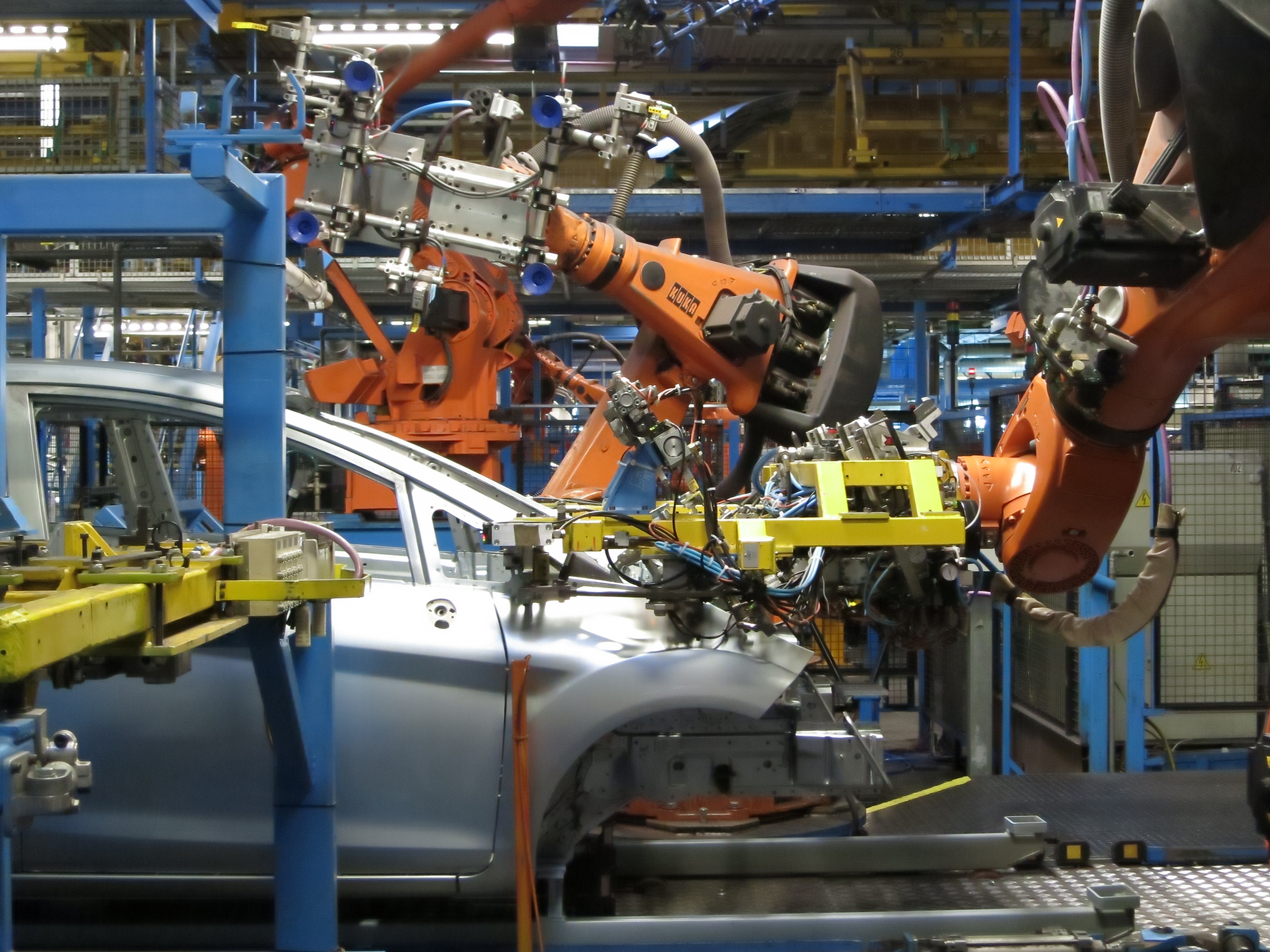
3. Ownership does not always mean control
At the annual meeting, shareholders vote. Results appear on the screen: director appointments, executive pay, financial authorisations. The ritual presents a company accountable to its owners. Yet some participants have one vote per share, others several. Many have delegated their vote. In certain companies, the outcome rests with a group small enough to sit around one table.
Asking “who owns the company?” requires separating equity ownership, voting rights, the ability to appoint those overseeing management and influence over decisions. These dimensions may converge or diverge so far that someone retains control over an organisation while holding only a fraction of its economic interest.
A shareholder owns securities issued by a company, not a direct fraction of each machine, patent or building: those belong to the company. Securities confer rights depending on their class and the legal framework, including rights to possible distributions and often to participate in collective decisions. The business can therefore keep operating when its shares change hands. Thousands of transactions alter ownership without moving a single machine.
At Alphabet, Google’s parent, Class A shares carry one vote each, Class B shares ten, and Class C shares no voting rights except where required by law. On 31 December 2025, Larry Page and Sergey Brin together held about 89.3% of Class B shares, accounting on their own for 52.7% of total voting power. Capital could circulate widely while leaving the founders a voting majority. The group acknowledges that this concentration limits other shareholders’ influence. [4]
This structure funds growth without sharing power in equal proportion. It can protect a project’s continuity from changing market sentiment: a founder pursues uncertain investment without immediately risking rejection. But that protection can preserve a productive insight or prolong a mistake. Investors accept that their economic participation gives them limited means to correct the course.
Family control can produce a similar outcome through other arrangements. At the end of 2025, the Arnault family group held about 49.8% of LVMH’s capital and 65.9% of its voting rights. This historical snapshot, rather than a timeless account of ownership, shows why equity distribution alone cannot describe power: slightly less than half the capital accompanied almost two-thirds of the votes. [5]
A family can open its company to outside investors while retaining decisive governance influence. Continuity can provide a horizon longer than an executive’s tenure. It can also bring succession, heirs’ roles and relationships between family branches into the organisation. The issue is how those considerations interact with the interests of investors outside the family.
Holding companies add a level. In a simplified example with equal rights for every share, a family owns 51% of a holding company that owns 51% of an operating company. Its indirect economic interest in the latter is approximately 26%, but it has a majority at each level. Subject to applicable governance rules, it can maintain a chain of control while bringing minority investors into each tier. Their rights and directors’ duties remain; the example shows how economic participation and decision-making can diverge.
Conversely, a company without a dominant shareholder does not automatically become a collective of owners governing together. Every small investor benefits from better management, but the effort required to obtain it may exceed their individual gain. Many prefer selling to organising opposition. Management, permanently present, then has an advantage in continuity, information and preparation.
Institutional investors can reduce that fragmentation. Pension funds, insurers and asset managers assemble stakes that allow dialogue with boards and influence in votes. But a manager often acts for funds and clients: the sums are not simply its own property. Its influence depends on mandates, rights actually exercised and willingness to use them. OECD governance principles emphasise the importance of such informed participation. [6]
A minority stake can be influential without providing lasting control. An investor can persuade others, challenge a transaction or seek new directors. An agreement can stabilise a coalition. A veto can prevent an acquisition without conferring day-to-day management power. Blocking, appointing and managing are distinct capabilities.
Between owners and management stands the board. Employee representation and the separation of supervision from management vary across countries. The board remains central to reviewing strategy, monitoring risk and holding executives accountable. OECD principles stress objective judgement and equitable treatment when shareholders’ interests diverge. Supervision loses its purpose when it merely ratifies decisions already taken. [6]
State ownership introduces another time horizon. The state may seek a return but also continuity of service or industrial capacity. These aims can reinforce or contradict one another. Maintaining a strategic activity need not follow the same calculation as improving short-term profitability. Who arbitrates, under what mandate and with what accountability must be identified.
No ownership structure guarantees good management. A stable owner can support investment or protect an underperforming team. An open market can renew leadership or impose demands incompatible with industrial timescales. What matters is the means of correction: who gets information, asks for explanations and can replace decision-makers?
Disagreement reveals the real structure. Succession, a contested acquisition or years of poor performance expose what percentages concealed. Some can protest, others negotiate; a few can decide. Yet appointing an executive does not mean taking every decision for them. Between ownership authority and daily operations lies a space of incomplete information and judgement in which executives sometimes build power of their own.
4. The executive and the constraints of power
The project fits into a few pages. A factory to modernise, three years of expenditure, benefits expected afterwards. The industrial director explains that equipment is ageing. Finance points to other calls on cash. Sales questions the projected volumes. The chief executive must decide without knowing the demand that will justify the investment. Their power begins where the numbers stop providing a certain answer.
From outside, a large corporation appears to move under a single will. Its leader presents a strategy, announces targets and discusses results. Internally, coherence emerges from constraints that do not align spontaneously. More inventory secures deliveries but ties up money. Fewer suppliers may improve prices while increasing dependence. Launching early can beat a competitor but leave less time for testing. Management means choosing between immediate consequences and others that remain invisible for years.
Executive power comes from allocating resources. Strategy takes its actual shape in budgets, approved hiring and discontinued projects. An activity can dominate speeches without receiving funding. An unobtrusive investment can commit the group for a decade. The decisive document is sometimes the budget determining which teams can act and which must wait.
Executives also influence how choices are presented. Boards do not receive the entirety of corporate life: they examine selected papers, assumptions and scenarios. Whoever proposes the options already has power over the decision. Presenting a project as essential to survival rather than a risky expansion may leave the numbers much the same but produce a different discussion.
This does not necessarily imply manipulation. Every organisation reduces complexity to make decisions. But cost savings are quickly estimated, whereas the loss of expertise is harder to quantify. An acquisition’s price is known at signing; integration problems emerge later. Executives compare elements with unequal visibility and certainty.
Their personal situation also enters the calculation. They have a reputation, an uncertain tenure and compensation linked to particular outcomes. Not every decision is an individual calculation. Nevertheless, the company determines what is advantageous, risky or difficult to defend for its leader. The compensation contract condenses its definition of performance.
For financial year 2025, Tim Cook’s total reported compensation as Apple’s then chief executive was $74.3 million: $3 million in salary, $12 million in cash incentives, $57.5 million in stock awards valued at grant date and approximately $1.8 million in other items. This was not a sum entirely received in cash during the year. The programme combined annual revenue and operating-income goals with performance share awards generally assessed over three years against the total shareholder returns of S&P 500 companies. [7]
Compensation thus combines horizons and definitions of success. Rewarding growth encourages commercial expansion but is insufficient if extra sales contribute little. Prioritising margins can promote discipline or neglect of activities still finding their footing. Linking pay to shares brings executives closer to shareholders while exposing them to movements beyond their full control. No indicator captures every dimension of a healthy business.
The measurement period matters as much as the measure. Investment can depress results before improving competitiveness. Spending cuts can flatter accounts before revealing maintenance costs, poorer quality or exhausted teams. A longer horizon reduces some biases without removing them: an executive may harvest a predecessor’s decisions or leave consequences to a successor.
These mechanisms travel down the organisation. An ambition becomes commitments for divisions and then targets for plants. Purchasing negotiates lower prices, factories improve output, sales teams hit volumes. Each can succeed on its own dashboard while making the next team’s work harder. Cheaper material creates more defects; generous payment terms weigh on cash.
If bonuses reward only local results, cooperation depends on the goodwill of those asked to sacrifice their performance. Overly collective targets can instead blur responsibility. Management must make contributions visible without turning every boundary between departments into defensive negotiation.
Information travels back through the same levels. A technical problem becomes a delay, then a variance against target, before appearing in a summary. Each reformulation can clarify the issue or soften its seriousness. If reporting difficulty consistently brings criticism, the organisation learns to wait, reassure or present the problem as under control. Its leader receives an orderly picture of a situation that is no longer orderly.
Culture is revealed in the response to bad news, the room for objections and the treatment of someone who stops work to check quality. Stated values matter little when rewarded behaviour contradicts them. The OECD assigns boards a role in ethical standards, executive oversight and mechanisms for raising concerns without fear of retaliation. [6]
Success can weaken this vigilance. Good decisions increase confidence in a leader, sometimes faster than the quality of their information. Intuitions become starting points rarely questioned. Teams anticipate what the leader wishes to hear rather than what they need to know. Personal power gains ease of execution as the organisation loses the ability to challenge.
Yet leaders must also protect uncertain projects and prevent an accumulation of local caution from producing paralysis. Some transformations require conviction before the data can fully justify it. The ability to revise that conviction when facts change must remain. Persistence and obstinacy can look similar for a long time.
Executive power therefore lies in organising judgement as much as in the final decision. Questions, information channels and the people allowed to challenge assumptions all matter. But no decision guarantees that customers will accept the price or competitors stay away. The organisation of power must ultimately demonstrate its economic value. 
5. Where margins are made
Two companies can sell at the same price and achieve very different results. One relies on promotions; the other has an order book allowing it to choose its terms. One carries underused equipment, the other spreads costs over rising volumes. The difference appears in what each retains after paying for the resources its business needs.
Margins describe the distance between revenue and costs, provided the costs are specified. Gross profit deducts the cost of goods or services sold as presented in the accounts. Operating profit also includes selling, administrative and research expenses. Net income then incorporates items including financing and tax. Moving between measures without saying so turns comparison into illusion.
Even a correctly calculated margin does not universally rank corporate quality. Some businesses buy and resell large quantities of goods; others charge for access or licences. Their revenue represents different economic content. A business recording a sale in full and a platform recording only its commission may show very different margins without the gap directly measuring efficiency.
Costco illustrates why a low margin need not mean weakness. For the year ended 31 August 2025, the retailer recorded $269.9 billion in sales and $5.3 billion in membership fees. Operating income reached $10.4 billion, about 3.8% of total revenue including fees. A few percentage points produced a substantial result because of scale. [8]
The model relies on a limited range, volume purchasing, simplified distribution and rapid inventory turnover. Costco identifies these as the conditions allowing it to operate with low gross margins. Low prices attract members and sustain the volumes that make the policy possible. A company can pass some efficiency gains to customers to strengthen its position. [9]
At the other end, a high margin can arise from expertise that is difficult to reproduce. A supplier enabling greater precision, speed or fewer defects sells an improvement in its customer’s production economics. The acceptable price depends on that benefit, not simply the equipment’s material cost.
In 2025, semiconductor lithography specialist ASML reported revenue of €32.7 billion and a gross margin of 52.8% under US accounting standards. Net income was €9.6 billion, approximately 29.4% of revenue. These percentages describe different levels of the income statement. The group also reported roughly €4.7 billion in research and development: maintaining an advantage requires continuing to fund it. [10]
The contrast with retail reflects different competitive conditions. A comparable product available from several sellers generally allows less pricing freedom than a scarce solution on which a complex operation depends. That scarcity can arise from research, expertise, patents, approvals or a network that is hard to recreate. The margin is the visible result; it does not identify the cause.
A brand can provide protection. It sometimes reduces uncertainty: customers pay for expected quality, familiar service or a satisfying experience. It can carry social, aesthetic or emotional value beyond physical characteristics. Willingness to pay more must be maintained. Poor quality, uncontrolled distribution or a proliferation of offers can damage it.
Elsewhere, strength lies in the difficulty of leaving. Replacing software requires moving data, training staff and changing procedures. Switching industrial suppliers requires testing and qualification. Even when an alternative looks cheaper, the full switching cost can encourage customers to stay. Pricing power also comes from the continuity provided and the disruption replacement would cause.
Network effects add protection. A service can become more useful as more people participate. A marketplace attracts sellers because it has buyers, and vice versa. A rival must persuade several groups to join almost simultaneously. Building a good product is no longer enough: an existing pattern of cooperation must be displaced.
These mechanisms can reward innovation while creating a position difficult to challenge. A company can improve its service, reduce customers’ costs and use the resulting dependence to raise prices. Analysis begins by distinguishing those movements rather than deriving legitimacy or abuse from profit alone.
The activity mix also matters. Apple’s 2025 product gross margin was 36.8%, compared with 75.4% for services. Services represented approximately 26% of revenue but 42% of total gross profit. These are accounting categories comprising several activities, not net margins for individual products. Their weight can nevertheless transform group profitability without an equivalent change in device volumes. [1]
Margin leaves another question unanswered: how much capital was tied up to earn it? An activity may show a comfortable margin while requiring expensive facilities that need frequent replacement. Another retains little per sale but uses the same resources rapidly and repeatedly. Profit must be assessed against capital employed, equipment renewal and cash flow after investment.
Accounting conventions also require care. A factory appears as an asset and its cost is spread over its useful life. Some expenditure building a brand or expertise is expensed immediately. The balance sheet therefore does not represent every resource historically needed for success. Apparently exceptional returns can partly reflect that difference.
Margins must also be observed over time. A shortage temporarily empowers a producer; the capacity it attracts may later depress prices. Old investments sustain results before requiring replacement. Spending cuts improve profitability before their consequences emerge. A robust model retains customers and renews advantages while funding the future.
The question is therefore not simply how much the company earns, but why customers accept its terms, what prevents rivals from offering better and what must be spent to keep that position. A lasting margin rests on a difference the market cannot easily erase. It also supplies resources to extend that difference by buying what would take time to build.
6. Growing, buying, concentrating
On announcement day, the two companies still fit into two logos. Months later, their accounts will be combined, their organisational charts brought together and their executives asked to show that the whole is worth more than its parts. In between, a considerable sum will have changed hands. An acquisition immediately buys a perimeter. The additional value remains to be built.
Buying seems to offer a shortcut. Developing technology takes time without guaranteeing success. Building a brand requires trust. Entering a country means learning its practices, obtaining approvals and training teams. An established company brings these together. The buyer acquires time, relationships and experience that are difficult to reproduce quickly.
Yet acquisitions pursue different objectives. Buying a competitor increases market presence. Buying a supplier secures expertise or capacity. Buying a distributor brings the customer closer. Entering a new activity diversifies revenue but requires understanding another trade. Growth can therefore mean very different transformations.
The prior question is ownership: why must the activity be owned to obtain the desired benefit? A partnership, licence or contract might suffice. Acquisition becomes convincing when coordination between independent firms is difficult, knowledge is inseparable from a team or investment requires trust a contract cannot establish. It becomes fragile when justified only by market size or fear of another bidder.
Synergies sit at the centre of announcements. Some gains are concrete: eliminating duplicate software, using a warehouse better, spreading administrative costs. Others depend on hypothetical behaviour: selling to the target’s customers, accelerating innovation, securing acceptance of a combined offer. Savings can be estimated; customer responses remain to be seen.
Even tangible savings carry costs. Closing a site, transferring production or merging systems consumes resources before releasing them. Contracts must be ended, employees supported and procedures relearned while operations continue. A combination may improve the eventual organisation yet cause enough disruption to lose customers or discourage the teams that created its value.
The difficulty is especially clear when buying expertise. Patents transfer; people can leave. Creative teams may lose effectiveness under a large group’s procedures. A small company valued for speed can become slower after integration. The buyer must intervene enough to benefit from the deal without destroying the conditions of success it paid for.
Price turns that problem into a financial one. A good business can be a bad acquisition if bought too dearly. Sellers seek a share of their strategic value. When several bidders compete, an increasing portion of anticipated gains may pass to selling shareholders. The buyer retains execution risk but has less room for error.
In a simplified illustration, if a company is worth 10 billion independently and a combination creates 2 billion more, paying 12 billion leaves all that expected gain with the seller, before transaction costs and integration risk. A deal can make industrial sense without enriching the buyer. Target quality, project logic and price discipline are separate questions.
Accounts retain a trace of the expectation. For its acquisition of Activision Blizzard, completed on 13 October 2023, Microsoft recorded a total purchase price of $75.4 billion. The final allocation included approximately $51 billion in goodwill: the residual after assigning the price to identifiable assets and liabilities under accounting rules. It is neither a cash reserve nor, by itself, evidence of a valuation mistake. [11]
It nevertheless assigns substantial weight to benefits inseparable from the acquired whole. Their justification depends on future performance. If prospects deteriorate sufficiently, impairment may be necessary. It does not cause an equivalent new cash outflow; it acknowledges that the recorded value is no longer supported by the outlook.
Microsoft also offers an example of revision. After acquiring substantially all of Nokia’s handset and associated services business in April 2014, the group recorded $7.5 billion in goodwill and other asset impairments in its phone business for financial year 2015. The deal was intended to accelerate innovation, generate synergies and unify branding and marketing. Expected benefits had not sustained the recorded values. [12]
Failure is not limited to poor integration. Markets change, technologies lose relevance, rivals extend their lead. Those uncertainties are part of what price must allow the buyer to absorb. A deal requiring every favourable assumption to materialise provides little protection against the ordinary workings of the economy.
A combination also affects outsiders. Bringing competitors together can improve capacity utilisation, but reduce customers’ alternatives or increase pressure on suppliers. Higher profitability does not necessarily mean an equivalent improvement in collective efficiency. It can arise from shifting bargaining power.
In October 2023, the UK competition authority approved the restructured Activision Blizzard acquisition after an agreement transferring to Ubisoft, outside the European Economic Area, cloud-streaming rights for existing Activision PC and console games and those released over the following 15 years. The issue concerned access to content in a developing market. [13]
As acquisitions accumulate, what does the group still contribute? A diversified organisation can allocate resources across different cycles and spread expertise. It can also maintain underperforming businesses, multiply management layers and obscure accountability. Diversification creates value when common organisation contributes more than it costs.
Refocusing responds to that limit. Selling a subsidiary or making it independent can provide clearer strategy and better-suited resources. Divestment can acknowledge that common ownership no longer adds enough. A group must be willing to shrink even when size has become a source of executive prestige.
An acquisition must therefore add useful capabilities, preserve the target’s strengths and deliver gains sufficient for the price paid. Announcement marks only the point at which the buyer assumes the gap between expectation and reality. Sellers can be paid immediately while industrial benefits take years. When debt fills that interval, strategy acquires the timetable of interest and repayments.
7. Money imposes its timetable
The factory will be ready in eighteen months. Orders will follow if tests succeed and customers confirm commitments. Financing has already begun to take effect: interest accrues, suppliers want deposits and wages must be paid. Before becoming profitable, the project must cross a period in which it consumes more than it generates.
Finance makes that interval possible. Without resources committed today against future income, businesses would need to sell before building and demonstrate an innovation’s success before developing it. Finance resolves that impasse. But its resources carry rights, expectations and deadlines that influence how the company is run.
Equity absorbs losses. Ordinary shareholders generally have neither a guaranteed return nor a date by which their contribution must be repaid. They hope for dividends or proceeds from selling their shares, but their return depends on value created. Flexibility has a counterpart: their investment is exposed and they expect compensation for that risk.
Debt establishes a promise to pay. Lenders do not necessarily participate in all the upside; they hold claims specifying interest, maturity and possible security. Principal can be repaid progressively or at the end. The company must organise resources around commitments that do not automatically fall when business slows.
Durable equipment in a predictable activity may generate the resources needed for repayment. Debt then avoids asking new shareholders to fund every investment. It is more difficult when income is uncertain, cyclical or expected only after prolonged development. Matching timetables matters as much as the amount borrowed.
Cheap debt due soon can constrain more than expensive long-term funding. Fixed rates protect against some increases; floating rates transmit them unless appropriately hedged. A maturity can be refinanced, but that depends on lenders’ confidence when needed. Yesterday’s funding does not guarantee access tomorrow.
Leverage amplifies shareholder outcomes. Consider a €100 million activity financed by €40 million of equity and €60 million of debt. With €10 million in earnings before interest and tax and debt at 5%, interest of €3 million leaves €7 million before tax. If operating earnings fall to €4 million, only €1 million remains; at €2 million, the company records a pre-tax loss. Debt has not changed, but absorbs a growing share of earnings.
In a leveraged acquisition, a fund provides part of the resources; the rest comes from financing serviced, depending on the structure, through the target and acquisition group’s cash flows. If operations improve and debt falls, value accruing to investors can rise sharply. That increase can come from operating improvements, deleveraging or a more favourable resale valuation. These contributions must be distinguished.
Debt can impose useful discipline: tracking cash, selling unused assets and ending unproductive spending. It also leaves less room for surprises. An organisation that once absorbed a bad year must preserve scheduled payments. The same setback can allow a lightly indebted firm to wait while forcing another to sell assets or seek urgent capital.
For its year ended 28 January 2017, Toys “R” Us reported sales of $11.54 billion and operating earnings of $460 million. Interest expense reached $457 million, almost as much as operating earnings. Yet it reported adjusted EBITDA of $792 million. A measure before interest is therefore insufficient to assess whether a company can support its financing structure. [14]
In September 2017, the company and certain subsidiaries sought court protection in the United States. It subsequently stated that indebtedness had adversely affected its financial position. This does not reduce its difficulties to one cause: commercial performance and adaptation mattered too. But financial constraints limited its ability to respond. [15]
EBITDA does not deduct equipment replacement investment or measure money absorbed by extra inventory and later customer payments. A growing business can run short of cash because it buys, produces and delivers more before collecting. A declining business may temporarily release cash by reducing stock. Money and activity do not always move together.
Debt can shift power before a payment is missed. Contracts may contain financial covenants, distribution limits and restrictions on transactions. When compliance becomes difficult, management negotiates. Lenders may grant amendments, demand higher compensation or seek security. The executive keeps the title but loses freedom.
Abundant cash poses the opposite question: how much to retain, invest or return to shareholders? Distributions do not necessarily sacrifice the future. A company without sufficiently promising projects can return resources for allocation elsewhere. Retaining them without convincing uses may encourage expensive acquisitions or sustain businesses needing reconsideration.
A dividend distributes funds to eligible shareholders; a buyback pays those selling shares to the company. Fewer shares can raise earnings per share without increasing total profit. That arithmetic does not prove operational improvement. The purchase price and resources remaining determine the transaction’s merits.
During the year ended 26 February 2022, Bed Bath & Beyond spent approximately $574.9 million under its accelerated share-repurchase programme. At year-end, cash and equivalents stood at $439.5 million, down $913.5 million over the year. Buybacks did not account for the entire decline, but used resources no longer available for other needs. [16]
The choice must extend beyond the next earnings release. How long could operations be funded if sales declined? Which investments can actually wait? What resources would remain if lenders became cautious? Reserves sometimes represent the ability to keep choosing when conditions worsen.
Finance shapes the time allowed for projects, mistakes and transformation. It enables construction before sales but can impose permanent urgency on an activity that needs time. That urgency travels into budgets, hiring, orders and payments. Someone must provide the flexibility that financial deadlines do not.
8. Those who work, those who bear the risk
The order has been postponed. For the group placing it, this adjusts inventories to weaker demand. At the supplier, materials have already been bought, a machine reserved and wages will be due without the expected payment. On the shop floor, overtime disappears; temporary contracts may not be renewed. A decision improves one participant’s position by moving uncertainty to others.
This circulation of risk runs through the entire business. Someone funds the wait, absorbs volume changes and bears forecasting errors. Contracts allocate obligations, but depend on the ability to refuse proposed terms. One company’s flexibility can rest on its partners’ much less flexible commitments.
A supplier commits capacity, sometimes hiring, and forgoes other customers. If one purchaser accounts for a large share of revenue, legal independence can coexist with limited commercial freedom. Price cuts, investment demands or faster delivery carry a weight that the contract alone cannot show.
Delivering before payment means extending credit. This can be planned and incorporated into price. Late payment adds uncertainty: the work is complete but the timing of receipt is unknown. In its September 2026 presentation of the Payment Terms Observatory’s 2025 report, drawing notably on 2024 accounts, the Banque de France estimated that small and medium-sized firms and microenterprises would have had €13 billion in additional cash without payment delays. This is tied-up funding, not lost profit. [17]
Pressure can move down another level. Paid late, a supplier delays its own payments, reduces inventories or suspends recruitment. The constraint reaches businesses that never negotiated with the original purchaser. A supply chain connects balance sheets as well as workshops. Those with the smallest reserves may absorb much of the adjustment.
Employees are exposed differently. They generally do not finance the company like shareholders, but commit time, skills and a professional future. Investors diversify portfolios. Workers cannot as easily spread their employment across firms: income, progression and sometimes where they live depend on one organisation.
Concentration is especially pronounced when skills are specific. Long experience makes someone valuable without necessarily being transferable elsewhere. Losing a job can require retraining, relocation or a lasting reduction in income. Conversely, scarce and portable expertise gives workers bargaining power their employer must recognise.
Pay therefore depends on alternatives, replacement difficulty, collective rules and bargaining arrangements as well as usefulness. Essential work can be poorly paid when many people can perform it and have few options. Less visible positions may pay more for scarce skills or access to customers difficult to replace. Economic necessity and bargaining power do not coincide.
Productivity gains can reduce prices, raise pay, shorten working time, fund investment or increase profits. Technology makes the surplus possible without determining where it goes. Competition, institutions and bargaining relationships shape that allocation.
An ILO/OECD study published in April 2025 estimates that labour’s share of global income declined by 1.6 percentage points between 2004 and 2024. The authors connect this with changes including automation, globalisation and weaker bargaining power. The measure does not describe every company or mean that all labour incomes declined in absolute terms. An economy can grow while labour receives a smaller relative share. [18]
Conditions diverge within the same network. Direct employees may receive training or compensation unavailable to some contractors, even when contributing to the same product on the same site. A legal boundary becomes a social boundary determining agreements, protections and prospects.
This does not condemn all subcontracting. A specialist can offer better expertise, richer careers and more efficient organisation than an isolated internal department. But where does the saving come from: improved work, better equipment use or constraints transferred to less protected labour? Similar accounting outcomes can conceal different realities.
Training exposes the trade-off. It costs today, benefits arrive gradually and the worker can leave. Every employer may wait for others to fund the necessary skills. Generalised, that logic leaves the sector short of qualified staff. Investing in learning maintains capabilities extending beyond company boundaries while improving its ability to adapt.
The same applies to suppliers. A lower price can stimulate efficiency when improvement is possible. Continuous pressure can instead lead to deferred maintenance, fewer checks and abandoned equipment investment. The purchaser secures savings whose costs return as defects, delays or inadequate capacity.
In a crisis, some participants cut volumes while others retain idle equipment. Some have savings and credit; others depend on the next wage or invoice payment. Risk exists in every position, but differs in nature and capacity for absorption. Losing part of a diversified portfolio and losing one’s only income do not produce the same situation.
Corporate endurance also depends on those making the activity possible. Strong suppliers invest; experienced teams correct defects before they become expensive. Stable relationships are a resource absent from the balance sheet. An organisation that continually wears down its partners may eventually lack the skills and trust it needs.
The phone’s price brings together many contributions, but income and risk do not mechanically follow effort. They depend on the ability to negotiate, wait, leave and resist. Contracts alone do not determine those possibilities: labour rules, education, social insurance and infrastructure alter the alternatives. Behind private bargaining stands public power.
9. The corporation and public power
Before the first component is produced, land must be found, the factory connected, staff trained and supply routes organised. The project is private, but its conditions are negotiated with administrations, local authorities, training providers and electricity networks. Once the machines run, these contributions become less visible. They have not stopped mattering.
A company enters an organised world. Institutions recognise contracts and resolve disputes. Property rights, standards and payment systems make exchange between strangers possible. Education, infrastructure and research produce skills and knowledge. These conditions are not all exclusively public, but depend substantially on collective decisions.
This takes nothing away from private investment and innovation. It shows that performance is also built outside the firm. With comparable resources, prospects differ according to reliable electricity, transport, skills and administrative predictability. The location contributes to productivity.
Taxation funds collective provision and influences location. A group can distribute factories, teams, financing and intellectual property across countries. Where should profits be taxed when their creation depends on dispersed activities? Sales, jobs, assets and accounting profits need not be in the same place. Several states may consider part of the value to belong within their jurisdiction.
Apple’s Irish tax case shows that the relationship is not simply a taxing state confronting a resistant company. On 10 September 2024, the Court of Justice of the European Union upheld the Commission’s decision concerning tax advantages granted to Apple companies between 1991 and 2014. The Commission estimated them at approximately €13 billion and ordered recovery. This was unlawful state aid to be recovered, not a fine of that amount. Ireland itself had challenged the decision. [19]
A government may prioritise attracting investment while a common institution protects competition between jurisdictions. Companies encounter authorities with different mandates and priorities. They do not negotiate with a single, perfectly coherent public power.
Subsidies make the exchange explicit. The state commits resources to secure a location, capacity or expertise. Its calculation may include supply security, local suppliers and training beyond immediate factory profitability.
On 15 November 2024, the US Department of Commerce announced up to $6.6 billion in direct CHIPS support for TSMC Arizona. It was intended to accompany investment then announced at more than $65 billion in three Phoenix factories. Payments depended on project milestones. These figures describe the agreement at that date, not fully disbursed amounts or entirely completed facilities. [20]
What does the support actually enable? Does it accelerate investment, change its location or create capacity that would not otherwise exist? Does it reward a decision already made? The announced amount does not answer these questions. Commitments, implementation and lasting effects must be examined.
Competition between locations can strengthen investors. While choosing sites, they compare support, costs and infrastructure. Every authority fears losing the project. Mobility declines once facilities are built and teams trained. A specialised factory does not move like cash. The company becomes dependent on its location.
The relationship evolves: after investment, the state retains influence over operating conditions, while jobs make closure politically costly. If the site struggles, negotiations resume around support, investment or a buyer. The initial contract does not exhaust the relationship.
Public procurement offers another route. Purchase commitments provide investment visibility when development costs are high and private demand uncertain. Public buyers must nevertheless retain the ability to compare, verify and switch suppliers. Cooperation that builds expertise can become dependence if government loses technical evaluation capabilities.
Regulation shapes market access through safety rules, merger control and commercial conduct requirements. Market size matters. Forgoing a few sales is not like losing a broad customer base. A company free to choose its location can still depend on the rules of countries where it sells.
Compliance has costs. A complex rule can protect consumers while being easier for a large group to absorb than a new entrant. A standard can harmonise trade but entrench a technology. Objectives must be considered alongside concrete competitive effects.
Companies therefore seek to represent their interests. Their expertise can help governments understand a sector. Risk arises when useful information becomes intellectual dependence and the authority adopts the categories of those it oversees. Public decision-making requires comparing arguments and preserving independent expertise.
International politics adds constraints irreducible to costs. An efficient location can become vulnerable to export restrictions, sanctions or deteriorating diplomatic relations. A group may duplicate capacity, diversify suppliers or change markets. Industrial geography also depends on what states allow to circulate.
Corporations and public authorities negotiate within mutual contributions and dependencies. States need productive, innovative employers; companies need reliable institutions and accessible markets. Bargaining power depends on the scarcity of contributions and available alternatives. But no combination of assets, contracts and support guarantees a permanent position. An actor once considered indispensable can cease to be so.
10. What remains when power fades
The sign is still visible. Buildings are maintained, managers prepare budgets and sales teams know their customers. Yet those customers can now obtain elsewhere what they once sought here. The company operates with the habits of power while its foundations disappear. Decline sometimes arrives before losses, in the gap between an organisation convinced of its importance and a market learning to do without it.
A dominant position lasts long enough to appear natural. A network becomes a given, a technology a benchmark, a brand unavoidable. Investment and careers assume continuity. Change then confronts an institution that has learned to succeed in a particular way.
The difficulty is not always ignorance. Kodak developed a digital camera in 1975, then commercialised a professional system in 1991 and a consumer camera in 1995. Its history is not simply that of a group failing to see the technology coming. [21] Designing innovation does not guarantee recovering the previous model’s revenues and advantages around it.
A technology can expand an activity while destroying the economics of those who popularised it. More photographs can be taken without more film being bought. The need remains, but spending moves elsewhere. The incumbent retains expertise in a function customers need much less.
According to Fujifilm’s history, photographic-film demand peaked in 2000 and fell below a tenth of that level by 2010. [22] Better yields and defended market shares are insufficient against such contraction. Skills need new applications while legacy costs must still be borne.
Transformation opportunities are unequal. Expertise may transfer; equipment may be too specialised. A brand retains trust without credibility in a new trade. Resources must be assessed individually. What strengthened the whole may not be as useful when it breaks apart.
Fujifilm describes diversification through the reuse of photographic technologies in functional materials and the development of healthcare. Accumulated expertise, investment and acquisitions contributed to the trajectory. [23] It is no universal recipe: preserving a company can require no longer defining its future by the product that created it.
The choice is difficult when the old business still funds the group. Its customers and results are more predictable than replacement projects. Each budget can favour what earns today. Individually, the decision appears prudent; repeated, it can leave the company without a successor business. Danger comes from reasonable decisions within a frame that has become too narrow.
Owners’ and executives’ identities also matter. Reducing an activity can mean acknowledging that the model behind a career or fortune will no longer drive growth. Succession becomes a strategic test. What deserves transmission must be distinguished from what needs challenge. Loyalty to the company is not loyalty to its habits.
As margins fall, time tightens. Gradual transformation becomes urgent. Selling a subsidiary raises money but removes earnings. Cutting staff reduces expenses while potentially losing transition skills. Management tries to preserve enough resources for a future to remain possible.
Adequate equity, manageable debt and staggered maturities allow experimentation and correction. A company under repayment pressure may sell assets before transforming them. The same disruption produces different outcomes depending on commitments made in prosperous years.
Failure does not mean everything has lost value. Customers still want to buy, employees retain skills, activities remain viable. What no longer works may be their combination under one management, perimeter or debt burden. Restructuring seeks to reorganise that whole; liquidation disperses elements and can destroy collective value.
Kodak emerged from US reorganisation in September 2013, focused on business imaging after divesting several activities. [24] It did not simply disappear with its former model. A combination of trades, positions and obligations ceased to exist. Continuity of the name can obscure profound change.
For workers and communities, a brand can survive a closed plant, a patent can be sold while its team disperses and one activity can be bought while others are abandoned. Legal or commercial survival does not preserve every relationship the company organised.
Some losses are difficult to rebuild. Industrial districts combine skills circulating between employers, responsive suppliers and habits of cooperation. Multiple closures make remaining capabilities less effective. A company leaves more than buildings: an organisation of work and local life whose value is not fully captured in its accounts.
Longevity alone is nevertheless not proof of success. Indefinitely preserving a structure unable to meet needs ties up resources. Transferring a team, selling an activity or reducing a group can be preferable to retaining its historical perimeter. A company sometimes endures by accepting that it must become smaller or different.
The phone bought at the beginning contains this history in miniature. It takes photographs, communicates, provides information and enables payment. Around it, activities have grown; others have changed or lost their place. Its simplicity rests on skills, capital and rules whose components no one owns in full.
The brand on the box marks where that arrangement meets the customer. Understanding its power required examining assets, dependencies, shareholder rights, management decisions and funding. It also required following those who work, wait for payment, absorb fewer orders or provide infrastructure.
The corporation organises cooperation as well as power. It enables achievements no participant could accomplish alone while allocating decisions and income unequally. Success gives those tensions a form that holds for a time.
That form can be profitable and difficult to challenge. It remains a product of history. Customers change, skills circulate, alternatives develop. Assets, rights and reputation have value because they still meet a need on terms others accept.
A company’s power is measured by what it can organise today, but also by its ability to renew tomorrow the reasons it is needed. The logo can remain the same. The reasons to choose it must continue to exist.
Main sources
Figures refer to the stated financial years and do not constitute a single snapshot as of 4 October 2026. Bracketed references correspond to the sources below. Comparisons distinguish gross profit, operating income, net income and cash flow.
Apple — 2025 Form 10-K. Results, products and services, margins, expenses and outsourcing dependence.
Apple — Fiscal 2025 financial statements. Cash flows, capital expenditure, dividends and repurchases.
McDonald’s — 2025 Form 10-K. Year-end restaurant network and franchise models.
Alphabet — 2025 Form 10-K. Share classes and year-end voting power.
LVMH — 2025 Annual Report. Capital and voting rights in December 2025.
OECD — G20/OECD Principles of Corporate Governance 2023. Shareholders, institutional investors and boards.
Apple — 2026 Proxy Statement. Fiscal 2025 compensation; stock awards valued at grant date.
Costco — Fiscal 2025 results. Year ended 31 August 2025.
Costco — Corporate overview. Volume, selection, distribution and inventory turnover.
ASML — 2025 results and 2025 US GAAP Annual Report. Results, margins and research.
Microsoft — Acquisition note, interim accounts at 31 December 2024. Activision Blizzard purchase price and final allocation.
Microsoft — 2016 Annual Report. Nokia Devices and Services and 2015 impairments.
CMA — Restructured Microsoft/Activision Blizzard transaction. Decision of 13 October 2023.
Toys “R” Us — Fiscal 2016 results. Year ended 28 January 2017.
Toys “R” Us — Accounts at 28 October 2017. Reorganisation and indebtedness.
Bed Bath & Beyond — Form 10-K, year ended 26 February 2022. Repurchase programme and cash.
Banque de France — Presentation of the Payment Terms Observatory’s 2025 report. Published 24 September 2026; accounting data notably from 2024.
ILO/OECD — Policy measures to address inequalities and increase the labour income share. 8 April 2025.
CJEU — Case C-465/20 P, press release of 10 September 2024. Apple’s Irish tax advantages and recovery of aid.
NIST — CHIPS agreement with TSMC Arizona, 15 November 2024. Historical agreement amounts and milestone-based disbursement.
Kodak — Photography history. Digital developments in 1975, 1991 and 1995.
Fujifilm — 90th anniversary history. Film demand contraction between 2000 and 2010.
Fujifilm — Integrated Report 2023. Business transformation and diversification.
Kodak — Release of 3 September 2013. Emergence from reorganisation and refocusing.
The 51% × 51% holding structure, 10 + 2 billion valuation and €40 million equity/€60 million debt examples are theoretical. Costco, ASML and Apple ratios are calculated from the cited accounts. Opening scenes are illustrative, not reports of field observations.
Atlas Limits Research Desk
Atlas Limits’ editorial and analytical desk.