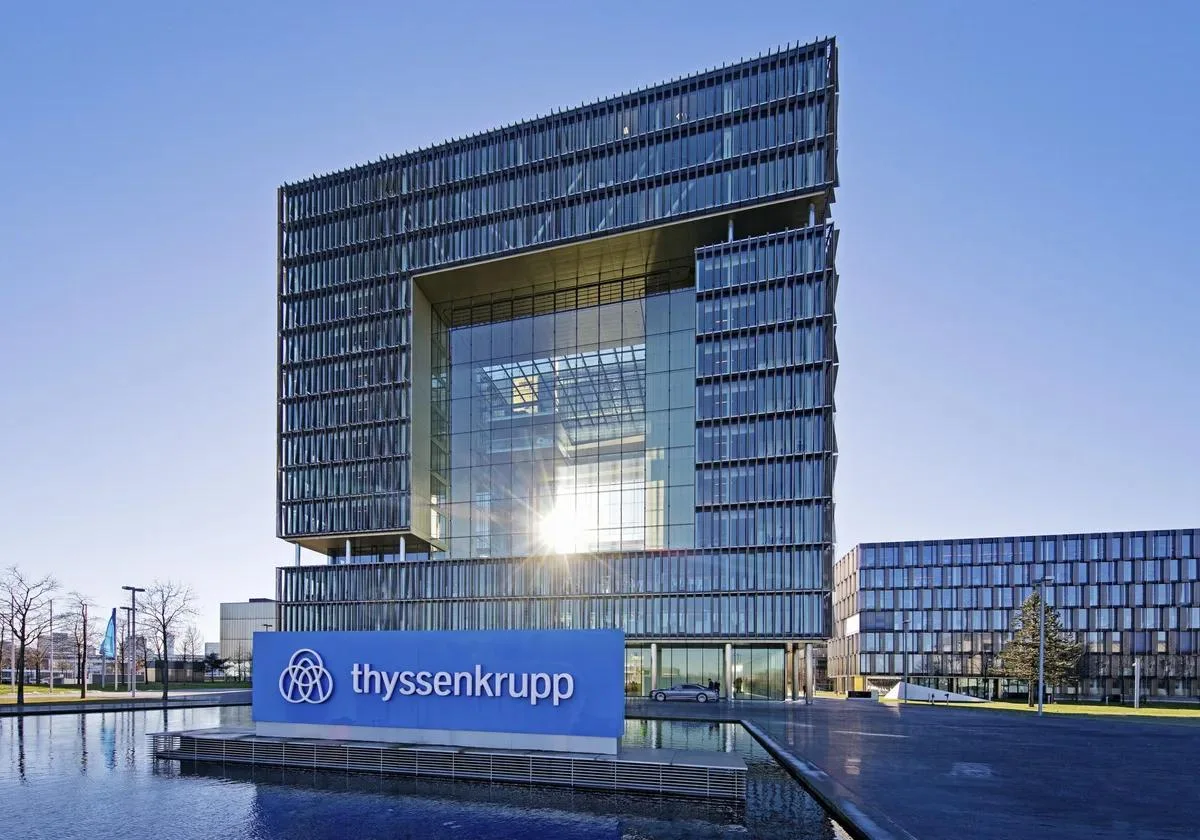
The stock market debut of tk accelis marks another milestone in Thyssenkrupp’s restructuring. Beyond the financial transaction lies a more fundamental transformation: the evolution of a historic industrial conglomerate into a holding company overseeing increasingly autonomous businesses. The move raises broader questions about industrial organization, capital allocation, and value creation in Europe.
On October 28, 2026, a new German industrial company made its debut on the Frankfurt Stock Exchange. Known as tk accelis, it brings together Thyssenkrupp’s materials distribution and related services businesses, formerly part of one of Germany’s most historically significant industrial groups.
The transaction represents far more than another stock market listing.
It marks a decisive step in the transformation of a conglomerate traditionally organized around integrated industrial operations, ranging from steelmaking and naval technologies to industrial equipment and business services.
Thyssenkrupp is now pursuing a different organizational model: becoming a holding company with strategic stakes in several businesses, each operating under its own governance structure, exercising greater operational autonomy, and progressively gaining independent access to capital markets.
This transition raises a fundamental question for European industry: does the strength of an industrial group still depend primarily on integrating its activities, or increasingly on its ability to organize, finance, and manage a portfolio of distinct businesses?
A Listing That Redistributes Ownership Without Relinquishing Control
The newly listed company, officially named tk accelis Group AG & Co. KGaA, began trading on October 28 on the Prime Standard segment of the Frankfurt Stock Exchange.
Its opening share price was €27.80, implying an initial market capitalization of approximately €1.77 billion.
The transaction ranks among Germany’s most significant stock market debuts of 2026.
Its defining feature, however, lies in its structure.
Unlike a conventional initial public offering, in which a company issues or sells shares to investors, Thyssenkrupp implemented a partial spin-off of its subsidiary.
The group distributed 49% of tk accelis shares to its existing shareholders while retaining the remaining 51% directly.
Thyssenkrupp shareholders received one tk accelis share for every twenty shares they held in the parent company.
The distribution required no additional payment from shareholders and did not, in itself, constitute a capital increase designed to finance the newly listed business.
Nevertheless, it fundamentally changed the ownership structure.
Thyssenkrupp investors became direct shareholders in a separately listed company, while the parent group retained a majority stake and continued to exercise strategic influence.
The transaction therefore establishes a distinction between three dimensions traditionally combined within the conglomerate: economic ownership, strategic control, and operational management.
This separation forms one of the foundations of Thyssenkrupp’s emerging industrial architecture.
An €11.4 Billion Business at the Heart of Industrial Supply Chains
Behind its new corporate identity, tk accelis operates an extensive international industrial and logistics business.
The company employs approximately 15,500 people across roughly 400 locations worldwide.
It generated €11.4 billion in revenue during the 2024–2025 financial year, representing nearly one-third of Thyssenkrupp’s consolidated sales.
Its activities include purchasing, processing, storing, and distributing industrial materials, particularly steel and various alloys.
However, the company has been working for several years to move beyond its traditional role as a materials distributor.
Its business model increasingly emphasizes integrated services across industrial supply chains.
These services can include materials processing according to customer specifications, inventory management, logistics coordination, supplier management, and digital solutions.
The objective is to become more deeply involved in customers’ industrial operations rather than simply supplying physical products.
This strategic direction reflects structural changes in global value chains.
Industrial companies must increasingly manage complex sourcing networks, geopolitical disruptions, traceability requirements, and mounting pressure to optimize inventories and logistics costs.
Under these conditions, a supplier capable of managing multiple supply-chain functions can occupy a more strategic position than a conventional materials intermediary.
Tk accelis aims to capitalize on precisely this development.
Its customers operate across aerospace, automotive manufacturing, energy, and other industrial sectors.
The company has also identified growth opportunities in data centers, industrial electrification, and defense.
These markets are particularly relevant in an environment where materials availability, processing capabilities, and delivery reliability are becoming increasingly important determinants of industrial competitiveness.
From Materials Trading to Higher-Value Industrial Services
The transformation of tk accelis does not depend solely on its legal and financial independence.
Its long-term success will depend primarily on its ability to change its revenue mix and improve profitability.
During the 2024–2025 financial year, the company generated adjusted EBITDA of €229 million, equivalent to a margin of approximately 2%.
This profitability level reflects the economics of a business historically exposed to sales volumes, materials prices, and industrial cycles.
Traditional distribution activities generally operate with relatively narrow margins, particularly when they remain heavily dependent on standardized products.
Tk accelis intends to shift progressively toward higher-value services.
The company describes this strategy through its Materials-as-a-Service concept.
The model combines materials supply with processing, logistics, and supply-chain management solutions.
Rather than competing primarily on product prices, the company seeks to build customer relationships based on deeper operational integration.
Initial financial results indicate progress.
During the first nine months of the 2025–2026 financial year, tk accelis generated €9.1 billion in revenue and €256 million in adjusted EBITDA, lifting its adjusted EBITDA margin to 2.8%.
Over the medium term, management is targeting an adjusted EBITDA margin of between 4% and 5%, alongside average annual revenue growth exceeding 4%.
These figures represent management objectives rather than achieved outcomes.
Their realization will depend on the expansion of specialized services, growth in North America, and improvements in operational efficiency.
The financial implications are substantial.
For a company generating more than €11 billion in annual revenue, an improvement of several percentage points in operating margins could significantly increase cash generation and investment capacity.
The stock market listing creates a framework in which investors can evaluate this transformation independently.
Market Valuation Reveals Both Expectations and Uncertainty
The listing allowed investors to assign an independent market value to a business previously embedded within Thyssenkrupp’s consolidated financial statements.
At €27.80 per share, the initial market capitalization stood at approximately €1.77 billion.
This figure must be distinguished from enterprise value, which also accounts for net financial debt and other relevant valuation adjustments.
The listing prospectus reported financial debt of €710.6 million.
Ahead of the transaction, analysts at Jefferies had estimated a potential enterprise value for tk accelis ranging from €2.6 billion to €4.8 billion.
The valuation implied by the first trading session was toward the lower end of market expectations.
This illustrates an important principle: separating a business legally and financially does not automatically create additional economic value.
Investors must still assess earnings quality, balance-sheet strength, growth prospects, and the company’s ability to achieve its profitability targets.
The market will also need to determine whether tk accelis should be valued primarily as a traditional materials distributor or as an industrial services provider offering more specialized solutions.
That distinction could materially influence the valuation multiples investors are willing to assign.
The company must therefore demonstrate that its strategic repositioning translates into sustainable financial performance.
Its listing makes that process more transparent, but also more demanding.
Thyssenkrupp Continues to Dismantle Its Traditional Conglomerate Structure
The partial separation of tk accelis forms part of a transformation that has been underway for several years.
Thyssenkrupp has progressively sought to reduce the complexity of its industrial portfolio and grant greater autonomy to its principal businesses.
This approach previously contributed to the listing of Thyssenkrupp Nucera, which specializes in electrolysis technologies, and TKMS, the group’s naval shipbuilding business.
With tk accelis, another major business moves toward a more independent corporate structure.
Under its ACES 2030 strategic program, Thyssenkrupp is pursuing an organization in which operating companies assume greater responsibility for their businesses, while the parent company concentrates increasingly on capital allocation, portfolio management, and strategic oversight.
The objective is therefore not simply to dispose of assets or reduce the group’s size.
It is to change the nature of Thyssenkrupp itself.
Under the traditional conglomerate model, different divisions operate within an integrated corporate structure, with financial resources, central functions, and strategic decisions coordinated by the parent company.
Under the emerging model, businesses exercise greater autonomy and can be evaluated individually.
Independent access to capital markets may also facilitate future partnerships, mergers, acquisitions, or changes in ownership structures.
This architecture allows the holding company to maintain economic exposure to multiple industries while progressively reducing its direct involvement in day-to-day operations.
The role of corporate headquarters consequently changes.
Rather than functioning primarily as the central command structure of an integrated industrial organization, it increasingly becomes responsible for managing investments, allocating capital, and preserving the strategic interests of its holdings.
Why Industrial Conglomerates Are Moving Toward Holding Structures
Thyssenkrupp’s transformation reflects a broader debate about the organization of large industrial groups.
For decades, conglomerates were considered powerful instruments of economic expansion.
They enabled companies to pool financial resources, distribute risks across different activities, and support long-term investment.
Diversification could also reduce dependence on individual markets.
However, this model has limitations.
When businesses with fundamentally different economic characteristics operate within the same group, consolidated valuation becomes more complex.
A capital-intensive industrial manufacturer, a logistics services provider, and a technology company do not share identical financing requirements, growth prospects, or risk profiles.
Combining them can make their individual performance more difficult to assess.
Financial markets sometimes apply a conglomerate discount when organizational complexity, financial obligations, or governance structures reduce transparency.
Separating businesses is one way to address this problem.
By providing each company with its own capital structure and market valuation, the parent allows investors to select their preferred exposures more precisely.
It also makes operational performance easier to evaluate.
Nevertheless, separation does not guarantee value creation.
Independent businesses may lose economies of scale, incur additional administrative costs, and become more exposed to fluctuations in their respective markets.
They may also face more immediate financial discipline from shareholders.
Success therefore depends less on the number of separately listed companies than on the quality of their industrial organization and their ability to invest.
Greater Flexibility for Corporate Strategy and Industrial Consolidation
Thyssenkrupp’s transformation also has important implications for future industrial transactions.
A separately listed company possesses an observable market valuation that can serve as a reference in financial negotiations.
Subject to applicable conditions, its shares may be used in acquisitions, share exchanges, or combinations with other businesses.
A majority stake held by a parent company may also be reduced over time if strategic and financial circumstances justify such a move.
Conversely, the parent may choose to retain control indefinitely over a business it considers strategically important.
This flexibility is one of the principal advantages of the new structure.
For tk accelis, it is particularly relevant given ongoing consolidation across the materials distribution industry.
Companies are seeking to expand their geographic coverage, broaden their service offerings, and strengthen relationships with major industrial customers.
Mergers and acquisitions can also create opportunities to integrate logistics networks, improve procurement efficiency, and optimize processing capabilities.
North America represents an important market in this process.
Tk accelis has identified the region as a priority for expansion.
Its independent listing could provide additional options for participating in industry consolidation.
However, these potential advantages must be distinguished from transactions that have actually been announced or approved.
No major acquisition follows automatically from the stock market debut.
The new structure creates strategic options whose implementation will depend on industrial opportunities, market conditions, and management decisions.
The Paradox of Industrial Autonomy Under Majority Control
The transaction also raises important governance questions.
Tk accelis is now a publicly traded company with its own management and shareholder base.
Yet Thyssenkrupp retains 51% of its capital.
This creates a distinctive balance between autonomy and control.
The newly listed business must develop its strategy, finance investments, and respond to minority shareholders’ expectations.
At the same time, the parent company retains substantial influence over major decisions through its shareholder rights.
Such arrangements are not unusual in industrial groups.
They can combine the advantages of an independent listing with the stability provided by a strategic controlling shareholder.
However, they also require governance mechanisms capable of distinguishing the interests of the listed subsidiary from those of its parent.
Decisions involving dividends, capital expenditure, related-party transactions, and future changes in ownership will need to account for this dual structure.
The German legal form selected for tk accelis, an AG & Co. KGaA, adds another dimension to this arrangement.
Its governance mechanisms differ from those of a conventional stock corporation, particularly in the relationship between management authority and shareholder control.
The company’s actual economic autonomy must therefore be assessed through its governance practices and strategic decisions, rather than through its stock market status alone.
A Transformation That Reflects the Pressures Facing European Industry
The Thyssenkrupp case extends well beyond Germany.
It illustrates the challenges confronting several major European industrial groups.
These companies must simultaneously modernize operations, finance the energy transition, maintain international competitiveness, and respond to increasingly demanding capital markets.
Their businesses operate under very different economic conditions.
Some require substantial and continuous capital expenditure, while others generate more stable cash flows.
Certain activities face intense global price competition, while others depend on specialized technologies or long-term industrial relationships.
Corporate organization therefore becomes a strategic question in its own right.
Should these businesses remain within integrated groups to preserve financial capacity and industrial complementarities?
Or should they be separated to pursue strategies, partnerships, and financing structures better suited to their individual characteristics?
There is no universal answer.
Integration can provide considerable advantages when businesses share technologies, infrastructure, or critical resources.
Separation can improve performance when synergies are limited and economic requirements differ significantly.
Thyssenkrupp has chosen to move toward the second approach.
But this does not mean that industrial integration has lost its relevance.
Rather, it reflects an attempt to establish a new balance between strategic control, entrepreneurial autonomy, and financial discipline.
The Next Test Will Be Industrial, Not Merely Financial
The listing of tk accelis represents a significant step in the execution of Thyssenkrupp’s transformation strategy.
It demonstrates the group’s ability to reorganize its portfolio and establish businesses with distinct financial identities.
However, it does not yet prove the economic success of the strategy.
For tk accelis, the central challenge will be to transform its commercial model and achieve sustainably higher margins.
For Thyssenkrupp, the objective will be to demonstrate that a holding structure enables more effective capital allocation than the traditional conglomerate model.
Investors will also need to determine whether the combined value of the group’s listed stakes and remaining assets justifies a higher valuation than the previous organizational structure.
This question is particularly important because the remaining businesses continue to face substantial industrial and financial requirements.
Transforming a conglomerate into a holding company does not eliminate operational risks or investment constraints.
It changes how those risks and obligations are distributed, financed, governed, and valued.
That is precisely what makes the October 28 transaction significant.
Thyssenkrupp is no longer simply seeking to improve the performance of its divisions. It is progressively transforming the way it owns, controls, and finances industrial businesses.
The listing of tk accelis is a visible milestone in that transition.
Its ultimate success will be measured over the coming years, when the newly autonomous companies must demonstrate that their independence enables them not only to satisfy financial markets, but also to invest, innovate, and strengthen their industrial competitiveness.
Because beyond the restructuring of ownership lies a fundamental question: can the financial separation of Europe’s major industrial groups produce stronger industrial companies, or does it risk dispersing the resources that once underpinned their strength?
Atlas Limits Research Desk
Atlas Limits’ editorial and analytical desk.