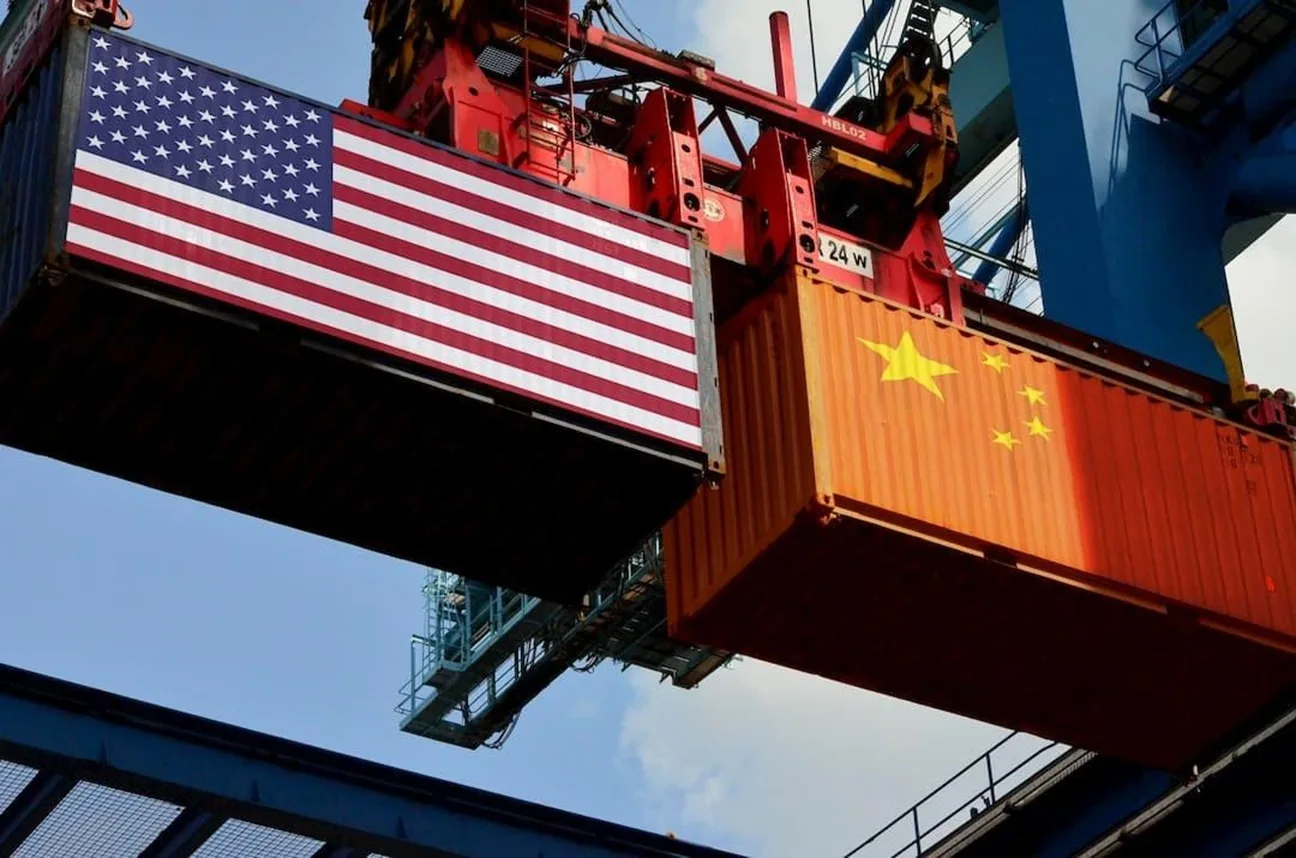
Sixty billion dollars may appear modest compared with the scale of trade between the world’s two largest economies. Yet the commercial arrangement unveiled by Washington and Beijing in late September may ultimately matter less for the goods it covers than for the architecture it begins to establish.
On September 28, China confirmed that a consensus had been reached on a mechanism covering approximately $30 billion in imports in each direction. According to China’s Ministry of Commerce, nearly 90% of the products concerned are expected to return to most-favored-nation tariff treatment once both countries have simultaneously completed the necessary domestic legal procedures.
The tariffs, therefore, have not yet fallen.
That distinction is essential. Chinese communication presents the mechanism as the result of an agreement reached between the two governments. The US administration has used more cautious language. A day earlier, the Office of the US Trade Representative described the lists as “recommendations” concerning products that could eventually benefit from more favorable tariff treatment.
A political framework now exists. So do product lists and institutions designed to extend the dialogue. What remains missing is the step that turns this architecture into enforceable law.
But the architecture itself is precisely what has changed.
A Border Through Trade
The US list mainly covers Chinese products far removed from the core of the technological competition: non-connected toys, small household appliances, home textiles, children’s goods and certain recreational equipment.
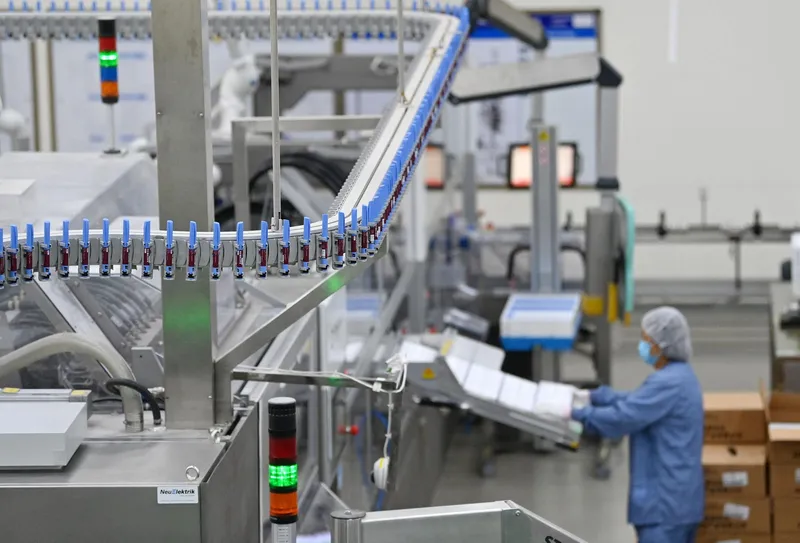
China’s list follows a different logic. It includes US corn, wheat, sorghum, meat and dairy products, alongside medical devices, cosmetics, wood and coal.
One omission is particularly revealing: non-seed soybeans remain outside the arrangement.
Taken individually, these products amount to a limited trade agreement. Taken together, they begin to draw a boundary.
On one side are goods for which Washington and Beijing appear to consider interdependence economically useful and politically acceptable. On the other remain sectors where trade is increasingly treated as an instrument of power: semiconductors, advanced technologies, sensitive industrial capabilities and, more broadly, infrastructure connected to economic security.
The US-China economic relationship is therefore not returning to the logic that dominated previous decades. Instead, two different trade regimes are beginning to coexist within the same relationship.
Managed Interdependence
That separation is now acquiring an institutional form.
Washington and Beijing have established a Board of Trade focused on commerce considered non-sensitive. Its procedures allow it not only to address the product lists already negotiated, but also to consider future arrangements intended to facilitate bilateral trade.
A Board of Investment is expected to create a permanent channel for discussing investment and the obstacles affecting it. An agricultural working group is due to meet before the end of the year. The two governments have also established a dialogue on artificial intelligence and a communication channel dedicated to AI-related incidents.
The existing trade truce has meanwhile been extended until January 10, 2027.
None of these mechanisms resolves the fundamental disputes between the two countries. They do not eliminate technology restrictions, national-security controls or disagreements over industrial subsidies.
They do something else: they allow trade to continue without requiring those disputes to be resolved.
That is an important shift.
For years, the debate over the US-China economic relationship has often been framed as a choice between two trajectories: preserving the integration built since China joined the World Trade Organization, or progressively decoupling the two economies.
The emerging arrangement suggests a third possibility.
Neither broad integration nor broad separation.
Managed interdependence.
Two Domestic Constraints
The composition of the lists also shows that this détente is not being constructed around an abstract commitment to free trade.
It responds to constraints within both economies.
For the United States, reducing tariffs on selected Chinese consumer goods could lower the cost of imports that are difficult to replace quickly. These are also products whose prices are directly visible in household spending.
For China, the opening is weighted more heavily toward agricultural, medical and energy products. Beijing can improve access to selected US supplies without opening sectors it considers strategically sensitive.
Détente can therefore coexist with rivalry.
Each government can preserve its economic-security instruments while gradually removing frictions whose political or economic costs outweigh their strategic value.
That is also what makes the mechanism potentially expandable.
If the first tariff reductions are ultimately implemented, additional products could be added without requiring another comprehensive US-China trade agreement. Normalization could advance tariff line by tariff line, sector by sector.
The boundary between ordinary commerce and strategic commerce would then become one of the principal instruments through which the relationship is managed.
Détente Without Reconciliation
Several uncertainties remain.
The new tariff rates have not yet been published line by line. Their effective date has not been established. The mechanisms governing the suspension or reinstatement of tariffs still need clarification. The legal significance of the US recommendations must also be distinguished from Beijing’s more definitive presentation of the arrangement.
The exclusion of soybeans further demonstrates that even agricultural trade remains shaped by political and strategic considerations.
The announced $60 billion therefore does not yet constitute a new commercial normal.
It may constitute its laboratory.
Washington and Beijing no longer appear to be trying to restore the economic order that existed before their trade confrontation. Nor do they appear prepared to dismantle all the connections built between their economies.
Instead, they are beginning to determine which ones they intend to preserve.
The question is therefore no longer simply whether the United States and China will decouple or reconcile.
It is becoming narrower — and probably more durable: in which sectors can they still accept depending on each other?
Main Sources
- China’s Ministry of Commerce — official account of the trade discussions, September 28, 2026.
- Office of the United States Trade Representative — statement by Jamieson Greer on the recommendations of the US-China Board of Trade, September 27, 2026.
- The White House — documents relating to the US-China Board of Trade and the proposed product lists.
- The White House — presentation of the US-China Board of Investment and the newly announced bilateral mechanisms.
- Reuters — cross-checking of tariff lists, exclusions and implementation details still to be determined, September 28, 2026.
Atlas Limits Research Desk
Atlas Limits’ editorial and analytical desk.