Africa occupies an increasingly important position in the economic, industrial, and military strategies of the world's major powers. Its mineral resources supply global production chains, its maritime corridors connect several of the planet's principal centers of consumption and production, its population is one of the driving forces behind global demographic change, and its markets represent a long-term opportunity for international businesses. Yet this strategic importance does not automatically translate into an equivalent increase in the economic and political power of African states. The continent therefore stands at the center of a fundamental contradiction: it is becoming increasingly indispensable to the functioning of the global economy without necessarily controlling the activities that capture the greatest share of the value generated.
This contradiction is not new. For several centuries, Africa has participated in international economic systems whose centers of decision-making, financing, and industrial transformation have often been located outside the continent. The forms of this integration have changed considerably, from colonial extractive economies to contemporary value chains. Independence fundamentally transformed political relationships, institutions, and the negotiating possibilities available to African states. But specialization in raw-material exports remains an important characteristic of many economies.
What is changing today is the strategic value attributed to certain resources, the growing number of actors seeking access to them, and the increasing ability of several African governments to diversify their partnerships.
The energy transition, economic digitalization, military reindustrialization, and the pursuit of secure supply chains have brought natural resources back to the center of national power strategies. The metals required for electricity networks, batteries, electronic equipment, and industrial infrastructure have become matters of sovereignty. States are no longer seeking merely to purchase raw materials at the lowest possible price. They are seeking to guarantee their availability, reduce dependence on particular suppliers, and control the industrial stages that determine how those materials are processed.
Africa occupies an essential position in this transformation.
The Democratic Republic of the Congo supplies a dominant share of the cobalt extracted worldwide. According to United States Geological Survey estimates for 2024, its production accounted for approximately three-quarters of the global total. The country also possesses substantial copper resources, particularly in the southeastern Copperbelt, which extends into Zambia.
Guinea ranks among the world's leading holders of bauxite reserves, an essential ore for aluminum production. South Africa possesses considerable resources of platinum-group metals, manganese, and chromium. Zimbabwe has lithium deposits, while Namibia, Niger, and other countries occupy important positions in various mining industries, including uranium.
Morocco holds a predominant share of global phosphate reserves, generally estimated at around 70% when deposits in Western Sahara are included in the statistical perimeter. This resource is essential to fertilizer production and, consequently, global food security.
Together, these resources give the continent considerable industrial importance.
But their geographical distribution is highly uneven. Not all African countries possess the same deposits, infrastructure, or processing capabilities. It would therefore be misleading to portray Africa as a homogeneous reservoir of raw materials.
Above all, possessing a resource does not mean that the economy extracting it controls the corresponding value chain.
Congolese cobalt provides a particularly revealing illustration.
The ore is extracted in the Democratic Republic of the Congo, but a substantial share of refining, active-material manufacturing, and battery-cell production takes place outside the country, particularly in China.
The value of a battery does not reside exclusively in the metals it contains. It also depends on chemical processes, industrial equipment, production technologies, intellectual property, energy, financing, and access to automotive markets or energy-storage systems.
Extraction is therefore an indispensable stage, but it represents only one part of the industrial chain.
This distinction explains why rising global demand for critical minerals does not automatically guarantee a proportional increase in revenues or value added for producing countries.
International prices can fluctuate sharply. Mining contracts may distribute benefits unevenly. The investment required for extraction may be financed and controlled by foreign groups. Equipment, technical services, and certain industrial inputs may be imported.
Part of the wealth generated then leaves the country through returns on capital, service payments, financial repayments, or purchases of intermediate goods.
This does not mean that foreign investment is necessarily unfavorable to African economies.
It can provide capital, technology, employment, tax revenues, and infrastructure that would otherwise be difficult to mobilize.
But its effects depend on contractual terms, fiscal policies, institutional quality, and the ability of local companies to participate in productive activities.
The fundamental question is therefore not simply how many minerals a country exports, but what share of the total value generated by their transformation remains within its economy.
This problem appears in several sectors.
Côte d'Ivoire and Ghana occupy major positions in global cocoa production, but processing, finished-product manufacturing, distribution, and international marketing remain largely organized around companies and markets located outside the producing countries.
Several African countries export crude oil while importing some of their refined petroleum products.
Mining economies may possess abundant resources without having the metallurgical, chemical, or mechanical industries that would allow them to develop a broader range of applications.
These situations are not identical, but they illustrate a common difficulty: specialization in the earliest stages of production can maintain dependence on industrial and commercial capabilities located abroad.
The current global competition could nevertheless alter some of these balances.
The United States, the European Union, China, Japan, South Korea, and other industrial powers are seeking to secure their supplies of strategic minerals. This effort to diversify supply chains creates negotiating opportunities for producing countries.
A state possessing a resource that is difficult to substitute may seek, in exchange for access to its deposits, investment in local processing, energy infrastructure, technical training, or national participation in projects.
Several African governments have consequently strengthened requirements concerning local content, mineral processing, or participation by domestic companies.
Such policies can improve economic benefits when the necessary industrial conditions are in place.
They also involve risks.
Requiring local processing without reliable electricity, sufficient technical capabilities, or competitive markets can increase costs and discourage certain investments.
Industrialization therefore does not automatically result from restricting raw-material exports.
It requires coordination among mining policy, infrastructure, energy, financing, training, and market access.
Legal control over a resource is not sufficient to create the industrial capacity required to capture its full value.
This distinction is particularly important at a time when major powers increasingly present their supply policies as instruments of national security.
China occupies a central position in several mineral-processing and industrial value chains. Its influence rests not only on access to African deposits, but also on refining capacity, equipment, technology, and companies capable of organizing successive stages of production.
Since the beginning of the twenty-first century, Beijing has developed extensive economic relations with African countries.
Chinese companies participate in the construction of roads, railways, ports, power plants, telecommunications networks, and industrial facilities. They are also active in mining, manufacturing equipment, and trade.
Merchandise trade between China and Africa exceeded $290 billion in 2024, according to Chinese customs statistics, making China one of the continent's principal trading partners.
This figure demonstrates the scale of the relationship, but it is insufficient to measure its economic quality.
The composition of trade remains decisive.
When African exports are concentrated in minerals, hydrocarbons, or agricultural products, while imports consist primarily of equipment, manufactured goods, and higher-value products, the relationship may reproduce certain structural asymmetries.
There are, however, important differences among countries and sectors. Chinese investment can contribute to factory construction, electrification, transport development, and the emergence of local productive capabilities.
The question is therefore not whether China's presence should be uniformly characterized as beneficial or predatory.
It is how investments are financed, infrastructure is operated, revenues are distributed, and industrial capabilities are transferred.
Debt occupies a particular place in this analysis.
Chinese financing has contributed to numerous African infrastructure projects. But some borrowers have encountered repayment difficulties, particularly when expected revenues proved insufficient, local currencies depreciated, or international financial conditions tightened.
These difficulties do not concern Chinese creditors alone.
African public debts are held by multilateral, bilateral, and private creditors, with structures varying considerably among countries.
Financial sustainability depends on debt levels, debt-service costs, maturities, currency denomination, and the economy's capacity to generate public revenues and foreign exchange.
Infrastructure can be economically useful while becoming financially problematic if its financing is poorly matched to the revenues it generates.
Conversely, excessively restrictive investment policies can undermine future productive capacity.
The challenge therefore lies in project quality and financing structure.
The United States approaches Africa through a different combination of interests.
Security, critical resources, private investment, technology, and diplomatic relations constitute several dimensions of its presence.
Washington is particularly interested in reducing certain industrial dependencies and developing partnerships capable of diversifying supply chains.
The Lobito Corridor illustrates this orientation.
The project seeks to strengthen rail and logistics connections between the mining regions of the Democratic Republic of the Congo and Zambia and the Angolan port of Lobito on the Atlantic Ocean.
It has attracted interest and support from several international partners, including the United States and Europe.
Its importance extends beyond the construction of transport infrastructure.
The objective is to reshape the economic geography of certain mineral exports and create new investment opportunities along the corridor.
But its impact will depend on the ability to develop productive activities around the infrastructure.
A railway allowing raw minerals to be exported more quickly can improve logistics revenues and producers' competitiveness without necessarily transforming the industrial structure of the countries it crosses.
To become an instrument of deeper development, the corridor must also encourage business investment, local processing, electricity access, and the integration of surrounding economies.
Infrastructure is a condition for industrialization, not its automatic outcome.
The European Union also pursues several objectives simultaneously.
It seeks to secure certain supplies, diversify partnerships, support infrastructure, and strengthen economic exchanges with a continent located immediately to its south.
Relations between Europe and Africa remain shaped by a complex history marked by colonization, independence, trade agreements, migration, and development cooperation.
This historical depth gives the European Union an important economic and institutional presence.
But it is also a source of tension.
Migration policies, environmental requirements, trade conditions, and diplomatic disagreements can generate differing perceptions of the nature of these partnerships.
African governments are increasingly seeking to negotiate their external relations according to their own economic and political priorities.
This development does not mean that older dependencies have disappeared.
Rather, it indicates that opportunities for diversification have expanded.
Russia has developed another form of presence.
Its influence rests particularly on military relations, arms sales, security cooperation, certain energy and mining interests, and diplomatic partnerships.
In the Sahel and several other African regions, changing relations with Western partners have encouraged a reconfiguration of military cooperation.
But replacing one security partner with another does not necessarily resolve the internal causes of instability.
Armed conflicts frequently result from combinations of political, territorial, economic, and institutional factors.
The presence of an external actor can alter the military balance without rebuilding the administrations, public services, or dispute-resolution mechanisms necessary for lasting stabilization.
This distinction is essential to understanding the limitations of influence strategies based primarily on security.
Turkey has also strengthened its relations with several African countries, particularly through infrastructure, trade, services, diplomacy, and military equipment.
India is developing commercial, pharmaceutical, technological, and energy relationships while seeking to reinforce cooperation with Global South economies.
The Gulf monarchies occupy an increasingly important position in port investment, infrastructure, agriculture, energy, and financing.
Their interests are particularly visible in regions connected to the Red Sea, the Horn of Africa, and major maritime corridors.
The multiplication of partners is changing the negotiating conditions available to African states.
During certain historical periods, several economies had access to a limited number of financial, commercial, or military partners.
Today's diversification can increase their room for maneuver.
But it can also intensify local rivalries when external powers support competing actors or pursue incompatible objectives.
Africa is therefore not simply the theater of confrontation between two blocs.
It is a space where multiple strategies intersect, sometimes competing and sometimes complementary, and where African governments seek to defend national interests that are not necessarily aligned.
This complexity is also reflected in the continent's maritime geography.
Africa borders the Atlantic Ocean, the Mediterranean Sea, the Red Sea, and the Indian Ocean. It lies close to several passages essential to international trade.
The Suez Canal connects the Mediterranean to the Red Sea. The Bab el-Mandeb Strait controls the southern entrance to the latter. The Strait of Gibraltar constitutes one of the principal maritime gateways between the Atlantic and the Mediterranean.
Routes around the Cape of Good Hope provide an alternative to passages through the Red Sea and the Suez Canal, but at the cost of greater distances and higher expenses for many journeys.
Disruptions to commercial navigation in the Red Sea have demonstrated the sensitivity of these corridors.
Attacks conducted with relatively limited means can force major shipping companies to alter their routes and generate economic consequences far beyond the immediate confrontation zone.
African maritime security has therefore become a component of global economic security.
This reality explains the interest of naval powers in port infrastructure, access agreements, military bases, and security partnerships located near major commercial routes.
Djibouti occupies a particularly significant position in this respect.
Its proximity to Bab el-Mandeb and its logistical role in the Horn of Africa make it an important operating location for several foreign powers.
The concentration of international military presences within a relatively small territory reveals the strategic value of certain African spaces.
But it also raises a question of sovereignty.
Hosting foreign forces can generate revenues, strengthen certain security capabilities, and provide diplomatic guarantees. It can also expose the host country to rivalries among powers and create strategic dependencies.
Territorial control and the management of infrastructure therefore do not automatically produce greater political autonomy.
The same question applies to commercial ports.
African port infrastructure attracts international investors because it provides access to domestic markets, natural resources, and logistical corridors.
But its economic profitability depends on the quality of inland connections, customs procedures, industrial zones, and productive demand.
A modern port isolated from its hinterland is insufficient to create an industrial center.
The strategic value of infrastructure depends on the economic system to which it provides access.
This logic leads to one of the continent's principal challenges: market integration.
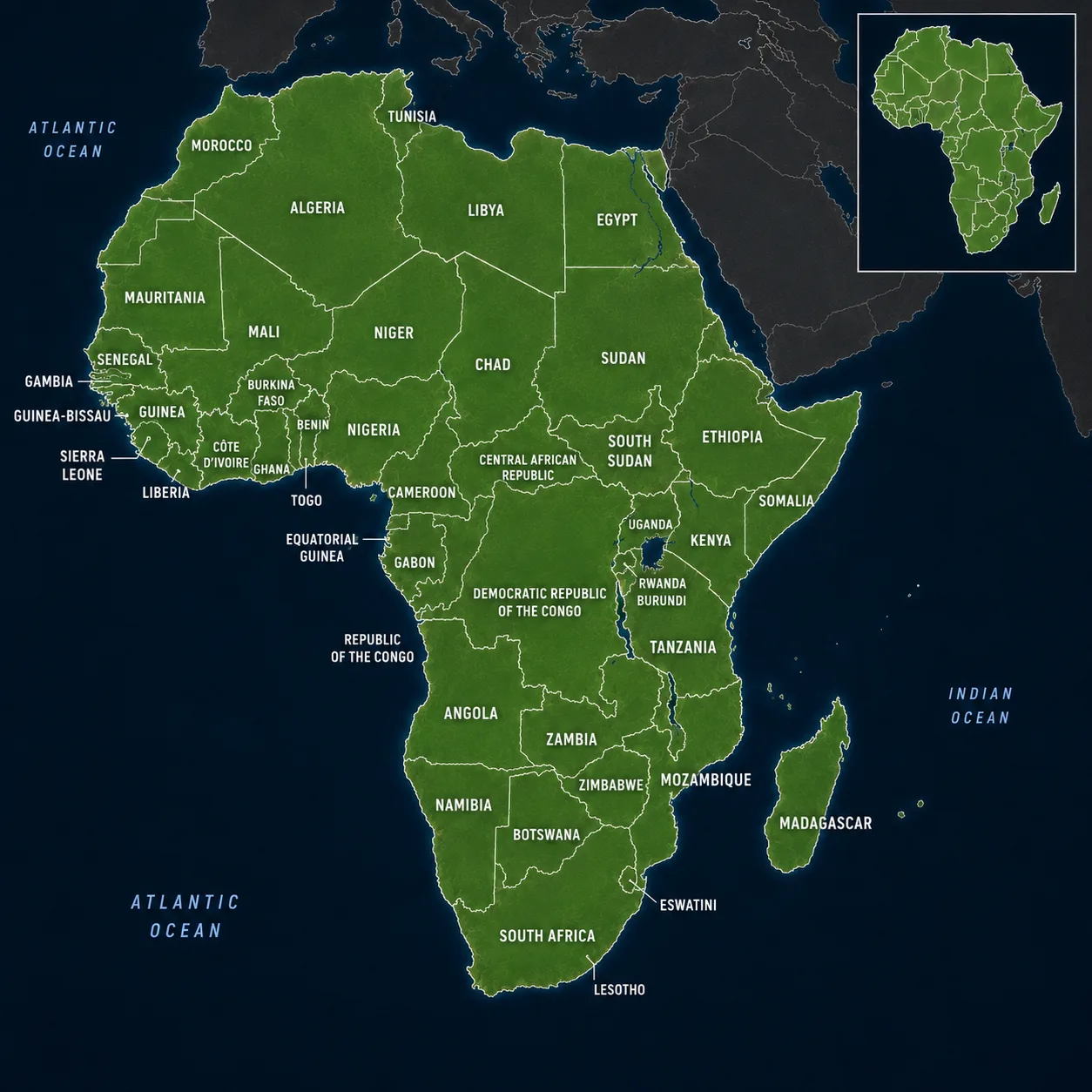
Africa comprises 54 states recognized by the United Nations, with widely differing economic structures, levels of development, and political trajectories.
Some possess significant industrial capabilities. Others depend primarily on agriculture, natural resources, or services. Several are landlocked and rely on their neighbors' transport infrastructure to access international markets.
Borders inherited from colonial history, regulatory differences, logistical obstacles, and insufficient infrastructure in certain areas have contributed to the fragmentation of economic spaces.
Intra-African trade accounts for a relatively limited share of the continent's total trade, generally estimated at around 15%, depending on the year and the methodology used for merchandise trade.
This proportion is lower than that observed in several other major economic regions.
It does not mean that African economies lack commercial relations with one another.
Rather, it demonstrates that their external trade remains largely oriented toward markets outside the continent.
This configuration limits certain opportunities for industrial specialization.
A company may struggle to achieve competitive scale when its national market is small, regional transport costs are high, and trade procedures remain complex.
Economies of scale consequently become difficult to achieve.
The African Continental Free Trade Area, or AfCFTA, seeks to progressively change this situation.
It represents one of the continent's most ambitious economic integration projects.
Its objective is to reduce trade barriers, facilitate exchanges, and create the conditions for a more integrated African market.
But the existence of an agreement does not immediately transform commercial flows.
Removing tariffs does not resolve problems of electricity, transport, financing, security, or regulatory compatibility.
Effective integration also requires efficient customs administrations, suitable payment systems, dispute-resolution mechanisms, and cross-border infrastructure.
Above all, it requires companies capable of producing competitive goods and services.
A continental market can expand opportunities, but it does not automatically create the productive capacity required to supply it.
The success of the AfCFTA will therefore depend as much on industrialization as on trade liberalization.
This relationship is essential.
A continent that facilitates imports without sufficiently developing its own productive capabilities may increase the circulation of goods without fundamentally changing its economic structure.
Conversely, integration accompanied by industrial, energy, and logistics investment can encourage the emergence of regional value chains.
Complementarities already exist in several sectors.
The mineral resources of the Democratic Republic of the Congo and Zambia can support regional metallurgical and industrial activities. The energy capabilities of certain countries can meet the productive needs of their neighbors. Automotive, chemical, agrifood, and mechanical industries operating in different African economies can develop new subcontracting relationships.
But these possibilities remain conditional on competitiveness, infrastructure, and regulatory stability.
Economic integration cannot be established by decree independently of industrial realities.
Demography represents another major transformation.
According to United Nations projections published in 2024, Africa's population is expected to increase from approximately 1.5 billion in the mid-2020s to nearly 2.5 billion by 2050.
This growth will profoundly reshape global human geography.
An increasing share of the world's workforce, consumers, and infrastructure requirements will be concentrated on the continent.
But demographic growth is not, in itself, a guarantee of development.
It can become an advantage when economies create sufficient productive employment, improve skills, and invest in the necessary infrastructure.
It can also intensify social pressures when urbanization advances faster than employment, housing, and public services.
The demographic dividend therefore depends on specific economic and institutional conditions.
A gradual decline in the demographic dependency ratio can support growth if a larger share of the population works in productive activities.
But this effect requires investment in education, healthcare, vocational training, and employment.
African trajectories will differ considerably.
Some economies have already reached relatively advanced stages of demographic transition. Others retain high fertility rates and rapid population growth.
Public policies must therefore respond to widely varying national situations.
Urbanization constitutes an essential dimension of this transformation.
Africa's major metropolitan areas concentrate an increasing share of population, economic activity, services, and investment.
Lagos, Cairo, Kinshasa, Nairobi, Abidjan, Johannesburg, and several other urban centers play major economic roles.
Cities can encourage productivity gains by bringing companies, workers, suppliers, and consumers closer together.
But these advantages depend on the quality of urban infrastructure.
When transport networks, sanitation, electricity, and housing fail to keep pace with demographic growth, economic and social costs can become considerable.
Urban growth therefore does not automatically produce a more productive economy.
It requires long-term planning and investment capacity.
This requirement leads directly to the question of financing.
Africa has substantial investment needs in energy, transport, water, telecommunications, education, and healthcare.
But many states face high financing costs.
International interest rates, risk premiums, the weakness of certain currencies, and the limited depth of domestic financial markets can make projects more expensive than in advanced economies.
This difference in the cost of capital constitutes a major constraint.
Two industrial projects using comparable technologies can generate very different returns depending on their financing conditions.
A power plant, mineral-processing facility, or railway infrastructure project may be economically relevant while becoming difficult to finance when interest rates are high or currency risks are substantial.
Foreign investment is not always sufficient to resolve this problem.
It may depend on public guarantees, long-term purchase agreements, tax exemptions, or risk-protection mechanisms.
Contract quality then becomes decisive in determining how benefits are distributed among investors, states, and populations.
African financial institutions, development banks, regional capital markets, and guarantee mechanisms can help reduce certain constraints.
But their capacity to intervene remains uneven.
Development financing is therefore a central dimension of economic sovereignty.
A country that possesses strategic resources but cannot finance their transformation remains dependent on actors capable of mobilizing capital.
Control over natural resources and control over financial resources become two complementary dimensions of power.
This relationship is also evident in energy policy.
Africa possesses considerable solar, wind, hydroelectric, and geothermal potential, alongside substantial fossil-fuel resources.
Yet access to electricity remains insufficient in many regions.
According to international estimates for 2023, approximately 600 million Africans, primarily in sub-Saharan Africa, still lived without access to electricity.
This deficit represents a major constraint on industrialization.
A factory cannot operate competitively without a reliable energy supply. Storage equipment, backup systems, and production interruptions increase costs.
Access to abundant and competitively priced electricity therefore determines African countries' ability to process minerals, develop industries, and create employment.
The global energy transition may open new investment opportunities, but it must not lead policymakers to overlook the continent's domestic energy requirements.
Exporting raw materials destined for clean technologies while populations and businesses continue to experience energy shortages would represent a major economic contradiction.
Developing renewable generation capacity, electricity networks, and regional interconnection systems could help reduce this vulnerability.
But energy choices must take account of national circumstances, costs, technological reliability, and industrial requirements.
Africa's energy transition cannot be conceived exclusively as a contribution to the decarbonization of external economies.
It must also respond to the continent's development needs.
The same distinction applies to climate policy more broadly.
Africa has contributed relatively little to cumulative historical greenhouse gas emissions, yet several of its regions are particularly vulnerable to the consequences of climate change.
Droughts, floods, rainfall variability, and pressure on water resources affect agriculture, infrastructure, and living conditions.
These phenomena can increase public financing requirements and weaken economies already facing fiscal constraints.
They can also intensify existing tensions over access to land, water, and resources.
It would nevertheless be excessive to establish an automatic link between climate change and armed conflict.
The political consequences of environmental pressures depend on institutions, resource-management mechanisms, and local economic conditions.
Climate often acts as an aggravating factor rather than a single cause.
This distinction is particularly important when analyzing African security crises.
The Sahel, Sudan, the Horn of Africa, eastern Democratic Republic of the Congo, and certain other regions face conflicts with profoundly different origins.
Political rivalries, communal tensions, historical legacies, natural resources, foreign interventions, and institutional weakness can combine in particular configurations.
These crises generate considerable human and economic consequences.
They destroy infrastructure, displace populations, interrupt productive activities, and divert public resources toward security expenditure.
They can also encourage the emergence of war economies in which resource extraction, trafficking, and territorial control become sources of financing for armed groups.
Instability consequently reduces states' ability to transform their natural advantages into development.
But it should not lead to the entire continent being regarded as a crisis zone.
Many African countries follow different institutional, economic, and security trajectories.
The diversity of national situations is precisely one reason why international strategies toward Africa cannot be analyzed as a single policy.
South Africa possesses a relatively developed industrial and financial base. Morocco has strengthened its integration into international industrial value chains. Egypt has a vast domestic market and strategic logistics infrastructure. Kenya plays an important role in services, technology, and regional trade in East Africa.
Côte d'Ivoire is developing agrifood and logistics activities. Nigeria combines a considerable population, energy resources, services, and substantial entrepreneurial capabilities, while facing significant macroeconomic and infrastructure constraints.
The Democratic Republic of the Congo and Zambia occupy strategic positions in mineral supply chains. Botswana has developed a distinctive experience in managing diamond revenues, without escaping the challenges of diversification.
These trajectories demonstrate that economic transformation depends on national choices and specific institutional conditions.
They also reveal the limitations of an interpretation based exclusively on natural resources.
Some countries can develop competitive productive activities without possessing substantial mineral reserves. Others can remain dependent on raw-material exports despite considerable geological wealth.
The difference lies particularly in institutional organization, investment, infrastructure, skills, and the ability to integrate markets.
Economic sovereignty therefore cannot be measured exclusively through legal control over resources.
It depends on the ability to define the conditions of their exploitation, negotiate with investors, develop domestic enterprises, and direct part of the revenues toward productive investment.
This negotiating capacity becomes particularly important in an international environment characterized by a growing number of partners.
African governments can seek to diversify their relationships to reduce dependence on a dominant actor.
They can encourage competition among investors, negotiate skills transfers, or seek financing adapted to their priorities.
But multiplying partnerships does not automatically guarantee greater autonomy.
A state can replace commercial dependence with financial dependence, or one dominant security relationship with another.
Diplomatic diversification becomes genuine strategic autonomy only when accompanied by stronger national capabilities.
This requires competent administrations, effective tax systems, companies capable of participating in value chains, and institutions strong enough to negotiate and enforce contractual commitments.
Competition among major powers can then become a diplomatic resource.
Otherwise, it risks reproducing asymmetries in new forms.
Africa's position within international institutions represents another dimension of this transformation.
With 54 member states in the United Nations, the continent constitutes an important diplomatic grouping in multilateral negotiations.
The African Union seeks to strengthen political and economic coordination among its members, while regional organizations play varying roles in security, trade, and crisis management.
The African Union's admission as a permanent member of the G20 in 2023 marked an important symbolic and institutional development.
It reflected greater recognition of the need to incorporate African perspectives into discussions of global economic governance.
But institutional representation does not automatically guarantee an equivalent capacity for influence.
African states may hold divergent positions on commercial, financial, security, or diplomatic questions.
Building common positions therefore requires compromises among economies and political systems that differ considerably.
The continent's ability to influence international negotiations will depend as much on this coordination as on its demographic weight.
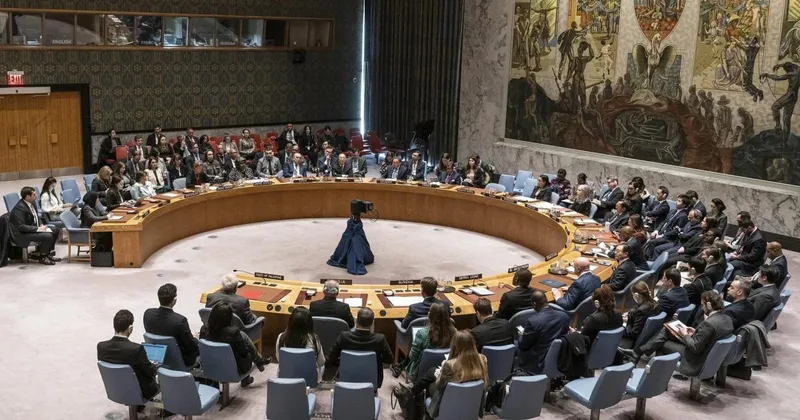
This question arises particularly in debates concerning reform of international financial institutions, sovereign debt, climate financing, and representation on the United Nations Security Council.
African governments are seeking greater consideration of their development needs and strategic interests.
But international influence also depends on the economic, technological, and financial resources an actor can mobilize.
Diplomatic weight and productive power are not interchangeable.
They can reinforce one another, but neither replaces the other.
This is why Africa's geopolitical future will depend substantially on its economic transformation.
The continent possesses resources whose strategic importance may continue to increase.
Demand for copper, certain critical minerals, energy infrastructure, and agricultural products creates significant opportunities.
Demographic growth and urbanization are expanding consumption and investment requirements.
International companies are seeking new markets, suppliers, and productive locations.
But these developments do not guarantee that African economies will capture a growing share of global value.
Competition among powers can increase investment while maintaining extractive specialization.
Demographic growth can expand markets while intensifying employment pressures.
The construction of ports and corridors can facilitate exports without sufficiently developing local industries.
The energy transition can increase demand for African minerals without resolving the continent's electricity deficits.
These contradictions demonstrate that strategic importance and economic power do not necessarily advance at the same pace.
The continent's transformation will therefore depend on its ability to change the conditions of its international integration.
The objective is not complete economic autonomy, an ambition difficult to reconcile with the interdependence of contemporary economies.
Rather, it is to strengthen the ability of African states and companies to choose their partners, negotiate investment conditions, develop their own productive activities, and reduce their most costly vulnerabilities.
Such a strategy requires a combination of national and regional policies.
States must improve institutions, infrastructure, and training systems. Regional organizations must facilitate trade and develop interconnections. Companies must be able to access financing, technology, and markets large enough to achieve competitive scale.
International partners can contribute to this transformation, but they cannot permanently substitute for domestic institutional and productive capabilities.
The question of value added remains central.
An economy that exports more raw materials can increase revenues without fundamentally changing its dependence on international commodity prices.
An economy that develops processing capacity, industrial services, technological skills, and domestic enterprises can progressively diversify revenues and strengthen resilience.
The difference does not lie exclusively in the volume of investment.
It lies in investment's ability to produce lasting changes in economic structure.
Development is therefore not measured solely by foreign capital inflows or rising exports.
It is also measured by productivity, incomes, employment, tax revenues, infrastructure quality, and the economy's ability to finance its future requirements.
This distinction helps explain why some strategic investments can simultaneously strengthen the interests of foreign partners and African countries, while others generate much more asymmetric benefits.
The challenge is not to systematically oppose African interests to external interests.
It is to establish economic relationships in which the benefits of interdependence are not concentrated exclusively in production stages located outside the continent.
Africa consequently finds itself in a distinctive historical situation.
It is becoming more important to the industrial, energy, commercial, and military strategies of major powers at the very moment when several of its economies are seeking to move beyond their traditional specialization.
This convergence may create opportunities for transformation.
It may also prolong existing dependencies if rising global demand is not accompanied by improvements in African productive capabilities.
International competition is therefore neither a guarantee of development nor a sentence to dependence.
It creates an environment in which political choices, institutions, and economic strategies become decisive.
The continent does not have a single trajectory. Its states possess different resources, constraints, and ambitions. Some may strengthen their industrial capabilities, others develop services or infrastructure, while several will continue to face major institutional and security difficulties.
But one question runs through these trajectories: what share of the value created by Africa's growing importance in the global economy can be retained, reinvested, and transformed into productive capabilities on the continent?
That question will determine the true significance of the geopolitical transformation now underway.
Africa is no longer merely a region attracting the interest of major powers because of its natural resources. It is becoming an important element of their industrial strategies, economic security, energy supplies, and diplomatic calculations.
But being indispensable to the strategies of others does not necessarily mean possessing the capacity to define one's own.
Power does not reside exclusively in resource ownership, demographic growth, or geographical position. It depends on the ability to organize these advantages, transform them into production, finance the necessary infrastructure, and build institutions capable of defending lasting interests.
Africa is becoming one of the decisive arenas in the restructuring of global power. But the central question is not how many powers will seek to invest, trade, or establish influence there. It is whether African economies can transform this competition into industrial, financial, and political capabilities of their own. The continent will not become powerful simply because the world increasingly needs its resources. It will become powerful to the extent that it can control a growing share of the value, decisions, and infrastructure that make those resources indispensable.
Atlas Limits Research Desk
Atlas Limits’ editorial and analytical desk.