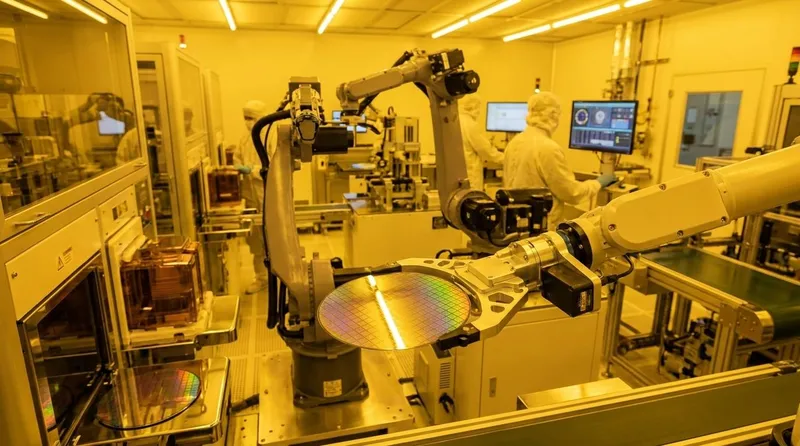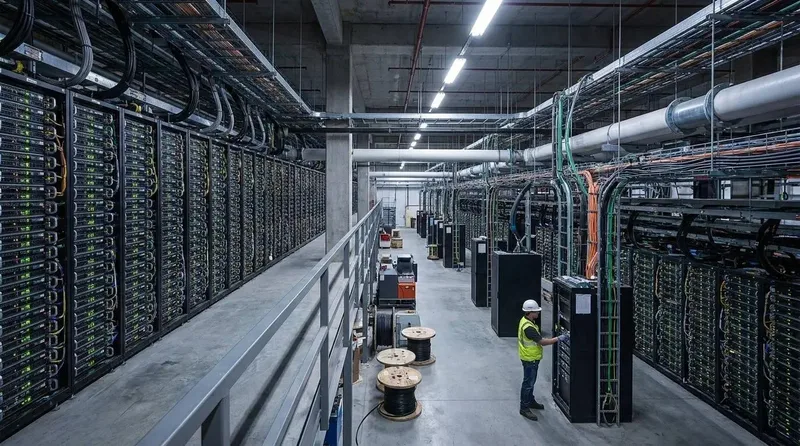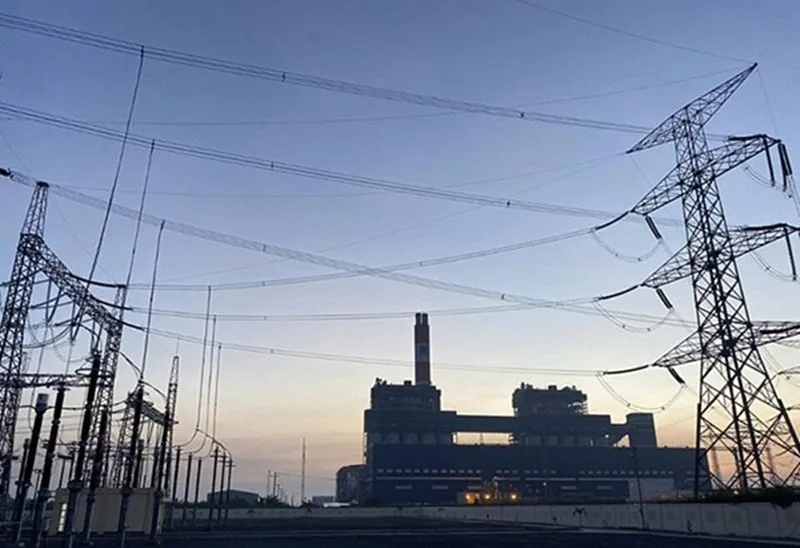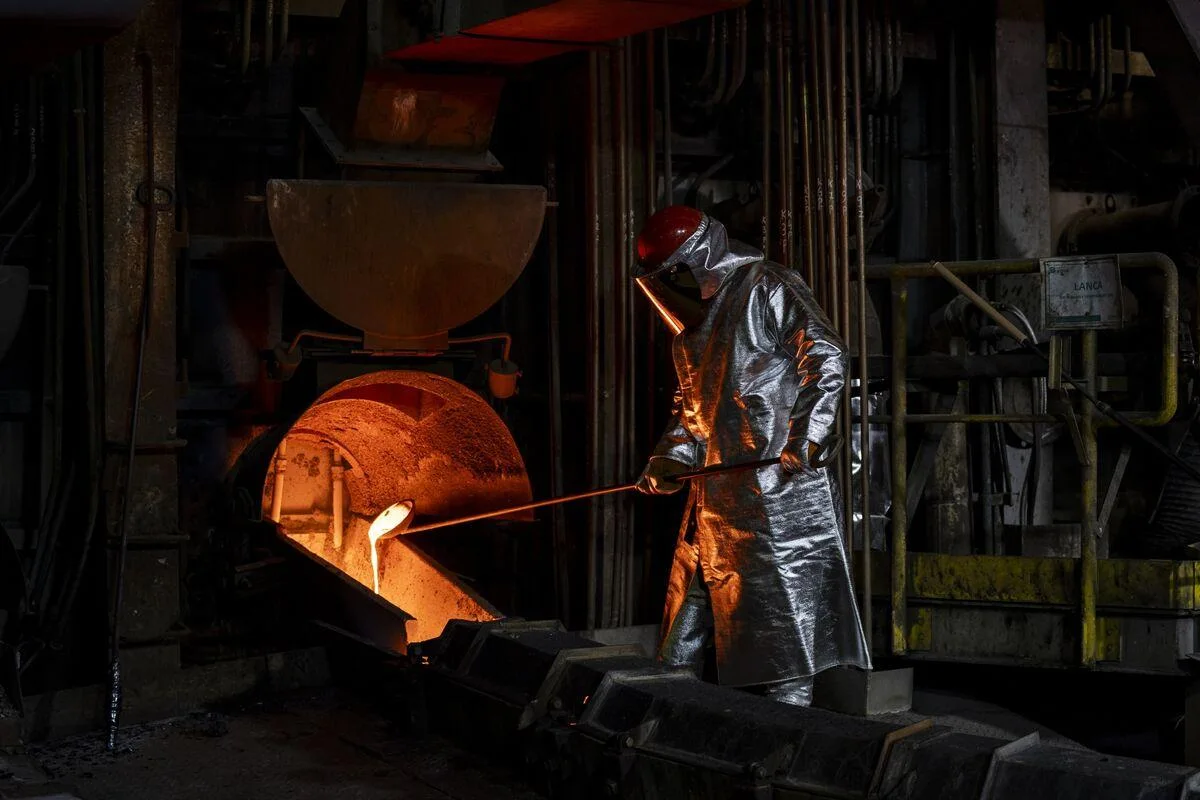
In Bangkok, where the annual meetings of the International Monetary Fund and the World Bank are taking place, a new financial ambition has emerged. The World Bank Group intends to increase its support for the metals and minerals sector to $19 billion between fiscal years 2026 and 2030, expanding its activity in the sector fivefold. Behind this announcement lies a longstanding question that has become central to the global economy: will countries possessing the resources essential to future industries finally be able to retain a significant share of the value they generate?
The question is particularly relevant to African economies. From Zambian copper to Congolese cobalt, from Gabonese manganese to Mauritanian iron ore, the continent possesses resources that occupy an increasingly important position in international industrial supply chains. Yet the location of mineral deposits rarely coincides with the location of refining facilities, component manufacturers, or companies marketing finished products. Geological wealth provides an initial advantage, but it does not automatically create an industrial economy.
The initiative announced on 16 October introduces precisely this distinction. The World Bank is no longer presenting minerals merely as resources to be extracted and exported, but as potential foundations for new productive activities. Eight countries — Argentina, Bolivia, Egypt, India, Kazakhstan, Malawi, Mauritania, and Zambia — have launched national partnerships or programmes designed to connect investment, infrastructure, skills development, and domestic processing. Twenty countries have been identified as potential partners.
The ambition is substantial. Its realization, however, will depend less on the overall amount announced than on how financing is allocated among extraction, processing, infrastructure, and the development of local enterprises.
Mineral Wealth Does Not Guarantee Prosperity
The economics of critical minerals presents a structural paradox. Resources are geographically dispersed, sometimes concentrated in low- and middle-income countries, while the industrial capabilities required to process them are concentrated in a much smaller number of economies.
This imbalance reflects decades of investment, industrial policy, and technological accumulation. Building a mine requires capital, equipment, and infrastructure. Developing a refining industry demands considerably more: reliable energy supplies, technical expertise, specialized workers, quality-control capabilities, and sufficiently predictable markets to justify expensive industrial facilities.
Producing countries can therefore occupy strategic positions in global supply chains without exercising comparable influence over the creation of industrial value.
The Democratic Republic of the Congo illustrates this asymmetry. Its importance in global cobalt and copper production gives it a decisive role in several supply chains. Yet that position guarantees neither control over advanced processing technologies nor the establishment of industries that manufacture products using these metals.
The situation cannot be explained solely by insufficient investment. It also reflects the organization of industrial markets. Manufacturers tend to favour locations where infrastructure, suppliers, skills, and customers already form integrated ecosystems. A country with extensive mineral reserves can consequently remain confined to the earliest stages of production, even when global demand increases sharply.
This explains why higher commodity prices or the opening of new mines do not automatically translate into economic diversification. Export revenues may rise without fundamentally changing the productive structure of an economy.
The essential question is therefore what conditions allow countries to move beyond raw materials and establish the intermediate stages of industrial production.
The $19 Billion Ambition and a New Financing Model
The World Bank's programme represents a significant increase in scale. According to information published on 16 October, the targeted $19 billion for 2026–2030 combines financing from the World Bank Group with the mobilization of private capital. It is therefore not a single allocation of public grants or loans that has already been committed.
This distinction is fundamental.
The International Bank for Reconstruction and Development and the International Development Association can support public financing and institutional reforms. The International Finance Corporation invests in private-sector activities, while the Multilateral Investment Guarantee Agency can help reduce certain risks faced by investors.
In principle, this combination allows several obstacles to be addressed simultaneously. A mineral-processing facility may become financially viable if electricity networks, transportation infrastructure, investment guarantees, and regulatory conditions improve within the same programme.
Yet this architecture creates a difficulty: the projects that are easiest to finance are not necessarily those that generate the greatest industrial benefits for local economies.
A mine designed to export mineral concentrates may offer relatively identifiable revenue streams, particularly when supported by long-term supply contracts. A new processing industry, by contrast, may require several complementary investments before becoming competitive.
The contribution of a development institution cannot therefore be assessed solely through the volume of capital mobilized. It must also be evaluated through the productive capabilities established, the quality of employment created, the integration of domestic suppliers, and the diversification of exports.
The World Bank appears to recognize this challenge by linking its new partnerships to measurable commitments concerning infrastructure, skills, governance, and local economic benefits.
What remains uncertain is whether these objectives will carry the same weight in practice as profitability requirements and the strategic imperative of securing mineral supplies.
Africa and the Geography of Industrial Corridors
The transformation of African mining economies cannot be considered exclusively within national borders. Mineral deposits, energy sources, ports, markets, and pools of specialized labour are often located in different countries.
This is why economic corridors are becoming increasingly important in development strategies.
The Lobito Corridor, connecting mining regions in the Democratic Republic of the Congo and Zambia to Angola's Atlantic coast, is one of the most significant examples of this emerging geography. Supported by several international partners, it aims to improve railway and logistics connections between the continent's interior and global markets.
Its immediate function is to reduce transportation constraints. Its potential economic importance, however, extends beyond the movement of minerals.
Railway infrastructure can facilitate industrial supply chains, improve agricultural producers' access to markets, and encourage manufacturing activities along its route. But these benefits depend on investment and development policies capable of supporting such activities.
Without this coordination, an efficient corridor may primarily accelerate raw-material exports. Combined with energy infrastructure, industrial zones, appropriate training, and local companies capable of supplying investors, it could become an instrument of productive diversification.
Zambia provides an important case study. Its new partnership with the World Bank accompanies a strategy to achieve annual copper production of three million tonnes by 2031 while developing related industries and domestic value-creation capabilities.
The production target is measurable. The objective of economic transformation is more complex.
It requires assessing not only extraction volumes but also the proportion of procurement directed towards domestic enterprises, the number of skilled jobs created, the processing capacity established, and the revenue effectively reinvested in the economy.
Mauritania and Malawi are also among the first countries participating in the new arrangements. Their mining sectors and economic constraints differ, but they face a common challenge: converting investments concentrated in a limited number of extractive projects into lasting capabilities across the wider economy.
Competition Between Powers Is Reshaping Opportunities
The World Bank initiative comes at a particular geopolitical moment.
The day before the announcement, US Treasury Secretary Scott Bessent called for a reorientation of several policies pursued by international financial institutions. Washington wants stronger support for hydrocarbons and strategic minerals, including controversial activities such as deep-sea mining.
The American position forms part of a broader strategy to secure industrial supply chains.
Critical minerals are used in batteries, electricity networks, semiconductors, military equipment, and numerous advanced technologies. Their availability has become a major concern for governments seeking to reduce industrial dependencies.
China occupies an especially important position in several refining and processing activities. The United States, European Union, Japan, and other economies are seeking to diversify their suppliers and processing capabilities.
For producing countries, this competition may create new negotiating opportunities. Multiple partners are seeking access to the same resources, offering infrastructure financing, or proposing long-term agreements.
But competition can also reproduce existing asymmetries.
International financing primarily designed to secure supplies for an importing power does not necessarily lead to industrialization in the exporting country. It may even reinforce extractive specialization if investment remains concentrated on mines and export infrastructure.
The economic-security objectives of consuming countries and the diversification objectives of producing countries are therefore not automatically aligned.
They can become complementary when agreements provide for commercially viable domestic processing, skills development, and sustained participation by national enterprises.
The World Bank will have to navigate this tension. Its institutional mandate is to support development in beneficiary countries, while its major shareholders also pursue economic and strategic interests.
Its ability to preserve development priorities when selecting and designing projects will therefore be decisive.
The Hidden Cost of Industrialization
One of the main obstacles to domestic processing lies in financing infrastructure that does not belong directly to the mining sector.
A metallurgical facility requires abundant and reliable electricity. Supply interruptions can undermine profitability, damage equipment, and make products less competitive. Railway networks must be dependable enough to support industrial inputs and shipments. Customs procedures must allow equipment, components, and intermediate goods to circulate efficiently.
These physical constraints are accompanied by requirements for education, applied research, and industrial standardization.
Possessing a mineral deposit does not confer automatic mastery of the technologies needed to process it. Such expertise develops through investment, productive experience, and gradual integration into industrial networks.
Economies that have established competitive processing industries have generally benefited from sustained combinations of infrastructure, technical capabilities, public policy, and market access.
The prospect of African mining industrialization must therefore be considered over several decades rather than solely through the duration of financial programmes.
It also requires choices.
Not every producing country will be able to develop every stage of every mineral value chain. Some activities depend on economies of scale, technologies, or demand volumes that are difficult to achieve within a limited national market.
Regional specialization could offer a more realistic approach: concentrating certain refining capabilities in selected locations, developing component manufacturing elsewhere, and organizing intermediate trade across several economies.
Such an approach, however, requires political and regulatory coordination that remains incomplete across much of the continent.
Industrial Transition Under Environmental Constraints
The expansion of mining projects also introduces a potential contradiction.
Critical minerals are essential to many energy-transition technologies, but their extraction and processing can cause substantial environmental damage.
Water consumption, mining waste, industrial emissions, population displacement, and competing land uses represent risks that do not disappear simply because a resource is classified as strategically important.
Domestic processing does not automatically guarantee improved social conditions either.
A refining industry may create skilled employment and additional tax revenue while also concentrating a greater share of environmental costs in producing territories.
Industrial development therefore requires institutions capable of regulating operations, monitoring commitments, and ensuring a sufficiently balanced distribution of benefits.
This dimension is particularly important for the World Bank, whose financing mechanisms are accompanied by environmental and social standards.
The October announcement also identifies stronger governance, monitoring systems, and national capabilities among the objectives of the new partnerships.
The debate over deep-sea mining nevertheless illustrates the continuing divergence between the strategic priorities of certain governments and environmental precaution.
The World Bank's ability to maintain consistent standards will be an essential element of the programme's credibility.
The True Measure of Development
The $19 billion target gives the new strategy international visibility. It does not yet provide a basis for measuring its eventual economic effects.
Increased financing could accelerate mine development, improve infrastructure, and diversify certain sources of supply. These would be significant outcomes, but they would not be sufficient to demonstrate a transformation of producing countries' development models.
Structural change would appear elsewhere: in the growing capabilities of workers, the emergence of industrial suppliers, the establishment of competitive processing activities, and the ability of national economies to retain an increasing share of the value created.
The experience of commodity-dependent economies demonstrates that extractive revenues can coexist for decades with limited industrial diversification. The central challenge is precisely to overcome this separation.
The World Bank's new partnerships provide an institutional framework that could contribute to that objective. Their significance will depend on the projects actually financed, their geographical distribution, and the obligations imposed on investors.
For Africa, the stakes extend beyond the current competition for copper, cobalt, and other strategic minerals. They concern the possibility of using exceptionally strong global demand to establish productive capabilities that can endure beyond commodity cycles.
The continent possesses a considerable geological advantage. Its industrial advantage remains to be built.
The success of this initiative will therefore not be measured solely by billions of dollars committed or tonnes of minerals exported. It will be reflected in the geography of factories, skilled employment, and enterprises that emerge around these resources.
Because the decisive question is no longer simply who possesses the minerals the world needs. It is who will control the economic activities those minerals make possible.
Main Sources
- World Bank Group, 16 October 2026 — Eight Countries Launch Plans to Turn Mineral Resources into Jobs and Economic Growth. Official announcement.
- World Bank Group, October 2026 — Minerals and Mining Country Compacts. Country documents.
- Reuters, 16 October 2026 — World Bank's Banga sets goal of quintupling critical minerals financing in five years. Article.
- Reuters, 15 October 2026 — Bessent calls for World Bank reforms, including upstream oil and gas financing. Article.
- Africa Center for Strategic Studies, 7 October 2026 — Transforming Africa's Economic Corridors for a New Era. Analysis.
- Brookings Institution, 2026 — Unlocking Africa's Critical Minerals for Broad-Based Prosperity and Global Competitiveness. Analysis.
Atlas Limits Research Desk
Atlas Limits’ editorial and analytical desk.