For decades, Samsung Electronics embodied a particular vision of Asian industrial power: producing at scale, mastering components, expanding across markets, and turning manufacturing discipline into global dominance. Its televisions, smartphones, and semiconductors accompanied the expansion of a digital economy built on the continuously declining cost of technology. On October 8, 2026, the South Korean group announced results that appeared to reverse that logic. Its prosperity was no longer explained simply by its ability to produce more. It was increasingly driven by the scarcity of what it produced.
For the third quarter of 2026, Samsung expects operating profit of 107.4 trillion won, approximately $80 billion, on revenue of 195 trillion won. Operating profit would be nearly nine times higher than a year earlier. The group's consolidated operating margin would approach 55%, an extraordinary level for an industrial corporation simultaneously operating in semiconductors, consumer electronics, telecommunications, and household appliances.
These figures remain preliminary. Yet they already describe a transformation extending far beyond one company's financial statements. Artificial intelligence is not merely changing software, occupations, or consumer behavior. It is reshaping the distribution of value throughout global industry. Memory, once treated as a relatively interchangeable component, is becoming one of the most strategically contested resources in the digital economy.
An Industry Built Around Cycles
The history of semiconductor memory is that of an industry repeatedly undermined by its own efficiency. Manufacturers invest billions in new capacity, increase production, drive prices downward, and eventually reduce investment when margins collapse. Several years later, demand recovers, capacity becomes insufficient, and prices rise again. The cycle begins anew.
Samsung learned to prosper in this environment. Its advantage rested on a combination of financial strength, technological expertise, and the ability to invest when competitors were forced to retreat. This strategy allowed it to establish itself among the world's leading manufacturers of DRAM and NAND memory.
DRAM provides the temporary storage required by processors to execute operations. NAND retains information in storage devices, particularly solid-state drives. Both technologies are essential to computers, servers, smartphones, and industrial equipment.
Their economics, however, contain a fundamental contradiction. Manufacturers must invest continuously to remain competitive, yet every new factory risks weakening the very prices that justify those investments.
The expansion of artificial intelligence has not eliminated this contradiction. It has transformed it.
Large computing facilities dedicated to training and operating AI models consume enormous quantities of memory. They also require components capable of transferring data at exceptionally high speeds. Demand no longer depends primarily on the replacement cycles of personal computers or smartphones. It is increasingly driven by the construction of a global computing infrastructure.
The shift is decisive: memory is becoming an operational prerequisite for computing capacity supported by investments measured in hundreds of billions of dollars.
Processing Power Is No Longer Enough
Attention surrounding artificial intelligence has long concentrated on graphics processing units, particularly those developed by Nvidia. Yet a computing accelerator can exploit its full processing power only when the necessary data reaches it quickly enough.
This constraint has a name: memory bandwidth.
Artificial intelligence models manipulate immense volumes of parameters and intermediate data. Their execution requires constant exchanges between processing units and memory systems. When these exchanges become too slow, even the most powerful processors spend time waiting for information rather than performing calculations.
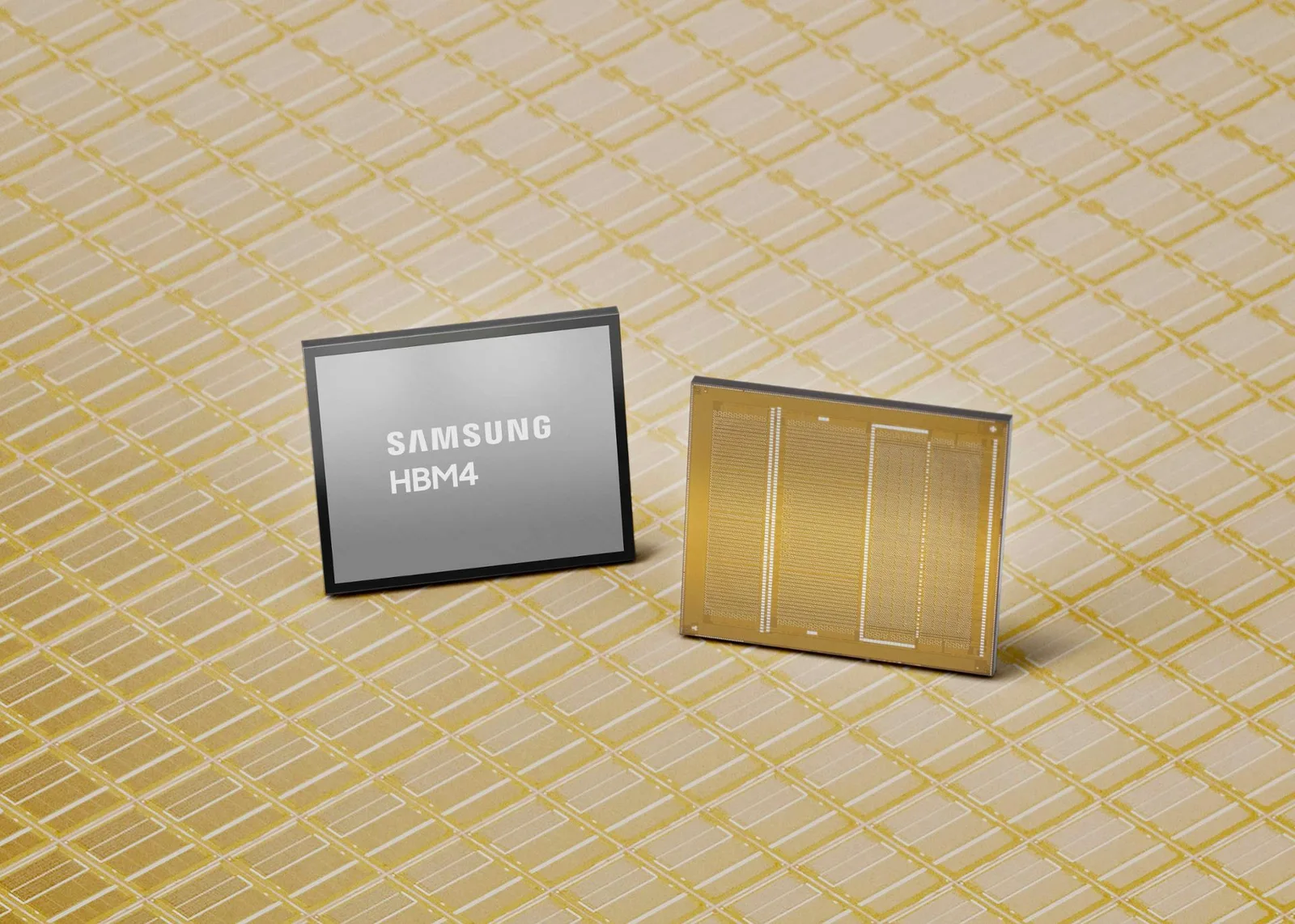
High-bandwidth memory, or HBM, was developed precisely to address this limitation. It stacks multiple memory layers and connects them through vertical interconnections, enabling much higher data-transfer rates while controlling energy consumption per bit transferred.
The technology is substantially more complex to manufacture than conventional memory. It requires advanced expertise in semiconductor fabrication, chip stacking, thermal management, and integration with processors.
Value therefore no longer resides solely in the quantity of memory produced. It increasingly depends on the ability of that memory to operate within the world's most demanding computing systems.
This is where Samsung, SK Hynix, and Micron occupy an exceptional industrial position. Their expertise reflects decades of investment, extraordinarily expensive production facilities, and manufacturing processes that cannot easily be replicated.
Artificial intelligence has generated demand that existing industrial capacity cannot immediately satisfy. The resulting scarcity gives memory manufacturers unusually strong pricing power.
Eighty Billion Dollars and a New Industrial Hierarchy
Samsung's financial performance provides a spectacular measure of this imbalance.
In the third quarter of 2025, the group generated operating profit of 12.17 trillion won. One year later, it expects 107.4 trillion won. Revenue would simultaneously increase from 86.06 trillion to 195 trillion won.
Sales growth is remarkable, but profit growth is considerably faster. This divergence reveals powerful operating leverage: when prices rise in an industry characterized by extremely high fixed costs, a substantial share of additional revenue can translate directly into operating profit.
Industry estimates illustrate the scale of this transformation. According to data reported by Reuters, contract prices for conventional DRAM increased by approximately 60% in the second quarter of 2026. TrendForce anticipated a further increase of 10% to 15% in the fourth quarter, indicating that the market remained tight despite some moderation in component-price inflation.
Before the publication of Samsung's detailed quarterly results, analysts estimated that the operating margin of its memory business could reach approximately 76%.
Such profitability does not mean that every chip generates an identical margin. It reflects the combined effects of pricing, production volumes, product mix, and manufacturing-capacity utilization.
Nevertheless, it reveals a profound change: in certain segments of the technological supply chain, available industrial capacity is capturing an exceptionally large share of the value being created.
The comparison with major digital platforms is revealing. Companies developing artificial intelligence models must finance their infrastructure before knowing precisely how much future revenue it will generate. Component suppliers, by contrast, can collect a portion of that spending as computing systems are built.
In other words, much of the commercial risk associated with artificial intelligence remains with the companies developing its applications, while a significant share of immediate profitability accumulates among those supplying its physical resources.
Samsung and Its Korean Rival
This prosperity does not mean Samsung enjoys uncontested dominance over the emerging memory economy.
Its principal competitor in high-bandwidth memory is another South Korean company: SK Hynix. The latter established an important lead in supplying components for artificial intelligence accelerators, particularly through its industrial relationships with Nvidia.
Samsung historically benefited from a dominant position in conventional memory. But the development of HBM introduced new competitive requirements. Production scale alone was no longer sufficient. Manufacturers had to satisfy demanding standards of performance, reliability, manufacturing yield, and qualification established by accelerator designers.
Samsung's delays in qualifying certain HBM generations consequently allowed SK Hynix to consolidate its position.
The group is now attempting to close that gap through increased shipments and the development of HBM4.
According to JPMorgan estimates reported by Reuters, Samsung's share of the HBM market could reach 34% in 2026, compared with approximately 20% in 2025. SK Hynix's share could decline from 60% to 46% over the same period.
These figures remain estimates, but they illustrate how quickly competitive positions can change as successive technological generations reach the market.
Competition also increasingly concerns the ability to reserve manufacturing capacity several years in advance. Customers seek to secure supplies, while manufacturers attempt to reduce their exposure to the industry's historical price fluctuations.
Samsung has indicated that it wants approximately two-thirds of its memory production to be covered by long-term contracts.
This development could fundamentally alter the sector's economics. An industry traditionally organized around cyclical transactions is gradually moving toward a model based on the reservation of strategic manufacturing capacity.
This is not yet a guaranteed industrial rent. But manufacturers are attempting to convert temporary scarcity into contractual visibility.
Samsung's Paradox
Perhaps the most revealing consequence of this transformation can be found inside Samsung itself.
The company manufactures memory, but it also produces smartphones, televisions, and numerous electronic devices that depend on these components. When memory prices rise, its semiconductor business benefits. Its finished-product businesses, however, face higher production costs.
Analysts therefore anticipate losses in some of Samsung's mobile and consumer-electronics operations during the third quarter of 2026, even as the group announces record consolidated operating profit.
This contradiction illustrates a transformation in the industrial hierarchy.
For decades, the finished product captured consumers' attention and a substantial portion of commercial value. The smartphone embodied visible innovation, while its components remained largely anonymous.
Artificial intelligence is partially reversing this relationship. Manufacturers of finished products can find themselves competing for access to the resources required for production. Component scarcity forces them to choose between higher selling prices, lower volumes, and reduced margins.
For Samsung, the situation is particularly instructive. Diversification allows the group to benefit from rising memory prices at the consolidated level, but it does not protect every division.
For manufacturers without a comparable semiconductor business, the constraint can be even more severe.
Producers of computers, smartphones, servers, and electronic equipment must absorb higher costs, pass them on to customers, or redesign their products.
A technology intended to make the economy more productive can therefore contribute, during its expansion phase, to making certain digital devices more expensive.
An Exceptionally Concentrated Geography
The emerging memory economy also has a geopolitical dimension.
The United States dominates several essential segments of accelerator design and artificial intelligence software. Taiwan occupies a central position in advanced processor manufacturing, particularly through TSMC. South Korea concentrates a decisive share of global advanced-memory production, while Micron represents the principal major American participant in this market.
This distribution creates powerful industrial interdependencies.
An American data center may rely on processors designed in the United States, manufactured in Taiwan, incorporating memory produced in South Korea, and assembled through an international network of suppliers.
Computing power therefore appears less as an isolated national capability than as the product of a highly specialized industrial geography.
South Korea benefits from this organization. Samsung and SK Hynix occupy positions that are difficult to replace quickly because new manufacturing capacity requires enormous capital expenditure, highly skilled labor, and years of technological development.
Yet this concentration also creates vulnerability.
Trade tensions, export restrictions, energy risks, and logistical disruptions can affect manufacturing chains on which digital infrastructure thousands of kilometers away depends.
Memory is consequently becoming an economic-security issue. It joins advanced semiconductors, lithography equipment, electricity networks, and critical minerals among the resources whose availability conditions the technological capabilities of states.
This strategic importance does not mean that every memory component is interchangeable or that manufacturers can impose their conditions indefinitely. It means that certain industrial capabilities have become sufficiently essential to influence investment decisions, manufacturing locations, and national sovereignty strategies.
China and the Limits of Scarcity
Every industrial rent attracts new competitors. Memory is no exception.
China has spent years developing its domestic manufacturing capabilities, particularly in DRAM and NAND. Western technological restrictions complicate access to certain advanced equipment and processes, but they also strengthen incentives to establish a national semiconductor industry.
Chinese manufacturers continue to face substantial technological gaps in the most advanced products. Nevertheless, they may exert growing competitive pressure in conventional memory segments.
This distinction is essential.
The memory market is not homogeneous. Components used in consumer electronics, conventional servers, and artificial intelligence accelerators must satisfy different technical requirements.
A competitor can become significant in certain categories without immediately mastering the most advanced generations of HBM.
Chinese expansion could therefore put downward pressure on conventional memory prices while supply constraints persist in more sophisticated products.
Samsung must manage both horizons simultaneously: defending its historical production volumes while investing in the technologies that increasingly concentrate the industry's highest margins.
The challenge is intensified by the nature of semiconductor investment. A fabrication plant cannot be built in a few months. Equipment must be ordered, installed, qualified, and integrated into complex industrial processes.
Decisions made today will determine part of the available supply several years from now, when prices and artificial intelligence requirements may be substantially different.
The Shadow of the Next Cycle
Samsung's exceptional results raise a question financial markets cannot ignore: how long can this situation last?
The company currently benefits from an imbalance between rapidly expanding demand and supply that requires considerable time to increase. Memory manufacturers enjoy strong negotiating power, while major customers seek to secure their supplies.
But the industry's historical mechanisms have not disappeared.
Exceptional profits encourage investment. Investment expands capacity. When that capacity enters production, prices can decline, particularly if demand grows more slowly than anticipated.
Artificial intelligence introduces an additional layer of uncertainty. Major technology companies are investing heavily in computing infrastructure, but the ultimate profitability of these facilities will depend on service monetization, productivity gains, and the evolution of business models.
If investment slows, component demand could weaken even before newly constructed data centers reach full utilization.
Improvements in computing efficiency could also change memory requirements per unit of computation, although lower application costs could simultaneously stimulate broader adoption.
Financial markets already appear to be incorporating some of these uncertainties. Despite its historic profits, Samsung's share price had fallen by approximately one-quarter from its June peak, according to Reuters. Investors are not necessarily questioning the scale of current earnings. They are attempting to determine what proportion can be sustained once industrial supply catches up with demand.
The difference between a durable industrial rent and a cyclical earnings peak will depend precisely on the ability to preserve margins beyond the present shortage.
Long-term contracts, increasing product complexity, and closer relationships with processor designers can make revenue more predictable. They cannot entirely eliminate the risk of excess capacity.
The Return of Industrial Capital
Beyond Samsung, this transformation reveals a broader evolution in technological capitalism.
Over the past two decades, the digital economy frequently favored companies capable of developing platforms, software, and services with relatively low marginal costs. Their enormous valuations rested on the possibility of serving hundreds of millions of users without proportionately multiplying physical infrastructure.
Artificial intelligence is reintroducing a formidable material constraint.
Every new computing facility requires processors, memory, cooling systems, electrical equipment, buildings, and energy capacity. Infrastructure must be financed before it generates future revenue. Its expansion depends on industrial supply chains whose timelines cannot simply be compressed at will.
This development does not signal the disappearance of the software economy. It demonstrates that its most advanced ambitions depend on an exceptionally tangible productive foundation.
Component manufacturers consequently find themselves at the center of a redistribution of value. Companies promising future applications are financing the immediate expansion of those supplying the physical means to deliver them.
Samsung occupies a distinctive position in this movement. It does not merely sell a product associated with artificial intelligence. It supplies part of the material capacity without which AI systems cannot operate at scale.
Its announced quarterly profit therefore represents more than an industrial achievement. It provides an indication of how physical scarcity is redistributing profits across the global economy.
The World's Memory
It would be premature to conclude that Samsung has permanently escaped the cycles of its industry. Its third-quarter 2026 results reflect exceptionally favorable conditions whose duration remains uncertain. New manufacturing capacity, Chinese competition, evolving computing architectures, and the investment discipline of major technology companies will shape the years ahead.
But one transformation is already visible.
Memory is no longer merely the discreet component accompanying advances in computing. It is becoming one of the material foundations of artificial intelligence expansion, a source of bargaining power for its manufacturers, and an economic-security concern for governments.
Samsung currently offers the most spectacular illustration: a company whose profits are growing far faster than its sales because the industrial capacity to supply certain technological resources has become scarcer than the capital available to purchase them.
For decades, the power of the electronics industry consisted in making memory continuously cheaper. Artificial intelligence is now demonstrating that the components enabling machines to operate can also become the constraints limiting their expansion.
And in an economy investing hundreds of billions of dollars to teach machines how to think, those who manufacture their memory now possess a form of power that software companies can no longer afford to ignore.
Main Sources
- Samsung Electronics, Third Quarter 2026 Pre-Earnings Guidance, October 8, 2026. Preliminary consolidated revenue and operating profit.
- Samsung Electronics, Second Quarter 2026 Results, July 30, 2026. Performance of the Device Solutions and Device eXperience divisions.
- Reuters, Samsung flags $80 billion profit on AI boom, October 8, 2026. Financial results, memory demand, and industry outlook.
- Reuters, Samsung's Q3 profit seen jumping nine-fold, but chip margins may be flat, October 7, 2026. Profit margins, long-term contracts, competition, and exchange rates.
- TrendForce, industry forecasts cited by Reuters, October 2026. DRAM contract-price developments.
- JPMorgan, HBM market-share estimates reported by Reuters, October 2026.
- Yonhap News Agency, Samsung's Q3 operating profit reaches new high, October 8, 2026. Industrial outlook and divisional performance.
Atlas Limits Research Desk
Atlas Limits’ editorial and analytical desk.